How Driver ID Tags can help your business

Do you know who is driving your vehicles and how they are driving? These questions should be top of mind for all business owners who have a large fleet of vehicles. It’s important from a security perspective, as well as in terms of how you manage their driving. Electronic driver ID tags are the perfect solution for both these concerns, as this technology only allows authorised drivers to operate your vehicles and provides a verifiable, secure record of who is using them.

As the world leaders in vehicle tracking and telematics, Cartrack has made it our mission to empower fleet managers and drivers, through the expert delivery of data. Part of the way we deliver this data is by providing Driver ID tags, which can be used to make your drivers and vehicles more secure, and also provide information on driving habits. From this platform, you can implement various programmes to improve on-road habits and reap some added benefits such as:

More efficient routes

Driver ID tags allow you to track your vehicle’s whereabouts, which ensures that your drivers take the most efficient routes. They can then be more productive and complete more assignments in a day, while less fuel is wasted as you establish routes that have less traffic.

Empowered drivers

Having an identification process will place more responsibility on your drivers, as they will know that they are being carefully watched. In so doing, you will encourage your drivers to be more productive. You can also put your drivers through skills improvement courses to help them develop proper driving habits and reflexes, which could potentially save lives and money.

More efficient working hours log

Keeping track manually of a driving log can be difficult and open for human error. The Driver ID feature records the trips electronically with no human intervention, providing a much more accurate and detailed log.

Improved eco-driving training

Eco-driving is a pressing concern for most companies, and Driver ID tags help you out considerably to enforce this directive. Driver analysis can determine whose driving needs improvements that the impact on the environment is lessened.

Let Cartrack be your ID tag provider

Cartrack’s superior technology allows us to provide you with the ultimate in Driver ID technology. Contact us today to enjoy the security and enhanced efficiency and management of fleets that we can offer.

Why Africa is the final frontier for the global automotive industry

With a population of over a billion people and a consistent rise in income levels and quality of life, there is ample room for growth in the automotive industry in Africa. This was the finding from research conducted a couple of years ago from global consulting firm, Deloitte.

The report found that the underdeveloped nature of Africa’s automotive industry means that there is scope for the industry to rapidly develop across the entire value chain, including vehicle production, assembly, sale and after-sales service.

The current economic and social changes in Africa, which include rising per capita income levels, a projected increase in motorisation rates and financial markets that are continuously developing, has prompted Deloitte to label Africa as the “final frontier for the global automotive industry”.

Research completed at the time of the report demonstrated that the automotive market in the continent was still relatively small – it’s motorisation rate of 44 vehicles per 1 000 inhabitants is well below the global average of 180 vehicles per 1000 people. However, while only about 1.55 million new vehicles were registered or sold across Africa in 2015, new vehicle sales could be as high as 10 million units a year within the next 10 years or so.

Cartrack has benefited from the developing nature of Africa’s economies having established a presence in 11 countries on the continent, including South Africa (head office), Botswana, Kenya, Malawi, Mozambique, Namibia, Nigeria, Rwanda, Swaziland, Tanzania and Zimbabwe.

The Fourth Industrial Revolution to boost Africa?

Deloitte maintains that The Fourth Industrial Revolution (which refers to the mass automation and digitisation of industries) could provide an opportunity for African economies to create strong automotive manufacturing industries, which in turn could stimulate inclusive growth in these countries and help them reduce their exposure to commodity price fluctuations.

Cartrack is your African partner

As the African automotive market prepares for significant growth, Cartrack is primed to be an invaluable partner to both private car owners and companies across the continent by providing superior and world-class vehicle recovery and fleet management services. Contact us today to find out how our services can make your vehicles more secure and add real value to your fleet.

Top tips on how to save fuel in your Fleet

PRECIOUS, PRECIOUS FUEL

When it comes to costs within a fleet, most fleet managers understand that fuel is one of the most important factors. If your drivers speed, spend too much time idling or just drive badly in general, they will waste precious fuel and negatively affect your bottom-line. There is also the chance that your drivers or other parties are stealing fuel from your fleet of vehicles, which adds further to your costs and administrative hassles.

CHANGE BAD DRIVING BEHAVIOUR

In general, using the best practice implementation of strategies arising from fleet telematics data can help reduce labour costs by between 15% and 20%. Similarly, telematics data can help you save fuel, as you can monitor your drivers, and subsequently take action to correct bad or reckless driving habits. When drivers infringe on the road, fleet managers will be alerted to these, either instantly via push messages or SMS or through regular reports.

Cartrack offers our subscribers a comprehensive set of reports and alerts, including information on:

  • Fuel cards
  • Idling
  • Speeding
  • Car theft
  • Geofences
  • General driver performance

TOP WAYS TO SAVE FUEL IN YOUR FLEET

  • MAKE SURE THAT VEHICLES IN YOUR FLEET ARE IN TIP-TOP SHAPE

To improve the way that your vehicles consume fuel, it is advisable to maintain them. Getting them serviced regularly and using the correct oil helps maintain engine efficiency, which subsequently reduces fuel use. Cartrack’s Mi-Fleet will make this task that much easier for you. This administrative and vehicle cost accounting software will send alerts via the platform, e-mail or SMS, indicating when your vehicles are due for maintenance.

  • GET YOUR DRIVERS TO SLOW DOWN

The role that speeding plays in increasing fuel use is often overlooked. It is therefore important that your drivers recognise this and don’t try to rush to their destination. They should try to reduce their speed as much as possible and ensure that they stay within or even well below the road speed limits for the type of vehicle being driven.

  • UPSKILL YOUR DRIVERS

It is vital that your drivers develop good driving habits and begin to anticipate other drivers’ actions and potential hazards. This will reduce the amount of fuel they use as they will accelerate and brake less often.

It is also unnecessary for drivers to “rev” the car – some motorists let the Revolutions Per Minute (RPMs) run up to between 2,500 and 3,000 per minute before changing to a higher gear. Rather, don’t rev the car for too long before changing gears, and use the highest gears (fifth and sixth) sooner rather than later.

Cartrack lets you monitor your drivers 24/7 to see whether they are adhering to good behaviour on the road – all you have to do is log in to your profile on any platform (computer, tablet or smartphone). Our mobile app makes this task even easier, as you can get everything you need at the touch of a button, including vehicle tracking, logbooks and emergency services.

  • GET THE BASICS RIGHT

Making sure that the vehicles in your fleet are roadworthy is a simple way to reduce fuel use. As such, tyres must be well maintained and their pressure checked regularly, which will lead to safer and more economical driving and maximised fuel use. You should also not overload vehicles as this will considerably increase fuel use – a lighter car will always use less fuel.

  • CONSIDER SWITCHING TO A MANUAL

On average, manual transmission vehicles tend to use 10% to 15% less fuel than automatic transmissions. And while the gap is closing, as modern, efficient semi-automatics gain in popularity, it still might be worth your while to look into making the switch in your fleet in order to save on fuel.

LET CARTRACK BE YOUR FUEL SAVER

As a trusted, world-class company that provides superior fleet management solutions, Cartrack is equipped to provide services that will help you drastically reduce fuel use within your fleet. Contact us today to get peace of mind that your fleet is performing optimally.

Predicted automotive trends in 2020

It’s sometimes hard to believe that we’re now in 2020. What always seemed like a year that was “way in the future” is now here, and technology is trying to keep up with the various predictions that have been made about this era over the years. Considering all the technological changes that we encountered during the previous decade, it is no wonder that this year produce even more sophisticated, technological wonders.

And this trend goes for the automotive sector, which is expected to ramp up the technology on existing innovations. Check out a sample of some of the expected automotive trends for 2020.

Electric cars

Ok, so this technology has been around for a while – all the way back to the 1800s. But for a long time, electric cars remained unviable and essentially dormant, until the emergence of modern electric cars in the 1990s. Now, electric cars have been identified as the wave of the automotive future, particularly in light of CO2 emissions and climate change concerns, as well as dwindling fossil fuel resources.

Electric cars don’t pollute and are friendlier to the environment than cars powered by fossil fuels electric vehicle drivers are essentially playing their part in lowering CO2 emissions. What’s more, these vehicles are more economical and practical to drive; there is less wear and tear compared to a fuel-powered car, and with less servicing needs and maintenance costs, they might actually be a more affordable option.

In 2020, you can expect a larger number of automotive players and their clients to embrace electric vehicles.

Self-driving cars

Whether you love self-driving cars or not, you can’t deny that these cars represent the future of the automotive industry, especially considering that most vehicle accidents are caused by human error. And, some reckon that the future is now, thanks to cutting-edge technology such as GPS, Wi-Fi, Bluetooth and 5G. Self-driving cars, also known as autonomous vehicles, use Artificial Intelligence (AI) technology to achieve the effect of driverless cars. Major advancements are expected in the coming months, with self-driving technology development company Waymo already possessing a host of self-driving cars in its portfolio. South African- born Elon Musk is also proudly representing Africa within this industry, with his company Tesla ranked in 2018 as the world’s best-selling plug-in passenger car manufacturer.

Increased use of automotive software management tools

Digital software has unsurprisingly become an important part of the automotive industry, with automotive software management tools playing an important role in helping companies run more successful operations. Some of these tools include:

  • A customer interface – customers can access a complete database from some automotive manufacturers, which allows them to access their invoices and schedule maintenance appointments.
  • A main desktop app – companies are given access to their entire database, whether that be technical information or client data. All authorised users can then access, update or delete information.
  • Technical app – all technical information that is relevant to the business is available and can be managed from this interface, including invoice generation, employee scheduling features and inspection reports.

Bring in Cartrack and telematics here

In 2020, we should see a move towards next-generation technology such as cloud computing and big data, with most automotive business owners having adopted online accounting software tools such as QuickBooks Hosting, NetSuite and Xero to help manage their finances and accounting more efficiently.

Usage-based insurance packages

The emergence of sensors in and on vehicles means that you can learn a lot more about a driver, including their driving behaviour, patterns and accidents. This information is being used by the insurance industry, with usage-based insurance packages becoming more commonplace. AI (Artificial Intelligence) and sensors enable insurance companies to determine driving behaviour and vehicle information such as the distance a vehicle has driven in a certain period of time, airbag deployment and harsh braking frequency.

If insurers have information at hand that a driver is well-behaved, that client is more likely to get a more favourable rate.

Tracking and monitoring tools

Worried about the health of your car? In 2020, you can always know how your “loved one” is doing thanks to vehicle health tracking tools. Once again, the sensors incorporated in the vehicle allow you to accurately monitor your vehicle and take better care of it thanks to monitoring and tracking apps and tools. These systems are fully equipped to help out in any emergency a driver may have, including accidents, with exact coordinates of locations provided, ultimately saving lives.

Ride into 2020 with Cartrack

As a leading stolen vehicle recovery, fleet management and innovator in mobility solutions, Cartrack is always on the cutting -edge of the latest technological developments. We have a range of tracking and monitoring solutions that will give you total peace of mind and allow you to benefit from all the latest automotive trends in 2020.

Contact us today to find out how we can make your vehicle more secure, improve the efficiency of your business and put you in control.

The future of vehicle tracking

Over the last 20 years, vehicle tracking has developed in leaps and bounds to the point where it is an integral part of both vehicle security and the modern management of vehicles within a fleet. As GPS technology develops even further, vehicle tracking is bound to become an even more important aspect of both the vehicle industry and modern commerce. Here’s a glimpse into what the future holds for vehicle tracking: Automated Driving With automated driving soon to become ever-more present, GPS-enabled vehicle tracking systems will ensure that this new industry is more efficient and reliable. Vehicle tracking will allow you to simply enter the coordinates of the destination you’re going to and determine the best route of travel. In the meantime, as you travel without having to steer the vehicle, you will be able to concentrate on more important things such as preparing for your presentation or even getting a much-needed nap to re-energise yourself. Geofencing features Geofencing is already an important feature of vehicle tracking, and in future, its use and importance will only grow. Geofencing allows you to define the areas that vehicles within your fleet can travel to and from, with instant alerts provided when vehicles stray from this geofenced area. Areas are measured and geographical limits are marked using an advanced GPS vehicle tracking system, with certain systems utilising web mapping services such as Google Maps and others basing their calculations on the latitude and longitude defined by users. Augmented Reality The way we engage and interact with our car will change significantly in future, and GPS tracking will play a vital role in this regard. In particular, augmented reality will become ingrained in the functioning of many vehicles, which will help create a more seamless, safer and stress-free driving experience. Sensors that can recognise the presence of pedestrians near the vehicle and alarms that are issued to signal over-speeding and the entry of a vehicle into a restricted area are some of the features that will be created and integrated into the GPS-based vehicle tracking system. Thanks to technological improvisation, you will also be able to view directions on your windshield, eliminating the need to glance down at a GPS screen. Vehicle Sharing Ridesharing has become increasingly popular over the last few years. In the future, this service will become even more sophisticated thanks to the development of vehicle tracking technology. It is predicted that there will be an integrated approach between different fleets, which will make it easier for each cab service to allow for the sharing of passengers. Further, two or more passengers will be able to share a vehicle on the same route, which will result in a cheaper fare for rides. These trends have already been implemented in major cities around the world. Cartrack will be there for you into the future As a leading vehicle tracking and fleet management company that is on the cutting -edge of the latest technology, Cartrack is perfectly primed to help provide leading vehicle tracking solutions that are in line with the latest developments. Contact us today to find out more.

Best practice implementation can save you 15-20%

With the ever-increasing costs of conducting business, fleet owners the world over are looking at ways to reduce their expenses; Cartrack has the answer with its powerful combination of telematics, tracking, reporting and data analysis which can result in various expense reduction strategies.

For most fleet managers and owners, fuel and labour costs are the highest expenses, as the former is unpredictable and the latter is dependent on personality, attitude and ability. Drivers who are not trained correctly, and/or have bad attitudes towards their work and on the road, tend to abuse vehicles resulting in higher on-road running costs that range from more frequent tyre replacement ratio to accidents and those subsequent maintenance costs.

The converse of this is that properly trained drivers, who are properly engaged in the work and have a vested interest in what they do, can actually help save you costs and add to your bottom line. In addition, according to Canadian organisation, The Descartes Systems Group Inc, best practice implementation of both fuel and labour reduction strategies can result in a whopping 15-20% cost savings for fleet operations per annum.

Here are three ways Cartrack can help you reduce your labour costs:

Efficient planning through data analysis

Analysis of time spent on certain routes, and the subsequent costs involved including fuel expenditure, idling time and time at clients, fleet managers can plan better and optimise their workforce to spend less time wasting time, and more time delivering the expected service.

Analysis of data can assist fleet managers in planning better routes and times for vehicles to be on the road. Route management and traffic mapping, powered by Cartrack, can reduce the distance covered by each vehicle.

In addition, a myriad of sensors also provide feedback on what is happening on board your vehicles. A real-world example of this is the temperature sensors which alert you to a change in heat or cold depending on your goods. Once alerted, you can contact your drivers to find out what is happening and take corrective action. This helps keep your cold chain intact, and your clients satisfied.

Driver monitoring and behaviour change

Cartrack’s telematics information can provide feedback on how the vehicle is being driven with reports on acceleration, braking and cornering as well as time spent idling, stuck in traffic and any unplanned or personal stops. Identity tags can also assist in providing data as these show which drivers drove which vehicles, and from there, driver behaviour can be monitored and improved.

On board cameras, particularly those in the cab provide real-world, real-time images and recordings of your drivers’ actions. Using this, fleet owners can draft and implement procedures that can improve driver behaviour, rewarding those who improve their skills or those that consistently go beyond the expected.

The data analysis combined with the camera evidence can be used to determine if KPIs have been met and where the real issues lie so that proper intervention can be made.

Communicator App

This is a hugely valuable tool in your cost reduction arsenal. This handy app allows you to communicate directly with your drivers so you can assign tasks while on the go. Your drivers can also communicate with you on whether the assignment can be carried out or not and reasons for their answers.

The main benefits of Cartrack’s Communicator are:

  • Increased productivity
  • Identification and alleviation of delays
  • Quick and easy changes to workflows
  • Easy breakdown of tasks and process handoffs
  • Improved staff communication and morale
  • Improved legal compliance
  • Elimination of human error
  • Increased operational agility
  • Increased customer satisfaction
  • Reduced expenses

Reduced labour costs are just one of the many advantages that you can enjoy when you’ve got the world leaders in mobility solutions on your side. Contact us today and put yourself in control.

The 103ex designed for your most futuristic dreams

Kick start your 2020 eyeing out Rolls-Royce’s all-electric, autonomous 103EX concept car, designed to drive through the most futuristic of your dreams. One of the world’s most premium brands, Rolls-Royce has not held back on putting as much elegance and technology into the 103EX. This stunning piece of machinery has just returned to its home in Goodwood, England after a 3-year trip around the world. The 103EX seems to hover just millimetres above the ground, giving the impression that it is ready to simply take off, but it will be firmly on the ground at the company’s headquarters in West Sussex. There it will be “a symbol of the brand’s dedication to remaining a leader even as the auto industry goes through a technical revolution unlike any seen since last century”. The concept vehicle, also known as the Vision Next 100, is an amazing combination of “all-electric drivetrain, autonomous drive and enhanced artificial intelligence that does everything from charting out the most efficient route to keeping track of your daily schedule.” Rolls Royce has committed itself to producing vehicles that are unique, so much so that they could be classed as a works of art, truly living up to the statement made by Sir Henry Royce: “take the best that exists and make it better. When it does not exist, design it.” “As our first fully autonomous electric vehicle, the 103EX is a huge statement of intent. In its technical innovation, it showed unequivocally that Rolls-Royce regards electric power as the future of automotive propulsion,” says Rolls-Royce Motorcars CEO, Torsten Müller-Ötvös. He added that it also shows the company’s “vision of effortless, autonomous, connected, spacious and beautiful luxury mobility, with each car as individual as the customer themselves.” The 103EX is a prime example of just how rapidly and radically the technological advances are being made in the motor industry, but you can rest assured that Cartrack remains ahead of the curve. Our next generation tech provides a host of tracking, data and mobility services designed to put you in control of all your vehicles, from EVs to diesel-powered workhorses.

The benefits of telematics solutions for plant equipment

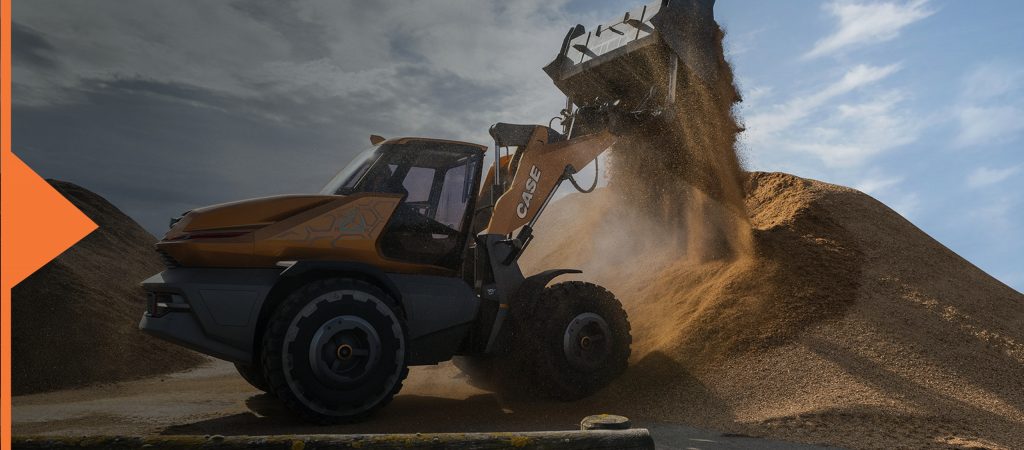
Not all vehicle fleets drive on the road, in fact, many are used for more niche activities such as farming and construction. However, these types of vehicles require telematics and tracking solutions as much as other vehicles to ensure efficiency, prevent abuse and aid in recovery if stolen.

We break down for you the benefits of using telematics solutions for plant equipment:

What is plant equipment?

This term refers to a wide variety of equipment that is either used or is capable of use in the manufacture of supplies or for any administrative or general plant purpose. These items can include loaders, dumpers, compressors, excavators and agricultural equipment.

Why the need for telematics solutions for plant equipment?

Plant equipment is a valuable asset that requires protection from either theft or other misfortune. The recovery and/or replacement of stolen equipment can prove costly and a major administrative hassle, severely impacting the functioning of a business. In this regard, tracking expensive, large and heavy assets can prove invaluable to a company and help improve profitability, reduce costs and improve security.

Benefits

Reduce fuel and maintenance costs

Smart GPS tracking ensures that companies can keep track of their equipment’s use, which in turn, helps them monitor the fuel consumption. Further, thanks to GPS tracking systems, they can get automatic notifications that the equipment is due for maintenance work, which ensures the equipment is better maintained in general, performs better and lasts longer.

Keep an eye on your equipment or vehicles

Knowing precisely where plant equipment is at all times helps companies to efficiently transfer equipment to nearby locations and can assist in recovering stolen equipment or vehicles.

Reduce idling

Equipment that is still running but is idle or not moving wastes fuel and could potentially increase the wear and tear of the machine’s engine. Fleet tracking helps reduce idling by notifying the fleet management or the site managers of this problem. In turn, site managers will know if operators need re-training in proper equipment maintenance.

Why you should choose Cartrack

With over 15 years in the telematics industry, Cartrack’s range of products and services is perfectly suited to this industry, giving owners, managers and foremen complete peace of mind when it comes this expensive machinery. Our telematics solutions allow you to effectively monitor and measure the operating hours of your plant and equipment, which means you can accurately determine utilisation, service intervals and billable hours.

With a Cartrack unit in your plant or agricultural machinery, you can enjoy the benefits of:

  • Minimised costs
  • Increased profitability
  • Improved security
  • Better use of equipment

Contact us today to find out more!

Festive safety tips

With the festive season nearly upon us, many of you are preparing for a well-earned rest and the prospect of a much-anticipated holiday. Setting off on these holidays usually means long hours spent travelling in a car, whether you’re holidaying locally or further afield. It also means that you expose yourself to danger both on the road and from opportunistic criminals.

To help ensure that you have a safe and trouble-free end-of-year trip, here are a few safety tips:

Make sure your car is safe before travelling

First and foremost, you need to ensure that your vehicle is safe and ready for a long journey. Before travelling send your car in for a service and make sure that your car’s tyres, oil and water have been checked and are in working order.

Drive defensively

It’s a given that, on the road, you should expect the unexpected. Even if you’re obeying the law and doing everything right, there is always a chance that another motorist will endanger your life through their reckless actions. It is therefore vital to undertake defensive driving actions:

Keep a safe following distance

  • Yield to other vehicles
  • Stay focused
  • Refrain from road rage

Drive predictably

It goes without saying that your own driving behaviour on the road should be stable and predictable. As such, take care to not make sudden stops or lane changes or perform any other surprise actions that could compromise your and other drivers’ safety.

Implement the safety basics

Performing simple tasks and checks in and around your car critical to enhancing your overall safety on the road. Make sure that the car is locked and all windows are closed, hold on to your car keys at all times and never leave your vehicle unattended if it is unlocked.

Make sure you’re sharp on the road

A key aspect of securing your safety on the road is making sure that you are fully equipped to handle a long drive. This means you should do everything you can to aid your concentration and mental alertness, including:

Get a decent sleep before travelling – at least six hours

  • Make regular rest stops – at least every three hours
  • Bring healthy snacks and stay hydrated

Hide your valuables away

Make sure that you never leave your valuables in plain sight in the vehicle, as this always proves to be an unavoidable temptation for would-be criminals. Instead, always lock your valuables in your glove box, boot, or hidden under your seat.

Use an alarm system

Using an alarm system will increase your security on the road, as it will instantly alert the general public should there be an attempt to steal your car. To add further security value, it is recommended that you use a tracking device.

Cartrack has a number of world-class recovery options that will give you peace of mind that your car is always protected from theft or hijacking.

Safe and happy travels!

Is your car talking to you?

Rally and racing car drivers will tell you they “drive by the seat of their pants”, listening to every nuance of the vehicle with an almost extrasensory perception. And while they may have that gift, the reality is that the average driver may often either ignore or misinterpret what their car is trying to tell them.

Even though most new cars have sensors and a CAN bus system that can relay information directly to you and the manufacturers, being able to pre-empt an issue before it becomes a major problem can save you money in the long run.

Here are signs that your car is trying to tell you something is wrong.

Puddles of stuff

If you drive an air-conditioned car, more often than not, the puddle under your parked car is caused by condensation However, don’t assume that, and check that puddle every so often as it could indicate one of the following:

  • Cooling system leak – the puddle is green, orange or yellow
  • Power steering fluid – the liquid is clear but feels oily
  • Sump/oil drainage plug – the liquid is brown and feels distinctly oily
  • Automatic transmission problems – liquid is reddish-brown and lightly oily.
    • If it smells burnt, the chances are that you’ll need to get the transmission (gearing system) overhauled.
  • Brakes not working – there is oily fluid on the inside of the tyre wall
  • Heavy, sticky oil under your truck’s rear axle – get the differential checked out.

Hight-pitched squealing

Back in the day, this problem was usually the fan belt, and you could’ve fixed it with a pair of pantyhose. These days, cars use a multitude of belts to drive a multitude of systems in the engine, from power steering to the alternator. So, don’t wait until the belt snaps; rather, deliver your car to the mechanic ASAP to get it sorted.

If the squealing occurs when you brake, it’s probably the brake pads that need to be replaced – again, don’t slouch on this, get them replaced ASAP before you have to skim the discs and drums.

Grinding noises

If ignored, the squealing brakes become grinding brakes as the metal backing plate of the pad makes contact with the brake disc. In this instance, braking is no longer as effective and the chances of an accident occurring have increased in leaps and bounds. Once again, get your car to your mechanic ASAP!

If your car grinds, clicks or rumbles when completing a tight turn, then the constant velocity joint is no longer effective – ignore this problem at your own peril.

If the grinding takes place while changing from first to second gear, then the synchronisers are probably wearing out and it is worth getting it checked by your mechanic unless you are a rally driver who can change gears without having to use the clutch.

Grinding noises should never be ignored. whether it’s the alternator bearings on their last turn or a pebble stuck in the braking system. Keep your costs down by taking your car for inspection as soon as you can.

Tyre noises

  • Regular smacking sound that gets louder as you speed up
    • This could be something in a tyre such as a nail or bolt. Pull over and change the tyre. If you’re unable to, slow down and drive to the nearest garage or tyre centre where they can remove the cause and patch the hole.
  • Wet, grinding noise – flat tyre.
    • Drive slowly to a garage and get the tyre pumped. Once there, also check the tyre for screws, bolts, nails etc lodged in the tread or tyre walls.
  • Slapping Sound – this is the tread coming off the tyre.
    • Pull over and change the tyre. Purchase a new spare tyre as soon as possible.

Blowing raspberries

If your car sounds like its blowing raspberries or laughing at you, especially from underneath the body, then the exhaust may need to be thoroughly checked. It’s a good idea to do this sooner rather than later to ensure that the exhaust fumes escape through the proper channels.

Going off course

If you struggle to drive your car in a straight line, you immediately need to get the alignment and balancing checked, especially if you’ve hit a few potholes or some nasty speed humps. If the problem persists, then chat to your mechanic about issues such as steering columns and ball joints.

And while you take care of what makes your car tick, let Cartrack take care of you and your car’s security and efficiency with our superior vehicle safety and telematics solutions. We’ll keep a virtual eye on your car, inform you if it moves without your permission, and recover it for you if it’s stolen or hijacked. Chat to us today to find out how we can give you #PeaceOfMind.