
What is ADAS? Never Worry About Devastating Collisions Again

Imagine a world where driving becomes not only safer but also smarter. A world where accidents are significantly reduced, thanks to cutting-edge technology that anticipates potential dangers and provides timely warnings.

In this article, you will:

  • Develop an understanding of what ADAS is and how it works
  • Unpack the importance of ADAS
  • Discover the top 5 benefits of ADAS for your fleet
  • Find out how Cartrack’s ADAS software can boost fleet safety, efficiency, and savings
  • Read about a Cartrack ADAS success story

ADAS: What it means and what it is

ADAS stands for Advanced Driver Assistance Systems. These systems are a collection of advanced digital technologies and features integrated into modern vehicles. These advanced technologies and features enhance driver safety by improving the driver’s ability to react to dangers on the road to reduce minor and devastating accidents.

From the humble seatbelt to the familiar traffic lights and road lanes, the quest for safer roads has been relentless. Today, nearly all automobile collisions are caused by human error, fortunately, we can prevent this through ADAS through early warning and automated systems such as:

  • adaptive cruise control
  • lane departure warning
  • automatic emergency braking
  • blind-spot monitoring
  • pedestrian detection
  • parking assistance and more

Seemingly,the primary goal of ADAS is to prevent accidents, reduce the severity of collisions, and enhance overall road safety by alerting the driver to potential hazards, assisting in maintaining safe distances from other vehicles, monitoring lane positions, detecting and responding to obstacles, and providing assistance during parking manoeuvres.

According to the Insurance Institute for Highway Safety,forward collision warning systems cut front-to-rear crashes by27%, rearview cameras reduce backing accidents by17%, while automated rear braking decreases them by a secure 78% – all thanks to ADAS.

Let’s find out how it works.
ADAS_What_it_means_and_what_it_is

How ADAS works: a simple explanation

ADAS works by using camera-based sensors, intelligent algorithms, as well as artificial intelligence and machine learning to heighten drivers’ awareness of their surroundings and enhance vehicle safety. These cutting-edge solutions consist of multiple chips known as systems on a chip (SoCs) to analyse data from the surrounding environment, such as road conditions and other vehicles, to provide real-time warnings and assistance.

To put it simply, here’s how ADAS operates:

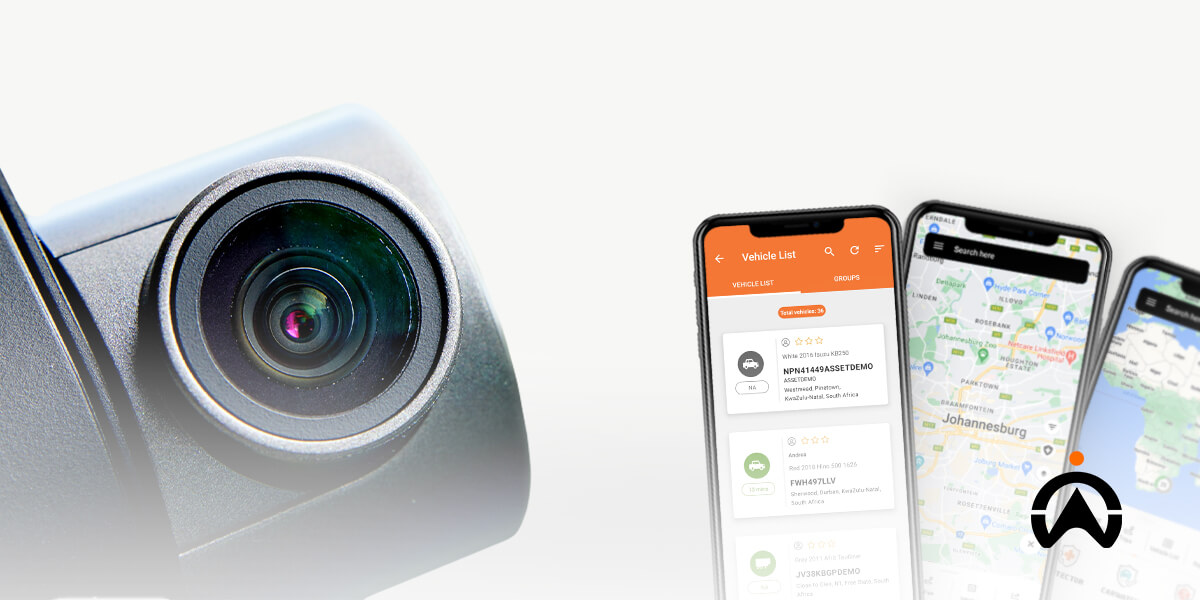
  • Sensors and Cameras:ADAS systems are equipped with sensors and cameras strategically placed around the vehicle. These sensors detect and gather data about the vehicle’s surroundings, including other vehicles, pedestrians, road markings, and obstacles. For optimal visibility, these ADAS cameras are usually mounted inside the vehicle by the front windshield, behind the central rear-view mirror.
  • Data Processing: Data collected by the cameras and sensors is processed in real time by onboard computer systems. These systems analyse the data using predefined patterns and algorithms to identify potential risks or hazards.
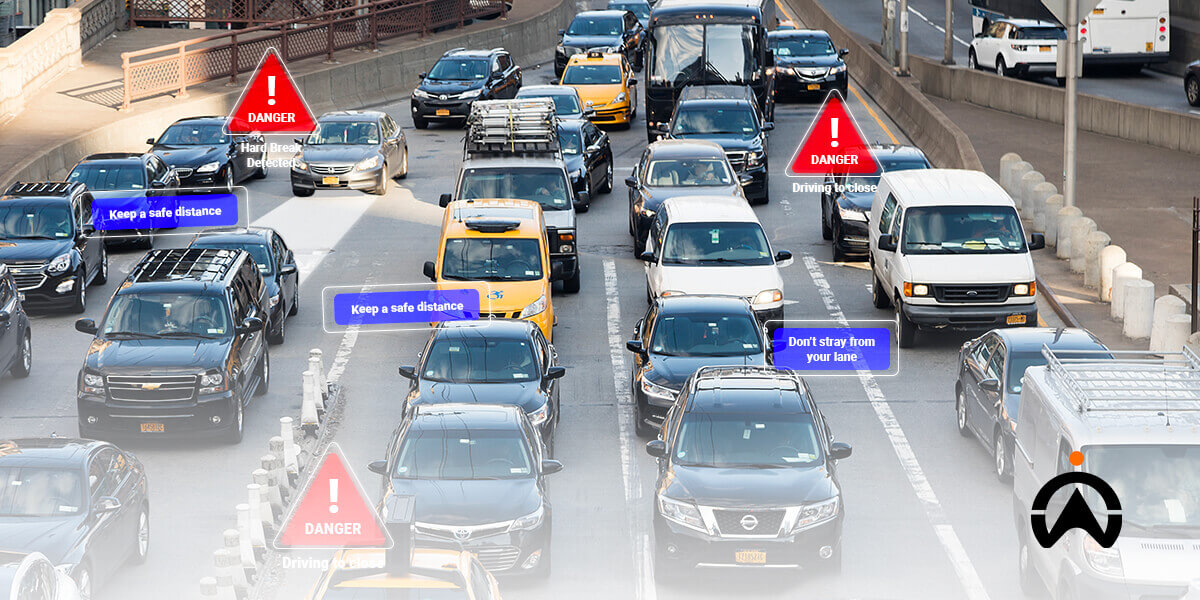
  • Driver Assistance Features: Based on the analysed data, ADAS provides driver assistance features to enhance safety. These features include:- Forward Collision Warning: Alerts the driver if the vehicle is approaching another vehicle or obstacle too quickly, helping to prevent rear-end collisions.

    – Lane Departure Warning: Detects when the vehicle drifts out of its lane without signalling and alerts the driver to take corrective action.

    – Adaptive Cruise Control: Automatically adjusts the vehicle’s speed to maintain a safe distance from the vehicle ahead, providing a more comfortable and controlled driving experience.

    – Blind Spot Detection: Warns the driver of vehicles in blind spots, reducing the risk of lane-change accidents.

    – Automatic Emergency Braking: Detects possible collisions and automatically applies the brakes to reduce the impact or avoid a collision altogether.

  • Audible and Visual Alerts: ADAS systems further provide audible or visual alerts to the driver through sound signals, dashboard displays, or heads-up displays. These alerts draw the driver’s attention to potential dangers and prompt them to take appropriate action to prevent collisions.

What’s the importance of ADAS?

In today’s fast-paced and technology-driven world, the automotive industry has witnessed remarkable advancements, transforming the way we drive and ensuring greater safety on the roads. With this, ADAS systems have become crucial in mitigating human errors, improving road safety, and shaping the future of vehicle and driver safety.

Let’s delve into the significant importance of ADAS:

  • Accident Prevention: With human error being a leading cause of accidents on the road, ADAS technologies, such as forward collision warning, lane departure warning, and automatic emergency braking,act as a safety net preventing devastating collisions.
  • Risk Mitigation: ADAS features play a crucial role in reducing or eliminating potential safety risks and their severity. By incorporating elements like blind spot detection, rearview cameras, and parking assist systems, drivers can overcome blind spots and navigate challenging manoeuvres with enhanced visibility. This reduces the likelihood of accidents caused by misjudgment or inadequate visibility.
  • Informed Decision Making: By providing drivers with real-time alerts about potential hazards, speed limits, and traffic conditions, ADAS becomes a valuable tool that empowers drivers to confidently make road safety choices. This reduces the chances of errors resulting from a lack of awareness or misinterpretation of the road.
  • Driver Assistance: In harsh weather conditions or low visibility scenarios, ADAS features like adaptive headlights, rain-sensing wipers, and traction control assist drivers in maintaining control and making the appropriate adjustments to minimise devastating collisions related to harsh weather conditions.
  • Safety Redundancy: Even the most attentive and experienced drivers can make errors or be momentarily distracted. As such, ADAS acts as a crucial backup system to compensate for human limitations and serves as an additional layer of safety by detecting and responding to potential dangers when human attention or reaction time falls short.

Overall, by mitigating human errors and providing critical assistance, ADAS technologies significantly contribute to reducing accidents, injuries, and fatalities on the road. They enhance the overall safety of your fleet by complementing human capabilities, making driving safer for everyone.
What’s_the_importance_of_ADAS

Top 5 benefits of ADAS for your fleet

ADAS integration has become increasingly vital in the fleet industry. This is due to its critical role in various other industries such as cold chain logistics, construction, rental and leasing, taxi services, and transportation and logistics. With thehigh accident statistics, ADAS is a necessary component for improving safety and efficiency in fleet operations.

Let’s unpack the top 5 benefits of ADAS for your fleet:

  1. Enhanced Safety: ADAS plays a crucial role in improving fleet safety by providing features that assist drivers in avoiding potential hazards and maintaining safe driving practices. This proactive approach significantly reduces the risk of accidents and promotes a culture of safety among drivers.
  2. Accident Reduction: Providing timely warnings and assistance to drivers by alerting them of potential road dangers, ADAS reduces the number of collisions. This results in lower costs associated with your fleet vehicle repairs, insurance claims, and potential injuries incurred by drivers as a result of accidents.
  3. Driver Training and Monitoring: Advanced ADAS features like fatigue detection identify and help you address risky driving behaviours within your fleet, promoting safer practices and reducing the chances of accidents caused by driver error. This ensures ongoing improvement in driver performance and overall fleet safety.
  4. Improved Fleet Efficiency: With ADAS features such as route optimization, real-time vehicle tracking, and predictive maintenance system, fleet operations can be streamlined and optimised, downtime can be reduced, and overall fleet performance can improve. This can result in increased productivity and profitability for fleet businesses.
  5. Cost Savings: The integration of ADAS in fleet operations translates into substantial cost savings. Fewer accidents thanks to ADAS, result in reduced expenses for vehicle repairs, insurance premiums, and liability claims. Moreover, ADAS features like adaptive cruise control contribute to improved fuel efficiency, reducing fuel consumption and expenses over time.

Although this is an impressive list of benefits, there’s just one catch: only top-notch ADAS can make them happen.

Cartrack ADAS for fleet efficiency, safety and cost savings

Introducing Cartrack’s ADAS, a cutting-edge solution that prioritises driver and fleet safety. Our ADAS analyses both internal (in-cabin) and external (road) driving environments to deliver unparalleled protection by:

  1. Detecting and informing drivers of any potential threats.
  2. Sending real-time audible alerts when high-risk behaviour is detected and capturing footage of the event and uploading it to the cloud.
  3. Alerting fleet managers and admin of any risk events and granting them access to the footage for effective training.

With our cutting-edge features, Cartrack ADAS cameras help fleets become more efficient, safer, and more cost-effective:

  • AI and Live-stream Technology:Use our AI-powered and live-stream internal or external cameras to safeguard your drivers, fleet, and precious cargo in real time. By providing a comprehensive view of your fleet operations, these cameras enhance efficiency by enabling proactive decision-making, optimising routes, and reducing downtime from potential collisions. This technology ensures the safety of your fleet by detecting potential risks and allowing for immediate intervention. Moreover, by minimising accidents and damages, they lead to significant cost savings in terms of vehicle repairs, insurance premiums, and legal liabilities.
  • Front Collision Warning:Our ADAS cameras diligently monitor the distance between vehicles, providing your fleet drivers with timely alerts to prevent rear-end collisions and bumper disasters. This proactive safety measure not only protects drivers’ lives but also prevents costly accidents, vehicle downtime, and subsequent repair expenses. By avoiding such incidents, your fleet efficiency is improved through uninterrupted operations and reduced downtime, thus resulting in significant savings.
  • Smoking Detection:Say goodbye to driving and smoking. Our DMS (driver monitoring system) camera instantly identifies smoking incidents, triggering immediate alerts. By addressing this risky behaviour, it ensures a focused and attentive driving environment, enhancing safety for both the driver and other road users. By eliminating this distraction, you can improve fleet efficiency and reduce the likelihood of accidents, vehicle damage, and associated costs. Additionally, it promotes a positive image for your fleet and reduces potential legal and reputational risks.
  • Distracted or Fatigued Driving Detection:Our advanced cameras keep a watchful eye on the driver’s head and eye movements to detect any distracted or fatigued behaviour such as yawning. If their attention strays from the road, it sends out in-cabin voice alerts, helping prevent accidents caused by distraction or fatigue. By proactively addressing distracted or fatigued driving, these cameras enhance safety by reducing the risk of accidents and injuries. This improves fleet efficiency by maintaining uninterrupted operations, and minimising delays caused by accidents or driver exhaustion. It also leads to substantial cost savings through reduced vehicle downtime, insurance claims, and potential legal liabilities.
  • Mobile Phone Use Detection:With incredible precision, our AI camera detects whether a driver is talking on their mobile phone by ear instead of via a Bluetooth handset. By discouraging handheld mobile phone use, it enhances safety by minimising distractions and promoting better driver focus. Thus reducing the risk of accidents, and improving both the safety of your fleet and other road users. Additionally, this promotes safe driving practices and increases fleet efficiency by reducing delays and enhancing overall operational productivity.
  • Camera-Covering Detection:No hiding. If a driver attempts to obstruct visibility by covering the camera, our system promptly alerts the fleet manager. By maintaining transparency and preventing camera tampering, this ADAS feature enhances safety by ensuring that monitoring and surveillance capabilities are not compromised. It further promotes fleet efficiency by discouraging unauthorised actions and behaviours, minimising potential risks, and preventing unnecessary accidents or incidents. By avoiding such incidents, fleet managers can save costs associated with accidents, vehicle damage, and legal complications, leading to substantial savings in the long run.

    You might be questioning the effectiveness and impact of these features on your fleet. Perhaps you’re wondering if they are truly necessary. Allow me to share a compelling real-life story that delves into the transformative power of these capabilities.
Cartrack_ADAS_for_fleet_efficiency_safety_and_cost_savings

Case Study: A Cartrack ADAS success story

Namdeb is a diamond-mining company that performs land-based prospecting (exploration), mining, and rehabilitation operations and services for (its subsidiary) Namdeb Holdings. Today, Namdeb monitors the utilisation and ensures the safety of over 416 vehicles (LDVs, crawlers, and buses), thanks to Cartrack’s ADAS cameras.

Challenge: Given the nature of the mining industry and the high potential for safety hazards that lead to worker accidents, injuries, and fatalities, Namdeb needed advanced driver-assistance systems (ADAS) to assist them in managing driver behaviour and safety, and monitor the utilisation of all fleet assets.

Solutions: To mitigate driver and safety risks, Namdeb implemented a comprehensive solution from Cartrack. ADAS cameras were installed in their fleet vehicles, enabling effective monitoring and detection of risky driving behaviours such as smoking, cell phone use, and fatigue. These cameras instantly send audible alerts to drivers in real time, allowing them to rectify their actions and prevent collisions. To further enhance safety measures, Cartrack’s Driver ID tags were implemented to monitor driver identities and prevent unauthorised use of vehicles and machinery. Additionally, a hand-held in-cab breathalyser detects alcohol and prevents drivers from starting their vehicles if they are under the influence.

Results: As a result of Cartrack ADAS cameras, Namdeb’s fleet now boasts alert and focused drivers, ensuring peak performance 24/7. With the ability to enforce authorised and sober drivers only, fleet and driver safety has skyrocketed. Additionally, the company maintains a finely-tuned fleet, avoiding both underutilization and overutilization, operating seamlessly in designated mines with top-notch safety measures in place.

Say hello to better safety, saving and efficiency with Cartrack ADAS

Don’t miss out on the opportunity to revolutionise your fleet with better safety, efficiency and savings. Contact Cartrack Zimbabwe, and get a free demo today.

AI Takeover: The Truth About the Future of Telematics

Artificial intelligence (AI) has and is transforming vehicle tracking more than we can imagine.

A concept once only seen in sci-fi movies has leapt from our TV screens into everyday reality. As we witness the growth of artificial intelligence, it’s only natural to wonder how this innovation will further influence the use of telematics.

Let’s take a peek into the future of AI in the world of telematics.

In this article, you will:

  • Understand the fundamentals of telematics and its role in fleet management
  • Explore the rise of AI and its impact on telematics systems
  • Learn about the benefits and downsides of AI in the telematics industry
  • Discover the potential of telematics and AI technology in everyday tasks
  • Uncover your fleet’s true potential with Cartrack Zimbabwe

What is telematics?

Telematics in simple terms, combines informatics and telecommunications, making it a powerful tool for gathering and managing data through technology. Today, telematics is used in various industries, including fleet management.

Imagine you’re a fleet manager responsible for a group of vehicles, such as delivery vans or service trucks. You want to make sure your fleet operates smoothly, efficiently, and safely.

Telematics is the best technology to assist with all these tasks.

A telematics system consists of a tracking device installed in each vehicle in your fleet. These devices connect with onboard diagnostics, enabling continuous communication while storing, sending, and receiving telemetry.

Some examples of telemetry data that can be collected by telematics systems include:

  • Speed – Records the vehicle’s speed, providing insights into driver behaviour and compliance with speed limits.
  • Fuel consumption – Monitors fuel consumption and stores data related to fuel usage, enabling analysis and optimisation of fuel efficiency.
  • GPS location – Captures the coordinates of the vehicle’s current or historical positions, allowing for accurate tracking and route analysis.
  • Vehicle idling time – Monitors instances of prolonged idling and helps identify inefficiencies. This can assist in reducing fuel consumption and emissions.
  • Driver behaviour – Analyse driver behaviour, including harsh acceleration, harsh braking, and harsh cornering, providing data to promote safer driving practices and identify areas for improvement.
  • Distance travelled – Calculates and stores the distance travelled by the vehicle, allowing for mileage tracking and maintenance scheduling.
  • Engine diagnostics – Monitors engine performance and stores diagnostic data like RPM, engine temperature, fuel levels, and error codes, which aids in troubleshooting and maintenance.

With this data, businesses gain invaluable insights into their fleet’s performance, leading to better decision-making, improved asset utilisation, and significant cost savings.

The rise of artificial intelligence

The future of vehicle tracking is here, driven by the power of AI and telematics. As technology advances, vehicle manufacturers are keeping pace by incorporating super-smart connectivity features that allow their vehicles to interface seamlessly with the AI-powered software designed to monitor and analyse them.

Traditionally, telematics systems collected and transmitted data, but struggled to extract meaningful insights on time. Thanks to the growth of IoT (Internet of Things) and the advancement of machine learning algorithms, AI can process and analyse vast amounts of data instantly, providing valuable information about vehicle performance, driver behaviour, and operational efficiency.

This empowers businesses to make data-driven decisions and take proactive measures to improve their operations.

The_rise_of_artificial_intelligence

Six benefits of AI in the telematics industry

So, what makes AI so revolutionary? Well, with easily accessible fleet data, comes swift decision-making and a more hands-on approach to managing.

Let’s explore six more key reasons why AI is a fleet manager’s dream assistant:

  1. Enhanced safety and accident prevention: AI automation in telematics offers real-time feedback to drivers, helping prevent potential accidents. By analysing data, AI can identify risky driver behaviour, provide coaching and feedback, predict risks in route planning, and address safety concerns before they result in costly errors. Automated workflows can also monitor fuel usage and suggest actions to reduce it, contributing to a business’s overall sustainability goals.
  2. Actionable insights through data analysis: AI technology with machine learning capabilities allow for analysing of data collected by telematics systems. By identifying patterns and trends, fleet operators can make intelligent decisions and improve operational processes. AI-powered insights provide valuable information about driver behaviour, fuel usage, safety issues, and maintenance, leading to better cost management and increased efficiency.
  3. Predictive analytics for proactive management: AI and advanced analytics enable a shift from reactive decision-making to proactive management policies. By leveraging big data, fleet managers can anticipate problems before they become obstacles to operations. Predictive analytics can help reduce costs, improve maintenance, increase efficiency, and promote better driver behaviour, resulting in financial benefits for the organisation.
  4. Improved driver behaviour and performance: AI technology can effectively monitor and enhance driver behaviour. By providing continuous feedback and reinforcement of safe driving habits, fleet managers can ensure that drivers practise responsible behaviour on the road. This leads to increased safety, reduced accidents, and improved overall fleet performance.
  5. Optimal safety measures: AI technology introduces advanced techniques such as driver behaviour and identification, alarm systems, and geofencing to enhance fleet safety. Real-time monitoring systems enable fleet managers to receive instant notifications and respond swiftly to emergencies. Comprehensive reports generated by AI-powered systems help identify safety deficiencies and facilitate corrective actions, ensuring the safety of the fleet and its drivers.
  6. Strengthened data security: As fleets handle large volumes of sensitive data, data security is crucial. In the telematics industry, there is a growing emphasis on increased cybersecurity measures and the adoption of integrated databases. Fleet operators prioritise protecting sensitive information and are investing in strategic management approaches and upskilling IT personnel to meet evolving cybersecurity challenges.

Six downsides of AI-driven telematics

While AI in telematics brings the above-mentioned benefits and many more, there are some challenges that need to be addressed:

  1. Ethical and regulatory concerns: The use of AI algorithms raises ethical considerations regarding transparency and accountability. Clear guidelines and regulations are required to ensure ethical standards are upheld and individuals’ rights are protected.
  2. Data privacy and security: Telematics involves collecting and transmitting vast amounts of data, including personal and sensitive information. Ensuring data privacy and security is crucial to protecting against potential misuse or unauthorised access. Robust encryption, authentication mechanisms, and adherence to data protection regulations are essential.
  3. Bias and discrimination: AI algorithms are trained on data, and if the training data contains biases, it can lead to discriminatory outcomes. Biassed algorithms may affect areas such as driver behaviour assessment, insurance premium calculations, and personalised user experiences. Efforts must be made to minimise biases, ensure diverse and representative training data, and implement fairness measures in AI models.
  4. Integration and compatibility: Integrating AI technologies with existing telematics infrastructure can bring up technical challenges. Compatibility and smooth integration with diverse hardware and software components need to be ensured.
  5. Skill gaps and workforce training: The increasing reliance on AI demands a skilled workforce capable of developing, implementing, and maintaining AI systems. Organisations must invest in training programs and upskilling initiatives to bridge the skill gaps and empower employees to work effectively with AI technologies.
  6. Cost and resource requirements: AI implementation in telematics may involve substantial costs, including hardware upgrades, software development, and ongoing maintenance. Organisations must carefully assess the return on investment and consider long-term sustainability to justify the expenses associated with AI adoption.

Despite the challenges, AI in telematics still holds immense potential. It empowers transportation, logistics, and various other industries to unlock actionable insights, optimise operations, enhance safety, and create personalised user experiences.

How do telematics and AI technology help fleet managers?

Simplifying tasks, streamlining operations and cutting down on fleet costs are always top priorities for fleet managers.

Let’s see how telematics can become your right-hand man in your quest to get those daily tasks done and dusted quicker.

Say you’re interested in monitoring fuel consumption across your fleet, one of your most costly responsibilities. With telematics, you can track this data in real time. You’ll know which vehicles are efficient and which ones may need attention. This insight allows you to take proactive steps, such as addressing maintenance issues or providing driver training, to improve fuel efficiency and save costs.

If you want to focus more on improving driver safety, telematics also provides valuable information about driver behaviour. It can track factors like speed, harsh braking, and idling time. As a fleet manager, you can use this data to identify risky driving patterns and take appropriate measures to improve safety. For example, if you notice excessive speeding, you can offer training programs or implement driver rewards for safe and responsible driving.

The possibilities are vast with the combination of AI and telematics. AI algorithms can process telematics data in real-time, enabling predictive modelling, intelligent analytics, and personalised experiences.

How_do_telematics_and_AI_technology_help_fleet_managers

How AI-powered solutions will shape the future of fleets

Traditional fleet management systems are making room for a new wave of AI-powered solutions, ushering in a transformative era for fleet management practices. These innovations can unlock new levels of efficiency, safety, and sustainability in the transportation industry.

  1. The prominence of Mobility-as-a-Service (MaaS)Initially focused on ride-sharing platforms like Uber, MaaS is now extending its reach to include traditional fleet operations with services like Uber Eats and Courier Butler to enter a $22.18 billion estimated market by 2028.

    Considered the future of mobility, Mobility-as-a-Service allows fleet managers to customise their services and move away from the conventional approach of solely operating and maintaining their own vehicles.

    By leveraging AI and telematics data, fleets can seamlessly integrate with MaaS platforms, offering end-to-end multimodal transportation services. This integration optimises passenger experiences, improves overall mobility efficiency, and enables fleet managers to explore new business models and revenue streams.

  2. The impact of the Internet of Things (IoT)One of the most popular trends in telematics is the Internet of Things (IoT). It enables the re-engineering of the entire supply chain process by promoting the seamless sharing of information between all stakeholders, such as retailers and manufacturers, and connecting physical vehicles, devices, and sensors with the digital world.

    With IoT and AI-powered telematics systems, fleet managers can now collect real-time data, enabling fleet operators to monitor tyre pressure, monitor refrigerated systems and track vehicle performance.

    How does this work?

    IoT technology in fleet management relies on three key technologies:

    – Wireless communication: This includes technologies like 4G, Bluetooth, and WiFi, which help transmit important information between vehicles and systems.

    – Global positioning system (GPS): GPS enables accurate real-time tracking of vehicle locations, allowing for precise monitoring and control.

    – Onboard diagnostics: Vehicles use diagnostic tools like OBDII and J1939 scanners to perform self-diagnostics and report any issues, making maintenance and troubleshooting easier.

So, it’s not just about keeping up with the latest tech — it’s about seizing the opportunities it brings. By embracing these advancements and leveraging the power of data, businesses can gain a competitive edge, deliver exceptional customer experiences, and propel themselves forward in the dynamic business landscape.

How_AI-powered_solutions_will_shape_the_future_of_fleets

Empower your fleet with Cartrack’s advanced telematics solutions

As the future of telematics and AI unfolds, businesses must prepare for a new era of fleet management. Cartrack Zimbabwe strives to deliver innovative technology to help businesses track, manage and improve their fleet.

Cartrack offers a suite of telematics solutions designed to streamline operations with robust tracking devices and sophisticated software like:

  1. Advanced telematics technology: With installed tracking units and a smart fleet management platform, Cartrack enables fleet managers to monitor their vehicles’ location, performance, and driver behaviour in real-time.
  2. Predictive maintenance: Cartrack’s telematics and AI solutions enable Cartrack Zimbabwe to predict maintenance needs before breakdowns occur. This proactive approach minimises downtime, reduces repair costs, and improves fleet reliability. Businesses can now optimise their maintenance schedules, enhance vehicle longevity, and maximise operational efficiency.
  3. Seamless integration with IoT and MaaS: Cartrack’s technology can seamlessly integrate with these technological innovations as well as vehicle advancements like electric vehicles. Fusing telematics, AI, and IoT, allows fleet managers to access fleet data like location, diagnostics, fuel monitoring and much more, to optimise passenger experiences, and explore new business models.
  4. Enhanced safety and compliance: Cartrack Zimbabwe provides solutions to ensure fleet safety and compliance with features such as vehicle reports and logbooks. Cartrack ensures roadworthy vehicles and regulatory compliance with over 40 reports to monitor driver behaviour and optimise fleet performance. Cartrack’s logbook automatically logs all car trips and categorises them as personal or business trips ensuring you have a tax-compliant logbook ready for SARS submissions. Businesses can also benefit from simplifying compliance management by seamlessly handling insurance, permits, contracts, and other compliance obligations all from one platform.

Discover how Cartrack can transform your fleet management and propel your business forward.

Lead the change with Cartrack

The future of telematics is evolving right before our eyes and Cartrack Zimbabwe is leading the charge. Businesses have long struggled to upload large amounts of data captured by their telematics systems, limiting the use of data and diminishing the return on investment.

Contact Cartrack Zimbabwe today to discover how our AI-powered telematics solutions can help you unlock the true potential of your fleet.

IOT In Fleet Management – Transform Your Fleet – Expert Guide

This is your expert guide to the power of IoT use in fleet management. Explore the game-changing potential of IoT and discover how it will transform your business management practices.

You are about to delve into the ever-progressing realm of IoT in fleet management, grabbing expert insights along the way, helping you navigate the IoT landscape and convert your fleet into a profit-producing machine.

In this article, you will:

  • Gain expert insights into the dynamic fleet management market
  • Explore the transformative impact of IoT on the fleet management landscape
  • Uncover the top 8 benefits of using IoT in fleet management
  • Discover how Cartrack Zimbabwe can transform your fleet operations
  • Delve into a real-world IoT success story

The fleet management market: condition and challenges

Over the years, we’ve seen the revolutionisation fleet management solutions have brought to fleet operations, allowing them to achieve maximum efficiency while minimising costs.

In South Africa alone, the fleet industry has experienced remarkable growth, with five prominent players dominating the market. These companies offer comprehensive fleet management solutions and currently, all boast at least 15,000 fleet management units in active use – impressive. This demonstrates the widespread adoption of fleet management practices in the country.

Among the key players in the South African fleet management market, Cartrack Zimbabwe stands out as a leading provider of fleet management solutions, not only within South Africa but on a global scale as well. With over 1.75 million active subscribers, Cartrack Zimbabwe has established itself as a dominant force in the software as a service (SaaS) industry.

According to the 5th Edition of Fleet Management in South Africa, the telematics market in the country has reached a pretty mature stage. More and more businesses are equipping their fleet vehicles with telematics technology, increasing the telematics usage rate by almost 10% from 34.6% in 2018 to 41.5% in 2021. That’s not all, projections suggest that this rate is expected to rise to an impressive 63.1% in the current year, 2023 and a whopping 68% by 2026. This means we can expect the number of actively utilised fleet telematics systems to grow at a compound annual growth rate (CAGR) of 12.6%, surging from 2.0 million units in 2021 to 3.6 million units by 2026.

While we clearly have exciting times ahead, it is worth noting that the South African fleet management landscape faces its share of challenges. Not all players in the fleet market offer comprehensive fleet management solutions. In fact, a large percentage of installed fleet telematics are low-end tracking systems, such as light fleet management solutions and stolen vehicle recovery systems with basic fleet management capabilities. So, there’s still some ground to cover.

As a result, the South African market is open to more advanced fleet management solutions that empower companies to tackle challenges head-on. From vehicle hijackings and low driver productivity rates to driver shortages, and concerns surrounding asset and cargo safety, there’s a lot to address. By providing real-time visibility into fleet operations, enhancing safety and security measures, and optimising resource utilisation, fleet management solutions can enable businesses to make informed decisions and improve overall fleet performance.

The best part is that these solutions have the potential to reduce costs and enhance customer service. Take it from me, it’s the dream of any fleet manager out there.

The_fleet_management_market_condition_and_challenges

Introduction to IoT: How technology is changing fleet management

The fleet management process involves a variety of aspects, from vehicle maintenance and fuel monitoring on the one hand, to driver and task management on the other. As a fleet manager, manually overseeing and managing one to one hundred or more vehicles can be an extremely tedious task, if not impossible.

Fortunately, today’s comprehensive and automated fleet management solutions, driven by IoT (and data capture, telematics, and cloud technology), have revolutionised the fleet industry worldwide.

The term IoT, or Internet of Things, refers to the connection of everyday objects (referred to as ‘things’) to the internet. This concept of IoT goes beyond merely granting internet access to desktops and smartphones and extends to a wide range of everyday things such as home appliances, watches and even buildings that are embedded with sensors, processors, and network connectivity that allow them to ‘communicate’ with each other and with us.

To illustrate IoT in practical terms, let’s consider your vehicles. They are physical everyday objects or ‘things’ that can be equipped with tracking devices, allowing them to connect to the internet and share vehicle data such as location. This capability allows you to remotely monitor and control your fleet, providing convenience, efficiency, and improved decision-making.

It is safe to say that IoT has paved the way for transformative fleet management changes such as:

  • Advanced computer performance, wireless tech and cloud storage: A combination of advancements in wireless communication technologies, cloud storage, and the augmentation of computing capabilities has revolutionised fleet management allowing fleet managers to access and gather data about the fleet. As a result, fleet managers are now able to access real-time or stored data and make decisions more quickly and accurately, which has drastically improved the efficiency of fleet management.
  • Accessible AI and ML technology: Artificial intelligence (AI) and machine learning (ML) have brought about significant advancements in fleet management software development. This progress empowers fleet managers to continuously monitor data from the entire vehicle fleet. Through this real-time feedback and deviation or alterations detection, fleet managers gain actionable insights such as real-time alerts of potential issues (such as maintenance reminders) enabling them to make informed decisions to enhance fleet performance.
  • Extensive and comprehensive data: IoT has made business data readily available and applicable to fleet management. By using sensors, telematics, and other IoT technologies, fleet insights have become more extensive and actionable. This valuable information allows businesses to gain a better understanding of fleet operations, leading to improved performance optimisation and informed strategic decision-making.

With emerging technologies like cybersecurity and others, projections for the IoT fleet management market further highlight its growth potential. Research indicates that by 2024, there will be 80 billion IoT connections worldwide, demonstrating the widespread adoption and impact of IoT across various sectors. This opens up possibilities for automation, optimisation, and innovation in various industries, such as cold chain logistics, transportation, construction, rental and leasing.

Let’s look at what these changes bring to my and your table.

Introduction_to_IoT_How_technology_is_changing_fleet_management

Top 8 benefits of IoT in fleet management

Having an IoT connection has made a significant impact on fleet management, basically giving fleet managers superpowers. Let’s uncover the top 8 incredible benefits that come with using IoT in fleet management:

  1. Enhanced route planning and tracking:
    Advanced route planning and tracking capabilities have undergone a remarkable transformation with GPS tracking. Fleet managers now possess round-the-clock vehicle monitoring, courtesy of the seamless integration of GPS technology and the IoT. This integration empowers you with precise, reliable, and real-time data, enabling you to drive productivity gains, cut down fuel expenditures, and swiftly respond to critical situations, such as unexpected breakdowns, therefore powering quick turnaround times.
  2. Automation of manual tasks and admin:Today, streamlining manual tasks and administrative processes is achieved through IoT-powered fleet management software. This sophisticated software facilitates data collection, storage, and analysis, leading to the automation of routine administrative tasks and manual data entries. By eliminating time-consuming and repetitive tasks, you can redirect the focus towards more strategic and value-added responsibilities.
  3. Preventative vehicle maintenance:
    The integration of IoT technology in vehicles has revolutionised the realm of preventative vehicle maintenance. Through digital mainframes, IoT enables comprehensive vehicle assessment, providing fleet managers with timely alerts regarding maintenance requirements. This proactive approach facilitates the establishment of preventative maintenance schedules, ensuring optimal upkeep of the fleet and prolonging the lifespan of vehicles.
  4. Fuel efficiency:
    IoT solutions play a pivotal role in delivering crucial insights into engine performance and fuel efficiency through ongoing monitoring of vehicle engine operations. By harnessing real-time data on fuel consumption, fleet managers gain valuable visibility into driver behaviour, particularly idle time, helping you optimise fuel usage, reduce emissions, and improve overall efficiency. By leveraging IoT technology, you can further gain actionable insights facilitating data-driven decision-making for enhanced fleet performance and fuel efficiency.
  5. Perfected delivery management:
    IoT fleet management solutions and GPS technology have transformed delivery management by offering end-to-end automation. Through the seamless integration of various functionalities, such as streamlined operations, route optimisation, coordinated vehicle dispatch, real-time vehicle location monitoring, delivery progress tracking, and seamless communication channels among managers, drivers, and customers, the entire delivery process is perfected. This holistic approach not only drives efficiency gains and cost reductions but also enhances customer satisfaction by guaranteeing punctual deliveries and handling any potential issues or delays that may arise.
  6. Driver safety control:
    IoT sensors offer comprehensive visibility into critical driver behaviours, such as engine start and stop frequency, speeding, braking patterns, accelerator usage, and fatigue monitoring. With access to this valuable data, you can implement targeted driver coaching and safety training programs, fostering a culture of safer driving practices and effectively reducing the occurrence of accidents.
  7. Increased customer satisfaction:With the use of IoT in fleet management practices and delivery, you can offer customers convenience, efficiency and personalised experiences. IoT enables data gathering for tailored user experiences, monitoring and optimising service delivery, and addressing issues promptly, thus fostering long-term loyalty through meeting their specific needs.
  8. Compliance with regulations:
    For fleet management businesses operating in regulated industries, partnering with IoT technology offers a strategic advantage in meeting strict government regulations. With specialised sensor capabilities in cold chain logistics for example, you can ensure reliable temperature control for sensitive products, closely monitor time-sensitive shipments, and guarantee adherence to delivery requirements. This advanced level of control and monitoring empowers you to navigate regulatory landscapes with confidence, maintainingfleet complianceand upholding the highest industry standards.

Top_8_benefits_of_IoT_in_fleet_management‍

Overall, IoT-enabled fleet management systems offer numerous advantages, such as improved efficiency, cost savings, enhanced safety, and regulatory compliance. However, the question remains: Which system is the right one for your business?

How Cartrack’s IoT solutions can transform your fleet

Imagine a fleet where your drivers, vehicles, and cargo are safeguarded, operating at maximum productivity, and generating lucrative results. Sounds like a dream, right?

Well, we can make it a reality. Cartrack’s advanced solutions will help you reap all the benefits mentioned above and even more:

  • AI-powered and live-stream camera technology: Utilise up to 8 internal or external AI-powered cameras to boost the safety of your drivers, fleet, and cargo. Our real-time alerts keep your drivers well-informed of potential safety violations and our live audible alerts enable them to make corrections in real-time. Additionally, record and access footage instantly, eliminating the need for tedious manual searches, helping train drivers where necessary and exonerating and expediting insurance claims.
  • Specialised sensors: Leverage Cartrack’s specialised sensors to gain valuable insights into key data for efficient fleet management. Our driver ID tags enable authorised vehicle utilisation and accurate driver tracking across different vehicles. Additionally, CANBus and OBD gateway provide real-time vehicle diagnostics, including engine health, brake pads, oil, and lights, and seat pressure sensors (that indicate whether a passenger is seated, used to monitor vehicle occupancy rates during trips or detect whether or not to activate an airbag in the event of an accident). These sensors allow you to enhance your fleet operation with tools that empower you to monitor vehicle and asset utilisation, perform preventative maintenance and ultimately improve fleet safety.
  • Temperature sensors: Safeguard the freshness and integrity of your refrigerated cargo with Cartrack’s advanced temperature monitoring solutions. Our sensors enable real-time temperature monitoring and immediate alerts for temperature fluctuations in refrigerated trucks or trailers to preserve perishable goods. Further gain peace of mind with comprehensive reports on cold chain temperature monitoring for each trip, which can be conveniently attached to electronic proof of delivery, providing valuable assurance to your customers.
  • Fuel sensors: Drive fuel efficiency and cost savings with Cartrack’s cutting-edge fuel monitoring solutions. Our advanced fuel sensors capture and analyse precise fuel consumption data, empowering you with valuable insights into fuel trends, vehicle utilisation, fuel card usage and other actionable areas for improvement – such as driver behaviour. By accurately monitoring and addressing fuel sensor data, you can effectively reduce fuel consumption and mitigate the risks of fuel-card fraud or theft through smart algorithms that match fuel receipts with vehicle location and status.
  • GPS tracking: Unlock the untapped potential of your fleet vehicles and assets with Cartrack’s GPS tracking solutions. Our accurate and reliable technology enables real-time vehicle and asset tracking, providing you with live alerts for tracking task completion rates, detecting potential faults, facilitating proactive maintenance, and monitoring changes in tasks. With this GPS tracking system, you gain unprecedented control and visibility over your vehicles and assets, empowering you to optimise resource allocation, streamline operations, and achieve peak productivity.
  • Trailer tracking: Take control of the security and protection of your trailers and valuable cargo with Cartrack’s GPS trailer tracking technology. Our advanced system enables real-time location tracking of trailers, providing you with comprehensive trip-history reports to monitor their whereabouts and ensure optimal security measures. With the integration of cargo door and temperature sensors, you can further safeguard your cargo from unauthorised access and maintain ideal environmental conditions. Meanwhile, our innovative smart-camera technology allows you to live-stream the interior of trailers, enhancing overall monitoring capabilities and providing an extra layer of protection for your assets.
  • Vehicle diagnostics: Elevate your maintenance planning and ensure optimal vehicle health with Cartrack’s real-time vehicle diagnostics. This advanced system provides fleet managers with instant alerts for engine faults, worn brake pads, oil and water fluctuations, and a comprehensive range of diagnostics, empowering you to take proactive measures to prevent breakdowns and mitigate the risk of accidents. With the ability to schedule maintenance and communicate directly with drivers through our intuitive app, you can effectively minimise downtime, streamline workflows, and ensure seamless operations throughout your fleet.

By leveraging the power of these solutions, you can transform your fleet operations and achieve remarkable results. Don’t just take it from us, here’s evidence of how our solutions helped solve challenges in another business.

How_Cartrack’s_IoT_solutions_can_transform_your_fleet‍

A Cartrack success story: User case

Diag, a rapidly expanding laboratory company, achieved an astounding 1,200% business growth and significantly reduced their administration costs by half, thanks to Cartrack’s delivery app.

Challenges: In the past, Diag faced challenges related to task assignments, driver and vehicle tracking, and administration. This resulted in lower driver performance and slowed down job completion rates. Additionally, without effective tracking and reporting mechanisms in place, the admin team struggled to quickly identify delivery issues.

Solutions: To overcome these obstacles, Diag implemented Cartrack Delivery – a user-friendly system that simplifies task allocation, enhances organisational efficiency and boosts productivity to meet unique delivery needs and increase customer service and satisfaction. With this solution, Diag experienced remarkable transformations in its logistics operations, empowering drivers and propelling their business to new heights.

Results: With full visibility and accountability in their logistics chain, Diag achieved impressive results. The company successfully scaled their delivery team from a mere 5 to a massive 65, enabling them to expand its services from only 15 clinics to over 400 clinics across Vietnam. This expansion led to sky-high customer satisfaction and elevated levels of driver productivity. Their drivers are now handling almost 30 times more clinics than before. Their dispatchers also experienced a significant increase in productivity, effectively managing the workload of over 26 drivers from only 10 drivers previously. Now Diag has a unique selling point of 20-minute collection times, contributing to heightened sales.

Thanks to Cartrack Delivery’s optimised routing, Diag could minimise fuel costs, improve delivery turnaround times, boost productivity and increase customer satisfaction, further solidifying its position as an industry leader.

That’s how we helped them, what can we do for you?

Ready to transform your fleet? We have a state-of-the-art solution:

If you are ready to transform your fleet operations and unlock new levels of fleet efficiency and productivity with Cartrack Zimbabwe, our comprehensive suite of solutions are designed for you.

Click here and get started with a free demo.

Unlucky Gents! Women Are The Better Drivers, Here’s Why

What are women better than men at? That’s a question sure to stir up many different opinions – but let’s keep this one all about the facts. Believe it or not, driving is one area where the ladies seem to have one-up on the gents. No wonder women tend to get better deals on car insurance than men. We’re unpacking all the reasons why, right here.

In this article, you will:

  • Learn how culture and society shape gender perceptions
  • Get the hang of the most recent stats on gender-based driving behaviour
  • Discover the critical traits of better drivers
  • Wise-up on how to improve your driving with top tips
  • Find out how Cartrack Zimbabwe helps you improve safety and responsibility

Men vs women: The age-old squabble has taken to the streets. But who’s less likely to have an accident?

One of the most important points to establish before embarking on a gender-based discussion of driving behaviour is what exactly “better driver” means. Responsible driving is the most desired attribute linked to better driving, especially in South Africa, where poor road conditions and sky-high accident rates are prevalent.

As we start exploring some of the differences between men and women and just how these play a role in their driving behaviours, looking at how society shapes our views on gender and gender-based behaviour is a great way to create some valuable context.

Cultural and societal factors linked to gender differences in driving

Two notable factors moulding gender perception are culture and society. And, when it comes to driving behaviour, the general norms set out by these factors can also influence how men and women make decisions while on the road.

  • Socialisation: Cultural norms influence gender roles and expectations, which can lead boys to be more assertive and competitive and girls to be more cautious and risk-conscious. These influences potentially impact their driving behaviour later in life.
  • Perceptions of masculinity and femininity: In numerous cultures, masculinity is linked to traits like dominance and aggression, leading to men’s tendency to adopt riskier driving behaviours to demonstrate or conform to societal expectations.
  • Attitudes and beliefs: Cultural and societal norms influence attitudes about gender and driving. For instance, the belief that men are naturally better drivers can lead to riskier driving displays among men.
  • Peer influence and peer pressure: Cultural and societal norms shape peer groups and social circles, exerting significant influence on behaviour. When a culture promotes risk-taking among men, it tends to foster a social environment where such actions are accepted or admired due to peer pressure.

It’s a popular belief that the way we understand the world around us is influenced by both nature and nurture. And, when it comes to nurture, culture and society are some of the most important shapers of the way we see gender as well as gender-based behaviour.

3 gender-based driving questions you’ve been itching to ask plus their honest answers

Does gender play a role in driving?

When it comes to responsible driving, gender plays a role.

While women come out on top as the most reliable drivers, it’s also been statistically proven that confidence levels can affect their driving abilities. While men tend to struggle more with irresponsible habits like speeding, tailgating, and harsh braking, women are more prone to underconfidence, which can also affect driver performance.

Are there more male than female drivers?

This can differ from country to country. Let’s use America as an example.

In 2021, licensed US women drivers outnumbered licensed male drivers on the roads. However, females travel fewer miles, making it less likely that a US driver on the road at any given time is female. So ultimately, the percentage of male drivers on the road in the US is higher than female drivers.

Are women or men better drivers?

Today in South Africa, women exhibit a higher likelihood of responsible driving behaviour than men. And, considering local role-players like poor road conditions and high-accident rates, “responsible driver” is a fitting definition for “better driver”.

The_verdict’s_out_women_take_pole_position

What constitutes a good driver? 5 telltale signs

Some drivers are from Venus, while some are from Mars. Still, basic behaviours linked to responsible driving remain the same regardless. So, the tendency of men versus women to exhibit these behaviours becomes fundamental to winning the title of “best driver.”

Behold the five telltale signs of good drivers:

  1. A clear mindLevel-headedness decreases the likelihood of uncontrolled anger and a lack of impulsive behaviour. Keeping cool helps you avoid tunnel vision and a lack of awareness of what’s happening around you. It ensures you remain mentally sharp with optimal reaction times and a decreased tendency to make rash choices, directly affecting driver skill and safety. Be the one that cracks a charming smile instead of giving the guy in front of you that middle finger.
  2. Proper indicator useNotifying everyone around you of your plans to turn or change lanes may seem like a no-brainer, but if you think about it, the absence of indicator use is something you tend to see on the road almost daily. Whether it’s a driver who doesn’t know how to use an indicator at a traffic circle or an obnoxious lane-changer on the highway, a lack of signalling is common road-based etiquette. All-in-all, proper indicator use shows you value your safety and the safety of others around you.
  3. An avid follower of traffic rulesThe rules of the road are, according to many motorists, open to interpretation. However, bending the rules lead to accidents, and injuries, and causes a dangerous lack of consistency in how drivers behave. Once a driver understands the goal of traffic rules to mitigate risk and reduce car accidents, it’s easier to make sense of why it’s important to follow them.
  4. No speeding today…or everCan you honestly say that you’ve never received a traffic fine for speeding? Most of us, regardless of gender, are guilty of speeding, even if it is just 65km/h in a 60km/h zone. What makes a good driver, though, is trying your best to stay within the limit and not allowing overwhelming emotions or road rage to dictate how much you want to bend the rules on any given day.
  5. Avoiding distractionsDo you have a no-phone-use policy while driving? Making sure you keep your eyes where they should be – on the road, keeps you and everyone around you safe. Enable hands-free while driving if you can. But, even then, screen your calls and only respond to emergencies, as you’re likely to shift your focus to the conversation instead of traffic-related events happening around you.

The verdict’s out – women take pole position

The official report by the U.S. Department of Transportation’s Fatality Analysis Reporting System (FARS) does not lie; the title of Responsible Driver undisputably goes to the fairer sex.

  • From 1982 to 2021, speeding was identified as a contributing factor for a greater percentage of male drivers than female drivers involved in fatal crashes.
  • During the same period, the proportion of fatally-injured DUI passenger vehicle drivers has been substantially higher for males.
  • Seventy-two per cent of all motor vehicle crashes in 2021 were males, accounting for 72% of passenger vehicle driver deaths, 48% of passenger vehicle passenger deaths, 70% of pedestrian deaths, 86% of bicyclist deaths and 92% of motorcyclist deaths.

In the end, accidents involving male drivers tend to be more fatal and are more likely to be attributed to risky driving behaviour.

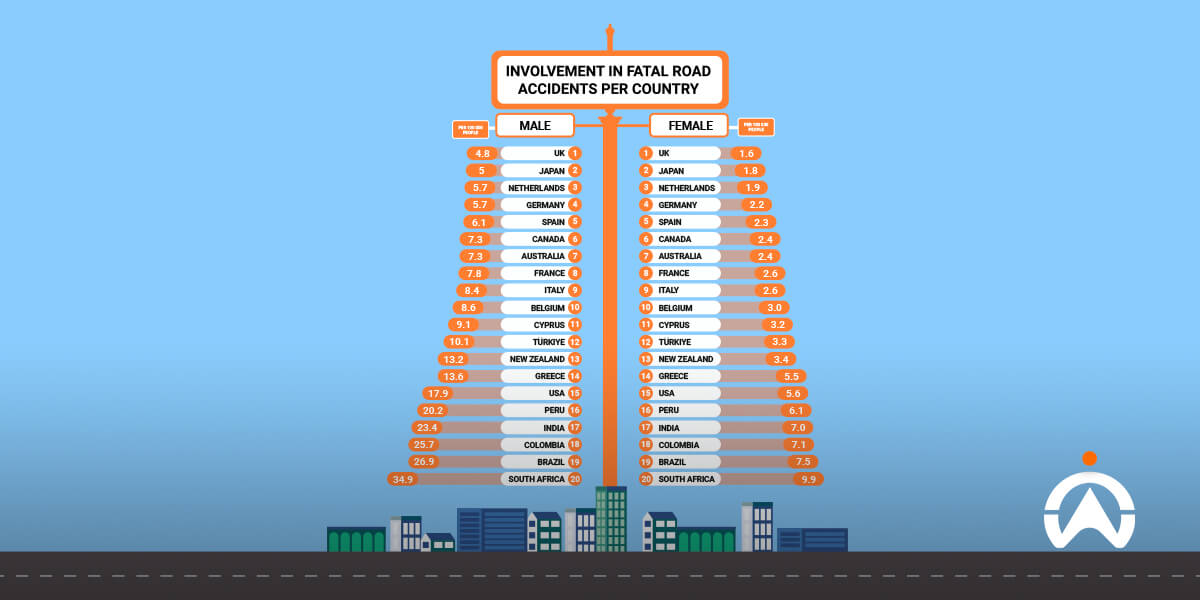
The involvement of men versus women in fatal road accidents globally

While the above data is US-based, research revealing global statistics tells the same story when it comes to fatal road-based accidents.

men_versus_women_in _fatal_road_accidents_globally

There’s always room for improvement: men’s and women’s top tips for becoming more responsible drivers

Whether you’re a male or female driver, doing some introspection on your daily driving behaviour will help you become a better driver by identifying and working on improvement points. And, because men and women are different, what can be better than providing a tailored list for each?

Men, this is how you can step it up a gear

  1. Don’t let other drivers’ irresponsible behaviour affect your focusCareless driving from other drivers will make anyone’s blood boil, but two wrongs won’t make a right. Keep your cool and maintain a defensive driving approach to counter the risky behaviour of others.
  2. Avoid distractionsDistractions come in many shapes and forms. From smoking in your car to listening to loud music or replying to a text message, you’re busy entertaining a distraction if your eyes and mind are not where they should be — the road.
  3. Adopt and keep a growth mindsetA growth mindset involves looking at situations from a there’s-always-something-to-learn perspective. No matter how careful you drive, never settle for thinking your driving doesn’t require any improvements.

Gals, to keep the bragging rights, consider these points

  1. Drive with confidenceWith statistics showing women as less likely to be confident about their driving abilities, it’s important to understand that a lack of confidence on the road can be dangerous. The best way to improve your driver confidence is to stay focused on the road and be ready for anything.
  2. Avoid multitaskingIt’s something women are notoriously good at, but when weighing up the pros and cons of multitasking while driving, your safety and the safety of others should be the first priority. While women are known to take fewer risks on the road and drive carefully, multitasking remains tempting.
  3. Don’t let emotions distract youEver had to drive away after receiving bad news or having a fight with a loved one or partner? Take a moment to clear your head before hitting the road to ensure you drive with a focused mind.

men's_and_women’s_top_tips_for_becoming_more_responsible_drivers

Explore Cartrack’s expert tools for better driving

Nobody’s perfect, so having reliable tools that promote improved driving while prioritising vehicle safety is something no driver should be without.

As for gender-based driving performance, keep up the good work, ladies! It’s official: women drivers have outshone the male drivers of Mzansi. And, having more conscientious, focused drivers on the road elevates everyone’s road-based safety.

Speaking of safety, Cartrack’s SaaS-based platform is developed with drivers in mind. Here are four ways Cartrack’s revolutionary tech can help improve your safety:

  • Advanced vehicle trackingA car is a priceless lifeline, so make sure you protect yours. With a state-of-the-art vehicle tracking device installed in your car, backed by our 90%+ independently-audited vehicle recovery rate, you can keep your vehicle safe from hijackings and theft.
  • Real-time crash detectionDon’t end up stranded in the event of an accident. With smart IoT technology, we receive real-time crash notifications, allowing us to dispatch live-saving emergency responses on your behalf and notify the most important people in your life.
  • Detailed driver behaviour reportsMake sure you drive safely with insightful trip reports. With the touch of a button, you can review your performance on common risky driving behaviours like harsh braking, fast cornering, excessive speeding and more, helping you be more mindful of your road behaviour so you can make improvements.
  • Peace of mind with Catrack ProtectorStuck on the side of the road with no petrol and no one to call? Cartrack’s Protector is there for you when you’re stranded or in need of help, giving you access to roadside, legal, and medical assistance so you’ve got what you need to stay safe.

Stay on the winning side of vehicle-safety stats, contact Cartrack Zimbabwe today to increase the safety for you, your loved ones and those around you with our industry-leading vehicle-safety solutions.

Workforce Management Software: 8 Unique Ways To Optimise Your Fleet

An optimised workforce is like the beating heart of a business.

It takes sophisticated technology and data to ensure that staffing levels meet the demands of customers, meet task deadlines and stay within budget.

Fleet managers need workforce workforce solutions to help them manage their drivers and activities at any time of the day.

Let’s dive into how workforce management software can help you optimise your workforce and get the most out of your fleet.

In this article, you will:

  • Learn the definition of workforce management and fleet optimisation, and why it is important for your business profits
  • Uncover the five core functions of workforce management software
  • Identify the common challenges in workforce management so you can correct these
  • Find the top eight benefits of workforce management solutions for your business
  • Learn how to improve the workforce management in your fleet, using Cartrack’s software platform

What is workforce management?

This involves optimising and tracking your organisation’s most important resource – people.

To achieve successful workforce management, employers should strive to strategically allocate their people and resources, track staff attendance and comply with workplace laws and regulations that change. This will optimise the productivity of their workforce and reduce various risks, such as paying employees less than what they should be paid due to mismanagement.

In addition, businesses can improve customer service and overall turnover, because they are not hiring unnecessarily, but rather optimising the processes for retaining their existing employees, saving them extra money on recruitment costs. This will also save them time spent on admin so they can free up time to focus on better ways to meet their customer’s needs and grow their business.

In addition, Workforce management contains processes that are well-integrated, especially if an organisation has multiple departments with many employees, which could make it more difficult and complex to manage these employees. They need to be in sync and communicate well together to get the work done.

This is where a good work management software solution comes into play but how can we apply this to a business?

What is an example of effective workforce management software?

In the fleet management industry, a software solution that offers work log reports and driver ID tags, such as Cartrack’s, can help a fleet manager improve his workforce and easily manage his drivers on the road.

The technology makes it compulsory for drivers to tap the tag sensor in the vehicle or machine in order to start or stop operating it. This unique tag can, in turn, indicate their actual working hours. These times are then fed through to the fleet platform where a fleet manager can pull up a report with all the vehicle activity data, and even receive alerts letting them know when drivers clock in or out. This gives them full visibility of driver attendance and fleet activity, which helps them pay wages more accurately, and improves employee accountability.

Another reason fleet managers love Driver ID tags is the control it gives them. They can assign drivers certain tags that only work for certain vehicles. This helps them prevent any unauthorised usage of vehicles or equipment, helping them protect and manage their fleet. It’s also a great time saver. All this data and activity is recorded so managers don’t need to manually do this, which frees them up to focus on more pressing tasks.

effective_workforce_management_software

Why is workforce management important?

If you choose a workforce software solution, there are many ways it can benefit your business. Here are just a couple of key examples why it is important and how it can make your operations more productive, cost-effective and compliance-friendly.

  • Reduced compliance violations: Easy tracking of employee attendance ensures that companies are on top of their payroll and are complying with the state labour laws.
  • Less workplace safety incidents: More safety violation alerts will ensure that you manage environmental health and safety incidents more effectively.
  • No staffing shortages: Processes for existing staff allow them to be more productive, reducing the costly need to hire new staff.
  • Cost management: With a workforce more optimised, businesses can retain their staff better, and they won’t incur additional costs hiring new staff, helping them reduce unnecessary recruitment costs.
  • Efficient processes and workforce: Staff will naturally be more productive as business tasks are organised and allocated more strategically.

Most businesses need a quick and easy solution that include these basic examples, which is why workforce management software is a great option, no matter what industry you’re in.

Here are the top eight benefits of workforce management solutions

Now that you know some common pitfalls in workforce management, here’s how a software solutioncan help address those challenges.

  1. Control staffing costsSoftware technology will enable employers to know exactly how much labour is needed to complete all their tasks. It will give them a better overview of tasks to meet business demands and will help them easily pinpoint where staff is over and under-resourced, so they allocate staff accordingly. If there’s overstaffing and excessive overtime is being used, businesses can incur major unnecessary costs in cases where staff and overtime are excessive, so just being able to identify and rectify this can save a business money.
  2. Effective payrollThere’s a way for you to have a more reliable payroll system in place, with the right software, which will automatically analyse hours worked, pick up overtime and will then calculate how much employees need to be remunerated. This will eliminate repetitive data entry and manual calculations, in turn minimising human errors and payroll inefficiencies.
  3. Easily compare with competitorsSoftware helps businesses create benchmarks against other competitors in a similar industry or size, especially when it comes to attendance data and productivity levels of their employees. If their workforce isn’t measuring up to competitors, a business has the tools to take action. This is important because if they don’t, competitors can provide better service and dominate the market by being more efficient.
  4. Measure the productivity of your workforceA software platform will help you create key performance indicators and task schedules for your staff. You can also analyse their progress with tasks, using reports from the platform. This will help you see if they are being productive. You can also analyse if schedules are effective and see if changes are needed for your workforce to meet business objectives.
  5. Create smarter schedulesWith real-time data, employers can easily see which shifts need to be filled, so they can immediately fill them before they face a staff shortage. They can also create schedules by location, department or job for improved scheduling in the company.
  6. Minimise compliance risksEasily manage leave balances and employee benefits that comply with state laws, using a software system that has automated workflows that track this data. A system can also have integrated online recordkeeping and documentation for compliance. This is helpful if there’s ever an audit by a government agency or if there is a potential breach of compliance as your business will have the data to mitigate the situation and avoid putting the company’s reputation at risk.
  7. Empower your employeesUse workforce software to improve communication with your employees, so you can make them feel more informed and help them reach your business standards easily. This will make them feel more empowered and motivated at work. You can also empower your employees further, by creating fair schedules that help them also meet their personal obligations, while still meeting the demands of the business. For example, they can have a say in their schedules with self-service features to update availability, swap shifts, request time off, and pick up extra shifts.
  8. Fewer errors and less adminAutomate the attendance of your employees to minimise any human errors. A system can accurately calculate how many hours an employee has worked and automatically send that through to payroll. This creates less admin for HR because they won’t need to manually call the employees regarding hours worked or if there are any changes in the system.

If you are a fleet manager, optimising your workforce is important to improve the logistics, driver behaviour standards, and bottom-line costs of your fleet. We’ll give you further insight into workforce management software that can help you manage your workforce better so you can improve the processes in your fleet.

Here_are_the_)top_eight_benefits_of_workforce_management_solutions

Five core functions of workforce management software

According to Garner Inc, these are five principle functions that are found in a typical workforce management solution. Next time you’re shopping around for a solution to optimise your workforce, make sure you tick these five crucial boxes.

  1. Labour scheduling: A software system should give you the insight to see how many employees are required for a particular job at any given time. You will then be able to strategically divide the labour in your workforce and ensure that the workload is evenly spread out, the demands of customers are met and all skill sets are used at optimum.
  2. Data collection: You will need data and detailed information from a platform so you can create reports, compare processes driven by data, and make decisions, to assess if your workforce is working for you, or if there are areas that are lacking.
  3. Leave and absence management: An automated leave management system makes it easy to track, approve, or deny employee leave requests so you comply with leave regulations.
  4. Task and activity management: Maximise productivity with your staff members by giving them the software tools they need to perform duties, which includes task management scheduling, enabling employees to be assigned to the right activities so they are updated on company tasks.
  5. Attendance and payroll: A system will help you ensure attendance data is captured easily and accurately and that staff are paid for the hours they work, ensuring that there are fewer payroll errors.

We could quickly give you all the solutions to help you better manage your workforce but it will be way more beneficial if you understand the challenges first.

What are the challenges of workforce management?

If you answer “yes, that’s my challenge” to any of these, it is a good indication that you are in need of a software platform that can help in one or more of the following ways.

Employee time attendance and tracking

If your employees have to manually log their hours when signing into work, it could cause more errors when tracking their hours worked, create unnecessary paperwork, and take longer for management to process their working hours. This challenge can easily be solved with an attendance-tracking software solution.

Scheduling and rostering

You might require your employees to work different shifts scheduled for different parts of the day, and you might require more staff depending on project demands during certain periods. Paper-based rostering for this would take up too much time and create inefficiencies, which is why work automation will help managers face the challenge of employee rostering.

Managing absenteeism

Unplanned absences can test a business due to the extra costs of covering the absences and the losses incurred while the absent employee is replaced. It will be challenging for a business if they cannot manage absences, especially with a large workforce, where they will need immediate replacements to fill important roles, such as in a pressurised sales environment.

Employee self-service

Employee Self-Service solutions allow employees to view their rosters, swap shifts, request absence or annual leave, and view their information. Unfortunately, it will not be possible to accommodate everyone’s requests at the same time and it is often necessary to get through these requests to ensure the company still functions fully. If this information is not stored digitally, information can get lost, which can cause issues with labour compliance and create a potential admin crisis.

Why workforce optimisation and management should be a priority

Fleet optimisation means making the most effective use of your fleet, cutting costs, maximising productivity and ensuring best practices for your operations. It’s also about getting the most out of your vehicles or assets for less.

Basically, better managed and more optimised fleet means more productivity, deliveries, satisfied customers, revenue and profit. And that means, less costs, mileage, fuel usage, emissions released and drivers, and vehicles needed – every fleet manager’s dream.

Why_workforce_optimisation_and_management_should_be_a_priority

How to improve your workforce and fleet with Cartrack’s software

Here’s how a telematics software platform from Cartrack Zimbabwe can help you take your fleet from good to great.

  • Create driver schedules and communicate effectively with your driversSchedule drivers to jobs or deliveries easily. Use Cartrack Delivery to view driver statuses and assign jobs in real time to your nearest available drivers. Drivers can also accept or reject tasks and review their schedules ahead of time. This allows them to communicate with managers via the mobile app, and notify them on the progress of deliveries, just by tapping the status buttons on the app. Managers can also view driver statuses to easily assign tasks to their nearest available drivers, and use the magic optimising tool to ensure the quickest and safest routes are taken for faster delivery turn-around times.
  • Enhance driver training with data insightsYou can receive detailed, automated driver behaviour reports for each driver from the Cartrack Zimbabwe platform. These reports can show you where your drivers are speeding, braking harshly, idling excessively and cornering fast. You can then use these insights to help grow your workforce by showing drivers where they need to improve, making them more accountable, and creating a safer, more efficient driving culture in your business.
  • Keep your whole workforce connectedSeamlessly connect your drivers on the road with your team in the office, keeping everyone up to date with the latest fleet activities. When your drivers are assigned jobs, they can automatically keep you updated on their progress in real time, allowing your office staff to see the status and progress of every job. If a vehicle breaks down or is delayed, fleet managers can immediately view and use the insights from Cartrack’s GPS tracking software to assist their drivers.
  • Accurate and easy fleet payrollGive each of your drivers ID tags that require them to tap the sensor on the vehicle or equipment in order to start and stop using it. Fleet managers will receive automated log reports, indicating the exact hours spent on a job. You can use these reports to help accurately pay staff wages – eliminating payroll errors and any wage disputes.
  • Increase driver safety and productivityUse AI-powered and live-streaming camera technology to track driver behaviour. These cameras are designed to audibly alert drivers in real time when it detects forms of dangerous driving gestures like fatigue, smoking, cell phone use and more, allowing your drivers to quickly rectify their behaviour and prevent a possible collision. This technology makes drivers more aware and accountable for their actions, which in turn makes them more productive and professional when on duty.

Drive your workforce to optimum success with Cartrack

When it comes to finding the best workforce management tool for your fleet, Cartrack is miles ahead of the game. With over 15 years of experience in providing businesses of all sizes with industry-leading telematics software, let Cartrack take your fleet’s workforce from average to optimal.

Chat with Cartrack Zimbabwe today.

These Countries Are Banning Petrol: Surprising Secrets Exposed

The Paris Climate Agreement and more recent COP26 or Glasgow Climate Pact allowed nearly 200 countries to negotiate possible actions to substantially reduce harmful emissions, leading to many pledging a ban on fossil fuel vehicle sales before or by 2040.

Here’s what countries like Norway, China, and the US are doing to reduce emissions and how things are looking for future fossil fuel vehicle sales for SA citizens like you and me.

Why there’s a global need to fight climate change with clean energy

Climate change should be a well-versed concept with most global citizens by now, posing an existential threat to human existence due to harmful man-made emissions, subsequent planetary warming, and other disastrous consequences. With harmful emissions increasing annually, reducing greenhouse gas emissions has become a global priority.

Why_there’s_a_global_need_to_fight_climate_change_with_clean_energy

Should fuel-run vehicles be banned? What the experts say

Three experts in the fields of economics and business administration have weighed in on whether banning ICE (Internal Combustion Engines )vehicles is beneficial and feasible.

Andrew Yates, professor at Chapel Hill, Stephen Holland, professor at the University of North Carolina, and Andrew Mansur, professor at Dartmouth College, agree that banning ICE vehicles will have significant climate-related benefits. However, the current solution, primarily EVs, could be a viable substitution to keep the global economy going.

With the three experts agreeing that EV (Electric Vehicles) vehicles have high positive transformative potential, they conclude that banning fossil fuel vehicles will be beneficial as long as the benefits and costs for this transition are carefully balanced.

Pros and cons of fossil fuel cars

The first thing you need to know about fossil fuel vehicles is how they are powered and what keeps them moving. Fossil fuel vehicles use internal combustion engines that require petrol, diesel, or kerosene and are also known as ICE vehicles.

While there are some concerning after-effects to using fossil fuel cars, there are also some thought-provoking pros, so let’s unpack the good and the bad of fossil fuel cars:

  • Fossil fuel vehicles utilise a more reliable energy source. Sparse charging points can affect long-distance driving, while a tank of petrol lasts longer and filling up is easier.
  • ICE vehicles are also significantly cheaper than EVs, making it easier for most people to acquire and use, especially in South Africa.
  • Fossil fuel-powered vehicles are notorious for emitting dangerous greenhouse gases and being bad for the environment, making them a fairly unsustainable future fuel source.
  • Fossil fuel-powered vehicles can be dangerous if treated irresponsibly. Besides being highly flammable, the unearthing process can cause devastating oil spills and a toxic environment.

Want to know which vehicles are being phased out? Here are some examples of fossil fuel vehicles

Passenger vehicles like cars and buses make out the majority of fossil fuel vehicles on the road today. Popular cars on South African Roads include bakkies, SUVs, hatchbacks, taxis, and buses. These means of transport primarily depend on fossil fuels, which need to be replaced with a cleaner and more sustainable energy source.

Their secrets exposed: A list of top countries banning fossil fuel vehicles

While there is a whole list of countries banning fossil fuel vehicles, some of them plan to make it happen sooner rather than later. Countries like Britain, Israel and Singapore, for example, all have matching goals of banning ICE vehicle sales by 2030, with other countries across the globe making plans with a similar sense of urgency.

Norway: Banning all ICE vehicle sales by 2025

With a consensus between left and right-leaning political parties established, Norway is all set to switch to a full-EV mode in 2025. A quarter of all vehicles in this small European country already consist of EVs, making the year 2025 that much more attainable.

Apart from a decent percentage of EVs as part of Norway’s overall vehicle count, residents also like to travel via bicycle, and the country is currently one of the most bicycle-friendly countries in the world — further contributing to the country’s promising attempt to minimise its carbon footprint.

The EU: Aiming for 2035 with a minor setback from Germany

With its power grid under pressure due to a drastic decrease in gas supply from Russia, Europe is facing blackouts if citizens don’t make an urgent effort to limit their energy usage. While these blackouts threaten the EU’s plans to ban fossil fuel vehicle sales, the need for increased sustainability is making them stick to their decision with only a minor change.

EU legislators successfully voted to ban sales of ICE vehicles by 2035, with the legislation subsequently approved by the EU parliament. However, Germany caused a setback by changing its stance to still-approved sales of ICE vehicles beyond the agreed deadline, as long as these vehicles run on synthetic fuels.

This happened before the final vote, complicating things. According to a Twitter statement by German transport minister Volker Wissing, the final agreement is that ICE vehicles can still be registered post-2035 if these vehicles exclusively run on CO2-neutral fuels.

China’s setting its sights on 2030

China is experiencing a significant increase in EV vehicle sales, and the country plans to reduce ICE car sales to only 50% by 2035. The other 50% of new car sales will be EVs, hybrids, or fuel-cell vehicles.

The US is looking at 2035

As a country that covers a vast stretch of land with a centuries-cold urban design that makes most residents wholly reliant on vehicles, phasing out ICE cars by 2035 will be challenging. Luckily, the US is ready to take on this mission on a State-by-State basis, with large states like California already mandating a 35% EV sales increase of its total car sales by 2026 with its Advanced Clean Car II Regulations.

Burning questions answered: Why are countries banning petrol?

  1. What countries are banning petrol?

    Banning petrol and other fossil fuels translates to banning ICE vehicles, and about 30 countries and states worldwide have pledged to achieve this goal before or by 2040. Developed countries include Canada, Germany, China, Italy, Japan, and the UK. Developed countries include Kenya, India, Cambodia, Mexico, and Rwanda.
  2. What country does not use fossil fuels?There is currently no country that is a hundred per cent fossil fuel-free; however, a few are notably more independent, with some major cities running exclusively on renewable energy.

    For example, Iceland’s fossil fuel usage contributes a mere 11% to its overall energy requirements, with other countries like Tajikistan, Sweden, and Switzerland close on their heels. Cities running entirely on renewable energy include Greensburg, Kansas; Aspen, Colorado; and Burlington, Vermont.

  3. Will petrol cars be banned in Australia?Australia is not one of the countries that pledged a nationwide ban on ICE vehicles by 2040. However, due to the EU and other key countries’ bans, the lack of production will affect Australian consumers’ ability to purchase fossil fuel vehicles.

    Moreover, while there is no nationwide ban, ACT or the Australian Capital Territory announced that it is implementing an ICE vehicle ban in its jurisdiction, covering several major Australian cities.

  4. What will happen to classic cars when petrol is banned?While it’s impossible to confirm if and when petrol will be banned, vehicles using petrol will eventually be completely phased out.

    Now, before we start picturing vehicle scrapyards bursting at the seams, it’s important to note that LPG gas conversions and synthetic EV kit installations are both viable repurposing options. And, as ICE vehicles have an estimated lifespan of fifteen years, it is safe to assume that once the most recently-sold ICE vehicles reach this age, they’re likely to have been repurposed in one of these ways.

  5. When will petrol stop being sold?Fuel sales will likely decrease with the phasing out of petrol and diesel-powered vehicles in so many countries in the next decade or two. However, if and when the sale of petrol will be stopped completely remains to be seen as it serves other purposes than fuelling ICE vehicles like energy production.

Here’s what’s in store for Mzansi

It’s safe to say that banning ICE vehicles in South Africa may be a lot more complicated than in other countries, as fossil fuel cars are currently an integral part of our transport system and economy. Another issue affecting South Africans is ever-present load shedding, and a rising number of EVs’ charging requirements will undoubtedly place significant strain on an already fragile grid.

However, Mzansi still needs to meet its revised NDC or Nationally Determined Contribution as set out by the United Nations Framework Convention on Climate Change (UNFCCC), which requires a 350 – 420 million tonnes reduction by 2030. Achieving this goal will undoubtedly require a dramatic reduction in ICE vehicles on the road, as almost 90% of transport emissions in SA are from road-based transport.

South Africa is currently considering a ban on ICE vehicles for freight and passenger use by 2035 in conjunction with the large-scale construction of Zero Emission Vehicle (ZEV) infrastructure.

With EVs becoming more affordable as technological developments progress, the preferred use of EV vehicles is starting to look like a reality for SA motorists and companies.

Cartrack can help you with a seamless transition to an EV-powered fleet

Doing a complete EV transition may not be viable for many companies. However, a gradual change from ICE vehicles to EVs still helps your company contribute to a greener future.

Cartrack’s sophisticated fleet management system allows you to:

The healthier your vehicles, the more sustainable your fleet, so don’t let defective combustion, poor vehicle health, and dysfunctional motor parts stand in your way of achieving a greener, more sustainable fleet.

Whether you own a personal vehicle or manage an entire fleet, Cartrack is your partner in building a greener, more sustainable future.

Contact Cartrack Zimbabwe today!

The Best Fleet Compliance Checklist You’ll Ever Need

Managing a fleet involves many responsibilities and one that takes a top spot is ensuring fleet vehicles and drivers meet the required compliance standards

Besides securing a safe work environment for drivers and their designated vehicles — compliance adherence also helps businesses avoid negatively impacting productivity and budgets with unnecessary fines, penalties, and even accidents.

A detailed compliance checklist ensures businesses and fleet managers cover all their bases. Luckily for you, we’ve compiled a guide that comprehensively lays out everything you need for the ultimate compliance checklist.

The Basics of Fleet Management Compliance

It’s important to understand fleet management compliance and why it’s crucial for safe and effective fleet management. It helps businesses understand how much they will benefit from implementing a solid compliance checklist.

One of the most important goals of fleet compliance is to guarantee the safety of drivers, assets, and members of the public. Staying fully compliant involves implementing measures that promote fleet safety and driver compliance. Compliance requirements and an advanced telematics platform help businesses determine their safety standards and how to maintain them.

What is the importance of fleet management compliance?

Fleet compliance goes hand in hand with fleet risk management. Both are crucial for identifying issues that can make a fleet unsafe or non-compliant and then finding ways to avoid these issues and make the necessary improvements.

How the Procedures in Fleet Management Link to Compliance

Foolproof fleet management software is a great way to identify compliance-related issues that need attention. It’s also an intelligent guideline for creating a custom compliance guide for your business. Discover some of the main fleet management components you can use to create yours.

Vehicle management: Regular inspections ensure that vehicles are always roadworthy and function as they should, contributing to a safe working environment.

Driver management: Tracking driver behaviour and managing an organised roster helps identify unproductive driving habits while ensuring drivers are well-rested, contributing to safety-related compliance.

Movement tracking: Making sure vehicle movements are always efficient with optimised routes is part of efficient fleet management. Tracking your fleet’s movements helps fleet managers proactively identify and deal with any compliance issues.

Workflow monitoring: Monitoring individual and fleet-related workflows helps create efficient fleet management systems. This enables fleet managers to identify the need for workflow adjustments and implement them accordingly.

Admin management: Admin is not every fleet manager’s favourite part of the job, but leaving a paper trail of detailed reports backs up any compliance-related claims and is a valuable source of information for future improvements.

A solid telematics system simplifies fleet management and drastically reduces the admin burden.

What types of fleet management documents are used?

Fleet owners or managers use fleet management documents to record information about fleet vehicles. These documents are often in the form of checklists for specific procedures to simplify the compliance process.

Companies often use a fleet vehicle inspection checklist in pdf format. This ensures all fleet vehicles are road-worthy, contain the necessary equipment, and are generally issue-free. Using a daily vehicle inspection checklist in Excel format can add more functionality to how the form is used.

When in doubt, it’s easy to download free daily truck inspection checklists or vehicle inspection checklist forms as a base for creating customised versions that fit your business’s needs. What all of these documents and checklists have in common is that they are used to monitor fleet-related movements and ensure that fleet drivers and vehicles meet compliance standards.

What_types_of_fleet_management_documents_are_used?

What Fleet Managers Need to Know: The Only Compliance Checklist You’ll Ever Need

With a streamlined compliance process where fleet managers can track all aspects of their fleets, including tax compliance, internal audits, and inspections, you can avoid possible penalties while keeping your accounting up to date and your drivers safe.

Look no further if you’ve been looking for the ultimate checklist to keep your fleet compliant — here’s what you need to do to stay on top of things.

1. Prioritise tax compliance

Benjamin Franklin famously said: death and taxes are the two things that are certain in life. When it comes to fleet management compliance, the latter certainly rings true. Companies must follow local tax laws to avoid fines and meet legal compliance standards.

These essential tax streams can be added to your compliance to-do list:

VAT: Value-added tax

PAYE: Pay As You Earn

UIF: Unemployment Fund

SDL: Skills Development Levies

In the US and Canada, fuel tax forms an essential component of companies’ tax compliance, as fleet managers must be able to indicate where fuel taxes go. They do this by monitoring fuel usage.

The IFTA or International Fuel Tax Agreement allows 48 US states and ten CA provinces to collect data, including travel miles, fuel purchased, and purchase locations.

While different countries may have different tax laws and compliance requirements, tax compliance remains an integral part of global fleet management compliance, and using a sophisticated SaaS platform helps companies gather the data they need to stay compliant.

2. Conduct regular vehicle inspections

As part of your overall compliance checklist, a fleet vehicle maintenance checklist can help you ensure your fleet vehicles are roadworthy and in tip-top shape. Regular vehicle inspections contribute to compliance best practices and help identify crucial defects while raising fleet safety standards and increasing fleet longevity.

Keep your fleet on the road with an expert vehicle inspection checklist

Start the process by jotting down the vehicle’s odometer reading, the last six digits of its VIN, license plate details, make and model, and the designated driver’s first and last name.

These details help you keep track of the vehicle’s mileage, age, identification markers, and assigned driver during an inspection.

When done, follow the five-step checklist below to do a comprehensive inspection:

1. Pre-Startup : Check the oil, transmission, and washer fluids

2. Interior : After starting the engine, check if the following is in working order: Fuel level, hooter, aircon, interior lights, brake pedals. Then, check the seatbelts and upholstery. Make sure the first aid kit is stocked and the vehicle has emergency tools like flares, flashlights, and spare wheels.

3. Mirrors/windows : Test the windscreen wipers and make sure the mirrors are clean.

4. Exterior : Start by checking the head-and-taillights, turn signals, and hazard lights. Then move on to the tyres and check for wear and tear and the spare tyre pressure.

5. Undercarriage : Check for fluid leaks and any loose or hanging objects

This checklist helps identify issues that may affect the fleet’s compliance status. By flagging these issues and taking immediate action, businesses can avoid further compliance and safety issues.

3. Keep tabs on licence & permit validity

Staying within the boundaries of the law is a non-negotiable part of fleet compliance. This can include ensuring registrations and licences are up to date and valid to keep fleet cars on the road and avoid related fines. Staying on top of the following fleet-related admin helps fleet managers remain compliant:

– Obtain and regulate proper permits for your vehicles

– Register vehicles with the proper authorities

– Stay on top of driver’s licence renewals

– Make sure vehicle registration renewals are done on time

4. Run internal audits

So, let’s say you’re implementing a new fleet management system or looking to identify pain points in your current one. Conducting internal audits can help you do both while also being a massive help in fleet compliance.

A comprehensive audit doesn’t only rate all aspects of fleet management, it also provides better insight about whether a company’s processes are compliant with government regulations, fleet management requirements, and best practices. What’s not to like about killing two birds with one stone?

The ultimate fleet management audit checklist:

To help fleet managers and companies benefit from staying compliant, here is a detailed fleet management audit checklist:

Fleet Management Policy – Review fleet safety and health and safety policies.

Vehicles – Review vehicle inspections and forward plan for vehicle replacement. Assess vehicle monitoring procedures. Analyse fuel usage.

Drivers – Assess drivers and review staff training. Review licence validity and insurance arrangements. Retrain drivers where needed.

Third-party – Review and assess third-party providers.

Fleet Security – Review and assess fleet security.

Operationally – Assess and review inventory.

Once all the data has been assessed and reviewed, it’s important to take three final steps:

– Review and assess recommendations from previous audits

– Review the current audit’s findings

– Get the findings approved by the relevant authority in the company

After completing all of these steps, you have conducted an in-depth audit of your fleet on the aspects that matter most.

5. Know your fleet drivers’ hours of service

Even if a company only has a few fleet drivers, knowing their exact hours of service or HOS on top of everything else that needs to be done is virtually impossible. However, keeping track of each driver’s HOS is crucial to remain compliant with health, safety, and environmental requirements. Here’s why.

Drowsy drivers risk their lives behind the wheel and pose a genuine danger to themselves and the public. Fleet managers that keep track of HOS can avoid drivers’ fatigue by giving drivers enough time to rest after a shift so they start a new one refreshed.

Additionally, drowsy drivers are likelier to exhibit lousy driving behaviour, leading to cost-related and environmental slipups, including increased fuel costs and unnecessary CO2 emissions from excessive idling and speeding.

Managing HOS leads to improved driver fatigue management and a safer fleet.

The_Only_Compliance_Checklist_You’ll_Ever_Need

Experience Effortless Compliance With Cartrack Zimbabawe

Here’s how Cartrack’s advanced telematics-based features can help make staying on top of compliance, safety, and risk management a seamless and painless process:

– Receive automated updates on licence renewal, permit, and registration compliance with the MiFleet accounting software which is seamlessly integrated into the Cartrack Zimbabwe fleet management platform.

– Enable fleet managers to keep track of vehicle services and scheduled maintenance, ensuring proper safety compliance via the MiFleet system.

– Ensure fleet drivers are well-rested by keeping track of their HOS. Cartrack’s SaaS platform allows you to track driver shifts and generate shift reports, facilitating proactivity and continuous improvement.

– Use Cartrack’s AI-powered camera solution to give drivers real-time audible alerts for risky and distracted driving behaviour so they can rectify it on the spot, boosting driver accountability and safety.

Achieving fleetwide compliance can be a difficult, if not, impossible task. To make compliance adherence as easy as possible, especially when it comes to acquiring data and accurate reporting – a sophisticated telematics system is every fleet manager’s best friend. Cartrack is a dominating SaaS provider, with over half a million active fleet management units in South Africa alone.

Chat with a Cartrack agent today for a smart tailor-made solution to all your fleet compliance needs.

Fleet Risk Management: Secrets Revealed To Make Your Fleet Thrive

Are you ready to discover the hidden ingredient that separates successful fleets from the rest? Successfully identify, assess, and mitigate potential issues in your commercial fleet that can impact your organisation’s goals and objectives with fleet risk management.

How can risk management achieve all this? Let’s get started.

What makes a fleet safe? — Risk management

You’ve probably heard of the saying “better safe than sorry”. It’s the principle behind risk management. Fleet risk management is the secret weapon companies use to ensure their drivers, other employees, and vehicles are always safe and secure.

We know life happens, so having a backup plan is important to mitigate those risks. This is where your plan B or risk management comes in. This hidden gem helps you foresee and prevent bad things from happening, like accidents, breakdowns, or theft. But effective risk management isn’t just about avoiding problems, it’s also about creating value.

How? Well, if you own or manage a fleet of vehicles, you want to make sure they’re operating at their best and ultimately working hard for the business, right? Managers must minimise the risk of breakdowns or accidents, to avoid expensive repairs and downtime. By implementing safety policies, conducting driver training, and maintaining vehicles regularly, you’re not just reducing risk, you’re also improving performance and cutting fleet costs in the long run.

What is the role of a fleet risk manager?

The fleet risk manager plays a crucial role in overseeing and managing risks associated with operating a fleet of vehicles. They are responsible for identifying potential risks and implementing strategies to mitigate them.

Their duties may include:

  • Developing and implementing safety policies and procedures to promote driver safety and minimise the risk of accidents.
  • Conducting driver training to improve skills and ensure compliance with safety policies and regulations.
  • Monitoring vehicle performance and maintenance to reduce the risk of breakdowns and improve fleet efficiency.
  • Implementing telematics technology to track driver behaviour and vehicle performance, using gathered data to identify areas for improvement.
  • Managing insurance and claims processes to minimise financial risk.
  • Staying updated with industry regulations and best practices to ensure compliance with the latest laws.

Fleet managers work tirelessly to protect their fleet at all times. They not only safeguard their vehicles and the business’s bottom line but also prioritise the safety of their employees. After all, the drivers are the ones behind the wheel, interacting with customers, delivering services, and moving assets from one location to another.

What_is_the_role_of_a_fleet_risk_manager

Unlock the hidden benefits of proper fleet risk management

See immediate results within your fleet with risk management. Unlike hidden secrets that take ages to reveal their benefits, risk management delivers instant advantages from the moment it’s implemented.

Reap the benefits:

1. Increased returns on investment: By keeping your fleet in top shape, you can avoid unexpected downtime and other costly issues, ultimately leading to higher returns on your investment. This can help you save money and invest in other important areas of your business.

2. Lower insurance premiums: When you manage fleet risks, you show your insurance company that you’re committed to safety. This can lead to lower insurance premiums, which can ultimately save you money.

3. Reduced business liability: If one of your drivers causes an accident, it could spell disaster for your business. By taking steps to reduce risk and improve safety, you can protect your business from legal battles and maintain a positive reputation in the market.

4. Heightened work focus: When you prioritise fleet safety, you create a culture that encourages your employees to take extra precautions with their tasks. This can help keep everyone in your organisation safer and more focused on the task at hand.

5. Less guesswork: With a risk strategy in place, you can predict and prevent potential issues before they happen. This helps you make more informed decisions leading to better outcomes for your business.

Why is fleet risk management important?

It’s reported that the risk management software market was valued at USD 27.80 billion just two years ago, in 2021, and is now projected to reach USD 86.53 billion by 2030. Many businesses are falling in line with investing in their fleet’s safety.

If you’re not yet convinced that your business needs a fleet risk manager, here are a few key aspects that could have you rethink your approach. Risk managers help:

Reduce costs – By preventing accidents, vehicle downtime, and legal issues, fleet risk management can save your business money in the long run. It also helps you optimise your resources and allocate them to other priorities.

Remain compliant – Compliance with local, provincial, and federal regulations is essential for any business operating a fleet. Failing to comply with regulations can result in hefty fines and legal issues that can damage your business’s reputation and harm your budget.

Improve driver safety – Fleet risk management helps you promote a safety-first culture in your organisation, reducing the risk of accidents and injuries. This can also lead to reduced insurance premiums and a more favourable risk profile.

Improve productivity – By minimising operational interruptions, fleet risk management can improve your fleet’s performance and productivity, leading to increased savings and better resource allocation.

Why_is_fleet_risk_management_important

Areas focused on by risk management

Fleet risk management covers a wide range of areas related to operating a fleet of vehicles. Here are five areas fleet risk management covers:

  1. Driver safety
    This involves implementing safety policies and procedures to promote driver safety and reduce the risk of accidents. This can include driver training, monitoring driver behaviour and implementing telematics technology to track driver performance with AI cameras and audible alerts.Monitoring drivers via telematics data can provide behavioural insights such as tailgating, late braking, or speeding. This can then be addressed through coaching safe driving and result in dramatically improving fleet and driver safety.
  2. Insurance and claims management:Fleet risk management includes managing insurance policies and claims processes to minimise the business’s financial risk. This can include working with insurance providers to ensure adequate coverage and managing claims processes to minimise downtime and costs.

    Fleet managers regularly review their policy terms with insurance providers to ensure the fleet’s insurance coverage is up to date, and aligned with business needs. This helps to explore opportunities for optimising coverage while minimising costs.

  3. Compliance and regulationsOne of the biggest headaches fleet managers experience is keeping up with the rules that govern commercial fleet operations and the related paperwork.

    Fleet vehicles should be fit for purpose, inspected regularly, and follow a planned maintenance schedule. All drivers should be fully trained to operate their assigned vehicles, be fully aware of the company’s safety policies and know the broader compliance regulations that it operates under. Plus, drivers should be in good health and hold a valid driving licence to drive.

  4. Fleet maintenanceMaintenance is a vital part of fleet risk management as it directly affects driver safety and fleet efficiency. Fleet risk management involves developing and implementing maintenance schedules, monitoring vehicle performance, and conducting regular inspections.

    With fleet technology, managers can efficiently maintain their vehicles by monitoring engine data, tyre pressure and braking systems, this ensures optimal fleet performance and increases vehicle longevity.

  5. Asset management:Fleet risk management involves managing fleet assets, including vehicles, equipment, and facilities. This can include developing asset management plans, monitoring asset performance, and implementing strategies to reduce asset loss or damage.

    Take a construction company for example, managers oversee a fleet of excavators, bulldozers, loaders etc and can accurately track the usage of each piece of equipment, and identify unusual idle times or underutilised assets.

  6. Telematics and GPS technology:The use of telematics and technology can help fleet managers identify potential risks, monitor driver behaviour, and improve overall fleet performance. This includes GPS tracking, driver scorecards, and real-time monitoring of vehicle data.

    Fleet managers can use this type of technology to improve equipment visibility, seeing the real-time location of their assets without depending on their drivers to inform them of their whereabouts.

Daily fleet risks

In the world of mitigating risks, every day brings its own set of challenges. From unexpected accidents to rising fuel costs, being aware of these day-to-day risks is the first step towards developing strategies that can overcome these challenges.

Here are some potential fleet risks you can encounter:

  • Vehicle collisions and other accidents
  • Costly vehicle repairs
  • Driver and motorist injuries and fatalities
  • Legal, medical, and other liabilities
  • Property and asset damage
  • Fines and other penalties for violating regulations
  • Vehicle theft and highway robberies
  • Vehicles getting caught on fire (e.g., when carrying highly flammable items)
  • Cargo loss and damage
  • Theft and vandalism
  • Insurance and liability

This long list still doesn’t cover the full extent that fleet risk managers have to oversee and control. Depending on specific industries such as food and pharmaceuticals, risk managers are faced with unique elements they have to take care of to ensure everything runs smoothly daily.

Luckily, fleet management systems are equipped to help.

Daily_fleet_risks

How fleet management systems keep risks under control

Advanced technology such as Cartrack’s smart telematics has given fleets the ability to leverage millions of data points to make better decisions in risk management. Managers can employ a variety of telematics to lower risk and make operations safer and more efficient.

Fleet management can be an effective solution to keeping fleet risks under control for several reasons:

Telematics: Telematics technology uses GPS tracking and other sensors to collect data on vehicle performance, driver behaviour, and other key metrics. Fleet managers can use this data to identify areas of risk, such as speeding or aggressive driving, and implement strategies to improve driver behaviour and reduce accidents.

Data-driven decision-making: Fleet management relies on data to make informed decisions about risk management. By collecting and analysing data on driver behaviour, vehicle performance, and other key metrics, fleet managers can identify areas of risk and develop targeted solutions to address them, as well as track improvements over time.

Proactive approach: Fleet management takes a proactive approach to risk management, which means that potential issues are identified and addressed before they become major problems. By implementing preventive maintenance programs, driver safety training, and other proactive measures, fleet managers can reduce the likelihood of accidents and breakdowns.

Compliance: Fleet management solutions can help fleet managers ensure compliance with regulatory requirements related to vehicle safety and maintenance. By staying up-to-date with the latest regulations and implementing strategies to meet these requirements, fleet managers can reduce the risk of fines, penalties, and other legal issues.Additional devices include:

Additional devices include:

  • GPS tracking devices offer real-time location tracking and other vehicle data on both powered and non-powered assets. They also support better route decisions based on the latest road, weather and traffic condition information
  • ELDs (Electronic Logging Devices) give fleets the ability to collect and transmit reports that are needed to meet compliance mandates
  • Dash cams offer real-time images/footage of what is happening both inside and outside a vehicle
  • Fuel cards give managers control over when and where fuel is purchased and by which driver

How_fleet_management_systems_keep_risks_under_control

The ultimate secret revealed: Cartrack Zimbabwe fleet technology

With the ever-increasing number of vehicles on the roads, fleet risk management has become more difficult to manage.

Cartrack Zimbabwe provides technology and services designed to help fleet managers ease through this process with their fleet solutions.

Real-time monitoring: With installed tracking units and Cartrack’s fleet management platform, vehicle tracking technology allows fleet managers to stay connected to their fleet at all times with accurate vehicle location and instant notifications. Cartrack Zimbabwe also offers a Geofence feature that allows you to set virtual boundaries around areas and receive real-time alerts whenever your vehicle enters or exits these areas.

Driver behaviour analysis: Cartrack’s technology also includes driver behaviour analysis through driver scorecard reports that indicate unsafe driving behaviours like harsh speeding, braking and turning, and AI cameras with in-cabin audio alerts that go off when drivers show signs of fatigue or distraction. This can help fleet managers provide targeted training and coaching to those unfocused drivers, ultimately improving driver safety and reducing the risk of accidents.

Maintenance tracking: Cartrack’s fleet management system keeps track of each vehicle’s mileage, engine hours, and time intervals between services to help ensure that vehicles are properly maintained and serviced on schedule. Managers are informed of the on-coming vehicle service through auto-generated reminders when a vehicle reaches its maintenance threshold. This can reduce the risk of breakdowns and other issues leading to downtime.

Accident management: In the event of an accident, Cartrack’s telematics technology can detect sudden impacts or collisions and instantly send a notification of the event to fleet managers while their tracking units further help by quickly locating the vehicle and prompting a quick response to send emergency personnel to the incident. This can help save the driver’s life and reduce the risk of damage to other motorists and your vehicle.

Remain compliant: Easily manage and automate your regulatory compliance throughout your operations with these Cartrack tools:

  • Time tracking: This enables tracking of driver work and break times, preventing vehicle operation if the driver doesn’t take their full break time, ensuring drivers get the necessary rest periods.
  • Automated compliance management: Automate regulatory compliance and track fleet requirements such as insurance, permits, and contracts through Cartrack reminders.
  • Real-time risk alerts: Prevent violations with Cartrack’s fleet compliance software that provides real-time alerts about compliance or operational risks and prevents unauthorised vehicle or machinery usage until the risk is handled.
  • Specialised sensors: Cartrack Zimbabwe offers a range of specialised sensors that cater to diverse industries. With sensors such as CANBus vehicle diagnostics, cargo door monitoring, temperature monitoring, and seat pressure sensors, Cartrack empowers various industries like transportation, logistics, construction, security and perishable goods to enhance efficiency, security, and safety.

All these smart features and services from Cartrack, help fleet managers become more vigilant to potential risky events and alleviate or at least lessen their daily stresses with top-notch fleet management solutions that can help identify and mitigate risks and keep their fleets running safely and efficiently.

A fleet management company that can reduce fleet risks

Looking for a reliable solution to help manage and mitigate fleet risk? Cartrack Zimbabwe offers a comprehensive suite of telematics and fleet management services that can help keep your vehicles, drivers, and assets safe and secure.

Contact Cartrack Zimbabwe today to learn more about how we can help your business!