
Vehicle Tracking at Its Best 24/7 – The Complete Solution

Whether your vehicles are used in your business to transport materials, perform in-field services, or are mostly used for personal trips and daily commutes, you want to ensure they are always protected no matter what they are used for.

While all roads don’t actually lead to Rome, all advanced safety and fleet management methods will lead you back to vehicle tracking. So, let’s take a deep dive to see exactly how this essential technology works.

In this article, you will:

  • Discover the importance of advanced vehicle tracking for businesses and individuals
  • Understand the technology behind vehicle tracking
  • Learn why vehicle tracking services are essential for businesses
  • Find out how Cartrack stands out in the vehicle tracking industry
  • Read a case study of how Cartrack’s technology benefited a business

Advanced vehicle tracking: A must-have for businesses and individuals alike

Various industries use vehicle tracking tools to track their vehicles’ locations while on the road. From hospitals monitoring their ambulances to security companies tracking their patrol vehicles, This tiny device plays a big part in ensuring schedules are followed, vehicles are safeguarded, tasks are completed, drivers’ work hours are tracked and more.

Private vehicle owners will also be happy to know that GPS technology is not reserved just for businesses and their fleets but has some solid pros for them as well.

While businesses use this technology more extensively to better their fleet and streamline operations, everyday drivers use vehicle tracking more to always know their vehicle’s whereabouts, to keep their loved ones safe and to have peace of mind regarding their vehicle safety.

The technology behind vehicle tracking

Like many connectivity IoT gadgets we use, including smartphones and connected cars, vehicle tracking technology is powered by telematics technology, a global positioning system (GPS), a cellular network or radio frequency signals, and ground stations to work and track assets, vehicles and people in real time.

Use GPS’s network of satellites orbiting the earth to determine the positioning of receivers like tracking units and pinpoint the exact geolocation of your assets.

In conjunction with telematics technology, you can receive in-depth information such as:

  • Distance travelled
  • Trip history
  • Travelling speed
  • Mileage
  • Vehicle status
  • Date and time

This data is transmitted using a cellular or wireless network to a cloud-based platform, where the end-user (fleet manager, business owner or everyday driver) can access it on any communication device (mobile phone, tablet or laptop) by visiting a website or installing an app.

Why your business needs vehicle tracking services in South Africa

Let’s face it: Losing one of your vehicles or machinery due to theft or asset downtime is a big blow to your operations and costs. As vehicle theft is a big concern in South Africa, business owners have to consider the safety of their mobile assets and invest in solutions that safeguard them before it’s too late.

A tracking service gives fleet managers the peace of mind they need to boost operations, streamline fleet management, enhance fleet management and more.

Here are some reasons why your business needs vehicle tracking that you can’t ignore.

1. Security and theft prevention

As vehicle theft is one of the top challenges for businesses in South Africa, vehicle tracking technology and stolen vehicle recovery services are features that might be very enticing for businesses. Vehicle tracking services provide an added security measure by allowing for quick recovery in case of theft.

Unfortunately, if you find your vehicles are not where you last parked them, the ability to track them might not be enough. Fleet owners need proactive steps like tracking and recovery services for their assets.

In the long run, a stolen vehicle might cost the business more than buying a new vehicle, with:

  • Increased insurance premiums
  • Lost profits due to unavailable vehicles
  • Cost of purchasing a new vehicle
  • Cost of renting another vehicle to take over activities of stolen vehicle

2. Fleet management

Vehicle tracking makes managing a fleet that much easier. By knowing the location of their mobile assets, managers can monitor vehicle usage, monitor driver behaviour, efficiently optimise routes and reduce travel time for better fuel efficiency.

This is a huge benefit for fleets that operate in logistics. With vehicle tracking, they can reroute deliveries based on traffic conditions or other obstructions and keep to the schedule, ensuring no lost time due to delays and upholding timely deliveries.

3. Improved driver safety

Driver safety and well-being are also top concerns. Vehicle tracking systems can monitor driving patterns and behaviours, informing managers of issues that require monitoring, such as speeding, abrupt acceleration after a complete stop, sudden hard braking and harsh cornering.

Managers can focus their driver training on these areas of concern and reduce the risk of accidents, ensuring the safety of their drivers and other motorists on the road. This can be most useful for fleets that spend most of their time on the road, such as transportation companies, promoting a culture of safety within the fleet.

4. Reduced insurance premiums

Besides the added safety these devices come with, insurance companies use them to offer motorists and businesses enticing incentives.

Insurance companies offer lower premiums to individual drivers and businesses who have vehicle tracking devices installed on their vehicles as it shows a proactive approach to risk management and a commitment to keeping their vehicle safe as they offer a higher chance of recovery if it is ever stolen, which is good news for them as they won’t have to pay out.

5. Increased productivity

Without checking on the whereabouts of your fleet, you have more time to focus on other aspects of fleet management, enhancing overall productivity. Real-time updates on fleet location allow for more precise scheduling and quicker response times to customers.

For a courier company to be able to give you ETAs on your scheduled deliveries, they need vehicle tracking technology showing vehicle location, travel speed and distance. This allows them to update delivery status to the T and efficiently manage customer expectations, ensuring satisfied service.

6. Increased visibility

No more overusing some vehicles while others are left being underused. Vehicle tracking enhances fleet visibility and provides better control and management over your fleet’s activities. This allows for informed decision-making, balanced vehicle usage across your fleet, and updated maintenance needs.

A company such as a rental business can use this feature to stay on track with their vehicle usage to prevent misuse and ensure timely returns and healthy vehicles to get leased out.

7. Compliance

Being informed of vehicle usage, vehicle health, and driver working hours helps the business comply with South African transportation regulations and avoid penalties or fines.

One missed maintenance appointment can leave a vehicle vulnerable to potential breakdowns or accidents or even render it unroadworthy. Without keeping track of working hours, you could overwork your drivers for a few hours. Both of these would render you non-compliant with set rules and regulations. Vehicle tracking can save you from these scenarios and costly fines that can accumulate.

There is more to vehicle tracking than meets the eye. Incorporating vehicle tracking services into your operations can greatly streamline your fleet, enhance efficiency and provide cost savings, making them a jack-of-all-trades (and master of all) technology that is invaluable for any business with a fleet.

Discover the power of Cartrack’s versatile technology by learning more about our smart fleet management solutions

Beyond vehicle tracking: What other features make this technology the complete solution for fleet management?

Simply being able to view the live status and location of your vehicles in real time is a huge win, but that’s not where it ends. The technology has evolved over the years to now offer business and fleet owners much more bang for their buck.

Now, fleet managers have the technology to see not only their vehicles’ whereabouts but also their fuel consumption rates, maintenance needs, safety and overall vehicle health and performance.

  1. Fuel management

While vehicle tracking can inform you of how much fuel is being consumed per trip, Cartrack and its fleet management solutions can take it a bit further by providing real-time fuel readings with their fuel sensors and mileage with CANBus integration.

Combined with our MiFleet cost management tool, you can track your fleet’s fuel consumption rate, ensure early fuel fraud detection, and better manage how much your fleet spends on fuel by matching fuel slips with fill-up locations, timestamps, and fuel card transactions.

All this helps you get a clearer picture of your fleet’s fuel economy and budget.

  1. Route planning and optimisation

If your fleet is always swamped with orders or scheduled deliveries to multiple places around the city and they waste time and fuel struggling to get to every location on time, then Cartrack Delivery can assist.

This task management tool makes it easier to manage your field service or delivery operations accordingly. Plan your fleet’s routes and efficiently order jobs to streamline each driver’s shift. Ensure your drivers follow protocol with a digital quality control checklist that includes a customer signature as proof of job completion. These tools combined help reduce travel time and fuel consumption while increasing customer satisfaction.

  1. Driver behaviour monitoring

Monitor your driver’s actions and driving habits on the road and encourage safe, fuel-efficient driving habits. With vehicle tracking and Cartrack, fleet managers can use trip reports to see how often their drivers practise risky driving behaviour such as harsh cornering, braking, speeding or excessive RPMs and use the driver-specific data for more effective coaching.

  1. Fleet maintenance scheduling

Running a fleet, you can easily lose track of which of your vehicles need service, which needs small repairs and which parts need to be replaced. Vehicle tracking can provide automated reminders for regular maintenance for all your vehicles.

For a more hands-on approach, you can use Cartrack’s preventive maintenance and start regularly performing maintenance checks to detect and stop issues early before they grow, become costly and cause breakdowns that lead to vehicle downtime.

Every essential feature a manager needs to run their fleet, all in one Cartrack platform efficiently.
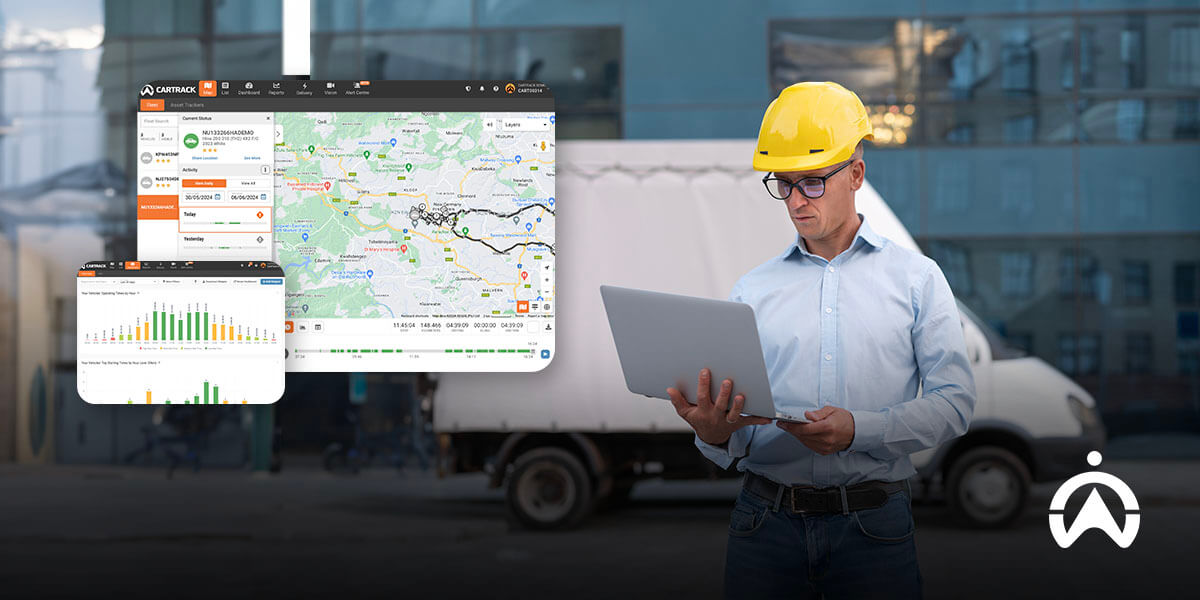
Cartrack: The complete vehicle tracking solution in South Africa

There seem to be as many vehicle tracking companies as there are vehicles. Motorists are spoiled for choice when it comes to companies that can provide this service. How does Cartrack stand out?

Cartrack is a leading provider of vehicle tracking technology and fleet management solutions. We boast an impressive over 90% stolen vehicle recovery rate, one of the highest in South Africa, and we are voted the most trusted vehicle tracing company on HelloPeter.

Cartrack provides more than just your vehicle’s location. We have various fleet management solutions that use vehicle tracking data to assist in improving and optimising any fleet.

  • Smart cameras
  • Alerts
  • Reports
  • MiFleet
  • Delivery
  • Preventative maintenance

Individual motorists are also catered to with premium vehicle safety features and service to ensure their four-wheeled prized possession is always safe whether parked in the garage or the side of the road:

  • 24/7 control room assistance
  • Skilled on-the-ground and air recovery agents
  • CarWatch
  • GeoFence

The Salt Block & Deli case use of Cartrack’s vehicle tracking technology

The Salt Block & Deli and Baron’s Meat Co. specialise in transporting fresh meat and produce to their clients, for that to be possible, they need trusted vehicle tracking for their fleet.

With Cartrack’s vehicle tracking and route optimisation solutions through Delivery, The Salt Block & Deli achieved on-time delivery and enhanced overall productivity

“[With Cartrack] we can plan our routes, and when we go back and look at the history, we can see exactly how long it took from one area to the next,”

Leriche Beneke, CEO of The Salt Block & Deli and the Baron’s Meat Co.

Take control with 24/7 vehicle tracking solutions

Experience premium vehicle tracking at an affordable price and enjoy peace of mind over the safety of your vehicle(s). We offer free vehicle tracking device installation, no matter the number of vehicles, and we come to you for your convenience.
Contact Cartrack and start today.

5 Ways to Improve On-Time Delivery Rates and Otif

With increasing demand from the consumer sector, the pressure on business fleets in the logistics or supply-chain industry has also intensified. This is simply because consumers have more expectations of retailers, and the outturn is that retailers have even higher expectations of your fleet’s delivery performance.

Let’s show you how to enhance your fleet management with Cartrack delivery to ensure on-time deliveries in full every time.

In this article, you will:

  • Understand the challenge of ensuring on-time deliveries every time
  • Learn 5 ways to improve on-time delivery rates and OTIF
  • Discover the benefits of using Cartrack’s fleet management system and delivery tool to ensure OTIF deliveries
  • Get industry-specific guidance on improving on-time delivery.

On-Time Delivery Rates and OTIF explained

On-time delivery rates and On-Time in Full (OTIF) are popular metrics that manufacturers and retailers use to measure delivery performance within their supply chain and rate their logistics and vendor partners.

With increasing consumer demand due to e-commerce businesses, online food and grocery delivery or even just the variety of products consumers expect from retailers; transportation and logistics companies cannot afford any more delivery delays. Neither can businesses with in-house fleets that move goods from manufacture or farm to store.

Here are some global stats on consumer demand from Meteor Space that paint a clear picture of consumers’ changing behaviour:

  • 76% of customers confirmed that fast shipping positively influences their shopping experience
  • 88% of consumers are more willing to purchase from a store that offers free shipping
  • 83% of online shoppers want regular customer support and communication on their order status
  • 95% of online shoppers expect all shipping issues to be resolved while in transit
  • 62% of online US customers believe fast delivery is the most important aspect of customer experience.

The online commerce industry in South Africa has also experienced a rapid increase since the COVID-19 pandemic and lockdown. It is estimated that by 2027, this market will be valued at $7.9 billion as online food delivery, clothing, and other retail shopping have dramatically surged.

According to Statista and other sources:

  • Over 70% of South African shoppers want home deliveries for their purchases.
  • Over 22% of online consumers consider clear communication on expected delivery timing to be a key factor in a digital shopping experience’s quality (or lack thereof).
  • 17% of customers will abandon a brand because of long delivery waiting times.

Meeting consumers’ new delivery demands means more businesses in transportation and logistics, and businesses with a complete in-company supply chain must adjust and focus on delivery time demands. That’s why on-time delivery rates and OTIF are critical; let’s tell you more about how they work.

On-time delivery rate

The on-time delivery rate, first and foremost, calculates a business’s ability to meet customer expectations for delivery time. It is used by e-commerce businesses and retailers in last-mile delivery to determine how fast they are meeting customer orders.

38% of online retailers are concerned about meeting these quick delivery expectations from customers at the low shipping costs their customers expect. Businesses can also use the on-time delivery rate to calculate and evaluate their transportation and delivery service partners when they outsource this service.

On-time in full delivery

OTIF generally refers to a supplier’s ability to deliver the full quantities ordered within the prescribed or agreed-upon delivery time. Suppliers and distributors often face challenges that disrupt timely delivery, such as vehicle breakdowns, traffic congestion or, in South Africa, public protests and demonstrations. Our unique challenge with load shedding can also cause delays and disrupt deliveries.

There are no standard OTIF expectations; therefore, the methods to improve your company’s delivery rate or quality depend more than anything on the steps you take to improve your fleet’s delivery performance.

More businesses are seeking customer-level experience from their logistics service partners. This means that they expect better communication from suppliers and distributors, delivery visibility to clients and precise delivery time communication.

Focusing on improving OTIF can help secure customers and enhance your transportation and logistics company’s reputation.

The stakes are high for your delivery fleet’s performance, and unfortunately, improving your on-time delivery rate and OTIF is not always an easy task because it relies on effective collaboration between fleet managers and drivers. Other external factors such as products being out of stock, warehouse and carrier issues, fuel price increases, protests, demonstrations, and staff shortages, all disrupt the process. Ultimately, problems at any stage in the delivery link can cause delays.

5 ways to improve on-time delivery rates and OTIF

On-time in full (OTIF) is the standard all logistics providers should strive for. Here are some smart strategic ways to improve your fleet’s delivery performance. We’ll guide you on how to apply these steps with real Cartrack case studies based on a carrier company we worked with and helped achieve improved delivery rates.

1. Gain real-time fleet and driver visibility with GPS tracking

Fleet tracking and driver monitoring are critical parts of fleet delivery performance and can help you achieve and improve your on-time deliveries. When fleet managers lack visibility on their fleet, they struggle to monitor drivers’ productivity, see which drivers are available for a delivery task, identify causes of delivery delays, and calculate their on-time delivery rate.

Consider a company like The Courier Guy—a leading South African courier services company that started in 2000. They have over 2,200 fleet vehicles and, with increasing consumer demand, are set to expand their fleet even more over time. With the growing number of drivers, customers and vehicles, it can be challenging for any courier company to manage every part of their fleet.

Whether you have a fleet of 20 vehicles or over 2,000 vehicles, like The Courier Guy, having real-time fleet and driver visibility is one of the best ways to improve your deliveries.

Cartrack’s telematics and easy-to-use fleet management platformprovide The Courier Guy with real-time fleet visibility and driver monitoring that helps them eliminate time-wasting and ensure packages arrive safely and correctly at their customers’ doorsteps.

By addressing the lack of fleet visibility, fleet managers can:

  • Accurately track each vehicle’s location: Gain a complete map overview of all your fleet vehicles and drivers to understand their activity.
  • Monitor driver’s productivity: Improve driver accountability and productivity by monitoring their activity on the road. Decrease unnecessary route deviations and stops.
  • Receive vehicle trip history reports: calculate their on-time delivery rate: By understanding your current delivery performance, you can easily implement these strategies to improve your delivery rate.

Real-time visibility makes it easy for fleet managers to intervene whenever necessary and proactively prevent late deliveries, ensuring a high on-time delivery rate. Immediately addressing and communicating the causes of delivery delays can help improve customer satisfaction and your business services’ reputation, but to do this, you need to make real-time visibility your new best friend.

2. Improve scheduling with delivery fleet management tools

The current shortage of drivers and the lack of capacity for deliveries in your fleet make it difficult for you to improve on-time delivery rates. In line with tracking fleet vehicles and drivers, planning and scheduling the two; adds to the difficulty of ensuring you meet your delivery date. Without the right delivery tools, fleet managers can run into scheduling challenges like:

  • Improperly matching special delivery loads with unqualified drivers or unequipped vehicles.
  • Manually logging and scheduling deliveries including recurring orders.
  • Unclear estimated time of arrival (ETA).
  • Inability to make changes to a delivery or communicate changes.

Whether your fleet is inbound, moving deliveries between your facilities and individual stores, or outbound, delivering to customers at their homes, you need to get on top of your scheduling and delivery planning to ensure your packages arrive on time. The good news is that Cartrack’s delivery tool helps fleet companies like yours to optimise scheduling.

  • Easily assign tasks and jobs: With a complete view of driver and vehicle availability, managers can see the progress of the driver’s delivery schedule, easily assign new jobs and ensure the right vehicle and driver is allocated for the job.
  • Prioritise and make changes: Your managers can quickly track drivers without disrupting their deliveries and tasks. If a task changes, managers can also instantly tweak the delivery schedule.
  • Automate recurring deliveries/tasks: Avoid the repeated manual uploading of customer information or re-inputting of delivery location by automating recurring deliveries.

For The Courier Guy, Cartrack’s Delivery software has been an essential part of their fleet operations, simplifying task management and helping ensure customer satisfaction with on-time deliveries. The software automatically enters customer details for recurring orders, helping them reduce manual processes and improve manager-driver communication, which has resulted in faster delivery turnaround times.

Customers also receive convenient delivery updates with automated emails and SMS notifications.

3. Ensure cargo security and quality with technology

To secure the “In-Full” part of OTIF, businesses can embrace the latest technology like AI cameras to detect and address any cargo theft and sensor technology to ensure products arrive in full without damage.

The Courier Guy, for example, has improved safety, security and accountability within its fleet thanks to Cartrack’s AI-powered camera live-streaming technology. These digital eyes live-track your cargo and drivers, monitoring driver behaviour and audibly alerting drivers in real time to quickly rectify dangerous behaviour like fatigue or cellphone use. These detection abilities and automatic alerts help result in fewer damaged goods and speeding fines and support stronger brand reputability.

Cargo theft and product damage in transit are major risks for businesses and can affect their delivery rate, customer retention, and OTIF delivery performance. To prevent these risks, Cartrack’s AI camera tech is ideal for levelling up fleet security.

  • Cargo details and specifications: Managers can upload package information with specifications, and drivers can scan the barcode of goods they load and offload so every piece of cargo is accounted for, safely transported and delivered.
  • Cargo monitoring using sensors: With cargo door sensors, managers receive live alerts for unauthorised cargo access. Temperature sensors allow managers to address unwanted temperature changes that could damage products.
  • AI cameras for security: Businesses can livestream or download camera footage when they receive alerts of potential cargo tampering and proactively respond.

4. Improve driver productivity and efficiency

Driver inefficiencies are a major hold-up for logistics and transportation companies that makes it difficult for businesses to achieve faster deliveries. Empower your drivers with better safety training and improved communication with fleet controllers.

To improve driver productivity and efficiency, fleet managers need to focus on driver management and set standards for evaluating their performance. A good driver management strategy involves the following:

  • Focusing on driver safety.
  • Improving driver performance with work optimisation tools like timesheets.
  • Implementing regular vehicle maintenance and inspection routines.
  • Equipping drivers with the right vehicle and tools to complete a delivery.
  • Hiring and retaining good drivers.
  • Introducing policies to ensure legal compliance.

Training and incentives: Use driver behaviour reports to train drivers on safer driving practices or incentivise responsible driving based on our driver scorecard that rates your drivers’ performance. Drivers can timeously complete deliveries while ensuring they are committed to safety.

Improve communication with drivers: Reduce driver stress with the Cartrack Delivery app where drivers can access their daily schedule, accept new jobs when available, and get instant alerts for new delivery tasks or changes to existing ones.

Route planning or route optimisation: Easily plan your driver’s delivery route with route planning, and ensure deliveries are completed promptly by automatically getting the best order for completing deliveries with route optimisation.

Securing a good delivery time rate can only be achieved through your driver’s skilled efforts. Encourage and take care of your delivery drivers so they have a more positive attitude towards their work.

5. Reduce transportation costs and time

Reducing fleet costs is the number one goal for most fleet companies, but it’s actually another way of securing repeat business. Retailers and other companies looking for logistics and transportation service providers also want to reduce their transportation costs to increase their profits.

According to a 2023 survey, profits can almost double if supply chain expenses fall from 9% to 4%, which is why most businesses aim to reduce their expenses. To do this, most retailers will make a large order for a single delivery. This is the time for your fleet company to shine. If you can ensure that your fleet timely and cost-efficiently delivers on its promise, you can improve your on-time delivery rate.

Load consolidation is a tactical way to reduce fleet costs while improving customer delivery time and efficiency, but it requires effective route planning and scheduling.

If your business is facing the challenge of balancing cost reduction and timely deliveries to meet customers’ demands; then it may be time to consider making changes to your fleet management that will improve your delivery performance in the future and get your repeat business from customers. Employing Cartrack’s fleet management and delivery tool can enable you to achieve this.

Here are some steps you can take to set yourself apart from your competitors:

  • Invest in your vehicles: Consider buying more fuel-efficient, reliable vehicles to help you avoid any vehicle downtime in your fleet that could cause delivery delays. Alternatively, using preventative maintenance for your fleet scheduling is another way of getting your fleet to run smoothly.
  • Address fuel consumption and expenses: You never want your fleet’s running costs to be more than your profits. Reducing fuel costs can help you ensure an ROI from your delivery.

These five strategies are intelligent ways to improve your on-time delivery rate or OTIF. Although these measures are based on your customer’s experience with your services and there is no standard for measuring this, these strategies aim to help you improve your service providing to improve your on-time delivery rate ultimately.

Make on-time and in-full deliveries every time with Cartrack Zimbabwe

Our fleet management system equipped with Cartrack Delivery helps fleet companies and businesses with in-house fleets keep up with an ever-increasing demand to exceed customer expectations every time.

Schedule a demo with us to see how we make delivery magic happen.

On-time delivery rates and OTIF: Frequently asked questions

On-time delivery makes the supply chain go round. Our handy FAQ section answers the most common questions about OTD and OTIF.

How can I improve my OTIF performance?

Here are quick steps to get started on improving your OTIF performance.

Step 1: Increase fleet visibility with GPS tracking and telematics fleet management.

Step 2: Improves driver management and productivity.

Step 3: Use delivery fleet management software and tools.

Step 4: Secure your fleet cargo from theft, loss, and damage.

Step 5: Improve communication from the manager to the driver and right to the customer with updates on the delivery progress.

For more information, contact us!

How do you improve on-time delivery in the last mile?

To improve last-mile delivery time, you can:

  • Set up convenient delivery methods and time for customers.
  • Give customer updates on delivery progress.
  • Use an all-in-one platform to manage deliveries, such as Cartrack delivery.
  • Explore alternative delivery vehicles, such as bikes for smaller packages.
  • Use GPS tracking and telematics to understand what’s causing delivery delays and make data-driven decisions.

What is the difference between OTIF and on-time delivery?

The on-time delivery rate is used by businesses (especially e-commerce businesses) to measure how many customer orders they’ve fulfilled by the expected delivery rate. Whereas, OTIF is a measure used by retailers and manufacturers to rate transportation and logistics service delivery businesses’ ability to deliver supplies or stock within the agreed-upon delivery time. It also assesses the condition of the delivery, for example, was the order only partially fulfilled, whether some products were damaged in transit, and whether there were missing items.

What is a good OTIF score?

OTIF depends on your customer’s set expectations and satisfaction, but there are different standards for delivery rates and hence different ideas for what counts as a good score.

A good OTIF score would be:

  • 95-99% for A-line products (these are your customer’s bestsellers that represent 50-80% of your sales)
  • 85-99% for B-line products (mid-range products that represent 30% of your income)
  • 99-100% C-line products (the last 60-70% of products that make only 10-30% of revenue)

How do you ensure that all deliveries are made on time?

Several challenges could disrupt your delivery progress, but that does not mean you should take a back seat from improving your fleet delivery performance. Here are some ways that help you keep your delivery promise:

  • Effective Planning with allowance for common delays such as traffic or weather conditions
  • Using reliable GPS tracking, fleet management software and delivery tools from Cartrack
  • Improve the operations of your entire fleet by reducing costs, focusing on improving driver performance and productivity, automating tasks like route planning managers, and using preventive maintenance to avoid vehicle breakdown.

This is what our partner companies love about us:

“Cartrack’s technology allows us to focus on our drivers, customers, cargo, and fleet all from one platform. It puts us in control from dispatch to delivery.”

Jeffrey Wheeler, Assistant Fleet Manager, Courier Guy, South Africa.

Contact us for more information about time-tested and advanced fleet management solutions.

How to Eliminate the Biggest Risks Associated With Our Fleet Operations

To ensure your fleet’s safety, compliance, and efficiency, managers come across various risks that can significantly affect operations.

Fortunately, they don’t have to fight this battle alone; effective risk management and Cartrack solutions are here to swiftly identify and eliminate all risks that can affect operations.

Let’s see what risk management Cartrack has in store.

In this article, you will:

  • Learn about the biggest risks affecting fleet operations
  • Understand the causes and outcomes of these risks
  • Discover effective risk management practices
  • Gain insights into maintaining operational efficiency and compliance
  • Explore Cartrack’s advanced solutions for mitigating risks

Understand the biggest risks associated with our fleet operations by first understanding fleet operations

Fleet managers often wear many hats. They are the driving force in fleet operation, with huge responsibilities for ensuring the fleet reaches its objectives within the business, whether that may be delivering packages, transporting people, or simply providing a service like vehicles for mining and construction.

It doesn’t end there; managers have to effectively track the performance of both vehicles and drivers, ensure safety is upheld in operations, manage finances and fleet expenses, maintain vehicles, and so much more. Organising, managing, and tracking all these different moving parts manually can bring the most experienced fleet managers to tears.

Luckily for managers and business owners everywhere, technology is always available to help with the workload. For fleet managers, it’s telematics, GPS technology, tools like dash cameras, fleet management software, and the many features it comes with.

These technologies streamline the fleet management process, provide easy access to vital information, and allow managers to make sense of the chaos of fleet operations by overseeing the lifecycle of their fleet all from one platform.

What are the biggest risks that affect fleet operations?

Risks differ depending on the business and the industry in which it operates. Fleet management doesn’t just ensure vehicles travel safely from one point to another and monitor their drivers; it also mitigates the many risks that can occur daily.

Here’s a list of risks that can majorly affect fleet operations:

  1. Accidents and safety issues
    Causes:
    Driver fatigue, poor vehicle maintenance, risky driving behaviour.
    Outcome: Poor driver safety, liability issues, vehicle damage, legal problems.
  2. Theft and vehicle damage
    Causes:
    Little to no vehicle security, operating/driving past dangerous areas.
    Outcome: Loss of assets, increased insurance premiums.
  3. Vehicle breakdowns
    Causes:
    Not following vehicle maintenance schedule, mechanical failure.
    Outcome: Delays, increased costs, reduced customer satisfaction.
  4. Fuel mismanagement
    Causes:
    Using inefficient routes, burning unnecessary fuel, fuel theft, unmonitored poor driving behaviour.
    Outcome: Higher operational costs inefficiency.
  5. Non-compliance
    Causes:
    Ignoring or failing to follow legal regulations towards safety.
    Outcome: Fines, legal action, operational shutdowns, poor business reputation.

Introduce risk management

Often, larger fleets are more prone to risks that can stem from technological issues, accidents, and natural disasters. Even incidents that affect finances, compliance, or the business’s brand can be seen as risks.

With this scope of concerns, it can be challenging to foresee every potential problem. Unfortunately, issues sometimes slip through the cracks and are ignored until they start negatively affecting fleet operations.

This is when risk management practices come into play.

Using risk management, companies can use its five-step process to manage risks and effectively start implementing actions to reduce the risks. These steps are essential to successful risk management, touching on:

Step 1. Identifying risk

Each fleet-related industry has its own challenges and risks. This step focuses on identifying the risks that your business is experiencing or will potentially be exposed to.

These risks can fall into these categories:

  • Market risks
  • Legal risks
  • Environmental risks
  • Compliance risks

It’s better to be prepared than to be caught off guard. Listing down the risks makes you more aware of them and better prepared to deal with them once they occur. You will be able to identify the signs of the risk and start planning ahead before it affects your operating environment.

Step 2. Analysing risk

Next, you have to determine the scope of the risk. Does the risk affect other departments in the business, or is it confined to one? A serious risk, like a fraud case, for example, can affect the whole company and its image, while others would be seen as more of a minor inconvenience. Risk analysis helps you understand the extent of the risk and whether it needs your immediate attention.

Step 3. Mitigating the risk

You’ve noted the risk and seen how much it can affect the company; this is when you find the solution. Depending on the scope of the risk, you might have to find a solution to stop the risk from growing or just to contain it. This could be hiring a maintenance team for your fleet if the risk is poor vehicle health or installing Cartrack’s infrared cameras for night-time security if the risk is equipment theft on site.

Step 4. Monitor the risk to show effectiveness

Solving the risk doesn’t guarantee that it won’t occur again; keep the risk and the solution logged for future use and monitor how well the solution is working.

Unfortunately, not all risks can be fixed, such as environmental risks or inflation risks that affect your budget, their effects just need to be monitored so you can adjust your operations accordingly.

GPS Insights conducted a fleet safety report in 2022, showing how 3,400 people active in fleet businesses successfully reduce risks by specifically focusing on safety and compliance.

These were their key takeaways:

  • Out of the 3,400 professionals surveyed, 65% of them believed that improving driver training was the key method to reducing risks associated with poor driver behaviour and fleet safety.
  • 57% would rather focus on using GPS vehicle tracking technology to effectively improve safety while out on the road. With increased visibility over one’s fleet comes real-time knowledge of one’s fleet’s whereabouts, schedule keeping and speedy response to vehicle theft or other emergencies.
  • When it comes to combating risks associated with their fleet, 41% of participants implemented a camera/video solution for monitoring driver behaviour live, keeping compliant with fleet rules and compliance and gathering video evidence of any events that occur, e.g., proof of following safety measures or road accidents.

This is a clear and comprehensive view of how different managers use risk management practices to see the full range of issues their team faces.

Be smart: Do risk management solutions for fleets the Cartrack way

Now that you have seen what risk management can do, how about partnering with Cartrack? Cartrack is an industry-leading company offering fleet management solutions and vehicle tracking technology that is ready to assist with addressing and mitigating different risks affecting operations.

Here’s how Cartrack can help manage your fleet and your risks:

  1. Security
    Some drivers may take shortcuts and deviate from set routes to complete their tasks quickly, but this can lead to fuel or vehicle theft, putting the vehicle in unnecessary danger. Tracking technology can do more than just inform you of your fleet’s location. With vehicle tracking units installed, you can see deviations, access your fleet’s trip history, and see the routes where theft often happens. If an emergency occurs, managers can act swiftly and deploy assistance directly to the vehicle’s location.

    As part of the solution to only use safe, visible, fuel-efficient routes, managers can use route optimisation technology to choose a route that improves travel time and fuel usage and geofencing to create digital borders around no-go areas for your fleet. A notification will be sent whenever your vehicle enters or exits these areas, prompting you to communicate with drivers to correct their actions and keep the fleet safe.

  2. Driver management
    Fleet managers are responsible for setting up safety measures such as performing pre-trip check-ups to ensure vehicles are safe to drive, creating compulsory vehicle speed limits to follow, and ensuring their drivers follow the safety rules such as no texting and driving, no speeding or reckless driving practices of any kind, etc., to achieve optimal driver safety.With the help of fleet management companies like Cartrack, a business can achieve its safety-first approach. Managers can leverage Cartrack’s driver behaviour management tools, such as driver scorecards that rate drivers’ performance and driver behaviour and risk reports that show all risk events, such as abrupt braking, rapid acceleration, speeding past set limits, harsh cornering and idling, to monitor driving habits and use the information gathered by these reports to motivate your team into safer driving habits.

    One of the top ten causes of truck accidents is distracted driving. Cartrack’s smart cameras can combat the risk of truck accidents due to drowsy, fatigued, or distracted drivers by recording these behaviours and audibly alerting drivers to them. This allows the driver to quickly correct their behaviour and be more alert on the road.

    If an incident occurs, don’t just focus on the solution, take time to review driver behaviour, look through the data, and find the cause so you know the next steps to take to prevent the incident from occurring again.

  3. Operational efficiency
    Sometimes risks come from poor vehicle health. Proper planning and scheduling can minimise the costly risk of your vehicle breaking down randomly and not being able to function for a while. This can affect the safety of your drivers and cost the business valuable time and profits.Unplanned downtime of an asset can be prevented by monitoring vehicle health in real time to schedule preventive maintenance. Cartrack can keep track of your fleet’s healthand performance with maintenance history reports. And assist in keeping track of servicing your vehicles at regular intervals with maintenance alerts.

    This:

    • Reduces downtime
    • Provides better fuel efficiency
    • Lowered long-term maintenance costs
    • Lengthens asset lifespan and enhances resale value
    • Boosts fleet safety and ensures compliance with regulations
  4. Fuel theft and misuse
    Fuel is a precious resource that powers vehicles’ ability to deliver cargo, goods, materials, and people. A lack of fuel can halt production and hinder fleet operations, affecting fleet efficiency. To decrease fuel theft and minimise the risk of inefficient fuel use, managers can monitor fuel levels in their tanks using Cartrack fuel sensors and CAN Bus for a more accurate reading.When it comes to keeping an eye on fuel expenses, MI Fleet, Cartrack’s cost management tool, keeps track of all fuel costs from tall gate payments, maintenance, speeding tickets, and fuel purchases. With its three-step transaction approval process, managers can stop fuel theft and ensure that fuel cards are used efficiently.
  5. Compliance
    If an accident occurs due to poor vehicle maintenance or a lack of replacing or repairing vehicle parts to maintain a healthy fleet, the business can be blamed for the accident and deemed non-compliant, which can result in hefty fines, among other penalties.Performing small pre-trip inspections on your fleet can go a long way in ensuring your vehicles are road-worthy and able to travel and perform tasks. Inspections can identify issues or problems, such as faulty wiring or loose bolts, that can grow into big problems and fix them. Plus, vehicle inspections don’t halt the flow of operations and only need a few minutes to be done.

For a more smart solution, Cartrack can help your team stay compliant with advanced solutions.

  • Automatically keep track of all your regulatory contracts, insurance papers, permits etc.
  • Receive alerts on paying important paperwork such as vehicle permits, speeding tickets, and licence renewals.
  • Use working logs or vehicle usage reports to track the work hours your team spends on site and ensure your drivers receive breaks mid-shift and are well rested.

Take control of fleet risks with Cartrack

Make your fleet risk-free with Cartrack. From driver behaviour monitoring tools to tracking fleet expenses and staying compliant, our advanced features and services are the solutions you need to fight against the biggest risks associated with your business operations.Contact Cartrack today.

Powerful Fleet Management Reporting: 7 Ways to Simplify Your Fleet Company

There’s nothing better for fleet managers than improved driver productivity and safety, increased fuel efficiency, and more savings.

But how can your fleet manager achieve this for your fleet company without the right tools?

Fleet management systems like Cartrack’s offer advanced yet easy-to-use tools for your fleet company, helping your fleet managers use powerful fleet management reporting to address fleet-related pain points head-on.

In this article, you will:

  • Get seven ways to simplify your fleet company
  • Understand the power of fleet management reporting to simplify your fleet management
  • Learn how to effectively use reports and big data to address key fleet challenges
  • Discover ways to simplify your fleet using reports from Cartrack Zimbabwe

Fleet management systems are designed and equipped with tools that simplify your fleet company, whether your business leases out a commercial fleet to customers, is in the transportation industry, or has a fleet of delivery vehicles hitting the road every day.

7 ways to simplify your fleet company with fleet management reports

You may have once believed that simply installing a GPS tracker to your fleet would instantly help you improve your fleet company. While we’re here to confirm this belief, just with a twist. GPS fleet management is the key to simplifying your fleet company.

A recent survey found that 60% of business owners with a GPS fleet management system had not unlocked the full potential of a fleet management system.

Managing a fleet is not an easy task, no matter the fleet size or industry. Here are seven ways you can start smarter and simpler fleet management with customised reports that help you get more bang for your buck in terms of safety, productivity, and profits.

1. Keep track of every vehicle and asset in your fleet

It gets difficult to confirm how your drivers and clients are handling your assets when your vehicles are out on the road, or your machinery is stationed at a remote worksite. Managing your fleet can get even more complicated depending on the number of fleet vehicles you have and the mix of your different assets.

The primary advantage of tracking your fleet is that you can prevent the theft and misuse of your valuable assets or simply gain insights into the productivity of your fleet. With a GPS fleet management system like Cartrack’s, you can simplify your fleet company by:

  • Using live GPS tracking: With a GPS tracker, you can always know where your fleet vehicles and assets are. Fleet managers can also get real-time updates on their vehicles so they can address issues such as whether drivers are using them outside work hours.
  • Setting geofence zones: Set virtual boundaries around specific locations to get alerted when your vehicles enter or exit the area. For example, you will get alerted if any of your heavy machinery is removed from one of your construction sites and used at an unauthorised location.

Analysing vehicle trip history reports to increase driver productivity

You can see the start and end locations for all your vehicles and understand past vehicle activities. This is a great way to identify fraudulent activity with your vehicles, or you can simply create a logbook to separate business trips from private trips on your vehicles.

Understanding your vehicles or assets is one of the most straightforward ways to identify your fleet’s shortfalls.

2. Monitor your driver’s behaviour and performance

Your fleet’s profitability, productivity, and safety highly rely on your drivers. If your driver is not meeting service standards, this can turn customers away and affect your profits, similarly, if your drivers are undercutting their work hours or making personal runs during deliveries, they can affect productivity.

Safety is also important, and reckless driving can cause fatal accidents that cost lives and damage your vehicles. Fortunately, our fleet management system makes the work of monitoring drivers easy with a collection of driver behaviour and performance tools such as:

  • GPS tracking and telematics: This single tool also helps fleet managers monitor how drivers use fleet vehicles. Fleet managers get reports on harsh driving events such as speeding, harsh braking and excessive idling. Monitoring these types of behaviour helps managers understand their drivers’ bad habits and use insights to correct bad driving and train drivers on safety.
  • Driver identification tags: Prevent unauthorised vehicle and machinery usage with driver ID tags assigned to each of your drivers. This way, fleet managers can know which drivers have used their fleet and improve accountability.

Driver scorecards: The perfect driver behaviour reporting tool

See how your drivers score in terms of good versus bad driving habits and incentivise drivers based on their scores. This is an excellent way for fleet managers to recognise drivers.

3. Use purchasing controls for fuel

Track your fleet’s fuel consumption, tackle high fuel expenses, and prevent fuel theft in your fleet by introducing fuel purchasing and efficiency controls. Fuel theft is a growing concern in South Africa, so if you have been suspecting fuel theft in your fleet or you’re concerned about the sudden increase in your fleet’s fuel expenses, there are solutions for your fleet.

Cartrack’s fuel management system uses three primary tools to help you control fleet fuel costs, these include:

  • Fuel sensors: Measure the amount of fuel in your vehicle or machinery’s tank using sensors. This information helps managers monitor their fleets’ fuel consumption per period which is helpful for budgeting and fuel claim validation.
  • Fuel cards: Drivers and other staff can use business fuel cards for refuelling vehicles and machinery or paying for vehicle servicing. Fuel cards help reduce the administrative work of tracking your fleet fuel costs but also quickly identify fuel theft and other issues.

Keep track of that liquid gold with fuel consumption reports

Fleet fuel reports are an effective way to monitor your fleet’s fuel consumption and track your expenses. You can customise and automate fuel reports that will help you quickly identify fuel theft or inefficiencies.

4. Save with preventative maintenance

Establishing a maintenance schedule to effectively minimise vehicle downtime and extend your fleet’s lifespan, completely reversing your fleet company. Instead of attending to vehicles and machinery once they have broken down, your fleet staff can get proactive about maintenance to avoid these issues and costly repairs.

Now fleet managers can simplify fleet maintenance and save on their fleet with Cartrack solutions for maintenance that include:

  • Maintenance reminders: Our preventative maintenance software lets you schedule maintenance and services according to your fleet’s needs to ensure uninterrupted workflow. Now fleet staff know when and why a vehicle or machinery is not available.

Increase your fleet’s longevity with vehicle health reports

Get detailed, customised reports on your vehicle and machinery’s health and see the history of the asset’s condition. For example, battery health and engine performance. This report helps your fleet managers stay informed on your asset’s condition and identify issues that need servicing or repairs faster.

Use maintenance reports for fleet health and reduced downtime

Maintenance reports provide a summary of your vehicle history, so your fleet staff can plan for any vehicle downtime or use these reports to assess whether they should replace certain vehicles or equipment.

5. Prioritise safety and compliance

According to a 2023 survey for fleet managers, 48% of fleet owners identified fleet safety and regulatory compliance as their number one priority. Regulations for fleet compliance are constantly changing and updating, so this has become a big challenge for fleet managers globally.

Fleet companies must comply with several safety regulations that are constantly changing to ensure the safety of drivers and vehicles when they are on the road. Our fleet management system helps simplify fleet compliance with:

  • Safety training: Conduct thorough onboard training for new drivers and keep training older drivers on safe driving. Fleet managers can use driver behaviour reports to train drivers on safer driving practices.
  • Record keeping: Store important driver and vehicle information on our cloud-based fleet software so that all your fleet staff and stakeholders can access the documents from anywhere. Fleet managers can also set reminders to renew vehicle licenses or complete fines and toll payments.

Keep your drivers safe on the road with driver inspection reports

Fleet managers can ensure drivers are prepared for every trip with a pre-trip inspection. For example, you can require drivers to check whether a fire extinguisher is available before any trip.

6. Use tasking and scheduling software

With Cartrack Delivery, assigning delivery tasks, field service work or emergency service calls to drivers and mobile workers has been simplified. Fleet managers can easily coordinate deliveries, tasks, and fleet vehicles so your fleet company stops losing out on profits.

No matter what industry you are in, food and beverage, logistics or e-commerce, our delivery tool disentangles the process. Fleet managers can use Cartrack delivery for:

  • Task management: Fleet managers can easily update delivery/field task information and quickly match drivers with available fleets. The process is instant, and any updates are instantly communicated with your drivers, so there are no delays or miscommunication.
  • Route planning: Managers can quickly track drivers without disrupting their deliveries and tasks. If there are changes to a task, managers can also instantly change the schedule for delivery or services via the Cartrack Web Page or the mobile app.
  • Communicate with drivers and customers: Use Cartrack delivery to ensure an open line of communication between fleet managers, drivers, and customers. These tools help drivers communicate delays directly with customers and managers.

7. Manage and reduce your fleet overhead expenses

Track, analyse, and control all the expenses associated with your fleet of vehicles, heavy machinery, and assets. Fleet overhead expenses refer to the indirect costs associated with your fleet. These costs can easily go undetected, such as vehicle taxes or renewing licensing fees. Managing these types of expenses is important for budgeting and seeing the return on your fleet investment.

With Cartrack’s MiFleet, you can ensure your fleet expenses don’t get out of control. MiFleet is a cost and accounting management software that tracks all the expenditures related to your fleet company, see how fleet managers easily access and use MiFleet to manage such expenses:

  • Budgeting: Reduce your fleet’s overhead expenses by tracking the expenses over time and identifying areas where your fleet could save money.

Gain full financial control of your business with driver and asset reports

Receive reports on all costs associated with your vehicles, drivers, and assets. Now, fleet managers can get a breakdown report to understand the profitability and ROI of their fleet investment.

Take advantage of automated MiFleet reports for smart budgeting

These customisable reports can be automated for fleet managers to access monthly or every other quarter so they can understand their fleet’s expenses and budget appropriately for the next quarter.

Fleet management reporting is a smart, strategic, and powerful way to improve your fleet company.

Access Powerful Fleet Management Reporting with Cartrack Zimbabwe

Cartrack’s fleet management system digitises, compiles, and organises various fleet reports, so you don’t have to deal with 500 computer tabs, over-complicated spreadsheets or incompatible fleet software.

Contact us to find out more about fleet management reporting for your unique fleet company.

The Most Dangerous Countries in the World

While there are beautiful places in the world, some countries have made their way to the list of the top 10 most dangerous countries in the world. Based on the latest research this blog will show you just which countries are the most dangerous.

We’ve also compiled a list of the most dangerous countries by region based on the likelihood of robberies, thefts, hijackings and other crimes. So whether you are planning a holiday for your family or researching potential business risks globally, this list will pique your interest.

Bonus: 5 Cartrack tips for protecting your loved ones and assets in a ‘dangerous country’.

In this article, you will:

  • Get a list of the top 10 most dangerous countries in the world
  • Understand what makes these 10 countries dangerous
  • Get a list of the most dangerous countries by region
  • Have a look at South Africa and understand the dangers here in a country case study
  • Explore the top 5 Cartrack tips for individuals and businessesin South Africa
  • Get answers to FAQs

Top 10 most dangerous countries in the world

The World Population Review lists the following countries as the most dangerous based on their crime rate results (from worst to least):

This crime rate is based on the number of crimes reported per 100,000 people. To calculate the crime rate, the World Population Review divide the number of crimes of any type by the total population of the country and multiplies this by 100,000 people.

But what exactly makes each of these countries dangerous?

  1. Venezuela

The number one contributor to the high crime rate in this South American country is government corruption, the poor justice system and sentencing for crimes and the lack of respect for the rule of law. The crime index in this country is 83.76 which is the highest of any country in the world.

  1. Papua New Guinea

This country is known for being one of the most diverse countries in the world, with residents speaking over 800 different languages. Unfortunately, it’s also known for violent crimes fueled by rapidly changing political, economic and social changes in the country, the corruption and gang-related activity in the country. Bringing this diverse country to the second most dangerous country in the world.

  1. Afghanistan

Over the years, this country has been known for its constant political instability and conflict in the area, which all contribute to its high ranking. Afghanistan suffers from various crimes that include corruption, kidnapping, money laundering and other crimes such as robbery and assault.

  1. Haiti

The Caribbean country of Haiti has struggled with political stability, increasing gang warfare, and economic challenges. The biggest contributor to its high rank is the increasing number of homicides over the years, either from violent conflicts or intergang violence.

  1. South Africa

With a crime index rate of 75.5, unfortunately, our beautiful rainbow nation makes its appearance as one of the top 5 most dangerous countries. South Africa has a notably high rate of assaults, rape, homicides and other violent crimes, which all contribute to our rank on this list.

  1. Honduras

In 2012, Honduras was reported to have experienced about 20 homicides per day due to gang violence. Today, the country is still inflicted with violent crime caused by gangs, drug trafficking and almost nonexistent law enforcement to control the country’s notorious reputation of lawlessness.

  1. Trinidad and Tobago

This state faces several challenges caused by increased crime from gangs and drug-related crimes, which the government struggles to address. It takes the 7th spot on this list, and visitors to this country can become victims of pickpocketing, assault, theft and fraud.

  1. Syria

The conflict in Syria has led to increased crime, widespread corruption, and bribery, putting this Middle-Eastern country at 8th place on this list. It’s also become known for violent crimes such as kidnapping, assault, carjackings, and robberies.

  1. Guyana

The Northern South American country is small, sparsely populated, and Anglo-Caribbean. Due to the high murder rate, lack of law enforcement support for domestic violence, and frequency of armed robberies, this country has a high crime rate of 68.74. It ranks 9th on this list.

  1. Peru

Homicides, corruption, domestic violence, pickpocketing, and petty crimes have landed Peru at the 10th spot on this list of the most dangerous countries. Over the years, the crime rate in Peru has decreased, and with each year, they report decreasing rates of crime.

Are there any countries you were surprised made the list or some countries that did not make the list?

One thing we’ve noticed about this list is that as much as there are differences in crime rates among these countries, the crimes also vary by severity in each of these countries. This list of the 10 most dangerous countries above is not an entirely reliable guide on places you should not be or should not take your company to but is a useful starting point.

We’ve compiled a list of the most dangerous countries by region based on the likeliness of hijacking, robbery and theft, which are the most common crimes tourists and business travellers experience.

Get A Tracking Device Now

The most dangerous countries by region

Some of the countries on this list may be a few kilometres away from you, while others require you to cross borders or even take a flight to witness the dangers.

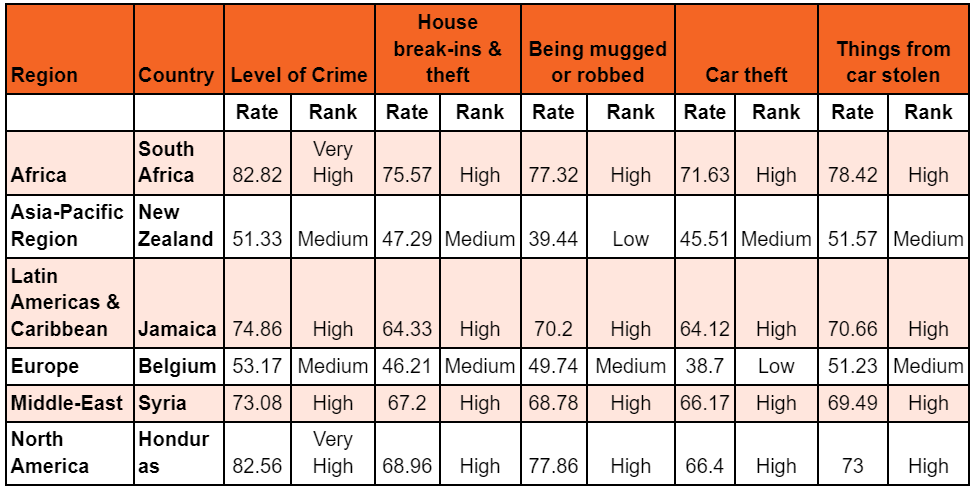
Our selected list of the most dangerous countries in the world is given by region and is based on the likeliness of theft crimes and the fear of theft crimes within the country. We use the Crime Index, and Safety Index from Numbeo as a data source.

Crime index – an estimate of the crime level in a given city or country. The rate is based on a survey of the general perception of crimes, safety levels, and concern about specific crimes. The rate also considers property crimes and violent crimes in the country. The higher the crime index, the more risk is perceived in the country, and the lower the index, the less crime is perceived and experienced.

Safety index – an estimate of how safe the city or country is, the higher the safety index, the safer a country is perceived to be.

We’ve focused on the level of crime and worries about different crimes, such as house break-ins, robberies, car theft and other thefts in these countries.

List of countries highest crime and dangerous

South Africa: The most dangerous country in Africa

Crime Index: 75.44

Safety Index: 24.56

South Africa has landed the number one spot for the most dangerous country on the continent based on the likeliness of theft. According to research by MSN News, Cape Town, Port-Elizabeth, Durban, Johannesburg, and Pretoria are the top five most dangerous cities in Africa. This is due to crimes such as theft, house break-ins, petty crimes, carjackings, and smash and grabs.

New Zealand: most dangerous country in Asia-Pacific Region

Crime Index: 47.72

Safety Index: 52.28

The rate of theft stats show that New Zealand reported the most thefts in 2020 among the island countries, and the number of victim-reported thefts increases annually. Petty crimes and theft are the most common types of crime in the country, and in cities like Auckland and Canterbury, vehicle theft has also been particularly high.

Jamaica: most dangerous country in Latin American & Caribbean Countries

Crime Index: 67.57

Safety Index 32.43

Jamaica is often believed to be unsafe because of the high homicide rates. In 2023 this country reported 60,9 murders per 100,000 people. These rates are largely due to gang violence and drug-related crimes. Petty crimes and a lack of police and law enforcement also make the country quite unsafe for tourists and travellers.

Belgium: most dangerous country in Europe

Crime Index: 49.49

Safety Index: 50.51

According to Statista, Latvia has the highest homicide rates, and this has landed Latvia in the first position as the most dangerous country in Europe. But a more recent statistic based on crime theft places Belgium, particularly the capital Brussels, as the city with the highest crime theft rate in Europe. Petty thefts, purse snatching and pickpocketing are the most common crimes in Belgium. In 2021, however, there was an increase in stolen bike and car theft crimes.

Syria: most dangerous country in Middle-East

Crime Index: 68.61

Safety Index: 31.39

This region is known for having the lowest theft crime rates compared to other countries in the world because of strict law enforcement measures and extreme penalties for crime. However, Syria has topped the list of the most dangerous countries in the region.

Honduras: most dangerous country in North America

Crime Index: 73.11

Safety Index: 26.89

Honduras has one of the world’s highest murder rates, making it one of the most dangerous countries. Crime such as armed robberies, carjackings, trafficking, and even bus jackings have also grown as an area of concern in the country. Government crime prevention tactics against gang violence and other organised crime have had little to no impact over the years, making it one of the countries with the lowest safety index.

Country Focus: Understanding the dangers in South Africa

South Africa is one of the most beautiful places in the world but somehow lands on the list of the most dangerous countries in the world. This might not be a shock to many of us, as we have become more fearful of crime in our country.

According to StatsSA, since 2021, South Africa has witnessed an increase in the number of household crimes such as house break-ins, home robberies, and vehicle theft. For businesses, the sudden increase in the number of cargo thefts and fuel thefts from trucks has also become a concern. The South African Police Services (SAPS) crime stats confirm the increase in these types of crimes.

But what are some things we could do to protect ourselves now that we know we live in one of the most dangerous countries?

Get A Tracking Device Now

Top tips for safe living in South Africa

  1. Secure your home

There are several services and products you can purchase in South Africa to protect the things you care about. For example, get insurance to protect your devices, such as TVs and cell phones. When your devices are insured your insurance company will pay out a certain amount to you to help you recover your loss and avoid suffering from a household crime or petty crime.In addition, adding an alarm system or aiming to live in a safer area is another way to add security to your life.

  1. Secure your vehicle

Add another level of security to your vehicle insurance. GPS tracking and stolen vehicle recovery (SVR) services from a company like Cartrack can help you get your car back. With carjackings and hijackings increasing every year, this is the best security you can get for your vehicle.

  1. Don’t be a target—be vigilant

Whether you are driving or simply walking down the street, avoid displaying your valuables, such as jewellery, cameras, and mobile phones so you are not the target of petty crime and other theft. Keep your handbag or backpack while driving or when parked to avoid a smash-and-grab.

Our top tips for doing business in South Africa

Running a fleet company in South Africa may seem a bit more tricky now. Here are two quick tips to secure your fleet in South Africa.

  1. Prevent fuel theft with fuel monitoring solutions

Fuel theft has become a growing concern in South Africa, and more businesses have reported concerns about fuel theft in their fleet. Businesses in transportation, mining, and manufacturing have also revealed decreasing fleet profitability and efficiency due to fuel theft. Cartrack’s fuel monitoring solution is one of the most strategic ways that you can protect your fleet from fuel theft, increasing expenses and other challenges relating to your business.

  1. Safeguard your drivers with GPS tracking

With GPS tracking and telematics, you can monitor your fleet and other company vehicles to protect drivers while they are out on the road. One of the latest innovations from Cartrack is a panic button for drivers to alert us and managers of any emergency or security issue.

For example, if there is an accident at one of your remote sites, your driver can use the panic button to alert our control room of the incident, and Cartrack Zimbabwe can take action immediately.

Don’t live on the edge safety-wise. Let Cartrack Zimbabwe give you peace of mind.

If you live in one of the most dangerous countries in the world, you are constantly worried about your safety.

There is global concern over increasing crime, but Cartrack has been committed to ensuring vehicle safety and fleet security since 2004.

Contact us here for our innovative tracking solutions.