
Truck Maintenance: How to Service a Truck

Truck service is the robust backbone for a healthy and long-living truck fleet! For this reason, placing it high on your to-do list while educating yourself on the “whats” and “hows” of taking care of your fleet is a good idea.

According to a press release by the American Truck Association, the 2022 freight cost in the United States of America (USA) consisted of 80.7% trucking, or $940.8 billion in revenue, with a clear sign of trucks taking charge when it comes to providing various goods and services worldwide.

Truck service is thus the ultimate bedrock for long-lasting vehicles and driver safety, and ignoring it can have severe consequences.

However, solutions lie around the corner – let’s take a peek.

In this article, you will:

  • Discover the negative consequences of ignoring truck service
  • Distinguish between truck service and maintenance
  • Discover the negative consequences of ignoring truck maintenance
  • Uncover the different types of truck maintenance
  • Learn about what maintenance needs to be done to a truck
  • Discover more about Cartrack’s fleet maintenance and service solutions

How to service a truck: a guide to minor and major services

To service a truck, you usually respond to what is wrong with your vehicle or fleet at that moment and determine what needs fixing. Service is not regular or scheduled but somewhat responsive. However, if you choose, you can receive general services, which fall under minor and major services.

Let’s find out more about the two to gain a deeper understanding.

Minor services include:

  • Oil and filter changes
  • Brake pad inspection
  • Fan belt inspection
  • Checking the clutch fluid
  • Checking tyre pressure

Major services include:

  • Full vehicle inspection
  • Replacing brake pads, or spark plugs if needed
  • Inspecting the speedometer or brake leaks if needed
  • Cleaning general components

The cost of ignoring truck service

Each minor and major truck service is an important milestone for your fleet’s health. Here’s what happens if you don’t service your trucks when you should.

Decreased reliability and longevity

When you service your truck, you get a healthy engine. This, in turn, increases the engine’s and the truck’s lifespan. Failing to do so will lead to a damaged engine with a limited lifespan.

Reduced Safety and security

Service focuses on all parts of a vehicle, all of which play an important role in the overall functioning of the truck system. Establishing that all these parts are in order leads to a secure truck without any unforeseen risks of failure.

Loss of costs, business, and clients

While servicing your truck, especially on a recommended regular basis, can be costly, it is an investment that will save you significant money in the long term. Neglecting to service your truck will increase the likelihood of issues and problems, shorten the truck’s lifespan, and drain your pocket.

Servicing also increases fuel efficiency, which helps save some extra cash.
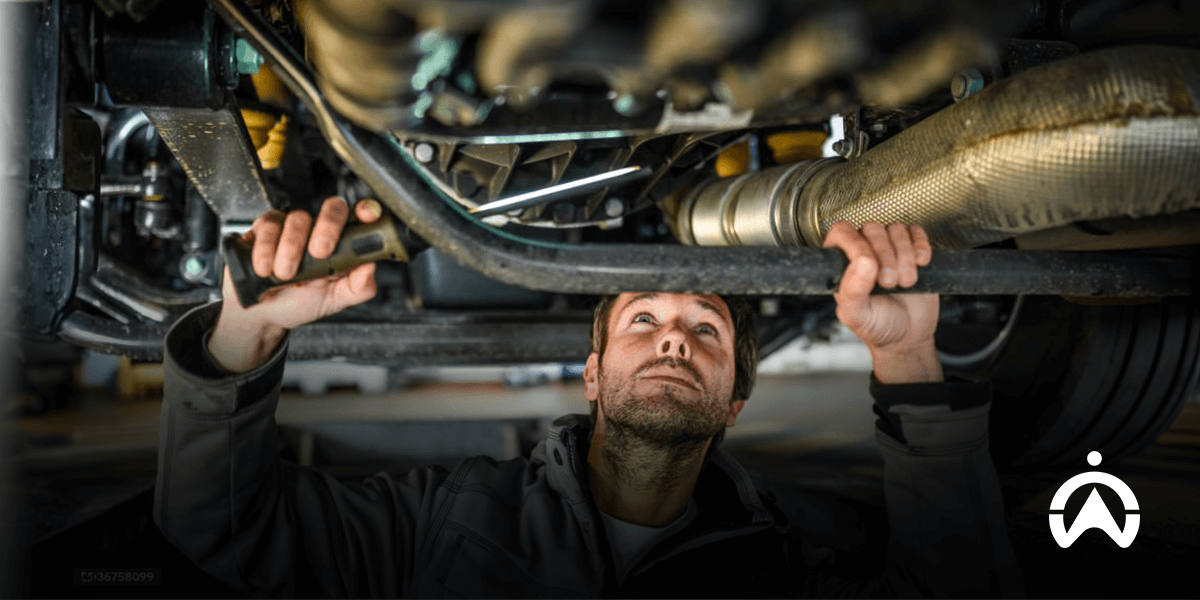
An introduction to truck maintenance

Truck maintenance is the consistent and regular caretaking of your truck or fleet for various basic issues, such as checking oil or brakes. This goes hand in hand with service, but definite differences distinguish them from one another.

The difference between truck maintenance and truck service

The most straightforward way to tell the difference between maintenance and service is that maintenance is a broad approach to caring for your vehicle or truck, while service is a more specific approach to vehicle upkeep.

While maintenance and service can include similar methods of taking care of trucks, such as checking oil and brake inspection, maintenance implements this on a more regular basis. In contrast, services occur only on an as-needed basis.

Maintenance involves a regular schedule that consistently focuses on what vehicles need. This includes inspections, filter or oil changes, and checking tyre pressure. Service is not a consistent approach but a particular, targeted one. Service is sometimes only implemented when something is especially wrong with a truck or vehicle—fixing headlights or tending to engine damage are two examples.

Both are incredibly important. Maintenance ensures a long vehicle lifespan. Services are always available if a vehicle or truck faces more particular problems—usually due to maintenance neglect.

In its 2014 document, “Better Truck Maintenance,” The Abu Dhabi Department of Transport stressed the importance of truck maintenance. The document stated, “A planned safety inspection and maintenance system aimed at meeting the annual test standard at all times will improve truck operating standards, reduce truck accidents, and, as a result, improve road safety.”

The cost of ignoring truck maintenance

Truck Maintenance shares points of negative consequences when you do not approach them seriously, but they show up in completely different ways.

Decreased reliability and longevity

Constant and planned maintenance increases truck reliability and lifespan and ensures that many of the vehicle’s parts are in consistently good health. Neglecting maintenance and steering from the consistency of a schedule will cause quick deterioration and increased vehicle downtime that negatively affects your fleet’s efficiency.

Reduced Safety and security

Rules and regulations are there for a reason. From the state of your vehicle lights to flat tyres, brake problems, and many other issues,theselaws ensure that your truck is roadworthy—ensuring your safety and that of other road users.

It is easy to predict that if you do not follow these regulations and rules, you might end up in a world of trouble, having hurt yourself and, worse, others.

Loss of costs, business, and clients

Delays cost businesses. Companies need to implement a maintenance plan to avoid unnecessarily losing profits. Beyond profit loss, it can affect your business’s productivity. This leaves customers disgruntled or no longer desire to purchase your services or products–Ouch!

The different types of truck maintenance

There are many types of truck maintenance, each with a different role. Learning about the “whats” and “hows” of these maintenance types will help us understand them deeply.

These factors will also influence how you, your team, or professionals approach your own “how-to” method.

For this reason, placing them high on your to-do list while educating yourself on the “whats” and “hows” of taking care of your fleet is a good idea.

They include corrective maintenance, preventive maintenance, condition-based maintenance, predictive maintenance, and proactive maintenance.

Corrective maintenance

Corrective maintenance is implemented after an issue or breakage has already happened. It is also sometimes referred to as “reactive maintenance.”

Preventive maintenance

Prevention is always better than cure—this is the exact concept that preventive maintenance is based on. This well-known principle applies to maintenance as well as medicine. Preventive maintenance allows for early identification of issues so they do not snowball into unmanageable crises.

We have many solutions and systems geared toward preventive maintenance, such as risk reports. These reports on our fleet management app note harsh driver behaviour, such as speeding or harsh braking. This prevents possible future vehicle damage and threats to driver safety.

Condition-based maintenance

Condition-based maintenance is different in that it rids the need for scheduled maintenance. Instead, using collected information, it predicts when trucks will require maintenance and what kind of maintenance they need.

Predictive maintenance

Predictive maintenance combines data with prediction models to understand, diagnose, and tackle possible fleet-related complications awaiting on the horizon.

Using our application’s Dashboard can help you tackle future problems. Compare different data from your fleet of trucks over your chosen period–this will help you track and tackle multiple issues.

You can choose three out of these empowering seven options to source data from:

Proactive maintenance

Proactive maintenance will use information, analytics, and data to understand specific future problems. This will allow it to apply preemptive solutions that focus on fundamental issues.

What maintenance needs to be done on a truck?

Now that we understand the basics of maintenance and service, we can finally learn how to take care of trucks. This topic is all but simple – so here is an easy-to-reference-starter-pack list:

  • A regular schedule: Businesses or truck owners should maintain a regular truck maintenance schedule. Consistency is key!
  • Oil checking: Regular oil checks safeguard all vehicles, including truck engines. If you don’t consistently do this, engine failure lurks around the corner–no one wants that.
  • Keep on the pulse: Keeping up to date with what and when maintenance has been performed is a great way to ensure that your trucks are getting the tender care they need and deserve.

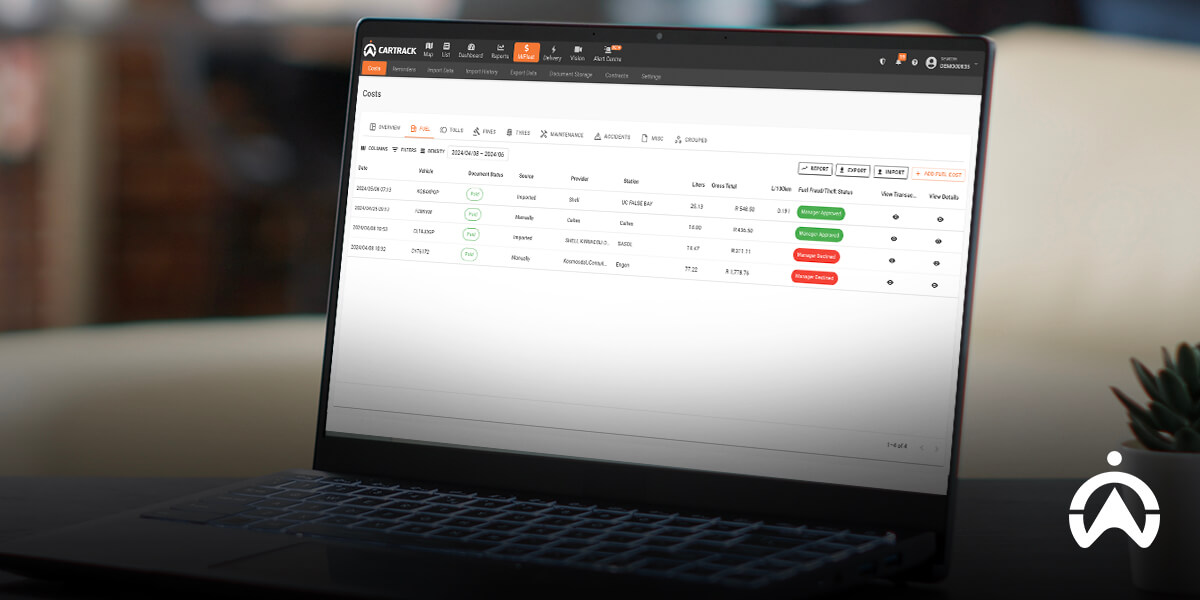
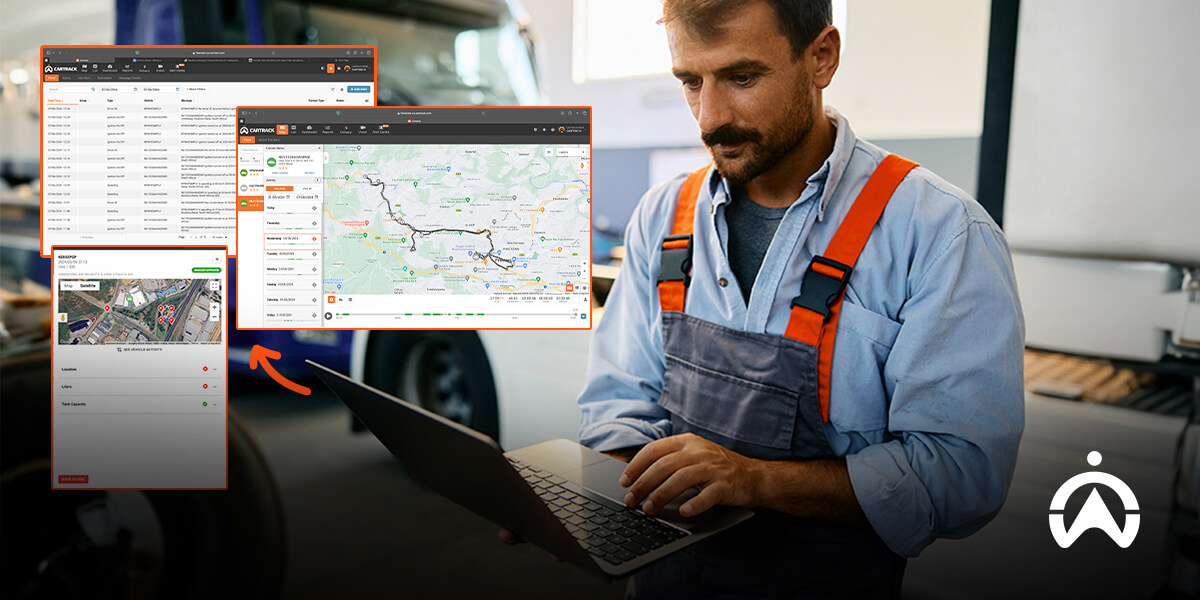
Using Cartrack’s application, you can access the MiFleet option. Using this solution, you can keep track of and download maintenance reports over your chosen period.

  • Tyre maintenance: Regular tyre upkeep ensures that trucks run smoothly and promptly. MiFleet can also keep track of tyre operations. It sends the relevant person or business a report of these operations. These reports outline the information according to the person or company’s chosen timeframe.
  • Inspecting brakes: Overlooking brake inspection will lead to nothing but regret, especially if they stop working mid-journey and you’re stuck in the land of nowhere.
  • Battery health: A working and healthy battery is vital for a functioning and reliable vehicle.
  • Air filtration: A clogged air filter reduces power, while a well-functioning one contributes to a smooth-running engine. Ensure that you schedule regular air filtration cleanings.
  • Exterior lighting: Exterior lighting secures your safety and that of other road users. Make sure to replace any exterior lighting that is not working.
  • Clutch and gearbox: The clutch and gearbox are used regularly on the road and should be inspected.
  • Listen to the professionals: Invest in a professional, such as a repair shop or an experienced, hands-on engineer. If this is impossible, do not stray from the owner’s manual.

The importance of professional assistance

It is easy to look at trucks in isolation and how they affect those closely connected to them. From negative profits to driver safety, these close-to-home considerations are crucial. However, in the broader society, from shops that buy in bulk to consumers who need their vital goods and services, there is a chain reaction to companies neglecting their fleets’ health, with more reaching consequences.

This is why companies, big or small, should consider investing in professional services instead of maintaining and servicing trucks manually.
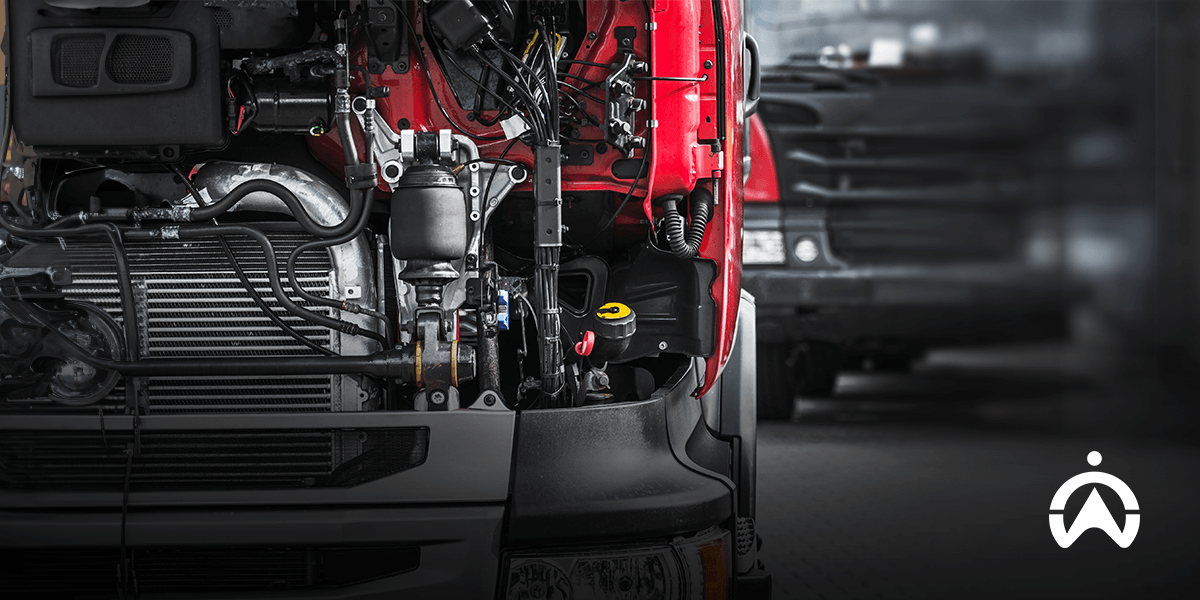
Get the best fleet maintenance and service solutions with Cartrack Zimbabwe

If you’re looking for professional assistance, Cartrack Zimbabwe provides an all-in-one solution for all your maintenance needs.

Maintenance and service solutions

Our maintenance services offer many benefits, such as automated scheduling, a reduction in waste-of-time downtime, and pre-trip inspections. They also include updated maintenance logs, service management, and less money spent on overall maintenance.

Let’s discover the details:

  • Maintenance logs: By recording digitalisation, you consistently document maintenance-related tasks for records and reference purposes, so accurate data is available whenever you need it. Service management is another type of maintenance logging that allows you to track whether your vehicles or trucks are en route to being serviced.
  • Real-time engine diagnostics: Cartrack’s vehicle diagnostic tools are CANBus-powered. CANBus allows all your vehicle’s parts to transmit and, in a sense, “talk” with one another. These communications between parts can then diagnose engine issues, helping you to react before damage becomes too extensive and costly.
  • Preventive maintenance: Preventative maintenance alerts let you know proactively when you need to take your vehicle in for maintenance or service. These alerts are triggered based on the vehicle’s odometer readings, which show when the next service is due based on the kilometers travelled or recent service dates provided on maintenance logs.
  • Vehicle inspection checklists: Use our Field Service/Delivery App to create pre-trip or vehicle inspection checklists based on your fleet and business’s unique needs.

Keep your fleet’s health on track with Cartrack Zimbabwe

From service and maintenance to security and driver safety, Cartrack cares about your fleet’s longevity from all angles. Take control of your fleet’s health—contact Cartrack Zimbabwe today.

Your pressing questions answered

Q1. What maintenance needs to be done on a diesel truck?

Filters are a significant issue for the health of a diesel truck. Therefore, filthy filters are a massive maintenance no-no. Fuel filter change is paramount and highly emphasised in diesel truck maintenance.

Frequent oil and air filter changes, as well as coolants, are also vital.

Q2. How do you keep a diesel engine healthy?

In line with general diesel truck maintenance, dirty fuel filters should not exist, so changing fuel filters is a must. You should also clean your engine regularly, replace oil when needed, and keep an eye on your air filter.

Q3. What is basic maintenance for a semi-truck?

Temperature and weather are core to how you approach semi truck maintenance, with differing atmospheres calling for different specifics.

For example, warm weather calls for inspecting the air conditioner. The electrical system should be checked for corrosion, and the wires should be secure. Keeping an eye on the tyre pressure is also very important. During the heat, it is also essential to have an annual flush, pressure test, and draining of the coolant.

Q4. How long is the useful life of a truck?

The lifespan of trucks depends on the model and type and, of course, how well they are maintained. For the most part, the average truck will last up to or slightly over a decade.

With Cartrack, our various solutions will propel your truck or fleet’s lifespan to its ultimate limit. Contact us today to discover your fleet’s fountain of youth.
10 Reasons Why You Failing at Fuel Management in Your Fleet

Great fleet owners understand that fuel management goes beyond reducing fuel budgets or leaving fuel expenses to employees. Instead, they embrace advanced fuel management to future-proof their businesses for long-term success.

Controlling your fleet’s fuel costs requires fuel monitoring patterns, the right fuel monitoring system, data-driven decisions, and sustainable practices.

If you think you’ve given fuel management your best shot, here are 10 reasons why you may not have mastered fuel management and efficiency just yet.

In this article, you will:

  • Learn why businesses care about fuel management
  • Discover the 10 reasons why businesses are failing at fuel management
  • Get possible solutions for these fuel management challenges
  • Explore Cartrack’s Fleet Management System and fuel monitoring solutions
  • Get answers to the most frequently asked questions about fuel and fleet management

10 reasons why you failing at fuel management in your fleet

As your business grows, your fleet operating expenses, such as fuel, will most likely increase with it, but this does not automatically result in increasing profits.

If your fleet is still reporting unreasonably high fuel costs that stifle profits, then there may be other factors affecting your fleet fuel management that you need to pay attention to.

Here are 10 reasons why your business may be failing at fuel management and the fuel management solutions you need to know to combat these challenges.

1. Outdated vehicles

It’s not so much old cars versus new cars, but the ongoing vehicle price inflation has made it more difficult for ordinary South Africans and businesses to acquire new vehicles or replace their older and outdated vehicles. Unfortunately, your outdated vehicles may also be the weak point of your fuel management efforts.

  • Lower fuel efficiency: Cars become less fuel efficient as they age, meaning you may not get as much mileage from your refuelling and, therefore, need to pour more.
  • Increased maintenance needs: Wear and tear over the years also increases your vehicle’s maintenance needs, sometimes including the frequency of fuel system issues.

Alternative Solutions: Transition your fleet

Older in-built technology can make tracking fuel usage difficult. For example, not all vehicles have CANBus technology, which provides more accurate fuel consumption insights.

However, the solution to this weakness is not as simple as just replacing your fleet with the latest vehicle models. Fuel prices are still a major concern for businesses, and fleets that are planning for alternative fuel transition in the next 12 months need to be more strategic to future-proof your business. Consider joining the growing number of fleets, accelerating their EV transition and slowly replacing outdated vehicles with more fuel-efficient ones.

2. Lack of driver training on fuel efficiency

Unnecessary speeding, harsh braking, and excessive idling are fuel-inefficient practices you may be overlooking in your fuel management efforts. An untrained driver is less likely to be aware of how these driving behaviours impact fuel efficiency, so while you are trying to lower your fleet’s fuel costs, these bad driving techniques and habits increase your fleet’s fuel use, causing:

  • Increased fuel costs: inefficient driving leads to higher fuel consumption per kilometre, directly increasing a fleet’s fuel expenses and making it harder for you to control your fuel costs.
  • Heightened risk of fraud and misuse: your drivers who are not properly trained, poorly disciplined, or uninformed about your fleet’s standard operating procedures (SOPs) may easily misuse your vehicles, causing increased fuel consumption and costs.

Cartrack solution: Fuel efficiency report

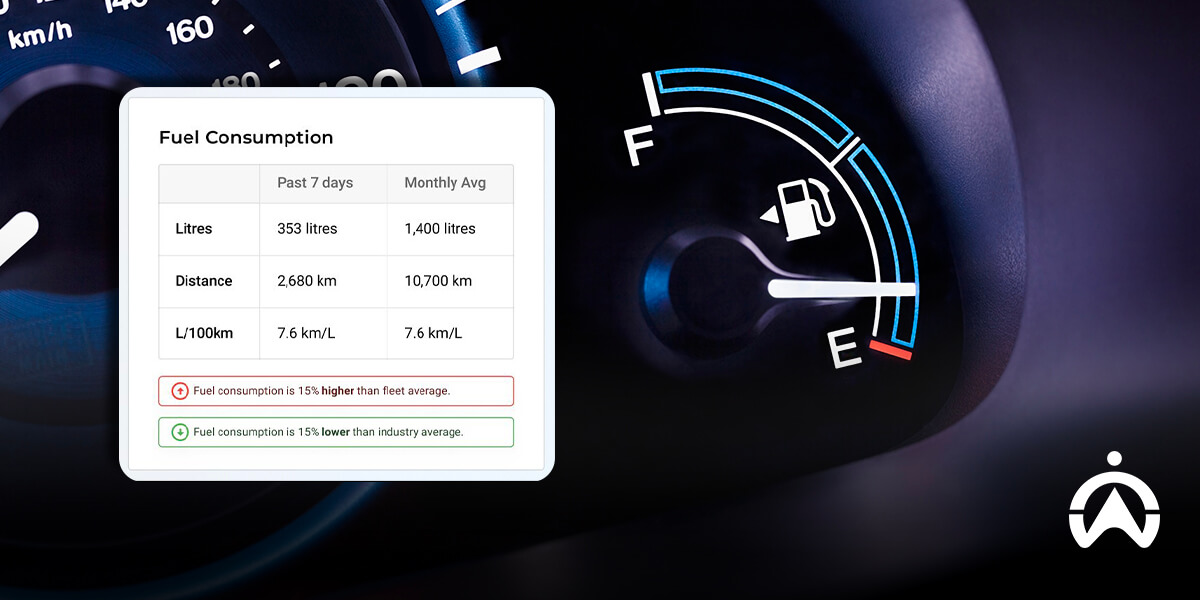
Are you aware of how many litres are consumed per kilometre in your vehicle? (This also changes as your vehicle ages). Abnormal fuel efficiency could either indicate fuel theft, high idling, or poor driving habits. Do you know how to calculate the efficiency of each of your vehicles?

Our fuel efficiency report is designed to help you detect fuel inefficiency in your fleet and introduce measures to reduce your fleet’s fuel consumption, especially from untrained fleet drivers, that impact your fleet’s fuel management significantly and reverse all your efforts to reduce your fleet’s fuel consumption and costs.

3. Short trips (stop and start)

The frequent stop-start with short trips causes poor fuel economy in your fleet. When you start your vehicle, it generally requires more fuel than when it runs at a steady speed. According to AA, trips of two kilometres or less use more fuel than longer trips, and based on your vehicle size, short trips could cost you more fuel unnecessarily.

Beyond increasing fuel costs and lowering your fleet’s fuel inefficiency, short trips could be causing your fuel management woes because short trips are:

  • Difficult to monitor: Without telematics, fuel monitoring hardware, or a fuel management system, fleet managers find it challenging to track fuel consumption for past trips and optimise fuel usage for short trips.
  • More susceptible to fuel theft and fraud: Because it’s difficult to monitor or get detailed fuel usage data with vehicles frequently used for short trips, fuel fraud and theft increase the risk.

Cartrack solution: Live GPS tracking and fleet visibility

GPS telematics helps increase the accuracy of a fuel management system. By tracking the location and activity of your vehicle’s movement, you can mitigate fuel theft risks with short trips by comparing your fleet’s fuel consumption against vehicle mileage and activity.

Cartrack’s route optimisation generates the best order for completing tasks and deliveries, helping you get from point A to B, and finally point C most efficiently by generating your route sequence. This software feature is a smarter way for you to combine multiple planned short trips into one longer journey and reduce the number of harmful stop-and-start trips.

With route optimisation, you can instantly order deliveries and service tasks instead of manually planning your route and work order, which is often less fuel-efficient.

4. Carrying unnecessary weight

There’s a relationship between weight and fuel economy, and you’ll have to pay attention to this in your fleet management. An extra kg of weight can cause the engine to work harder and use more fuel when accelerating and braking.

In addition to lowering your fleet’s fuel efficiency and increasing your fuel costs, carrying unnecessary weight in your fleet can surprisingly cause:

  • Accelerated wear and tear: Excessive or frequent additional weight strains your vehicle. Over time, this increases the wear on your vehicle and the risk of mechanical problems.
  • Safety risks: Added weight makes it difficult for your drivers to handle your vehicle and compromises vehicle safety.

Cartrack can lighten your load

While the solution seems simple, the less your vehicle weighs, the less fuel it will use. Drivers can avoid carrying unneeded items or extra persons during trips. But the truth is, it’s not only your driver’s additional items (or persons) in the truck that could be slowing down your vehicle or causing fuel management problems. Have you assigned the correct vehicle for the task?

Paying attention to your fleet vehicle capacity helps you ensure that your fuel tank isn’t leaking from unnecessary weight. Cartrack delivery ensures you assign the right vehicle to your drivers for their work and tasks, automatically notifying you when the job might require a larger capacity.

5. Weather conditions

It may be hard to believe, but weather conditions impact your fleet fuel. This is mostly because of how the weather conditions affect your vehicle and the driver’s behaviour. For example, drivers may frequently use the air conditioner on warm summer days which reduces fuel economy by 25%! If you think cutting the AC would work, think again! Driving with the windows down has also proven to affect vehicle aerodynamic drag and increase the need for more fuel.

Colder temperatures also cause higher fuel consumption and difficult driving conditions that force your vehicle’s engine to work harder. Weather conditions affect your fleet in two ways:

  • Difficult to mitigate: Weather affects both your drivers’ and vehicles’ performance, and fleet managers can find it challenging to mitigate these effects. How weather conditions affect fuel consumption and activity is often overlooked.
  • Not just temperature: Windy conditions and rainy weather can also affect your fleet’s fuel efficiency.

Cartrack Solution: Get strategic about the weather

The weather isn’t something you can dodge or avoid, so it’s up to you to come up with strategies for your fuel management that account for weather conditions. For example, encourage your drivers not to idle to warm up your vehicle and instead drive gently for a few minutes to warm up the engine. Alternatively, as mentioned earlier, you may want to avoid shorter trips on cold days because the vehicle engine may require more time to reach the right temperature.

Track vehicle activity and idling via the Cartrack FleetWeb. Here, you can customise alerts for vehicle idling or download an idling report to get an overview of the frequency of vehicle idling. By knowing which of your vehicles and drivers are idle, you can quickly address this fuel-inefficient behaviour.

6. Bad driving habits

Some driving habits simply waste your fleet’s fuel, so if you want to save on fuel, start by changing and training your drivers to avoid bad driving habits such as speeding, idling, and aggressive driving like harsh braking or accelerating.

Bad driving habits not only reduce your fleet’s fuel efficiency but also put your drivers and vehicles at risk. These common habits cause:

  • Increasing full consumption: The costs of bad driving behaviours are estimated to reduce fuel efficiency by 15-30% on the highway and 10-40% on stop-and-go.
  • Higher maintenance and repair costs: Reckless driving accelerates the wear and tear on your vehicles and could also result in accidents and damage that is costly to replace or repair.

Cartrack Solution: Monitoring drivers

You can mitigate bad driving habits by monitoring your drivers, identifying these habits, and training your drivers to help them improve. Cartrack’s driver monitoring solutions give insights into your driver’s performance on every trip, which helps you build driver-specific training and coaching.

With Cartrack’s driver scorecards, you can score the frequency of high-risk driver actions like speeding, harsh braking, and sharp cornering and create custom alerts for fuel-wasting bad habits to get notifications if your drivers violate rules.

7. Fuel fraud/theft

Fuel fraud and theft have been a fast-growing problem in South Africa, and more businesses are investing in identifying fuel fraud. Without the right fuel monitoring tools, your attempts at fuel management may be unnoticeable because of internal fraud involving employees and fleet staff.

There are a few ways that fleet staff may be frauding your fleet, including claiming fuel not poured into your vehicles, syphoning fuel from your vehicle’s tank, or engaging in other fuel card fraud. What methods are you using to identify fuel theft in your fleet? Even with fuel cards to monitor your fleet’s staff refuelling expense, there can still be fuel fraud or theft in your company, causing:

  • Unnecessary cost to company: Not monitoring and controlling fuel expenses results in excessive costs to the company that could otherwise be avoided.
  • Operational disruption: Fuel syphoning and misfueling can cause costly vehicle downtime and affect your fleet’s productivity.

Cartrack Solution: Advanced fuel monitoring

Fuel fraud and theft can cost your business substantially, but without the right fuel monitoring system, it’s very easy for you to miss suspicious activity. Cartrack’s FleetWeb with MiFleet makes it easy for you to monitor fuel theft by sending a notification when there is an increase in fuel consumption and fuel payments that do not align with your vehicle’s mileage.

8. Misuse of fleet vehicles and machinery

Driver deviations, unauthorised activity, or misuse of company vehicles and machinery can each significantly impact your fleet fuel management in several ways, causing serious financial losses. For example, if one of your employees moves your construction equipment to complete personal projects at a different location but leaves the fuel costs up to you, the misuse is costly for you.

Alternatively, your drivers and fleet staff can drain your fuel budget by using vehicles for personal purposes, which results in excessive fuel consumption and high costs. These kinds of unnecessary expenses are delaying your fuel management progress.

Cartrack Solution: Geofence and DID

Cartrack Live GPS tracking and driver identification tools improve your fleet’s fuel management by ensuring that your company vehicles and equipment are not used for personal projects at your expense. Now, you can verify claims for fuel, machinery and vehicle working hours, and other factors by validating where transactions or activities took place and which of your fleet staff were responsible.

9. Poor vehicle/machinery maintenance

Each vehicle and machinery requires specific attention to prolong your fleet’s fuel economy and efficiency. Neglecting maintenance and service tasks like oil changes, air filter replacements, and other engine and tyre checks decreases your fleet’s fuel efficiency.

When you’re managing multiple vehicles and machinery with different ages, performance capacities, and locations, it’s difficult to keep up and arrange maintenance and service tasks for each of your fleets. Overlooking some key maintenance needs in your fleet sets your fuel management efforts back over time by causing:

  • Increased fuel consumption: Whether engine problems or issues with the fuel system generally, faulty vehicles in your fleet lead to higher fuel usage.
  • Less fuel efficiency: Neglecting maintenance tasks will affect your fleet’s fuel efficiency, making it difficult for your vehicles to perform overtime.

Cartrack Solution: Service Reminders and Preventative Maintenance

Cartrack makes it easy for you to set customisable reminders to help you keep up with your vehicle’s maintenance and service needs. This is one of many handy tools to improve your fleet’s fuel management. In addition to reminders, Cartrack’s FleetWeb platform helps you get proactive about maintenance. Use historical vehicle maintenance and service information on Cartrack’s FleetWeb to predict and plan the maintenance activities your vehicle needs over time.

10. Lack of modern fleet management system or fuel monitoring system

Your fleet and fuel management systems should be equipped with more modern technologies like GPS and telematics for real-time tracking and communication capability. While you think your fuel management strategy is the best, any lack of real-time tracking capabilities makes it more difficult for you to identify the problems affecting your fleet’s fuel.

Using the correct fuel monitoring tools and hardware for the problem you want to address is also important. If you’ve invested in fuel sensors yet continue to struggle with your fleet’s fuel consumption or insights on fleet fuel use, then it is possible that your fleet fuel problems are due to something else. Without the right fuel monitoring system in place, it is difficult to:

  • Gain visibility over fuel use: Without the right system, managing and controlling your entire fleet’s fuel consumption becomes more difficult, making it easier for fuel theft or misuse to happen right under your nose.
  • Optimise your fleet’s fuel use: Fuel monitoring helps you identify your fleet’s fuel use and gives you insights on adjusting to delivery schedules and minimising fuel inefficiencies.

Cartrack Solution: Advanced fuel management

Upgrading your fleet’s fuel management system is the most effective way to monitor its fuel consumption and expenses closely. Our fuel management system helps you identify and address all fleet behaviours affecting its fuel usage and gives you data-driven insights so you can make decisions quickly.

Why care about your business’s fuel management?

Whether you have a small-scale fleet of 5 vehicles or a larger fleet with over 500 vehicles and specialised machinery, overlooking your business’s fuel management can be costly to your business and its future.

If you haven’t introduced controls for better fuel management yet, here are five reasons why you should care about your business’s fuel management.

1. High fuel prices and fleet budgets

Fuel prices in South Africa are frequently adjusted and impacted by several factors. Not paying attention to your fleet’s fuel consumption also means inaccurate budgeting. Without a well-structured budget and accurate fuel management, it’s difficult for you to properly allocate costs and account for other expenses for your vehicles. A fuel tracking system is one of the most effective ways to track and manage your fuel costs.

2. Manual fuel cost accounting

When you’re looking over and managing diverse fleets of vehicles, including low-powered engine-run machinery, that are perhaps located all over the country and even cross-border, then using manual methods for fuel cost accounting is impractical. Plus, there are plenty of automation tools like fuel cards and fuel monitoring systems that provide more accurate fuel cost accounting.

3. Missing fuel fraud, theft, and other risks

Without proper fuel management, you may be missing or overlooking fraudulent fuel activities that drain your fleet. Fraud risks such as fuel theft, misuse, and fuel card fraud can be prevented with the right fuel monitoring measures.

4. Lack of visibility over vehicle use

Due to a lack of fleet visibility, vehicle misuse and abuse by drivers and other employees can easily go unnoticed. Fuel management helps you detect this misuse and ensures that you avoid the costs of this kind of activity falling on you.

5. Environmental impact of running your fleet

Customers are growing to prefer more sustainable initiatives from businesses. Sustainable fleet transformation often requires businesses to purchase new low-emission vehicles or electric vehicles, but getting ahead of your fuel management is one of the most effective ways to improve the environmental impact of your fleet.

Master Fuel Management with Cartrack Zimbabwe

Cartrack’s Fleet Management System is equipped with everything you need for effective fuel management for your fleet’s success. You’ve got the full guide to fleet management systems. Are you ready to get started with Cartrack?

Contact us for a demo.

Useful FAQs about fuel management

  1. What are the difficulties in fleet management?
    Fuel management is often cited as one of the most difficult challenges for fleets. This is because fuel prices fluctuate constantly, and with every fuel price increase, bad driving habits, and other fleet inefficiency, there is a direct cost to the company.
  1. What is the major problem facing a fleet company?
    Managing high costs is a major challenge for fleet management, as it impacts your business’s ability to compete in the market. For example, if your courier business is forced to increase the cost of service to customers, this may force them to find a cheaper courier company.
  1. How can I improve my fleet management?
    An advanced fleet management system with other integrated technologies like GPS tracking, cost management software, fuel management software, fleet reporting tools, and delivery and task management tools can all help you improve your fleet management.
  1. How do you manage fuel for the fleet?
    This quick step-by-step guide is a starting point for fuel management, but here is a more detailed guide:Step 1: Gain complete fleet visibility with GPS tracking.

    Step 2:
    Use fuel monitoring systems to monitor and analyse fuel usage.

    Step 3:
    Use route planning and optimisation.

    Step 4:
    Utilise fleet cards to manage refueling.

    Step 5:
    Regularly maintain your fleet.

Get a quick demo of our fuel management system here.

How to Start a Successful Delivery Business

E-commerce businesses, drop shipping, and food delivery businesses globally have led to an increased demand for reliable, affordable, and customer-centric courier and delivery service providers. So, launching a delivery business start-up or expanding your business to offer delivery service is an excellent idea!

This is an attractive prospect for you to get into because it requires very little start-up costs. In fact, you could probably start a delivery business right now with the vehicle and cell phone you have. But to run a successful delivery business, you need a lot more effort and strategy.

This complete guide on how to start and run a successful delivery business using Cartrack’s delivery fleet management system is exactly what you need to get started.

In this article, you will:

  • Get a step-by-step guide to starting a delivery business
  • Understand the behind the scenes of a successful delivery business
  • See what you need to get started with a delivery business
  • Identify the biggest challenge to your delivery business success
  • Discover how Cartrack’s delivery fleet management software can help you achieve a successful delivery business
  • Uncover whether delivery fleet management is right for your business

Our 5-step guide to starting a successful delivery business

The delivery sector is expanding and is projected to grow at accelerated rates over the next few years.

Here’s why you should start a delivery business:

  • The increased demand and the growing e-commerce industry require reliable delivery service businesses.
  • Your business could provide this service to different companies on a small and large scale.
  • The initial investment and operational costs of a delivery business are relatively low.
  • As your business and customer base grows, you can easily expand your fleet, services, location, and client base.
  • The technology and innovations, such as fleet management systems in the logistics industry, make it a thousand times easier for businesses to run a delivery business and become successful.

Starting a delivery business is relatively easy, but growing it into a successful business will require more effort. To achieve business success, you first need to understand what goes on behind the scenes of such a business.

When you imagine a successful delivery business, what companies come to mind? Are you considering a delivery giant offering same-day express delivery or a smaller delivery business that ensures quality and timely delivery of your online orders?

Starting a successful business is no easy task. Here is what goes on behind the scenes to make your business a success:

  • Aiming to ensure on-time-in-full delivery of products and orders to retailers and customers.
  • Protecting brand reputation and ensuring customer loyalty and satisfaction.
  • Providing the best pricing options for customers and clients.
  • Real-time delivery progress, reliable order tracking, and multiple delivery options for customers.
  • Happy drivers with a good work-life balance.
  • A clear business goal and vision, understanding of the delivery market, and legal compliance.

Whether you are a business person looking to launch a delivery/courier business or you’re hoping to expand your business and offer delivery services to fulfil your customer’s needs, this guide will help you bring your business out of imagination into reality, and finally, business success.

Step 1: Identify your delivery business niche

The delivery business is a fast-growing market, with businesses offering food delivery, drop-shipping, gift delivery, courier service, medical equipment, supply delivery, and even after-hours delivery. The best way to start your delivery business is to first decide on your niche and prepare a business plan.

Here are five top delivery business niches worth looking at:

  • Food, grocery, and alcohol delivery
    This industry is projected to have a market revenue of US $2.40 billion in 2024. You can offer delivery service for restaurants, supermarkets, and liquor stores through on-demand and convenient customer services. You can also pick up and deliver or make and deliver catered meals for events, meetings, and parties through a catering delivery service.
  • Flower and gift delivery
    Who doesn’t love flowers and gifts? The market growth rate for this business is projected at 14.7% (2024-2028) in South Africa, with revenue reaching US $56.6 million. You can offer same-day or next-day delivery for fresh flowers and gifts for special occasions like birthdays, anniversaries, etc.
  • OTC and prescription delivery
    Partner with local pharmacies and offer customers reliable over-the-counter and prescription medication delivery services. The OTC pharmaceuticals market for online sales is projected to grow at a 13.68% rate annually and reach US$616.00m revenue by 2029 in South Africa and US $130.6bn by 2029 globally.
  • Pet food, supplement, and supply delivery
    Work with pet stores and vets or offer your own branded products to deliver food, medication, and other supplies to pet owners. Online sales of pet products are expected to grow by 11.82 annually in South Africa (8.14% globally), with a projected market volume of US$396.30 by 2029 (US$78.55bn by 2029 globally).
  • Courier services
    Deliver packages, documents, and other items for businesses and individuals with same-day, next-day, and more delivery options available to customers. In South Africa, this market is dominated by major players, with even global competitors influencing the market.

These quick insights into each of these niche delivery businesses in South Africa and the projected market revenue and market growth over the next few years are useful ways to understand the potential profitability of your own delivery business. The more the market demand and e-commerce industry grow in South Africa, the more opportunity there is for your business to offer a delivery service to the market.

Each industry has unique challenges, but once you’ve decided on a niche delivery service, it is easier to build a business plan detailing your mission, conduct market research, consider your financial investment, and estimate your return on investment (ROI).

Finally, remember to choose a business structure and register your business with the Companies and Intellectual Property Commission (CIPC).

Step 2: What you need to get started

With your delivery business plan and official registration from the CIPC in place, it’s time for you to invest in the necessary fleet, equipment, and other supplies for your business.

Consider making these investments for your delivery business:

  • The right vehicle(s)
    You’ll need the right vehicle for the job/delivery service you plan on providing and selecting the right vehicles is crucial for your delivery efficiency. Whether you decide to invest in a new or old vehicle, such as a cargo van, light-duty truck, compact car, motorcycle, or other unique vehicle is entirely up to you. Alternatively, this is also a great option if you simply use your own vehicle for deliveries. One of the most important things when choosing the right vehicle is your fleet’s operating costs, so investing in budget-friendly, low-fuel consumption and good fuel economy vehicles is important. To protect your brand image consider opting for more eco-friendly vehicles too.
  • The perfect delivery drivers
    Drivers play a crucial role in the success of your delivery business, and their performance and behaviour can impact key aspects of your operations from customer satisfaction to operational costs, and your brand reputation too. Training the perfect delivery drivers requires coaching to improve driver behaviour and prevent reckless driving, speeding, harsh braking and dangerous driving habits. Ensure that your drivers have the correct driver’s licence and personal insurance for their protection in the event of an accident.
  • The right insurance and protection
    Insurance will be your saving grace if your customer or client’s parcel or product is damaged or stolen in transit or one of your vehicle (s) is damaged or stolen. You need to secure the right insurance for your business, which may include business liability insurance, goods in transit (GIT) insurance, courier insurance, and public liability insurance. When starting your business, you will also want to add an extra layer of security, primarily to protect against vehicle and cargo theft. One of the best protections you can opt for is stolen vehicle recovery services from a company like Cartrack.
  • The best technology for delivery management
    Delivery management technology is your best friend for your business’s success. In addition to investing in the right vehicle, purchasing smart devices like a tablet or smartphone for drivers, and getting a GPS tracking system from Cartrack. You’ll want to add delivery service software such as Cartrack Delivery that can help you perfect delivery tracking and progress, plan the best route for drivers, automate processes, monitor your drivers, keep track of your vehicle maintenance, generate customised reports on your fleet and business and more.

Starting a delivery business is relatively easy, but growing it to be successful will require more effort. To achieve business success, you need to mitigate risks and proactively prevent the biggest challenges in delivery businesses from affecting you.

Step 3: Address the biggest challenges to your delivery business success

  • Parcel management
    Getting parcels to your customers’ doorstep seems easy enough right? The challenge comes with ensuring that the customer’s order is processed properly, to the correct item specifications and delivery address, and all information is properly recorded to plan the delivery logistics. Mistakes can happen more easily without adequate routing and scheduling, real-time visibility, or proper capturing of the delivery information, especially if you or your fleet manager has to complete this process manually.
  • On-time deliveries
    Timely delivery is essential for customer satisfaction, brand reputation, and your business’s competitive advantage. A delivery business requires efficient logistics and operational processes, as most successful companies prioritise on-time delivery. This is a brilliant way to increase sales as customers know they can trust a business that delivers their orders. Ensuring timely deliveries can be challenging for your business due to driver productivity and other delays, which can directly cost you sales.
  • Fleet fuel management
    Fuel is most likely the biggest operational cost your delivery businesses will face, so managing your fleet’s fuel costs will be a major challenge. High fuel costs affect your business’s profitability and the service pricing you can offer customers, making it even more difficult for you to run a successful business. You’ll have to manage the costs and fleet consumption and ensure your business’s cost efficiency.
  • Driver productivity and work-force optimisation
    Your drivers and fleet staff’s productivity can directly affect business sales and profitability, but how can you ensure they are productive and efficient? Operational efficiency is a major business challenge, but delivery fleet software and other technologies can help your business address this.
  • Unplanned vehicle downtime
    Any vehicle downtime due to maintenance, breakdowns, repairs, vehicle servicing, etc. can result in reduced productivity, financial business loss, customer satisfaction issues and even more problems for your delivery business.
  • Measuring customer satisfaction
    Getting client and customer feedback is important for your business, but old methods of sending surveys or completing a form can discourage customers from giving a review. Knowing how your customers feel about your delivery service is essential for improving service quality and enhancing customer experience.
  • Fleet logistics management
    This involves efficiently planning and coordinating delivery vehicles to optimise delivery routes and driver schedules. This is one of the biggest challenges for delivery businesses and gets more complicated as your fleet and business expand.

You may be concerned about whether your new start-up or business strategy, even with the right equipment and a good customer base, can compete with larger delivery service providers and popular third-party logistics companies, but would you believe us if we told you that there is enough cake for everyone to share in the market? What’s more, delivery technology and other innovations from companies like Cartrack make it easier for start-up businesses like yours to compete with delivery giants.

Step 4: Using technology for your delivery business

Delivery fleet management software is a top strategy for addressing your delivery business challenges and ensuring business success. At Cartrack, we’ve designed the perfect software for new delivery businesses. Cartrack delivery is an all-in-one tool equipped with cloud-based software and a mobile delivery app to optimise your delivery business and empower your drivers.

Take a look at these Cartrack Delivery features and benefits you can experience in your delivery business.

  • Automated and streamlined processes: Enjoy a more efficient method of uploading driver information, and assigning jobs to drivers.
  • Driver visibility: Gain real-time visibility on job progress and driver location, and intervene or communicate delivery delays. Managers can also receive updates about driver availability for new tasks.
  • Route planning and route optimisation: Ensure timely delivery by arranging delivery schedules in advance based on job priority, driver availability, and shortest route. Alternatively, auto-plan your deliveries with the route optimisation feature that organises jobs in the most logical order.
  • Two-way communication: Managers and drivers enjoy two-way communication, and drivers receive instant notifications when work orders are changed.
  • Customer communication: Customers receive an automated notification once the driver is on the way, with a link to live track their delivery and are notified when delivery is complete.

Step 5: Establishing a good customer-base

Your business’s long-term success depends on its customer base. Once you have chosen a niche area and invested in fleet, equipment, and software, it’s time to focus on building a good customer base by providing quality service.

Here are some strategies for effectively building and maintaining loyal customers:

  • Deliver a positive customer experience every time
  • Focus on reliable and timely delivery
  • Offer a competitive price
  • Build a positive brand image and market your business with customer reviews
  • Introduce a referral program for deliveries
  • Participate in local community events
  • Offer other value-added services to customers
  • Gather customer’s feedback

Here’s how Cartrack has helped businesses like Mr Build in South Africa run a successful and well-known business with delivery.

Cartrack Case Study: Mr Build

Mr Build is a well-known hardware store specialising in woodworking, timber, cement, plumbing, and a wide range of home decor. Over the years, Mr Build has grown with a total workforce of 200 people across different branches and a fleet of about 40 vehicles that deliver building and DIY materials to customers around South Africa.

As the business expanded, Mr Build found tracking where their drivers and vehicles were during deliveries was challenging. They could not update customers on their delivery without knowing if the driver was experiencing delays, which ultimately affected customer satisfaction.

Cartrack’s fleet management software was able to help Mr Build with:

  • Seeing exactly where their vehicles are at any given time and the vehicle history to see all trips completed.
  • Mr Build avoids the manual and costly processes of checking up on drivers by calling to locate drivers.
  • Reducing delays and unnecessary route deviations and boosting driver accountability and productivity.
  • Improving customer satisfaction by updating them on the delivery process and managing their expectations.
  • With the addition of CarWatch, managers get alerted the moment there is any unauthorised vehicle movement, and Cartrack’s 24-hour recovery team can respond immediately in the event of a vehicle theft. This helps them better manage risk and increase the chance of vehicle recovery during a theft or hijacking.

The manager at Mr Build, had this to say about Cartrack:

“Cartrack helps us monitor the fleet much better, I always know where all the vehicles are. There’s no part of the day where I have to look for a vehicle or driver. If I can’t get a hold of the driver, I know where the truck is.”

Mohammed Haider Yacoob – Manager, Mr Build Tzaneen

How to achieve a successful delivery business with Cartrack’s fleet management software

Our fleet management software helps businesses in several industries unlock another level of efficiency and profitability.

Beyond Cartrack Delivery, here are other tools and software services that can help you achieve a successful delivery business:

  • MiFleet
    Our cost and accounting software makes it easier for businesses to manage the varying financial costs of running their fleet. For your delivery business, this can help you ensure that every cent you spend on deliveries is accounted for. Track and authorise fuel costs such as driver refuelling, fuel card transactions, driver working hours, labour costs, and other costs such as repairs, services, and maintenance.
  • Fuel management
    Our advanced fuel management system has hardware and software that ensure your delivery fleet runs optimally and economically. Track and monitor your fleet’s fuel consumption accurately, eliminate fuel-inefficient behaviours like driver idling, route deviations, poor route planning, and identify any fuel fraud in your fleet.
  • Fleet management reports
    Get valuable insights into your delivery business operations with customised reports on driver behaviour and productivity, cost management, vehicle history and maintenance reports. Each of these reports can help you make data-driven decisions for your business.
  • Maintenance and service reminders
    Regular maintenance and servicing of your delivery fleet is the best way to prevent unexpected breakdowns, minimise vehicle downtime and costly repairs, and ensure that vehicles are always ready for delivery. See your vehicle’s maintenance history and set upcoming service reminders so you can keep up with your fleet’s maintenance. This also helps you ensure driver safety, extend vehicle lifespan, and enhance fuel efficiency.

Achieve a successful delivery business with Cartrack Zimbabwe

Launching a delivery business is simple, but transforming it into a profitable and successful business requires strategy.

So let’s get started; contact us for a Cartrack Delivery and fleet management software demo today.

When Is the Right Time to Sell Your Car?

One of the hardest things to do in life is letting go. Yet, holding on for too long only makes things even more difficult for you in the end, and in terms of cars, the longer you take to sell it, the less profitable it will probably be, right?

So, when exactly is the right time to say goodbye to your precious car? Let’s have a look.

In this article, you will:

  • See the things you should look at when thinking of selling your car
  • Find out the pros and cons of trading in, selling privately, or to a dealer
  • Discover the benefits of a Cartrack device, even when selling your car
  • Read more about other Cartrack features for your car
  • Get the answers to some car-selling FAQs

What to look at to determine the best selling time for your vehicle

Here are several factors that you should look into when trying to decide on the best time to sell your car:

  • The value
    This can be done using an online tool to calculate the value of your car so you have an estimate of how much it is worth, set a fair price and don’t get ripped off. When using this tool, enter the truthful condition of your car so the price range can also be realistic.
  • Age and mileage
    In one of our previous blogs, we mentioned how the age of the and its mileage play crucial roles for those looking to buy, so if you want to attract potential buyers, this is what they will look at first. A good mileage is about 15 000 to 20 000 kilometres a year. So a four-year-old car, for example, should have 60 000 to 80 000 km.
    A good age to sell your car should be around its second or third year because, by that time, the depreciation rate should have slowed down and the vehicle is still fairly new.
    According to Edmunds, the second steep depreciation comes around the fourth year so if your car is pre-word then it’s advised that you sell it before it hits another big drop in value. The next drop comes in its eighth year, so try selling your car in between these drops to get the best value.
  • Time of year
    Most people buy cars around the spring or summertime as that’s when they are getting ready for road trips, plus it’s when salary bonuses are out and people want to make it count. TimesLive mentioned in one of their articles that new vehicle manufacturers issue incentives to sell more units around the end of the year to avoid carrying inventory into the next year. This means more trade-ins and available vehicles on the market, making the end of the year a good time to buy and the beginning of the year a good time to sell.
  • Vehicle make or model
    Do a bit of research and check if your vehicle model is on the list of cars that are currently in high demand so you can cash in once yours is on that list.
  • The state of the economy
    A car isn’t a purchase one can make impulsively in this country, given the rate of inflation. Interest rates are forever fluctuating, and fuel prices are at an all-time high, causing people to be more value-conscious so they can get the most out of their money. In most cases buying a car is done out of the need for a new everyday mode of transport and not a luxurious treat. With that said, a tough economic time might be beneficial for you because most people cannot afford to buy brand-new cars so they’d rather opt for used ones.
  • Warranty
    People looking to buy will check if the vehicle warranty has run out or not, to see if they can still claim if the car gets a mechanical breakdown. They also want to see the full service history so they know what they are getting themselves into. While you still have the car, make sure you take good care of it because it will make a big difference when it’s time to sell.

Are you trading in, selling privately or opting for a dealership? Here’s what you need to know

You have the option of selling your car to a dealer, and instead of paying cash, they can use the money to settle your payment if it’s under finance or deposit it towards buying a new car at the same dealer. This is called “trading in” a car. It is a quicker way to sell and replace your vehicle, but the trade-in price might be lower than retail value.

Selling to a dealership or privately?

Dealerships are always looking to buy cars and are probably the quickest option for car selling. The good thing about this is that they take care of the paperwork for you and you will get your money immediately. The downside is that the price might be lower than trading in or selling privately.

Selling your car privately puts you in control and will actually get you the most money but it takes time to find a buyer, requires a lot of admin and might get scammed in the process.

A word of advice

If it no longer meets your needs, costs more to keep it running than what it’s worth, or is too expensive to maintain, then those can also be considered signs that you need to sell it. Remember, it’s always better to sell when you want to than when you need to so that you are not desperate and taking any offer.

How Cartrack is beneficial even if you are selling your car

As mentioned before, a car can still be seen as an investment, and if you’re looking into selling it one day then you need to take care of it and keep it safe.One of the main things you need to get to ensure safety is a GPS tracking unit, such as Cartrack’s. Your car will always have someone watching over it and in the unfortunate event that it does get stolen then you’ll be more at ease knowing our skilled air and ground teams are always on standby ready for your call.

Additionally, once you decide to sell your car, you can inform us so we deactivate your device and install a different one into your new car, then you can continue with us as per usual. That is not all, if your car buyer wants to keep the unit in the vehicle you sold, then we will simply change the details of ownership and start the buyer on a new payment plan. Old car, new car, next car, we go with you everywhere.

The benefits of an already installed tracking unit when selling your car

Increased security for the buyer: The new owner will be delighted by the fact that the car comes with a GPS tracking unit already installed, insurance premiums will be lower due to the added safety feature, so this also gives you an opportunity to charge a bit more for the vehicle because of the extra cool benefits.

More Cartrack features for your car’s safety

Here are some additional features that will give you and your vehicle an extra layer of security:

  • Carwatch
    Get alerted wherever your parked car moves without your permission by switching on Carwatch on your Cartrack mobile app. Carwatch is a virtual car guard that you’ll get access to at the flick of a button.
  • Protector
    Gain 24-hour access to emergency services such as roadside and medical assistance so you are not left stranded in the middle of nowhere. At the push of a button, one of our call centre agents will contact you immediately and get you the assistance you need.
  • Crash detection
    If you’re in an accident, our control room will instantly detect it and will instantly contact your loved ones to determine the kind of help you need.

We are with you every step of the way, anywhere and everywhere

Cartrack has a stolen vehicle recovery rate of over 90% and 2 million subscribers. They trusted us and so should you. Contact us today.

Have a look at some frequently asked questions relating to making a car sale

At what point is it best to sell a car?

A car depreciates quicker in the first 2-3 years, the fourth year, and the eighth year. So selling it in between those years will get you a better value.

What months are best to sell a used car?
Around spring or early summer.

What is the best month for car sales?
According to Auto Trader, the best months to buy a car are usually October, November, and December, as dealerships usually have sales during this period to help them meet their annual target.

What is the best time to trade in your car?

At the break-even point, this is when your trade value is in line with the settlement amount owed to the bank it’s financed with.

Outsourced Fleet Management: Get the Best Fleet Bureau Services

Sometimes, managing your fleet can be difficult, especially if you do not have the time or resources to do it effectively. Having someone else take the reins in your fleet management can take a load off your back and allow you to focus on other operational needs. Discover how you can get the best bureau services with Cartrack.

In this article, you will:

  • Gain an understanding of what bureau services are
  • Explore the pros and cons of using an outsourced fleet management system
  • Learn what the benefits of outsourcing your fleet management
  • Delve into what Cartrack’s Bureau Services offer you
  • Get answers to your questions about outsourced fleet management

What is outsourced fleet management? 5 things you need to know about fleet bureau services

  1. Cost reductions: Your business can save money on hardware and software costs, as well as the salary you would’ve paid someone to manage your operational systems internally.
  2. Improved customer service: Your delivery times can be improved with someone making sure that your drivers get to their destinations on time, and they can share live location links with your customers to ensure customer satisfaction.
  3. Reduced administrative duties: Knowing that someone else is ensuring your admin tasks get done, like scheduling maintenance reminders to avoid truck breakdowns, allows you to focus on your operational duties.
  4. Regulatory compliance: Having an external fleet management team helps ensure that your fleet adheres to road regulations, allowing your company to avoid getting fined for offences such as exceeding road speeds and not paying toll fees on time.
  5. Customisable solutions: Your fleet management solutions can be tailored to suit your specific needs.

The pros and cons of using outsourced fleet management

Pros Cons
✔ Experts in the field: Providers have teams that are only focused on managing your fleet 24/7. ✘ Data sharing: A third party will access your fleet’s operational data to streamline it and improve your fleet efficiency.
✔ Optimisation of your fleet: Outsourced managers can improve your fleet operations by performing tasks like planning routes, reducing fuel consumption and creating alerts and reminders to improve deliveries and other operations. ✘ Language barriers: You and your fleet manager might not be in the same country, which can cause language barriers and possible miscommunication.
✔ Risk management: Providers are usually well-educated on the road regulations and industry-related compliances they can use to manage your fleet. ✘ Contractual rigidity: You typically sign a long-term contract with your provider, which offers stability to your relationship. However, if you decide to switch providers, it might be challenging to end your contract.
✔ Access to advancing technology: Fleet management providers are usually at the forefront of the latest technological updates they can inform you of to improve the management of your fleet further. ✘ Not being as hands-on: You will have less control of your fleet’s management; however, a dedicated and capable team handles the details for you.
✔ Less company expenditure: By outsourcing fleet management, you can save the initial costs of purchasing all the hardware, software and infrastructure to manage your system and system maintenance fees. ✘ Provider dependence: It is great to have a provider that you know you can rely on, but sometimes their systems need updates that might influence the visibility of your fleet operations.

The benefits of using outsourced fleet management services

Stay on top of your business with expert fleet management services that will eliminate the complexities of fleet oversight.

Gain operational efficiency through the use of outsourced fleet management

Outsourced fleet management services have various advantages. Some of these include:

  • Handles all your fleet admin-related tasks: When you outsource your fleet management, you can assign your fleet administration duties to experts. This will allow you to focus on other operational responsibilities while your fleet admin is in the hands of capable professionals who can anticipate and manage potential risks.
  • Set up your custom alerts, reports & other checks like health checks: Your outsourced fleet management partner can set up custom alerts and reports and check whether your teams are dispatching on time.
  • Monitors and manages your fleet in real-time: You have a devoted team that monitors and manages your fleet live, so if anything goes wrong, they can address it right away.
  • The provided solutions are scalable and flexible based on your evolving fleet needs: Having an external fleet management team can make it easier to adjust your solutions as your operations develop and grow. This way, you don’t need to learn new skills about your system because you already have a dedicated team that knows the system and knows what solutions might work best for the changes in your fleet.

What Cartrack’s Bureau Services offers you

Cartrack’s Bureau Services is your all-in-one expert fleet manager who knows our system inside out and knows exactly what your operations need to function optimally and efficiently. Some of the Cartrack-specific features that we offer include:

  • 24/7 fleet support and assistance:
    • We offer customised update timing. As a rule of thumb, we send hourly updates, even through the midnight hours.
  • Identify and manage any risk to your fleet:
    • Our expert fleet managers can quickly identify any possible risks thanks to their trained eyes, which can catch any abnormalities or suspicious events.
  • Scalability and flexibility of your fleet management system:
    • Our fleet management service can adjust your system according to the growth of your fleet hassle-free.
  • Make your fleet more cost-efficient:
    • Our bureau service can help you optimise your fleet by scheduling preventative fleet maintenance to avoid breakdowns and unplanned downtime and ensure timely deliveries to enhance client satisfaction and recurring business.
  • Here’s how we manage your fleet admin on your behalf:
    • Our bureau services are adept in managing your fleet because they have access to the system that gathers your fleet data, such as:
      • Odometer reading updates
      • Trip history
      • Idling time
      • Kilometres travelled
      • Harsh events such as speeding
    • Our experts also set up reports and alerts such as the Fuel Management Report and Accident Reconstruction Report
    • Alerts & reminders
    • We do real-time calls to you, as the client, based on the following:
      • Vehicles entering or exiting high-risk areas
      • Vehicles entering or exiting loading areas
      • Changes in driver instructions
      • Drivers making unauthorised stops or movements that were not pre-approved
      • Drivers speeding
    • We also do daily or weekly health checks based on your preferences.

Supercharge your fleet management with Cartrack Zimbabwe

Contact us today and let our expert fleet managers handle your fleet admin worries.

Frequently Asked Questions about Outsourced Fleet Management

  • What is fleet management outsourcing?
    Fleet management outsourcing is when your business uses a third party to manage the administrative duties related to your fleet.
  • What is the biggest challenge in fleet management?
    The biggest challenge in fleet management is currently driver productivity and safety.
  • What is the biggest importance of fleet management?
    Fleet management has various important aspects. Some of these include improving driver and fleet safety, reducing overall fleet costs, and improving delivery services.
  • What are fleet management services?
    Fleet management is ensuring that all the necessary actions occur to ensure your fleet runs smoothly.

What Is Fuel Efficiency? Everything to Know

Nothing makes a fleet manager more proud thana fuel-efficient fleet. However, as rewarding as fuel efficiency is for fleets, many don’t know the first step to achieving it.

This blog explores the importance of fuel efficiency and the recommended steps to take to reach it. Let’s start our engine and begin exploring.

In this article, you will:

  • Learn the factors that influence fleet fuel economy
  • Discover the tools to calculate the fuel efficiency of your vehicles
  • Uncover essential tips for improving fuel usage
  • Explore Cartrack fleet management solutions tailored for optimal fuel performance
  • Get the answers to your frequently asked questions regarding fuel efficiency

Sustainability on the horizon

Fuel efficiency is a crucial aspect of managing any fleet but due to the fluctuating fuel prices recently, achieving such a goal has proven challenging for many fleet owners.

South Africa is trying to turn the tide by setting their sights on a more sustainable fuel economy. Focusing on improving their vehicle’s fuel economy will not only improve the business’s fleet fuel usage and improve fleet operations for business but also positively affect the surrounding environment and economy, which sounds like a win-win for everyone.

South Africa has expressed interest in creating a more sustainable economy, and vehicles are a good place to start. The Sustainability in South Africa report highlights targeting environmental sustainability and reducing our carbon footprint, showing that the wheels have already been set in motion for a cleaner future.

Everything you need to know about fuel efficiency

A thriving fleet requires effective fleet management, driver training programs, vehicle selection, and fleet management technology to ensure safety, compliance, and fuel efficiency.

What good is having a well-maintained fleet of various types of vehicles if none of them can use fuel efficiently? On the sustainability journey, the next logical step is to look towards vehicles on the roads and public transport operations, bringing a lens to vehicle fuel efficiency.

Fuel efficiency is measuring how far a vehicle can travel with one litre. Most would assume a litre of fuel can take you far, but not all vehicles will use a litre of fuel the same way. The more miles your vehicle can travel with that one litre, the greater fuel efficiency your vehicle has.

To improve your fleet’s fuel efficiency, you must overcome the many factors that affect vehicle efficiency.

Factors that affect your fuel efficiency

  1. Vehicle size and carrying weight
  2. Fuel quality
  3. Under-inflated tyres
  4. Road conditions and traffic
  5. Driver behaviour
  6. Poor maintenance habits

All of these play a part in the bigger picture. Understanding these is crucial for optimising your fleet’s fuel consumption and reducing costs.

Is my fleet fuel efficient?

After all this information, I’m sure you want to know if your fleet meets the fuel efficiency standard. One way to find out is to follow a few steps that assess your fleet’s vehicle performance, fuel consumption rate, and operational efficiency.

Step 1 Gather data
Your fleet’s fuel consumption rate is a clear indication of whether your fleet knows how to efficiently use fuel or not. Getting this rate can be done manually by looking through fuel receipts or tracking the total distance each vehicle travels. For a faster approach, fleet management software like Cartrack can automatically calculate this for you.

Step 2 Calculate your fuel economy

Once you have the information from step one, you can use it to calculate your fleet’s average fuel consumption per 100 km. All you have to do is divide the amount of fuel used in litres by the distance travelled and multiply by 100.

Step 3 Compare findings

Use the answer from your calculations to compare to industry standards or vehicle manufacturer insights on similar vehicle types.

This might seem like a long process but think of it this way, Calculating your fleet’s fuel consumption can bring light to your fleet efficiency levels and identify areas for improvement. Using this information to improve your fuel economy will result in lower fuel costs and less money spent at the petrol station.

Essential tips for achieving fuel efficiency

The way a vehicle is driven can go a long way in affecting how well its fuel efficiency is. Making small changes such as decreasing the amount of times you idle or abruptly accelerate can save you thousands per year, especially when this is practised across a whole fleet.

Here are other tips that can benefit not only your vehicle but also your wallet in the long run.

Purchase fuel-efficient vehicles

This option is not always available for all businesses but opting for more fuel-efficient vehicles such as electric or hybrid vehicles is a sure way of having a fuel-efficient fleet.

Actively track fuel consumption

After filling up the tank, how long can your vehicle go without refilling again? The steps listed above can help calculate your fuel efficiency and give you insights into improving fuel consumption.

Eliminate unnecessary weight

Be mindful of how you load your fleet as heavier vehicles use more fuel. Allocate the right vehicle to transport heavier material and don’t just cramp your vehicles with unnecessary weight that they can’t carry.

Stop excessive idling

If your vehicle is stagnant for a long period of time, it’s better to switch off the engine than to stay idle. Turn off your engine if you’ve stopped for longer than 30 seconds. Believe it or not, 300 millilitres, or around 1 cup of fuel, can be wasted by idling every 10 minutes.

Improve driver behaviour

Every hatch corner you take or sudden braking highly influences your fuel use. For this reason, many businesses have driver coaching available to ensure their drivers improve their driving skills so they can save on fuel and save costs on vehicle wear and tear.

Fleet management tools for fuel management

Partner with fleet management software like Cartrack that offers GPS vehicle tracking and telematics for vehicle diagnostic information, vehicle usage data, preventative maintenance, driver behaviour along with alerts for risky behaviour and real-time data on how fuel usage with fuel monitoring solutions.

The quicker you start implementing these tips, the faster your fleet and save on fuel and steadily move towards a healthier, more fuel-efficient fleet. The price for not following through can sometimes be greater than the impact on your budget.

The price for inefficient fuel use

  1. Higher fuel costs
  2. Negative environmental impact
  3. Increased wear and tear
  4. Operational inefficiencies
  5. Creates emissions

Cartrack fleet management solutions for improved fuel economy

Fortunately for South African businesses, they don’t have to tackle fuel efficiency alone.

Fleet management software along with companies that offer a variety of fleet management solutions such as Cartrack, is available to assist in improving fuel economy by streamlining every aspect of vehicle management such as vehicle maintenance, vehicle allocation and usage and driver behaviour, which can all contribute to how well your fleet uses the expensive resources.

Let Cartrack be the middleman between your business and achieving peak fuel efficiency. Cartrack has a fully-stacked feature list that is all ready to improve your fleet.

Here’s how Cartrack’s trusted solutions can help your fleet reach fuel efficiency potential:

  • Fuel monitoring for real-time fuel insights
  • Driver coaching via Driver scorecards and reports
  • Preventative vehicle maintenance notifications
  • Fuel usage reports
  • Route optimisation for fuel-efficient routes
  • Cartrack’s MiFleet to keep track of fleet fuel costs
  • Electric vehicle integration

Go electric: Invest in a greener fleet

Electric vehicles (EVs) have taken the world by storm ever since they were introduced and South Africa is steadily opening up to the idea.

These vehicles aren’t affected by the rising fuel costs that are causing many motorists in SA to reevaluate their fuel budgets, and they aren’t affected by the wear and tear caused by fuel usage. Since no natural resource is used to power these vehicles, they create zero emissions and offer impressive fuel efficiency to boot.

They sound perfect, right? Well not quite, as amazing as they seem to be, they aren’t very practical for South Africans because of the lack of constant power due to load-shedding.

Despite this, there is still a great deal of interest in these vehicles in many countries, with some businesses opting to operate fully electric fleets. In sunny South Africa, Woolworths has joined in using EVs for their deliveries, becoming the first retailer to have an EV fleet. In the USA, the next time you order items on Amazon or IKEA, an electric van might stop by to drop off your package.

If your business isn’t quite ready to go fully electric, there’s always hybrid cars ready and waiting.

These are a combination of a traditional combustion engine and an electric motor. These two technologies come together to offer the best of both worlds with fuel efficiency from the electric motor and peak vehicle performance from the combustion engine. If your fleet usually travels around urban areas and your fleet has mostly sedan or hatchback vehicles, then this option could be perfect for you as they are well-equipped for inner-city driving.

South African Incentives in support of electric vehicle rollout

To get the ball rolling, recently South Africa has offered a few big incentives to gain attraction for electric vehicles.

According to the annual budget released in February 2024, The government announced that companies that invest in the local production of electric vehicles will receive a 150% tax deduction starting March 2026.

The Department of Trade has also allocated R964 million towards electric vehicles, this is in line with the New Energy White Paper approved by Cabinet.

Improve fuel usage and slash fuel costs with Cartrack Zimbabwe

Cartrack is your one-stop shop for fuel efficiency. Put our advanced solutions to the test and start enjoying the benefits of managing a fully efficient fleet.

Contact Cartrack Zimbabwe today.

Frequently asked fuel-related questions

Do you still have one too many questions floating around your head regarding fuel efficiency and what you have to do to achieve it? Read on to get the information to some popular questions on fuel efficiency.

How to understand fuel efficiency?

To understand your fleet fuel efficiency, you have to evaluate your vehicle’s ability to use fuel to boost its performance. Calculate the distance your vehicles can drive on 1 litre of fuel. This will show you how fuel-efficient your vehicles are. The number you see is determined according to other factors that affect how your vehicle uses fuel such as the vehicle’s weight, maintenance of the vehicle, the type of engine it uses and more.

What is the concept of fuel efficiency?

The concept of fuel efficiency stems from motorists and managers needing to show the limits of their vehicles when it comes to fuel usage. Seeing what 1 litre of fuel can do for their vehicles, how much power can be used from it and what is needed to achieve minimal fuel consumption are all important information to have. This insight would influence the type of fuel you give to your vehicle, its maintenance schedule and the overall health of your vehicle.

How many litres per 100km is good?

If your vehicle is healthy, then lower litres per 100 km indicates good fuel efficiency. But there are other factors such as vehicle type, vehicle weight and size and driving condition that can change the fuel consumption rate.

What determines the efficiency of a fuel?

There’s a list of factors to consider that influence how fuel-efficient your vehicle is including:

  • Vehicle engine
  • Vehicle type
  • Driving habits
  • Driving terrain
  • Fuel quality used

And more, if each of these factors are managed with a car then your vehicle is capable of reaching maximum fuel efficiency standards.

Does cruise control save fuel?

This is a common myth that has been passed on from driver to driver over the years. Although it doesn’t directly influence fuel efficiency, cruise control does allow the vehicle to drive at a constant speed, which can improve fuel efficiency because of the steady, non-harmful driving behaviour as there would be no harsh acceleration, idling or deceleration.

For further insights into fuel efficiency and fleet management solutions, be sure to check out our blog on Fuel Efficiency: Know How to Save Your Fleet a Fortune.

What Is a Fuel Management System?

According to research done by the National Highway Traffic Safety Administration, fuel expenses can take up to 60% of total fleet business costs. With the ever-rising fuel prices, having a fuel management system will save your business a large sum. This is why it is important for every fleet business to have a fuel management system.

Let’s have a closer look at how this works.

In this article, you will:

  • Learn all things fuel management-related
  • Discover the disadvantages of running your fleet without a fuel monitoring system
  • See which fuel monitor would best suit your business
  • Differentiate between fuel monitoring and fuel management
  • Find how Cartrack Zimbabwe can help you save on fuel costs

Everything you need to know about a fuel management system

A fuel management system is a combination of hardware and software technology that is used to optimise fuel consumption in various industries such as mining, construction, and transportation.

Fuel management systems ensure that fuel is being used efficiently by monitoring factors such as fuel consumption and engine performance. Businesses without a fuel management system battle with the cost of fuel daily.

How do fuel monitoring systems work?

Fuel monitoring systems work hand in hand with fleet management software and telematics to be able to translate the data. Here is a brief breakdown of two components of fuel monitoring systems:

  • Engine Control Unit
    Also called an engine control module, this unit controls both the engine and the transmission. It collects data related to fuel consumption, engine operating hours and mileage.
  • Fuel level sensors
    These are filters installed in vehicle tanks to monitor fuel levels. A tube connects to the fuel measuring system, and when fuel is added, it fills the tube and the spaces around it. The information is then sent to a telematics system, which gives readings such as tank capacity, litres and vehicle location.

Disadvantages of running a fleet without a fuel monitoring system

Here are some of the things that can go wrong when your fuel is not being monitored:

  1. Fuel theft and fraud: Having a fuel card is essential when running a fleet as it helps keep track of fuel expenses. It makes it easier to know which driver refilled where, when and for how much. However, if the cards are not integrated with a fleet management system, there will be loopholes, such as false transactions or drivers using their fuel cards to purchase fuel from their personal vehicles.
  2. Incorrect data analysis: Without a fuel monitoring system, fuel card reports can be misinterpreted, and there is room for many human errors.
  3. Careless driving: Bad driving habits such as harsh braking, speeding, excessive idling, and harsh cornering require more energy from the engine. This means that more fuel needs to be burned, leading to fuel wastage. Aggressive driving not only drains fuel but also causes vehicle wear and tear, leading to unexpected breakdowns, vehicle downtime, and heavy repair costs.
  4. Unnecessary mileage: Fuel monitoring systems work hand-in-hand with GPS technology. This enables you to see the routes that heighten your fleet’s fuel consumption. Without it, it becomes more difficult to track mileage and pinpoint problem areas.
  5. Environmental impact: Businesses are charged more tax for a high fuel consumption. This is due to global warming and the aim is to slow down climate change by lowering greenhouse gas emissions such as the burning of fossil fuels.

Benefits of a fuel management system

There are many benefits that come with having a fuel management system, such as:

  • Improved driver behaviour
    Driving habits such as excessive idling, harsh braking or speeding not only put drivers in danger of possible collusion but also drain fuel faster. With a proper fuel monitoring system in place, fleet managers will be able to monitor driving habits that increase fuel as well as vehicle wear and tear.
  • Reduces human error
    Fleet technology simplifies administration and speeds up operations. A fuel monitoring system reduces the manual work and is more accurate, eliminating any miscalculations of fuel expenses.
  • Improved route planning
    Fuel management is part of fleet telematics. Fleet management software gets you access to real-time GPS tracking. With this, fleet managers can track the routes drivers use to make deliveries and see which routes are wasteful or unnecessary, therefore saving fuel.
  • Fuel theft prevention
    Integrating a fuel card with a fleet management system catalysis the process of matching fuel receipts with the vehicle’s location and fuel level status, making it easier to detect fuel theft.
  • Greener fleet
    If you want to go green, a fuel management system will help you lower carbon emissions by reducing the amount of fuel you use. You will save money and the planet too.
  • Reduced maintenance and repair costs
    Using engine technology to monitor fuel can save your fleet from breaking down and needing more repairs.

The difference between fuel management and fuel monitoring

Fuel management is about gaining full control of all the fuel operations in the business in order to reduce costs. It’s about knowing which vehicle needs refuelling, monitoring driver behaviour, maintenance, and fuel storage, and getting detailed reports. A fuel monitoring system, on the other hand, is the literal real-time tracking of fuel levels using fuel monitoring tools such as a fuel level sensor. Essentially, the fuel monitoring system is a part of fuel management.

What kind of insight can you gain from a fuel management system?

Let’s have a look at Chris, who’s fleet manager at a logistics company. He has noticed that every time a certain driver uses one of his cars, the petrol in the tank doesn’t last long. He always checks receipts for the fuel cards and just doesn’t understand why there are so many refills. So, where does the fuel go?

Chris suspected fuel card fraud, so he decided to get a fuel monitoring system to better assess the situation. To his surprise, it turns out that the driver was always taking a longer route because he was more familiar with it. There’s a bakery on the way that he likes and normally stops by. This route increased the mileage, which is why the driver always needed to refill.

Chris also noticed that the same driver had many incidents of excessive idling. This was because whenever the driver would stop by his favourite bakery, he would leave the engine running, thinking it would just be a quick in and out. However, on some days, there would be a queue, and he’d wait longer for his baked goods. Chris has since coached the driver on driving habits that increase fuel consumption and is now seeing massive improvement.

From this, you can see that very simple and innocent things can have a huge impact on fuel expenses. A quick analysis plus some chats with your drivers can save your fleet a fortune.

Boost your fuel savings with a Cartrack fuel management system!

Cartrack is an industry leader in the fields of telematics and has helped many from different industries, such as transport, construction and mining, to maximise their fuel savings. With us, you get:

MiFleet

Mifleet is cost management software that can help you detect fuel theft and fuel card fraud by validating transactions with vehicle telematics data such as location, litres and tank capacity. This powerful tool gives you alerts whenever there is suspicion of fuel fraud, allowing you to further investigate and resolve the matter.

Fuel sensors

You can monitor your vehicle or machinery’s in-tank fuel levels with any of the following three fuel monitoring tools:

  1. Float sensors: Every vehicle comes with a floater and a variable resistor installed inside the tank. This moves up or down as fuel is added or while the vehicle consumes fuel. Cartrack connects to the wires the wire to the IoT device in order to read the voltages produced and translate them into litres. This information is then accessible for your use on our fleet management platform.
  2. Fuel probes: These arefuel level measuring devices that use a float system to track fuel levels. They are for external tanks or fuel tanks that are not connected to the vehicle and are connected to a telematics device inorder to send fuel level data.
  3. CANBus: The Control Area Network bus (CANBus) clamp is connected to our telematics device to enhance the ability of vehicle components, such as the engine and transmission, to “‘communicate” with each other. This then makes it easier for vehicles to detect when fuel is needed, and the data is then stored and sent to our fleet solutions.

Preventative maintenance

An overworked engine uses more fuel. Cartrack has a preventive maintenance feature that tracks engine hours. This feature provides real-time alerts of engine faults and automated maintenance schedules for each vehicle, so you know in advance which vehicles are due for servicing.

Route optimisation

Find the best order for drivers to complete tasks and create job routes for drivers to minimise mileage and fuel consumption.

AI LiveVison

Promote driver safety by installing our AI LiveVison Camera solutions to help you monitor driver behaviour. Drivers get real-time alerts whenever distracted behaviour such as yawning, cell phone use or smoking is detected, allowing the drivers to make corrections quickly. The goal is to avoid driving habits that increase fuel consumption, such as harsh braking, which often happens when the driver is distracted and suddenly has to stop. You can also have external cameras that monitor your fuel cap installed into your vehicles.

Driver Scorecards

Get reports on driver events such as speeding, harsh braking and harsh cornering for each driver so you can use them to coach drivers on their areas of improvement.

Cartrack makes saving on fuel so easy!

We are an all-around solution for everything related to running a fleet with a user-friendly platform that gives you peace of mind. We are industry leaders in fuel management and all things fleet-related.

Contact us today to help you fuel your fuel efficiency.

Here are some of the most asked questions regarding fuel management

What does a fuel management system do?

A fuel management system is a combination of hardware and software technology that is used to optimise fuel consumption

How does the fuel management unit work?

A fuel management unit (FMU) is a secondary fuel regulator on the return line to the tank. A rise in fuel pressure equals a directly proportional rise in boost.

What is the purpose of a fuel monitoring system?

A fuel monitoring system effectively manages fuel usage by reducing costs, enhancing overall operational efficiency, and meeting regulatory compliance.

What is the management of fuels?

The management of fuel is a process of managing and improving overall fuel usage and costs using telematics.

Ready to fuel on fleet savings? Call 08677 000 401 or click here so we can call you back.

Used Car Mileage vs Age: What’s More Important When Buying a Car?

Buying a car can be quite stressful, especially when it’s your first. You don’t know what to expect, and all the advice you’re given might be overwhelming. For example, both age and mileage affect the depreciation rate, but which of the two matters the most?

No one wants a car that is always in need of repairs, so let’s have a look at what you need to know about used cars and how Cartrack can help make your experience better.

In this article, you will:

  • Understand the difference between mileage and age
  • Find out the best mileage for a used vehicle
  • Learn the pros and cons of a used car
  • Discover all other things you should consider when buying a used car
  • See how Cartrack makes the aftermath of vehicle purchasing less worrisome

Car mileage vs age: Which is better?

An older car with lower mileage or a newer one that has travelled more kilometres? Let’s start with the meaning of both so we can better understand.

What is mileage?

There are two meanings to the word mileage:

  1. It refers to the number of kilometres a vehicle is going to run per litre of fuel.
  2. The number of kilometres the vehicle has covered in its lifetime. (Which is what we will be focusing on today).

Mileage is visible on the dashboard and is an essential indicator of the vehicle’s condition, like the amount of wear and tear it has sustained over time. The more kilometres on a car, the more likely it has worn parts if they have not been replaced. However, lower mileage isn’t always better because, hey, aren’t cars made to be driven? This means that certain vehicle parts are designed to self-lubricate and stay functional while the car is on the move, so a car sitting in your garage for months won’t help either, as it will deteriorate faster.

Does age matter? The importance of vehicle age

Well, yes…and no! The older the car, the more likely it is to have been driven. In most cases, when it comes to age, the newer, the better.What matters more is the mechanical condition of the vehicle; an older car that has been well taken care of will give you fewer problems than a new one that wasn’t cared for. However, modern-day safety, fuel efficiency and connectivity features may not be available.

An older car’s warranty coverage may also be expired or limited, leaving you, as a buyer, responsible for repair costs. When it comes to financing, some banks do not finance a vehicle older than five years, which can leave you in a purchasing pickle.

The best age vs the best mileage for used cars

So, what is the estimate for a good age or a good mileage?

  • A reasonably good mileage on a used car should be about 15,000 km—20,000 km per year. For example, a three-year-old car should have used around 45,000 km to 65,000 km, and a five-year-old should have used around 75,000 km to 100,000 km. Anything beyond that is considered high mileage.
  • A good age for a used car is between 2 and 5 years because, by that time, the steep part of the depreciation curve has passed while the vehicle can still be considered fairly new.

Does a good mileage depend on the vehicle’s make?

Motorway suggests that good mileage depends on the vehicle’s make, model and maintenance history and that the general rule of thumb is to look for mileage under 12,000 miles a year (19312,128 km) for a petrol car and approximately 10,000 miles (16093,44 km) for diesel vehicles.

Beyond mileage: Additional factors to consider

Mileage and age aren’t the only things you should consider when buying a used car; here are some other factors that are just as important and will help round up your final choice:

  • Service Records
    Think of these as medical records for a car. Service records give you a history of the car’s health. They should give you information on the previous owner if the car were taken in for routine maintenance and repair records, which show you what repairs were performed on the vehicle; the records should also have dates. If this information is missing, then it could indicate vehicle tampering or fraud.
  • Pre-purchase Inspection
    Get a trusted mechanic to tag along with you to inspect the vehicle you’re interested in. There are a lot of things that you might not notice that a mechanic will do, such as repairs done but not mentioned to you. This will also confirm that you’re not being ripped off and that the car history given to you is correct.
  • Value for money
    The vehicle you buy should make you happy and fulfil its purpose, so you must do your research. TransUnion’s monthly Auto Guide lists vehicles in alphabetical order in terms of their original retail price compared to how the value has depreciated. This helps you ensure that you’re not being ripped off by buying a vehicle that is way above book value.
  • Finance
    Interest rates for used vehicles are usually higher than those of brand-new ones. Some banks have an age and mileage limit for vehicles they are willing to finance. Prepare your deposit, have your documents ready, make sure your credit score is still in good condition and most importantly, make sure you can truly afford the overall monthly costs of the vehicle, as purchasing a vehicle is not only about the instalment.
  • Warranty coverage
    Do you know the difference between a warranty, an extended motor warranty, a service plan or a maintenance plan? According to Subaru Africa, a warranty covers defects in materials or workmanship, and a maintenance plan covers the cost of routine maintenance tasks. A service plan, however, covers regular maintenance tasks, while a maintenance plan can cover both routine maintenance and more significant repairs and replacements. An extended motor warranty can be purchased once the manufacturer’s warranty has reached the end of its life plan.
    A warranty typically covers mechanical breakdowns such as the transmission system, engine, fuel and ignition system, steering, cooling system, and suspension. A service plan covers the costs of scheduled services at approved dealerships. Then, a maintenance plan covers almost everything, including wear-and-tear items such as tyres, clutchplate and brake pads. A maintenance plan is highly recommended for a young vehicle with high mileage.
  • Previous driving conditions
    A vehicle that was mostly driven in the city may have a higher mileage but be in better condition than one mostly driven on the highway. The city is always busy, and most of the time, commuters are in heavy, slow-moving traffic. The stop-start driving, speed bumps, and potholes result in wear and tear, while the constant braking and acceleration will negatively impact fuel efficiency. The vehicle’s service records should include all of this information.
  • Reputation of the dealership
    Some dealerships are shady and just outright scam people. Make sure you check online reviews of the dealership and see what other people are saying about it on social media. The Retail Motor Industry of South Africa can give you information on local car dealerships that are members of the National Automobile Dealers Association (NADA).
  • Verify that it is not a stolen vehicle
    Whether you are buying the vehicle privately, which sometimes is cheaper, or at a dealership, it’s important that you know where the vehicle comes from and ensure that it is not stolen. You can see the status of a car through its Vehicle Identification Number (VIN), which can be found on a copy of the National Traffic Information System(NaTIS), otherwise known as a vehicle registration certificate. The VIN is also visible on various locations inside the car like the lower left side of the dashboard or the front of a car frame, near the windshield wash container.
  • Accident history
    You need to know how many times the vehicle was involved in an accident and where the repairs were done. With this information, you can then inspect the quality of the repair and make an informed decision based on that. In an article written by TimesLive, TransUnion Africa auto information solutions division sales manager Hennie Strydom told the news outlet that customers need to give consent to dealerships purchasing their vehicles for their information to be accessed. A vehicle with no information on accident history should be marked as a red flag, as the previous owner might be hiding something.

Pros and cons of buying a used car

Here are several advantages and disadvantages of buying a used car:

Pros Cons
Lower price Higher interest rate
Depreciates slower than a new car If on a finance plan, the value depreciates while you’re still paying
More choices available/vehicle make variations Potential issues/wear and tear and a lot of unknowns
Lower upfront price and negotiable The vehicle might not be worth the price

3 things that will enhance your purchase experience

Here are a few more essentials you should put into mind so you can be more at ease after making your big purchase:

  • Insurance: The insurance premium of a used car isn’t always cheaper than that of a new one. This is because the vehicle might no longer be manufactured, making it difficult to outsource vehicle parts and therefore increasing the cost of repairs and replacements. Another thing you need to know is that insurance premiums are mostly based on risk factors such as the driver’s age, experience, location and how often you’re on the road.
  • Fuel efficiency: Fuel prices are always on the rise, and if this vehicle is for everyday use, you will definitely spend a lot on it. Getting an estimate of how much fuel the vehicle will need monthly will prevent you from exceeding your budget. Fuel-efficient driving habits will also come in handy, as they not only save you money but the planet, too.
  • Vehicle tracking unit: After purchasing your vehicle, you need to make sure that it is protected. You didn’t spend all that money just for the car to “disappear”. A GPS tracking unit is a must for all vehicles. This also may lower your insurance premiums, which is another bonus.

Ultimately, it all depends on your budget, intended use and preference. Once that is out of the way, Cartrack is here to give your vehicle the security it needs.

Boost the safety of your pre-loved vehicle with Cartrack Zimbabwe

Your new car needs to be watched over so you can get the most out of it. Here are some of Cartrack’s features that will get rid of all your worries:

Stolen Vehicle Recovery:

Cartrack has a 90% recovery rate, so with us, you can rest assured that should your precious pre-loved vehicle go missing, we will find it. In the unfortunate event that your vehicle is not found, you can claim up to a R150 000 cashback limited recovery warranty (Ts & Cs apply).

Carwatch:

Our Carwatch feature gives you an alert every time your car moves without your permission so you can have one less thing to worry about while running your errands.

Cartrack Insurance:

So you finally chose which vehicle you want and are not sure which insurance to go for? We’re here to help. Cartrack Insurance gives you the best quotes based on your needs and budget.

Protector:

You might never know the full history of your second-hand vehicle. Breakdowns can happen at any time, but with Cartrack’s Protector, you’ll get 24-hour access to emergency roadside assistance, so you won’t have to wait too long.

Purchasing a vehicle for business use needs measures put in place to save fuel and maintenance costs. Here’s how we can help:

  • Mifleet
    Get an easy-to-use cost management tool to help you monitor company expenses such as tolls, fuel, fines, tyres and maintenance. With this, you also can detect suspicious activity such as possible fuel theft and fraud.
  • Preventative maintenance
    A newly purchased used vehicle needs to be well maintained to avoid unexpected breakdowns and accidents. Cartrack’s preventative maintenance feature alerts you of engine faults, such as worn brake pads or oil and water fluctuations, so you know which vehicle needs servicing.
  • Driver monitoring
    As mentioned before, the way a vehicle is driven will affect its longevity. Driving habits such as excessive idling and harsh braking contribute towards greater vehicle wear and tear, bringing about more maintenance costs and vehicle downtime. Cartrack has a driver monitoring system with vast solutions that will help you keep track of driver behaviour. Here are two examples:
  • Advanced Driver Assistance Systems (ADAS)
    Comprising camera-based sensors, intelligent algorithms, artificial intelligence, and machine learning. ADAS helps heighten driver awareness by giving real-time audible alerts whenever blind spots are detected. It also gives forward collision warning. This promotes safety on the road and helps prevent sudden braking.
  • Driver scorecards
    Ensure your vehicles are taken care of on the road with Cartrack’s driver scorecards. Drivers will get rated based on events such as speeding and harsh cornering, this will allow you to see who needs coaching plus you get access to reports which give you better insight on the issue.
  • Route planning
    Another way to save fuel, cut costs, increase productivity and get the most out of your fleet vehicles is to plan routes precisely. Cartrack’s route planning platform assists you in choosing the best order to complete tasks, helping you avoid unnecessary delays and ensuring your deliveries are made on time.

We protect all vehicles, old or new

Cartrack will help you take good care of your vehicle so you have one less this to worry about. Contact us today.

Here are some frequently asked questions regarding vehicle age and mileage

  • What matters more, age or mileage?
    This depends on your budget, preference, and intended use, but if a car has high mileage, the wear-and-tear could cause bigger problems than a well-maintained, low-mileage car. Not all cases are the same, but mileage is a bigger factor to consider than age.
  • What is the best age and mileage to buy a used car?
    The best mileage for a used car is 15,000 km per year.
  • What mileage is good for a second-hand car?
    A good mileage for a second-hand is about 15 000km – 20 000km per year.
  • Is it advisable to buy a car with high mileage?
    In most cases no, because most high-mileage vehicles come with wear-and-tear issues, but the service records should give you all the information you need to be sure.

High mileage or not, Cartrack is here to protect the choice you make. Contact us today.

Fuel Economy vs Fuel Efficiency: How to Really Improve It in Your Fleet

Every fleet business is looking for ways to improve fuel efficiency, increase fuel-related cost savings, and ultimately get their fleet to go further for less.

But if you’re encouraging your drivers to shift to neutral at stops, only refuel on cooler days, or warm up your vehicles for better fuel economy and efficiency, then it’s time to introduce Cartrack’s fuel monitoring system for data-driven fuel management solutions.

Let’s show you how to really improve your fleet’s fuel management.

In this article, you will:

  • Understand the difference between fuel economy and fuel efficiency
  • Explore different ways to improve your fleet’s fuel efficiency and economy
  • Discover more about Cartrack’s fuel monitoring systems
  • Use our step-by-step guide to achieve a more economical and efficient fleet
  • Get answers to the most frequently asked questions about fuel economy and efficiency

Fuel economy and fuel efficiency explained

Fuel economy and fuel efficiency are both concerned with how well your vehicle uses fuel, but the difference between them lies in the definition.

Fuel economy measures the efficiency of your vehicle’s engine and fuel directly using the litre per 100 kilometres (L/100KM) or miles per gallon (MPG).

On the other hand, fuel efficiency is about how well a vehicle uses energy and consumes fuel based on the engine, and other monitored factors such as driving style, idling and speeding habits, vehicle type, and other added vehicle technology.

At a practical level, focusing on improving fuel economy and efficiency matters in fleet management because simple changes to your fuel management can help your businesses:

Increase cost savings

Every fuel price hike hits hard for South African motorists and fleet companies because the prices are adjusted almost monthly based on local and international factors. So, you have to think carefully about your fleet’s fuel economy to keep up with the monthly fuel price adjustments and avoid exceeding their budget.

By implementing strategies to reduce fuel consumption, you can literally save money on fuel expenses and ensure a return on investment from your motorbikes, cars, trucks or machinery.

An improved environmental impact

Fuel efficiency is closely linked to the environmental impact of your fleet. When it comes to fleet companies, such as businesses in the transportation and logistics industry, greenhouse gas emissions and pollution are a major concern.

By implementing more fuel-efficient measures to reduce fuel consumption or choosing to upgrade their fleet vehicles to more economical vehicles, businesses can also contribute to a more sustainable future.

Maximise driver productivity

Several driver habits may result in unnecessary fuel consumption and decreased productivity. A 2021 research study on drivers’ awareness of fuel-saving factors showed that drivers underestimated how indicators like engine speed, idling, and vehicle rolling without a load can affect vehicle fuel use. By prioritising fuel efficiency in your fleet, you can make a big difference to your overall productivity.

By monitoring and improving your fleet’s fuel economy through fleet management, you can encourage drivers to adopt more fuel-efficient habits such as reduced idling and speeding.

Enhance fleet visibility and management

The right fleet management system makes it easier for your business to track your vehicle’s litre-by-litre fuel use and improve fuel consumption and overall fuel efficiency. This allows you to see where changes can be made to improve your fleet’s fuel economy and run a fuel-efficient fleet.

By introducing a fleet management system, your business gains control over every moving part (and stationary assets like machinery) in your fleet.

Ready to address your fleet’s fuel economy and achieve ultimate fuel efficiency? Check out these five Cartrack strategies for increasing your fleet fuel efficiency.

How to increase fuel efficiency: 5 new strategies

There are several benefits from taking on the challenge of building a more economical and fuel-efficient fleet, our strategies help you make the process easier:

Method #1 Implementing fleet telematics and management software

Telematics technology and fleet management software are two essential elements to increasing fuel efficiency. These two smart technologies make the best starting point for any business focusing on improving its fleet. With telematics technology, you can track your vehicles and drivers in real time and receive notifications on engine faults or harsh driving events like speeding and excessive idling.

This data is instantly captured and made available via a fleet management system such as Cartrack, which helps you manage all your vehicles on one platform and analyse either individual vehicles’ telematics data over a period or your overall fleet performance to identify areas for improvement. Getting this technology can help you identify and address fuel challenges in your fleet.

Cartrack’s telematics and management software

GPS telematics helps you view fleet-wide inefficiencies like vehicle issues, idling, and poor routing that affect your fleet’s fuel consumption.

  • Telematics GPS tracking: Yourfleet managers know exactly where their vehicles and machinery are located and gain full visibility of vehicle and driver activity.
  • Cloud-based software: Our easy-to-use FleetWeb platform and Cartrack App are cloud-based, meaning your fleet managers can live track drivers, make updates, access various reports, get notified about their fleet, and ultimately streamline their workflow from anywhere.

Method #2 Use a fuel management system

Instead of manually calculating your fleet’s fuel consumption or guessing how economical your vehicles are, getting a fuel management system is a smarter, more accurate way of measuring your fleet’s fuel economy and efficiency.

A fuel management system refers to the process of monitoring, managing and improving your fleet’s fuel usage and costs. It uses fuel sensor hardware, software products such as telematics and fleet systems, or cost and accounting software to track fuel usage in real time and calculate fuel efficiency using data-driven reports.

The power of Cartrack’s fuel management solutions

Cartrack’s advanced technology helps you identify your vehicle’s needs and areas for improvement in your fleet. When it comes to fuel management, our telematics technology and fleet management platform, FleetWeb and Cartrack App, make it easy for you to start digging into your fuel problems

  • Fuel sensors and hardware: With up to three different types of sensors available from Cartrack, you can monitor your fleet’s fuel levels to get a more accurate understanding of your fleet’s fuel consumption and efficiency.
  • Fuel-specific reports and analytics: Customise, download, and automate fuel-specific reports for different vehicles or groups of vehicles over a specific time period to make data-driven decisions about your fleet’s fuel. Your fleet managers can receive notifications from drivers about activity affecting your fuel such as idling and speeding.

Method #3 Purchase and use fuel-efficient vehicles

A survey by Fleet Advantage revealed that 40.7% of businesses listed improved fuel economy as the big motivating factor for purchasing new trucks. The advancing of new vehicle technology has resulted in an increasing number of businesses operating mixed energy fleets, with EV trucks and hybrid vehicles becoming more popular. Selecting more advanced vehicle engine technology can have a big impact on fleet efficiency as a whole.

Fuel-efficient cars run longer on less fuel, so introducing fuel-efficient bicycles, cars, trucks, machinery, or fuel-powered equipment is worth the investment. The South African Automotive Master Plan (SAAM)outlines several incentives to encourage EV manufacturing and make it possible for the automotive industry to sell more affordable EV vehicles.

Fuel-efficient vehicles in your business would help you reduce fuel consumption and costs, improve your fleet sustainability, and reduce vehicle downtime. But did you know that this can also give your business a competitive advantage?

Customers and clients love using and working with businesses that care about their environmental impact. Your businesses will experience the benefits of fuel-efficient vehicles immediately and in the long run.

Cartrack’s fleet management for sustainability

Our fleet management software helps you manage your mixed energy fleet and track your fleet’s Co2 emissions so you can achieve your fleet’s sustainability target.

  • Eco-driving report: This unique report highlights your fleet’s effort to reduce its carbon footprint by measuring your drivers’ eco-driving techniques. The eco-driving report is based on your drivers’ vehicle use and calculates the kilometres travelled, excessive idling, speeding, vehicle fuel economy and harsh driving to report on the fleet’s efficiency and environmental impact.
  • Vehicle maintenance history reports: This report gives information on service history and repairs for specific vehicles. Fleet managers can use this as a data-driven approach to your vehicle replacement when considering purchasing more fuel-efficient vehicles.

Method #4 Monitor and improve driver behaviour

Investing in your drivers is equally as important as investing in new or used vehicles and trucks. Skilled and motivated drivers are proven to help improve productivity, efficiency, and safety for businesses. However, when it comes to fuel efficiency, many businesses miss the chance to get their drivers on board. Inform drivers about the importance of being mindful about how their driving and decisions impact fuel consumption.

Monitoring drivers can help you improve your drivers’ bad habits and equip them with skills to drive your vehicles better. However, other driver activity may be affecting your fleet’s fuel efficiency. For example, fuel-related crimes such as misusing your machinery, fuel theft, or fuel syphoning may be behind your fleet’s fuel inefficiency problems. Alternatively, your drivers may frequently deviate from your route and make stops along the way for personal activity.

If you suspect that other factors may be affecting your fleet’s efficiency, here are some effective Cartrack solutions.

Driver monitoring for fuel efficiency with Cartrack Zimbabwe

Quickly turn and take action against careless driving that is wearing out your vehicles, using up your fuel, and reducing your fleet’s fuel efficiency.

  • Driver ID tags: Help you monitor drivers while using company vehicles, you’ll know who did what with your vehicles at all times, ensuring accountability in your fleet. Know where your driver starts and ends his trip, and pick up driver deviations. Alternatively, a Cartrack trip summary report can show you all the stops, deviations, and other unusual activities.
  • Cartrack Driver Scorecards: This is a gamified method for monitoring your driver’s activity on the road. The scorecard rates your driver’s performance and deducts points for harsh driving, such as excessive acceleration, harsh braking, and long idling. These scorecards are useful for coaching drivers, helping them understand their own bad driving habits, and working on improving them.
  • Driver behaviour reports: A behaviour report gives you driver-specific details on harsh braking, speeding, excessive acceleration and idling. With driver behaviour reports, you can pinpoint fuel-inefficient driving habits and train drivers to improve their technique.

Method #5 Improve fleet vehicle maintenance

Proper maintenance on vehicles and other engine-powered machinery helps avoid unplanned downtime and improve your fleet’s fuel efficiency. Regular maintenance can also help maintain an optimised fuel economy, ensuring even your oldest vehicle operates like brand new.

Since fuel efficiency is related to your vehicle’s health, keeping up with your services and maintenance helps improve your fleet’s fuel-efficient performance. Get ahead of your vehicle maintenance by educating your drivers and fleet staff on regular oil changes and tyre pressure checks, for example. Alternatively, pay attention to your real-time telematics data on vehicle health, which reports on potential engine issues which may result in costly repairs and downtime down the line.

Preventative maintenance for fleet fuel efficiency

Our fleet management software helps you keep track of your vehicle and machinery’s maintenance history, upcoming service, and relevant cost with the following tools:

  • Maintenance reminders: Schedule your vehicle’s maintenance and detail the type of service. Alternatively, based on usage hours and information on the previous service our software notifies you of your next service for each of your vehicles and saves you the headache.
  • Cartrack’s MiFleet: Cost and accounting management software helps you keep up with your vehicle’s maintenance schedule and manage the costs for repairs, towing, services, tyre changes, and more. This way, you don’t fall behind your fleet’s maintenance or lose track of the cost of your vehicle’s maintenance.

Improve your fleet fuel economy and efficiency with Cartrack Zimbabwe

Telematics-based fuel solutions can really help you improve your fleet fuel economy. They are designed to make achieving fuel efficiency easy, regardless of your vehicle or engine type.

Contact us for a demo of our fuel monitoring system.

Fuel economy and efficiency big FAQs

We like it short and sweet! If you have any further questions, here are some frequently asked questions on fuel economy and efficiency we’ve expertly laid out just for you.

  1. How do you increase fleet efficiency?

Here are nine tried-and-tested solutions from Cartrack that help businesses improve their fleets’ efficiency:

  • Real-time fleet monitoring
  • Implementing fleet management software
  • Monitoring driver performance and improving productivity
  • Improving communication within your team
  • Utilising route optimisation
  • Regular asset maintenance
  • Eliminating empty miles
  • Data-driven insights for fleet reports
  1. How can we improve fuel economy?

Businesses can improve fuel economy by:

  • Using fuel monitoring systems
  • Keeping up with their vehicle’s maintenance and service
  • Using more efficient vehicles
  • Monitoring driver behaviour
  1. How can we improve the efficiency of fuel?

For individuals, there are a few methods to improve fuel efficiency:

  • Avoid constant and excessive speeding
  • Regular vehicle maintenance
  • Be mindful of unnecessary idling
  1. What is the key to achieving better fuel economy?

Telematics-based fuel monitoring solutions are the key to achieving better fuel economy. They make it easier to change, monitor, and ultimately improve your fleet’s fuel practices.

Want to know more about fuel monitoring for your business? Contact us for a demo.

Cartrack over Fuel Matter

Easily improve your fleet’s fuel economy & efficiency with our fuel management solutions.

Road Spiking: Sudden Huge Increase and How to Protect Yourself and Your Vehicle

Watch out! The number of vehicles falling victim to spikes on the road has been increasing. Criminals are constantly developing new ways of setting traps for motorists, and as they’re developing their techniques, we need to wise up to stay safe.

Here’s a closer look into this new trend and some tips on protecting yourself.

In this article, you will:

  • Learn about road spiking
  • Get tips on what to do should your wheels get spiked
  • Find out which highways are mostly targeted
  • See how you can avoid road spikes
  • Discover how Cartrack can help you in this situation

What is road spiking?

Road spiking involves placing spikes disguised to look like plastic bags or clothing on the road, usually when it is dark. This causes motorists to drive over them unsuspectingly, thinking it’s harmless. These “spikes” are mostly made out of nails, wood or even big stones.

Where on the road are the spikes placed?

Richard Brussow from the National Hijack Prevention Academy told eNCA that the thieves usually work in groups of two. One places the spiked object on the road, particularly the fast lane, while the other hides 300m-400m further down the road, waiting for the vehicle to come to a standstill. In most cases, the thieves are on foot, but there have been other cases where they drive behind the spiked vehicle till it stops, then attack.

The motive behind vehicle spiking

The aim is to damage the vehicle’s tyres, forcing you to pull over and assess the situation. Once you’re out of the car, the thieves come out of “nowhere” to rob you of your possessions. In some cases, this, unfortunately, does not only end with just getting robbed, as there have been several incidents where motorists were kidnapped and only released after all the money in their accounts had been withdrawn.

Calling all motorists: Targeted highways you should know about

What used to be reported once or twice a month has now risen to several incidents a week, with most incidents happening in Pretoria and surrounding areas. In the third week of May, 10 suspects were arrested in Pretoria in connection with road spiking. The Motor Industry Staff Association (MISA) has since provided a list of hotspots, most of which are on highways around Gauteng:

  • The N4 from Mpumalanga to Pretoria between the Soloman Mahlangu and Watermeyer off-ramps
  • The N4 from Pretoria to Mpumalanga between the Bronkhorstspruit and Balmoral off-ramps
  • The N1 and N4 Mpumalanga interchange in Pretoria
  • The N4 to Rustenburg between R80 Mabopane freeway and Britz Plaza tollgate Golden Highway
  • The R21 freeway from OR Tambo International Airport to Pretoria
  • The R562 in Olifantsfontein
  • The N12 in Witbank, under the Merridale bridge
  • The N12 between Klerksdorp and Potchefstroom
  • The N3 between Leondale and Barry Marais Road
  • The N17 between Rondebult and Heidelberg Road

Other highways in South Africa can still be targeted, as this is a growing trend, so stay vigilant!

Is there a way to avoid road spikings? Our top tips

Here are some tips on how steer clear of the spikes:

  • Avoid driving at night: It is difficult to see objects at night while driving, especially on roads that do not have enough lighting. Criminals take advantage of that, which is why most of these incidents happen at night or in the early hours of the morning. So, if you can, avoid being the night rider.
  • Have a good following distance: Create a safe space between you and the vehicle in front of you so that you can manoeuvre out of situations.
  • Do not stop for any objects on the road while driving: This is how they get your attention, which leads to you stepping out of the vehicle. If you spot an obstacle ahead of you, move into the emergency lane or the grass if the highway allows.
  • Reduce speed: Travel at a reasonable speed and try not to go over 80km/hr if you know you’re in a dangerous area. This increases your chances of seeing obstacles on the road. Thieves mostly target the fast lane because they know that by the time motorists realise that there’s something on the road, it is too late.
  • Stay in the middle: If circumstances allow, drive in the middle of two lanes, with two wheels on one side and two wheels on the other side. This may help you miss spikes placed in the lane, and it also makes it easier to swerve left or right. Remember, this is not in line with the rules of the road and should only be done in an absolute emergency, like when suspecting that you’re being targeted by spikes on the road.
  • Change lanes just before passing under a bridge. It is usually dark under a bridge, which makes it a hotspot for placing spikes.

So, let’s say you fall into the trap. What’s your next move?

These are some of the things you can do to get yourself out of the sticky situation unharmed and possibly dodge the entire situation:

  • Drive slowly and as far as possible: Your rims can handle more than you think. They can take you a few kilometres further, so long as you drive slowly. The goal is to get as far away as possible from the perpetrators, who are most likely on foot. Run-flat tyres also come in handy as they are built to keep your wheels running even with little or no pressure.
  • Do not brake: Most victims hit the brakes out of fear once the car falls in the direction of the damaged tyre. When you brake, you transfer all the weight of the vehicle to the front. Try as much as you can to keep the steering wheel straight and keep going, as the goal is to get as far away from the attackers as possible.
  • Don’t stay in the car: If your vehicle comes to a standstill, run out of the car as far as possible and hide while calling for help. Staying in the vehicle is what the thieves are hoping for because they want all your valuables, including your cell phone and bank card, so they can empty your bank account. This will also help you avoid getting kidnapped.
  • Send your live location: Make sure someone can track your whereabouts. This will be very helpful in getting you assistance faster, and should the thieves or any other potentially dangerous individual get to you, someone will be able to trace you using your last known location.

What to do should they get to you

If you were unable to run away from the thieves then the only thing that’s left to do is to comply. Here’s how:

  • Lift both hands up: If your hands are hidden or in your pocket, the thugs might think you are trying to call for help or take out a weapon to protect yourself, which can aggravate them and make the situation worse.
  • Do as you are told: At the end of the day, your life is worth more than whatever they are robbing you of. Do not try to fight them; instead, do as they say because everything is replaceable except your livelihood.
  • Take note of the little details: Without staring too much, try to take note of the little details so you may be able to give the police solid leads once you report the incident.
  • Keep calm: As hard as it is, try to remain as calm as possible. Panicking or making unexpected movements can intimidate the thieves and worsen the situation.

Additional safety precautions that’ll come in handy

Better safe than sorry! These are the daily safety measures that you can instil to help you from other dangers that you could come across on the road:

  • Always be in contact with friends/family
    Someone should know where you are at all times. Try to let your loved ones know your whereabouts as much as you can by always sending messages, making a call before you go, or sharing your live location with someone every time you’re on your way somewhere.
  • Pay attention to the people or objects around your vehicle
    If it is not road spikes, it might be police impersonations or other unusual objects that distract you and force you to stop and get out of your car. There might even be a car waiting not too far from your gate or in public spaces like drive-throughs to close you in. The bottom line is that you should always check your surroundings and be aware.
  • Get a GPS vehicle tracking device
    With a tracking device installed in your vehicle, your location will always be visible, making it that much easier to find should there be an incident like your wheels getting spiked.

Choose a GPS tracking system that is specially tailored for your safety: Choose Cartrack Zimbabwe

These new tactics criminals use require you to be protected in all ways possible. Your vehicle’s location might be your saving grace should your wheels get spiked. If you get stranded, Cartrack Zimbabwe is here to help. We offer advanced technological services for any outcome.

Here are some Cartrack’s safety must-haves:

  • Crash Detection
    This feature alerts our control room services when a collision is detected from your vehicle. If our control room can’t reach you, they will attempt to reach your provided emergency contacts or contact emergency services.
  • Panic button
    Get a panic button discreetly installed in your vehicle so you can call for help the instant you need it. The panic button sends a silent alert to our 24-hour control room service, which will attempt to call your emergency contacts, assisting in getting you help, should you not have enough time to reach for your phone after your wheels are spiked.
  • Protector
    This emergency medical and roadside assistance feature is available 24 hours a day and can be accessed on the Cartrack App at the touch of a button.
  • Geofence
    As an extra vehicle safety precaution, you can set virtual boundaries around areas of your choice so you are alerted whenever your vehicle enters or leaves them.
  • Stolen Vehicle Recovery (SVR)
    There are different motives behind criminals distracting you on the road; they may want what’s in the car or the car itself. It is, therefore, crucial that your car is protected at all times. Should the worst-case scenario be that your vehicle gets stolen, you will be more at ease knowing that Cartrack has your back. We have a 90% recovery rate, so that surely means you can trust us, and in the unlikely event that your vehicle is not recovered, you have a R150 000 recovery warranty that you can claim. Ts&Cs apply.
  • Cartrack Insurance
    Your car will need repairs after a road spiking incident, and the wheels will need to be replaced. Cartrack is also here to help you find an insurance quote that best suits you so you have fewer worries should you ever need to claim for repairs.

Cartrack goes beyond recovering your vehicle

We are an all-around company that specialises in vehicle safety and goes the extra mile for your personal safety. Contact us today and step into a realm of ease.