
How trailer tracking technology helps you manage, monitor and protect your trailers

Trailer tracking is just one of the many tools used to help make a manager’s life easier. With it, you can efficiently monitor and gain access to your assets from anywhere through our cloud-based solution.

It wasn’t that long ago that employees had to go out of their way to get information. Taking time to write down the trailer number, note the location, and record any onboard cargo leaves you with less time to actually use your assets.

When trailers were on the road, manual counting was more challenging and often required a phone call, or two, for the fleet manager to get an exact location. If a trailer went missing during transit or was stolen days could pass before the company found out.

Trailer tracking technology changed all that.

Telematics and asset monitoring for trailers

Although many businesses use GPS trackers for better trailer management, many don’t know the full extent and potential of these little gadgets, i.e a GPS device, in fleet telematics.

Telematics is the smart technology used through a GPS tracking device installed in their vehicles. It gathers and stores all vehicle and trailer data and compiles it for easy management and access through a fleet platform.

Like many fleet technologies, telematics is mainly used for tracking assets like vehicles, trailers, generators, IT devices and expensive equipment. This is used for damage prevention, asset protection and overall asset tracking within the fleet.

What is a trailer tracking device and how does it work?

With GPS technology advancing faster than many people imagined, we are only beginning to realise the true value that it adds to the transportation and logistics industry. One of the most promising uses of this technology is in asset protection through trailer GPS tracking.

There are two parts to the commercial trailer tracking systems.

Battery or solar-powered – A trailer tracking device is attached to the trailer itself which emits a GPS tracking signal that communicates through the use of a cell modem. This allows the user to find out where the trailer is at any given moment.

The software – This is what receives the signals sent by the tracking device. The software can translate the signal from the trailer tracker and put the information onto a map, showing the exact location, whether the trailer is stationary or moving, and in some cases, whether or not it is tethered to a vehicle.
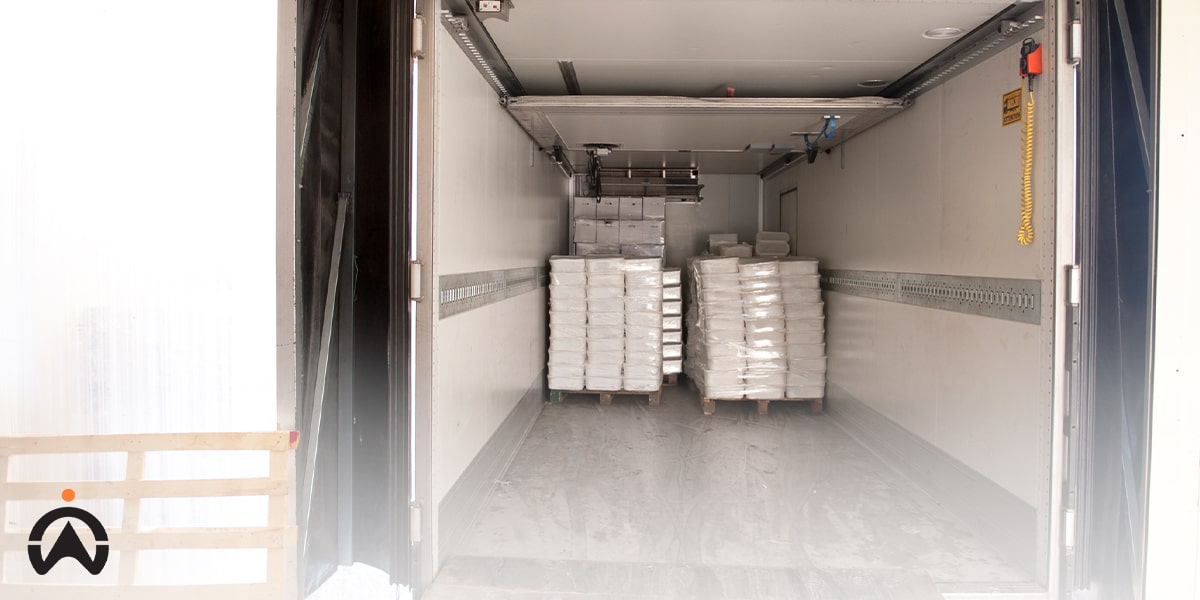
What is a trailer tracking device and how does it work?

Why track your assets?

Businesses invest in many things to generate profits, like their employees, vehicles and overall trailer assets. Physical assets could include any equipment, technology, or machinery that an entity uses to provide a service to themselves or their customers. All these different types of vehicles and site equipment are valuable for the business and need to be protected.

Asset tracking is used to track a business’s assets. It gathers any GPS data related to them, such as their current location, maintenance conditions, when last it was in use, for how long and by whom. This is achieved by equipping the assets with a tracking device.

Asset tracking is useful for:

  • 24/7 trailer surveillance
  • Movements of the asset
  • Usage of the asset

Apart from your trailer’s protection, asset and trailer tracking is used for productivity and easy management, having a tracking device automatically tells you how long one of your trailers has been used in a day, and by who saves loads of time in calculating, it also helps add up working hours so you can bill clients or pay employees more accurately.

The real-time vision of their trailers gives fleet managers insights into their assets whether on-site or on the road. Using fleet trailer tracking units and software not only makes their job simpler but can also boost the organisation’s bottom line.

Asset tracking devices for theft prevention

So it happened, you clock in one morning, open your emails and read that one of your trailers was damaged or stolen while unattended. Now what? Most of the time, criminals would strip the trailer and remove the trailer’s vehicle identification number (VIN) before you even notice your assets are gone.

This happens all too frequently, costing businesses time and money. Every company that uses trailers understands these struggles. The dangers of leaving your assets unguarded, the area where they are left alone, the chance of the item getting stolen or used without our consent, and the list goes on.

With a trailer tracker, you will immediately know that something has gone wrong. An alert would be immediately sent out, giving you enough time to call the authorities and find your missing trailer, and you can receive all this info via your mobile device.

Types of trailers that can be tracked

Realistically, GPS trackers can be installed onto any moving vehicles and stationary assets. Cartrack’s tracking units can be easily installed on all types of trailers, and vehicles in use, including:

  • Flatbed trailers
  • Enclosed trailers
  • Equipment trailers
  • Open auto trailers
  • Speciality trailers

While any GPS fleet tracking device would do, partnering with an industry-leading fleet management company like Cartrack would give you numerous benefits and added peace of mind.

Asset tracking technology

While GPS tracking is the most popular tracking method, there is more than one way of tracking assets. Finding the best asset monitoring solution for your company might be difficult given the variety of asset tracking technology available.

Bluetooth asset tracking/ Beacons: These are remote gadgets that transmit Bluetooth low-energy signals sent to another Bluetooth digital gadget or smart device to establish the location of the beacon itself.

Radio frequency identification: Passive RFID asset tracking is a form of wireless communication that uses electronic fields to identify and track tags attached to objects. These require RFID reader devices to receive signals from the tag.

GPS-based asset tracking: GPS tracking devices are attached to any assets and can interact via cellular networks or satellites and communicate over long distances while keeping accurate, up-to-date logs for employees.

Most types of mobile asset tracking devices allow for custom alerts, notifications and even geofence set-ups for the safety and protection of your assets.

The best GPS tracking features to look out for

Before choosing an asset tracking solution, always consider your goals and ask yourself: What exactly is my business looking for and what features do we need the most?

The best tracking devices are ones that have the following features:

  • 24/7 real-time location tracking
  • Cloud-based system
  • Theft detection
  • Easy installation
  • Long battery life
  • Solar-powered technology
  • Instant reporting
  • Over-the-air serviceability
  • Interface with user-friendly mapping systems such as Google Maps or others
  • Viewing trailer trip history

Finding one device that offers all these features would be a dream, but realistically most devices are not one-size-fits-all, these features are spread out between devices that are used to track different assets in different environments.
The best GPS tracking features to look out for

Why does GPS asset tracking matter?

GPS asset tracking is done to improve the use and security of valuable items, in this case, your trailers and the cargo they carry. Companies that fail to track assets correctly could be losing vast sums of money on an annual basis and losing the trust of their customers.

Trailer (and asset) management is an essential component of your business’s supply chain operations. Lost or delayed cargo means lost sales and unhappy customers, which can be detrimental to a business.

Management may have a better and clearer image of where everything is, and where it is going, by connecting trailer tracking devices and their fleet management system.

By doing this, you can receive:

  • Lowered insurance rates due to aiding in trailer theft recovery
  • Software upgrades can be done digitally and don’t need the removal of the tracking device
  • Optimised asset usage
  • Increased asset and cargo security
  • Improved customer service with accurate and timely information
  • A sealed trailer tracker that can work in harsh weather and road conditions.

Different businesses that can utilise trailer tracking devices

If your assets aren’t frequently monitored, operate in unsafe locations, aren’t being utilised enough or bring value to your business, implementing trailer monitoring would be very beneficial.

No matter the fleet size, almost all industries can benefit from tracking and monitoring their trailers.

  • Landscaping
  • Construction
  • Handyman
  • Tile and flooring installation
  • AC & heating repairs
  • Transport and logistics
  • Utilities

The benefits trailer tracking can bring your business

A fleet of any size can profit greatly from using a dependable trailer tracking system. With this, you can safeguard your trailers, get visibility and insights into their movements, and much more:

Gain complete trailer visibility – Track all your van trailers on one platform.

Increased trailer utilisation – Monitor trailer utilisation at customer sites and optimise trailers by redeploying under-utilised assets.

Protect cargo – Use smart sensors and camera systems to gain 24-hour cargo monitoring and protection against tampering or unscheduled usage.

Simplify deployment – Trailer tracking can be used on any trailer to keep assets safe.

Increase productivity – Examine past GPS data to see where you can improve trailer efficiency and usage.

Increased trailer safety – Receive instant alerts on trailer status, location, door activity and unauthorised usage for optimum security.

Trailer tracking systems use the data sent to the dispatcher to provide dependable and secure insights to shippers for better management of their various assets.

Secure trailer tracking with industry experts

Cartrack’s GPS trailer tracking technology puts you in control of both your active trailers and non-moving assets.

If you’re looking for advanced safety and tracking features, Cartrack provides real-time security with customisable geofences and alerts for your assets.

Let us help you protect your assets. Contact Cartrack today.

How to react in the event of a hijacking

Nobody climbs into their car expecting to be hijacked en route to their next destination. But, it happens. Every 32 minutes a vehicle is hijacked in South Africa.

The official Q1 2021/2022 South African crime statistics released by Police Minister Bheki Cele reveal that hijacking increased by 92.2% compared to the same period last year. A total of 4 973 hijackings were reported across the country over the period. In Gauteng, this number increased by a whopping 97.8%, with 2 704 incidents.

“The best way to protect yourself from a carjacking is to be aware of your surroundings and do whatever you can to prevent it from happening altogether,” says Eugene Herbert, CEO of MasterDrive.

Navigate the unexpected

The prospect of being targeted in a hijacking is frightening. It’s a scenario that you hope to never find yourself in. Unfortunately, despite our best efforts, the reality is that it could happen to any one of us. That’s why it’s important to have the appropriate knowledge that will allow you to safely navigate this unfortunate event.

Here are some tips on how you should react in the event of a hijacking:

1. Don’t resist and do as you’re told

While your first instinct may be to retaliate when your life and possessions are threatened, avoid this reaction at all costs. Yes, it’s your car and you’ve worked hard to own and drive it, but hopefully it’s also insured, so unlike your life, it can be replaced, along with your other possessions inside the vehicle.

The best way to handle the situation is to not threaten or challenge the hijackers in any way, especially if they are carrying a weapon such as a gun or a knife.

Calmly just leave all your valuables in the vehicle, surrender your car and move away from it as quickly as possible without making any sudden moves. Always try your best to place as much distance as possible between yourself and the hijackers.

2. Don’t make any sudden movements

As previously mentioned, trying to be a hero is a move criminals expect from the people they’re stealing from, so the hijackers are more likely to be startled by any sudden movements and they may perceive it as a threat. Their response could be to panic which could result in them retaliating aggressively.

Keep your hands clearly visible at all times, preferably in the air. “The safety belt can put you at risk of getting shot at,” a hijacker told Independent Media in an interview. “When you reach to unclick your seatbelt, we might panic and think that you are reaching for a weapon, and that is when you get shot.”

Lift both your hands up and spread your ten fingers wide apart to show you’re not holding anything, which sends a message that you are not a threat to the hijacker, advises Derek Kirby, Ford South Africa’s advanced and defensive driving expert.

Avoid making eye contact with hijackers and speak slowly and calmly so as not to further aggravate the hijackers.

3. Subtly gather information

Instead of looking for a way out of the situation by challenging the hijackers, use the time in which you’re being told to give up your car to gather as much information as you can without posing a threat to the hijackers.

It’s a stressful situation but taking note of small and important details that will be useful to police at a later date helps when making a statement which will help hopefully get your car back. This information includes:

  • How many hijackers are involved in the crime
  • General descriptions of the hijackers and the clothes they were wearing
  • How many firearms or weapons were used and what they look like
  • The type of language and accent they used
  • The direction they drove off in after taking your car
  • All the belongings left in your car at the time of the hijacking

What to do after the hijacking

As soon as you are safe, you must borrow a phone and call the South African Police Service on 08600 10111. SAPS should arrive on the scene and dispatch medical services if required. Should you require any other emergency numbers, you can phone 112 on any cellular network.

1. Activate your tracking device

If you have an active tracking device from Cartrack, immediately alert Cartrack’s control operations room by phoning 0861 111 564.

Vehicle tracking has become an important technology for the safety of not only fleet vehicles but also for the individual driver. With the extensive range of optional extras offered by Cartrack, you will be covered for almost every eventuality, including a hijacking.

2. Don’t panic, push the button

When you tap the Protector button on the Cartrack app, it unleashes a world of tools that come to your rescue, managed by highly-trained control room operators:

  • Our team will contact you to determine what kind of assistance you need
  • The closest, most appropriate provider will be dispatched to your exact location
  • Help will arrive based on real-time analysis of the GPS and satellite technology embedded in your installed device

Cartrack’s Protector feature is an additional, optional service that is available on all Cartrack’s packages. Our emergency control room teams are always ready to support you in the unfortunate event of vehicle theft or hijacking. They will communicate directly with our private response teams and local police to ensure a rapid response.

3. Sound the alarm

“Install apps on your phone that friends and family can use to track your location should you not arrive on time,” says Herbert. The Share Location feature on the Cartrack app allows drivers or individuals to share their exact location from anywhere. This comes in handy when hijackers are driving off with your car, leaving you stranded. Sharing your trip before hitting the road is ideal to get the best of this feature.

Another great feature is geofencing, to alert you when entering a predefined high-risk area. “Investigate high-risk areas,” advises Herbert. “This is not to say you shouldn’t drive in those areas, but knowledge of this information can help you make the best decisions for your safety.”

Near or far, we’ll watch your car

A Cartrack tracking unit in your car ensures that no matter how far you go or who illegally dispossesses you of your car, there will always be a team of experts ready to come to your rescue. Contact us today for ultimate peace of mind and find out why #DriversLoveUs

5 tips to keep in mind if you’re modifying your car

We’ve all seen them. We’ve even heard them long before they appear. Idling in traffic waiting on the green light and suddenly a striking car catches your eye. The bold colour and unique exterior are hard to ignore and you wonder for a bit what it would be like to cruise down William Nicol in a car like that.

You can get your modest car to look and perform like a premium model through the magic of modifications.

Whether your modifications are purely for aesthetics or you want to increase your car’s performance for more driving pleasure, modifying your car isn’t as easy as the movies might have you believe. Getting a car that rivals a Fast & Furious ride can be expensive, time-consuming and even illegal. Here are a few considerations to keep in mind before planning that drive off into the sunset with your pimped-up ride.

1. What are the most popular car modifications?

There are three main categories of trendy car modifications, based on the goal of the change to the vehicle. The most popular ways drivers are modifying their cars involve:

  • Boosting engine capacity
  • Installing illegal devices like nitrous oxide cylinders
  • Dropping suspensions
  • Fitting bigger wheels
  • Tinting windows extremely dark
  • Installing body panels, spoilers, diffusers, and tail fins
  • Altering the exhaust system to emit louder sounds
  • Fitting super sound systems that exceed the approved decibels levels

From looks, to feel and the need for speed, the most common tweaks people generally make to their cars are:

Aesthetic or visual car modifications

Stars, stripes, flames and even graffiti are popular choices when drivers want to add a more cost-effective visual appeal to their wheels. However, aesthetic modifications extend beyond the car body and can include chrome tyre rims, grilles and so-called “halo” headlights.

Modifying your car in this way is the simplest because all these changes aren’t permanent and only affect the way the car looks and not the way it performs. It’s a pretty harmless way to make tweaks to your car, but there’s no guarantee you won’t stop traffic with your bold design choices.

Functional car modifications

Car enhancements that have more to do with function than form mostly have to do with a vehicle’s suspension.

If you’re satisfied with your car’s general performance and don’t intend on increasing its machine power, you’re probably looking at making some functional car modifications, for practical reasons. Some reasons include lifting your vehicle’s suspension to navigate bumpy roads and rough terrain as a bakkie driver. This kind of enhancement elevates the vehicle to avoid any damage to its bottom. [N3]

Perhaps you want a sportier look and feel to your ride. A slight drop in suspension enables your car to have bigger and wider tyres while cruising comfortably – and safely.

Performance car modifications

Looks aren’t everything, and drivers who have a need for speed and a desire for a powerful engine know this. Car modifications that improve a vehicle’s engine power, speed and braking abilities are considered performance-based.

Turbochargers and nitrous oxide are popular ways to alter your car’s speed limit, but they’re not so popular with the law. These performance modifications are likely to be illegal because of the threat they pose to the safety of the driver and other users on the road.

The idea behind modifying your car for performance purposes is to improve the driver experience or simply increase your car’s capabilities in your chosen environment.

2. Benefits and challenges of modifying your car

The concept of modification isn’t just for illegal street car racing like in the movies. Some cars can benefit greatly from a few tweaks to various parts.

For example, if you alter your car’s speed capacity, your car will have more power, which you could either use with restraint and experience fuel economy benefits or choose to drag race, putting you and other road users at risk.

Fitting larger rims and better tyres could either improve your car’s roadholding ability and reduce road noise or be a road hazard if they are not compatible with your vehicle, ill-fitting or don’t have the correct speed rating.

Car modifications that fall outside the manufacturer’s approved accessory installation can also affect the warranty of your car. When the same alterations also contravene the Road Traffic Act, the car can be deemed illegal for use on a public road. This can result in your car being discontinued from service, and to continue driving it, you will need to restore it to its original condition and present it for a retest at an approved vehicle testing station.

According to Forensic Road Transport and Risk Expert Stanley Bezuidenhout, there should be no issues with modifying your car with after-market accessories or performing upgrades on a vehicle if you:

  • Have the car manufacturer’s approval
  • Use parts developed or provided by companies with suitable certifications regarding standards
  • Fit modifications supplied by a local company who have an elevated level of credibility

On the other hand, says Bezuidenhout, there are certain modifications that compromise vehicles and could deem your car unroadworthy:

  • DIY cutting and widening of rims
  • Suspension is done by cutting of springs or heating of coils
  • Swapping engines between different vehicles of different sizes and capacities

Remember to keep in mind when modifying your car the impact of the enhancements on fuel consumption. Cars are built a standard way for a reason, and they’ve gone through tests to get the most economic performance for that particular make. Something as small as the wrong set of tyres could increase your fuel costs

3. Which car modifications are considered valid?

To be considered valid, modifications to your car need to be fitted with parts and accessories approved by the car manufacturer so you don’t lose the vehicle’s warranty.

Tampering with the engine performance, suspension, wheels, and brakes of a vehicle go outside the approved parameters, making the car’s dynamic performance a safety hazard because that specific vehicle wasn’t designed with high-performance driving in mind, especially on a public road.

“Such highly modified vehicles can only be restricted for use on racing tracks,” says Bezuidenhout. “Illegal street racing with vehicles modified to boost the performance of the vehicle has become a significant concern to all in road traffic enforcement and a threat to all road users.”

4. Which modifications are a threat to road safety?

“Simply put, alterations and modifications can be described as bringing about changes to the original vehicle parameter standards with a view, largely of enhancing a vehicle’s performance in fuel consumption, load capacity, cosmetic trim, 0 – 100km/h or top speed runs,” says Bezuidenhout. “Where these modifications do not comply with the requirements of the Road Traffic Act, they will be deemed illegal.”

So, what car modifications are considered a threat to the law and safety of other road users?

  • Speed enhancement modifications, which results in reaching illegally high speeds
  • Suspension modifications, which can affect the steering and control of the vehicle
  • DIY suspension modifications which can sometimes see springs falling out of the vehicle
  • An oversized engine which can compromise overall driving, including the ability to stop in time.
  • Overly wide wheels which can cause premature wear of wheel bearings and other critical components

5. What is your modification budget?

One thing about modifying your car – it won’t be cheap.

Buying a car in itself is an expensive exercise, regardless of whether you’re buying it pre-owned or brand new, financed or cash. If you’ve already put down a deposit on a new car, you probably don’t have that much more to spend on modifying it to your satisfaction.

Not-so-obvious costs of car modification

Not to mention covering the hidden costs of car modification and maintaining your new enhancements. A modified engine may need you to switch to premium fuel, costing you more in the long run with every visit to the petrol pump. A specialised paint job can make a scratch or dent feel like more than a minor incident.

It’s already expensive driving an ordinary, off-the-rack vehicle. Throw in a few modifications and you’re looking at big short- and long-term costs. You need to decide if digging deeper into your pockets for nice-to-have features is a necessity.

Long-term costs of modifying your car

Perhaps consider seeking out modified cars for sale matching your desired features. Platforms like Carzuka offer a wide range of cars to choose from. It’s not guaranteed you’ll find exactly what you’re looking for, but it may work out cheaper than modifying an ordinary car from scratch.

You may have to make peace with the fact that your new pimped up ride may have been put through quite a lot already. Have a trusted contact in the auto industry run a check on the car’s history to ensure you’re not buying a car that will give you future problems because of a sketchy past.

Another consideration to keep in mind is that all these modifications may not increase the car’s value. The car’s book value remains the same, despite how much you spend on modifying it. So, in the long run, if you intend on selling the car one day, be prepared to lose everything you’ve put into it.

Protect your prized possession

Your modified car is just as special to us as it is to you. Let us help you protect it with our world-class service. About to drive through a dodgy neighbourhood or park at the mall for an errand? We’ve got you. Contact Cartrack today and let us help you stay safe on the road.

From the exterior to the interior and everything in between, modifications may not get your car looking like a Lamborghini, but you’ll look and feel like you’re driving a whole new vehicle.

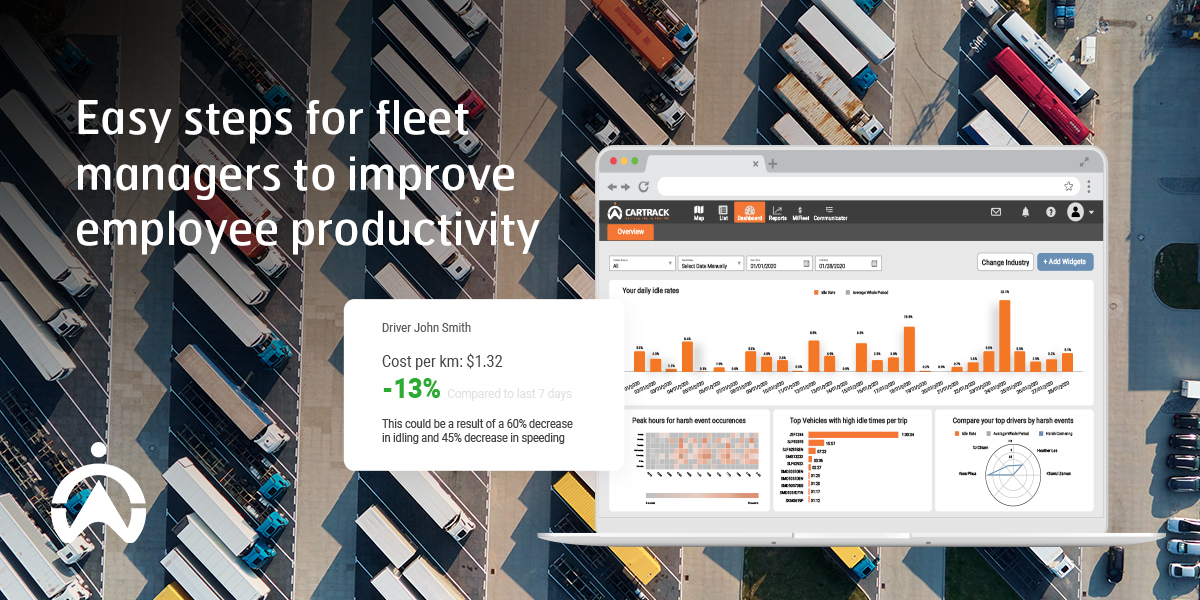
Easy steps for fleet managers to improve employee productivity

Managing fleet administrative tasks such as vehicle registration, fuel cards, invoicing and much more, leaves little to no time for fleet managers to focus on other business matters such as – employee productivity. Here’s how fleet managers can improve productivity rates.

Fleet managers often wear multiple hats and work on several projects simultaneously. Managing fleet administrative tasks such as vehicle registration, fuel cards, invoicing, driver expenses and quoting leaves little to no time to focus on other critical business matters, such as – employee productivity. Learn how to boost staff productivity and encourage fleet managers to bring production back on track.

With all the responsibilities fleet managers have, some might not be aware of the modern fleet technologies out there that can lessen their load and prove helpful in their daily duties. The most efficient way for fleet managers to increase their employee productivity is by outsourcing some of their responsibilities to someone, or something else.

Telematics and fleet management systems

A fleet management system is a database used to store all records of your fleet. Documentation on active vehicles, fleet vehicle specs, maintenance and anything else that has to do with your fleet vehicles can all be stored and accessed anytime you need the information.

Telematics, on the other hand, is a combination of vehicle tracking and communication services. It gathers and analyses all data collected from your vehicle(s) and sends it directly to the fleet manager. This information is used to keep track of various vehicle information.

Together, they possess a wide range of fleet data, reports and insights that fleet managers have full access to. All the administrative tasks that would have taken the manager several days to gather and compile, would all be waiting for him/her as soon as they open their laptop or phone.

How does fleet management help improve employee productivity?

The role of fleet managers is to keep costs low, maximise profits, and minimise risk while overseeing a fleet. With fleet management systems and telematics, half of the hard work would already be taken care of.

With the help of GPS technology, fleet management systems allow you to:

• Know the location of every vehicle in your fleet

• Be aware of each vehicle’s fuel consumption and be able to save

• Be able to decrease maintenance costs by continuously monitoring the vehicles

• Being the first to know when something needs to be replaced or fixed

• Cut delivery time down by implementing route optimisation

With these benefits put in place, and fleet management systems handling the heavy-duty tasks, fleet managers have more time to focus on maximising safety, improving service delivery standards and customer service and satisfaction. Fleet management systems don’t only improve a business’s work efficiency they also positively affect every employee’s productivity.

What is Employee Productivity?

Employee productivity is about fleet managers working smarter to raise the business’s bottom line. It’s the amount of work an employee gets done in a specific amount of time, or in simpler terms, how many jobs a fleet driver completes in a day.

Managers can access fleet data or employee productivity reports through productivity tracking and see where the majority of the employees’ time goes, how long it takes to complete their work and the quality in which it is done. This information is used by the manager to optimise operations going forward.

Productivity tracking

Productivity tracking measures show how productive your employees are in terms of how many projects they can handle and how fast they can get them done. It also tracks what the employees do when they are idling or simply not working, which websites they visit and how long they spend on these sites.

For a fleet manager, overseeing their many tasks on a day-to-day basis and being able to complete them before the day is done is very important. Productivity rates could rapidly decrease if their process is decreased by employees idling by or not completing their quota of tasks. It’s the manager’s job to keep them on schedule and avoid disaster.

“We often assume that productivity means getting more things done each day. Wrong. Productivity is getting important things done consistently,” says James Clear, author of Atomic Habits, “and no matter what you are working on, there are only a few things that are truly important. Being productive is about maintaining a steady, average speed on a few things, not maximum speed on everything,” says the productivity expert.

James Clear shares some top productivity methods with us:

These productivity methods could be used and utilised by both managers and employees. A valuable tool to have in your workflow management arsenal.

  1. Eliminate Time-Wasting Activities by Using the Eisenhower Box

The Eisenhower box is a task management tool that helps you prioritise tasks. It helps distinguish tasks according to urgency and importance and then lets you go through your work accordingly.

  1. Warren Buffett’s “ 2 List ” Strategy

Warren Buffett, a well-known billionaire investor, devised a two-list strategy in which you write 25 of your top priorities on one list, circle five goals from the first list, and jot them down on the second. Then only focus on those five while avoiding the remaining 20.

  1. The Ivy Lee Method

This is a 100-year-old strategy that’s proven to work time and time again. At the end of each day, write down six important tasks for the next day, then immediately do those tasks first thing in the morning. Repeat each working day with a new list.

  1. The 15-Minute, Anthony Trollope method

Anthony Trollope created a routine where he would ruthlessly do his work at 15-minute intervals every morning without giving himself any leeway. He exceeded his goals and increased productivity by:

  • Having someone keep him accountable
  • Tracking his progress
  • Focusing on the small achievements, not the finished product

Being productive is as simple as taking a few minutes out of your day and implementing one of these methods. Ten minutes of planning could result in a whole day’s worth of productive work.

What does it mean to improve employee productivity?

Increasing your employees’ productivity means catering to their needs. Fleet managers do this by:

  • Creating a healthy work-life balance
  • Establishing employee relationships within the workforce
  • Creating doable working hours
  • Providing positive feedback on how they can improve their work.

This allows fleet managers to make long-term solutions that will encourage employee productivity in the long run. These suggestions might not have immediate results, but little by little, an improvement will be evident in productivity rates.

5 Ways to boost employee productivity in your workplace

For employees, it’s easy to fall into the mundane routine of working at a steady pace, which often results in incomplete tasks. This could add more tasks to your to-do list for the following day. The more you repeat this cycle, the more work gets piled up and results in procrastination, falling behind on work and slowing down efficiency in your respective department.

Being productive is a skill that many of us struggle to grasp, but it does not have to be that way. Here are a few tips managers should implement to help increase their employees’ productivity at work.

  1. Stop multitasking

You might think doing a few tasks at once will help you finish your work faster, but in truth, it only slows you down and creates more work, as seen in the scenario above. Giving your attention to one task at a time is the only way to ensure your work is done and done properly.

  1. Take breaks

The time allocated for your break is important. It gives your mind and body time to recuperate and get some much-needed energy back into your system. One might think working for a prolonged period means being productive, but the opposite is true. You will feel mentally drained and produce work of poorer quality at a slower rate if you don’t take some time for yourself.

  1. Set small goals

Small achievements help maintain momentum over the long run. You’re more likely to complete large projects when they come by focusing on every achievement, no matter how big or small.

Acknowledging employees’ achievements helps motivate them, which in turn makes them more productive.

  1. Do the most work when you have the most energy

Whether it’s in the early hours of the work-day, or right after your lunch break, the time of day when you’re most alert and energised should be the time where you attend to your biggest tasks. Big projects require large amounts of energy, so give them the proper amount of time and attention they need. There’s no use letting all that energy go to waste on follow-up emails and organising paperwork.

  1. Implement the “two-minute rule”

This method is perfect for preventing procrastination and for reaching objectives without even noticing. All you have to do is fill small spaces of idling by doing tasks that would take you two minutes to do. Before you know it, you will have accomplished a lot of work and improved your work ethic.

Factors that impact employee productivity

Investing in your employees will have a lasting impact on your organisation. Beyond an employee’s experience, skills, and work ethic, several other office-based factors affect their work. These factors impact employee productivity, but they are often overlooked by fleet managers:

  • Engagement: Managers often think employees are productive simply by waking up, showing up for work and doing their assigned tasks. Getting to know your employees, giving them a sense of value and purpose so they feel a need to want to do more, is also an important aspect. It encourages them to be more productive.
  • Management practices: What level of engagement does the fleet manager have? Are they available and easily approachable by employees? And does he or she work with individuals’ strengths? Are they able to motivate their workers through their management style? These questions help determine if a manager’s management practice is effective or if it’s a liability to the business.
  • Workplace environment: When the atmosphere is unpleasant or intense, engagement and productivity levels plummet, which negatively affects the entire organisation’s productivity. Unnecessary stress and pressure might even drive employees to consider working for other businesses.

Fleet managers should look for ways to lighten the mood in stressful moments to ensure their employees remain calm and focused.

  • Appropriate tools: It is about providing people with the necessary tools and resources they need to get their jobs done to the best of their abilities. As a manager, make sure systems are in place to ensure new employee hires and current staff members have access to all the necessary software and resources they need to get their jobs done.

Employee engagement

This can be seen as the level of involvement or interest employees have within their workspace, towards their managers and with their surrounding colleagues. Whether they are fully involved in the business culture or are struggling to integrate into the environment.

Prioritising employee engagement in the business and various departments within it will build up work relationships and help in the long run, by making employees feel welcomed and more comfortable at work. Providing a safe environment for stellar production increases is an investment any business should be willing to make.

Lack of employee engagement

This lack of interest is often a result of improper organisational socialisation, also known as onboarding, in the first few weeks of the company. This is usually the responsibility of HR and the training department, but fleet managers also have a role in continuing to inform, assist and guide employees in their new roles and duties. This will aid in employees’ getting to know and engaging with their environment, colleagues and managers.

The type of work produced by an employee who is merely there to clock in and finish off their day, and one produced by an employee who truly enjoys their work and interacts with their colleagues, are drastically different.

Based on research gathered from 50 employees, Gallup states that “ Engaged employees produce better business outcomes than other employees – across industry, company size and nationality, and in good economic times and bad.”

Key factors to staff engagement:

  1. Purpose – “ People want purpose and meaning from their work. They want to be known for what makes them unique. This is what drives employee engagement.” says Gallup.
  1. Development – Employees need to feel like their skills and know-how are constantly being improved and they are learning new things by being at work. Not a place where they constantly share their business knowledge, but one where the business gives back by investing in them.
  1. A caring manager – Some managers think they need to lead with an iron fist, but a friendly personality and positive feedback go a long way.
  1. Ongoing conversations – The relationship between an employee and their supervisor is critical. If the employee and manager have a good line of communication with each other, issues can be resolved quickly and the work produced will be more aligned with the manager’s expectations, which means fewer reverts.
  1. A focus on strengths – Employees must focus on the strengths they already have while cultivating and improving their weaknesses.
  1. Have team building activities – Most people might think this is the job of HR, but managers are the ones that have to put the effort into planning and implementing team building activities as they have an impact on the overall production and behaviour of their employees.

Improving-employee-productivity-with-Cartracks-fleet-management-system

Project management

Project management is a process that helps to identify and manage the scope, cost, schedule, risks, and resources of a business. It also includes making sure that all the employees’ tasks are completed, resources are allocated appropriately, and that the work produced provides the business with increased sales and meets the business’s objectives.

The goal of project management is to create an environment where everyone on the team can work together and produce their best work. The aim is not to fix short-term problems like increasing the number of customer calls or emails sent per day. Yes, these are factors that increase employee productivity, but these problems will more than likely not have an impact on productivity in the long run.

What are performance measures

Performance measures are a collection of different attributes that come together to show how much a business, or employee, has achieved, based on its performance in a specific amount of time.

Many businesses use performance measures to set goals established by what their stakeholders and higher-ups expect from them. They then push these objectives towards their fleet managers and employees, to have a set goal.

Understand performance pace for different employees

Remember, not all employees work the same or at the same pace. For fleet managers, comparing one employee’s performance to their overall expectations of them or even to another employee is not always an accurate indicator of their ability to perform.

Managers have to evaluate each employee individually. Keep in mind that they are not all on the same level and they each have their own strengths, weaknesses and process they follow to get through their work.

Use employee productivity reports to customise every evaluation and use that data to individually improve productivity output. This will improve confidence in the employer, as it shows that the performance measures taken are used to help employees identify their ‘blind spots’. It also builds trust as it proves that the software is really there to make improvements and not as a spy tool.

The importance of performance measures

These are to keep fleet managers and businesses accountable and informed about every step taken to reach their goals. Each performance improvement is used to track the trajectory to success and the period in which it would take them to reach their target.

Without performance measures, managers wouldn’t have any means of tracking small milestones made on their way to achieving the business’s objectives.

Here are five pros and cons regarding productivity monitoring and performance measures:

Advantages

  • Ensures fairness within a work environment
  • Track individuals and team productivity
  • Sets positive standards for workplace behaviour, even outside the office
  • It reveals high-performing employers and underperformers
  • Shields business from cyberattacks

Disadvantages

  • Distributions of trust
  • Creates privacy problems
  • Employees can feel highly monitored and start to feel uncomfortable doing their job.
  • Lack of knowledge concerning the monitoring software
  • Cannot track where online, the employee spends their time

Most of the disadvantages of productivity monitoring can be dealt with through effective communication, indicating what exactly will be monitored.

For fleet managers, it’s important to be open and inform fleet drivers of the necessary safety measures put in place in each vehicle, yes, including the AI camera system recording their every move.

Advantages of employee productivity tracking

Productivity tracking helps to fine-tune business efficiency and employee work ethic. It helps the business in the long run by focusing on long-term solutions and not just short-term ones.

With the help of productivity tracking software, fleet managers can change the way they monitor employees, measure time, and keep track of their teams in between formal office hours.

Here are some of the benefits of implementing employee productivity:

  • Improve employee productivity and efficiency
  • Identifies struggles and internal problems
  • Efficiently track attendance and effort
  • Improves working from home conditions
  • Creates trust in employees
  • Effective project management
  • Increases security and safety

Employee productivity monitoring analyses the data provided to improve your employee’s work ethic, behaviour and productivity.

It is designed to show fleet managers which measures work. The data can be used to improve a team’s productivity as well as allow fleet managers to make informed important decisions like:

  • Whether they need to adjust their goals
  • Modifying certain departments.

It also gives a business a good indication of how far they are from achieving their objectives.

Make Cartrack your no.1 solution

When looking for a digital assistant to help you improve your employee productivity ratings, workflow and work ethic, Cartrack’s fleet management solutions do it all.

Cartrack offers fleet managers a range of add-on features that help cut fuel costs and driver expenses, lowers acquisition prices, saving businesses time and money.

Some add-on features include:

  • Routing
  • Fuel Monitoring
  • Temperature monitoring
  • CarWatch

Take your first step into work optimisation, contact us today to get a quote.

5 top actionable business insights for your fleet

The process of data collection is more than meets the eye. When cracked right, there are multiple ways businesses can use it to their advantage.

It starts with analysis, followed by objective-based interpretation, and ends with opportunities for business development and exploration.

In this article, we’ll take you on an insightful data mission, where you will get the chance to achieve actionable business insights through data.

We are here to empower managers and unleash their decision-making powers.

Actionable business insights through data

How-fleet-management-helps-with-your-vehicle-maintenance

The data process can seem like quite a mouthful, but let’s break it up into bite sizes.

Data is the information that you collect from your systems. For example, in the fleet management process, you might need data about driver behaviour, fuel consumption, maintenance alerts, and much more.

Insights are the value you derive from the analysed data. You can use data analytics to identify trends and patterns in the information retrieved. Analytics assists to make sense of the data.

Information is a product of refining this data and giving it structure and context. This way, you aren’t staring at a bunch of random numbers on spreadsheets and documents.

Actionable insights are where the magic happens. This is the part where businesses use data analytics and discoveries to take action and improve the efficiency of their operations.

There are many online tools available to make sense of data. In the fleet vehicle tracking industry, software platforms are trending. The advanced tech is already in place, with powerful insights, and integrated analytics – all designed to give you the reports you need.

Let’s dive in a bit more.

What are actionable insights examples?

How-Cartracks-fleet-management-delivers-actionable-insights

Fleet management systems or platforms are what fleet managers can use to achieve and harness actionable insights.

These are accompanied by advanced software technology assisting businesses in developing a strategy to make informed decisions.

You could choose Cartrack as a provider and gain actionable insights such as:

  • Instantly pinpoint challenges. This will allow you to make changes immediately during work hours and in your business overall. While you are quickly putting fires out the business can keep growing with increased productivity levels.
  • Receive contextualised metrics. Perhaps you want a specific context for a certain reporting requirement, such as the cost per job. The operational, administrative, and financial data costs can be aligned for you to analyse this spec. Receive metrics for all three and can determine the exact cost per job, and make price comparisons. Maybe one outweighs the other creating a cost imbalance, so you might need to make some cost changes there. Also, compare accurate metrics to see whether your routes are optimal and know how other costs impact your margins.
  • Use comparable metrics. Compare metrics across drivers and vehicles to pinpoint price differences in costs per task, or differences in behaviour and maintenance costs for the vehicles they are driving. If one driver’s vehicle is costing significantly more on maintenance than others, managers can assist their driving behaviours and empower them where needed. Use this to assess driver productivity. Know how much time your drivers spend on the road and how many jobs they complete in the required time.
  • Get important insights instantly. There might be an urgent concern that needs your immediate attention, prompting a meeting with concerned parties. Say you don’t have time to spend hours analysing data; the platform will give you a visual overview of your fleet’s fuel consumption, unproductive idling, safety, and utilisation on the dashboard, all with one click. You can filter data by time or vehicle for added flexibility and speed in pinpointing challenges. With this, you can be prepared for your meeting without doing much prep.

What are data insights for business decisions?

Data-insights-deliverd-through-cartarcks-fleet-management

We know that actionable data can help you make immediate moves and business decisions.

However, we should expand on it, ultimately using it in the best way possible for the business. In other words, use it to drive workforce optimisation, which encompasses admin together with task, team, and change management.

Fleet owners need a solid business structure and strategy behind them to set the foundation for fleet managers, drivers, and all other staff. From there, we can create meaning out of insights.

But let’s start with the base first.

Actionable insight business considerations

  • Get the right people in your corner

It’s important to hire the appropriate people for the job who can understand the data insights. Investing time and energy into finding the wrong people is costly, and not just financially, but for the business flow. For example, fleet managers should be hired based on the fleet experience they have to understand what the system data means.

  • Communication and team planning

The importance of communication and planning for businesses and teams has proven to be one of the most important task management strategies. With a vehicle fleet, it goes without saying that you will have a diverse team, often distributed all over. As a result, you need to plan, manage, follow up on tasks and create a space for them to excel. One way of doing this is having communication channels in place to improve driver productivity and ensure efficiency. Fleet software apps offer this feature.

  • Set up KPIs

These are used to assess an organisation’s performance against its goals. They aid in decision-making, assist in setting strategic objectives, and enable effective processes. This will motivate employees and assist with their performance.

  • Internal actions

Managers and teams need to create actions within their task management, and delegate tasks to team members. Reminders are set and updates are done, once the task is complete – they can move on to the next. This is also part of the communication channel chosen.

  • Competitive advantage

Companies should capture, manage and analyse their data to improve their business intelligence. They can then grab the opportunity to jump ahead of competitors by offering great customer service.

How do you convert data into meaningful insights?

Actionable-insights-brought-to-you-through-our-fleet-management-system

  1. Define your goals and objectives

Before even choosing appropriate fleet management software, goals should be top of mind. Goals give everyday tasks more meaning and clarify the reasoning behind company decisions. Without these in place, there isn’t much to work towards causing stagnation and struggle to make accomplishments. Goals are steps to the end result, which are part of every business plan.

Fleet managers can set operational goals such as saving on fuel costs and improving driver engagement. With this in mind, they can go directly to the part of the platform that gives this insight. Maybe the marketing team’s goal is to bring in more leads for the business, which will require a higher budget. Saving on fuel costs and working towards that goal, will directly bring in more revenue for the company.

If this does come to fruition, the data indeed will be a meaningful insight that can be measured to the goals.

Now, you will be able to ask the right questions and figure out what questions you want your data to answer. Before you unravel the data, it will ensure that you don’t spend time on the wrong things.

  1. Segment your data

Cutting up data into segments can help you make better sense of it. A fleet software platform works in the same way as Google Analytics. You can customise the platform to suit your needs, and pull up the specific data you require for adequate reporting. For example, maybe you have a management meeting about driver behaviour and productivity. You can create a segmentation for that on the platform, and then relay feedback on that only.

  1. Use visuals to simplify data sets

Visuals are a nice way to represent data in an easily comprehensible manner. Especially when it comes to presentations, you cannot use raw data to relay information, but should rather use visuals to show your findings. The software’s report function will be the starting point before you create the perfect presentation for your meeting.

  1. Discover the context

Without the right context, you’re either not getting the full story or getting the wrong one. Based on your pre-determined goals, you need to get the full picture to create meaning out of the outcome or visuals. You should ask questions like who is responsible for this within your fleet? Or why did it happen? And in what way does it affect the business?

  1. Spot the right patterns

Up, down and zig-zags in between, this is what you commonly see on visual representations. From this, you can determine patterns or trends in the data concerning certain incidents. You can identify when there is an upward or downward trend, visualise a relationship between two factors, and more. They’re all tailored towards uncovering the stories behind the data.

  1. Determine a hypothesis and action plan

You’ve done your research, now is the time to get going with an action plan. Perhaps, vehicle maintenance issues are the common trend of driver misconduct. Maybe you need to delegate this issue to more team members to resolve, where they will dissect this reporting feature in more detail.

6 key attributes of an actionable insight

Actionable-insights-for-your-business-through-our-fleet-management

We understand that you could be on the move a lot. Want a quick rundown of how to achieve actionable insights? Whip these out and take action.

  1. Alignment

Tie your insights to defined business goals to drive action. Align them with your KPIs to create urgency.

  1. Context

You need background information or comparisons to give data insightful context. Otherwise, there will be more unanswered questions rather than a plan.

  1. Relevance

Deliver the insight to the right person at the right time and setting. They need to reach key decision-makers for appropriate action to take place.

  1. Specificity

If you are highlighting actions, then you need to explain them in detail for people to understand. Explain why something happened to develop more action.

  1. Novelty

Give interesting insights. There’s no need for repetitive insights but rather to give new developments to create more growth and challenges. We switch off to information if we feel they constantly reinforce, rather than challenge and increase our current knowledge.

  1. Clarity

Insights need to be clear to understand. People need to understand the reason behind it and how it will help them. Visualisations will help the information stick.

Conclusion

Need some meaningful insights? With Cartrack, there are hundreds of reports to boost your business. Speak to us today and receive automated reports to match your workflow straight in your inbox.

How to efficiently manage business and transport logistics

What is business and transport logistics management and how can it benefit my company?

Business logistics matters to every organisation, regardless of the scope, industry or specialisation. Read more on how fleet managers can better utilise logistics management to transport goods and services from point A to B.

This is the process of transporting goods from one primary location, such as a manufacturing warehouse, to their destination. This process of movement makes up contemporary business logistics and keeps your logistics business running smoothly.

logistics and supply chains

logistics and supply chains

What are logistics and supply chains?

Supply chain management and logistics management are two topics often used interchangeably because both concepts are central to running a successful business. While the supply chain includes every element from production to delivery, logistics is only one element in the larger concept of the supply chain.

Let’s unpack this a bit more.

A Supply chain is a network of businesses, organisations and other people working together to produce and distribute popular products. Logistics, on the other hand, handles the safe movement of supplies and finished goods from location A to B, this includes transportation and warehousing.

Logistics also includes two processes:

  • The gathering of data on each process involved in a company’s distribution
  • The allocation of resources such as human resources, materials, equipment and capital to the different steps required in the movement of goods

Although logistics is a simpler concept to understand than the overall supply chain, don’t let its simplicity fool you, logistics has a huge role to play with many steps within it to keep it functional and beneficial to the business.

Business logistics: What it is and how it works

Business logistics refers to the workflow and oversight of goods in transit, whether from a supplier to a business or from a business to a customer. The key concept here is managing these processes as a unified system.

You don’t have to manage and oversee this process manually. A logistics management system can take care of inbound elements like purchasing and arranging the transportation of products, parts, materials and finished inventory from suppliers to a company’s warehouse or manufacturing plant. And outbound elements like the flow of items through a company’s production line, warehouse and ultimately to the customers.

Both these elements would need the logistics manager to implement other management techniques such as:

  • Transportation management
  • Warehouse management
  • Fleet management
  • Order processing
  • Inventory control
  • Supply and demand forecasting
  • Managing third-party logistics (3PL) service providers

A logistics management system can take over these different management departments and automatically gather and process information as needed. Leaving logistics managers with practical tasks such as making sure the supplies being transported arrive safely and intact, and striving to attain positive feedback from customers.

business logistics management

business logistics management

How does business logistics management boost profits?

Business logistics management gains profit and trade for the business, by exchanging goods and services, making logistics the backbone of any business. Without financial gain and trade, there would be virtually no transactions taking place, no deals, no profits and ultimately, no business.

But when done right, business logistics management can make organisations leaner and more profitable over time. Granting broader visibility over the movement of goods and items from production to consumption, identifying infrastructure and operational practices that help or hinder the smooth transportation and distribution of goods

As smooth as this process is, it can show cracks in the current workflow of any business. It can also inform which aspects of an employee’s duties are handled well, and which require new or updated systems. To ensure no further ‘cracks’ are shown, a set of inbound and outbound domains should be followed to ensure effective logistics handling.

The 7 pillars of effective logistics

1. Material sourcing

Material sourcing is more than finding the cheapest supplier of raw materials. Logistics includes calculating and managing factors like backorder delays, add-on service costs, extraneous fees, increased shipping costs due to distance or regulatory environments, and warehousing costs.

Going the extra mile to find the right supplier for any material also requires understanding how these factors will impact the overall operation cost. This process is referred to as “strategic sourcing”.

2. Transportation

Fleet managers should pay special attention to this component of logistics planning, as it is the core of logistics management.

For transportation to contribute and fulfil its role in logistics planning, first, a company needs to select the best mode of transportation – there are only three freight options for shipments: air, water, or land. Then they choose the best carrier based on cost, speed and distance, including optimising routes that require multiple carriers.

If goods are being transported globally, the shipper needs to be knowledgeable about customs, tariffs, compliance and any relevant regulations, while transport and fleet managers have to document and track shipments, manage billing and report on performance using dashboards and analytics software.

3. Order fulfilment

For items to get to their destination(s) without trouble, the right items must be “picked” from the warehouse as per the customer’s order, get properly packaged and labelled, and then shipped to the customer’s home or collection location as scheduled. Once delivered, this creates an order fulfilment, which is the heart of logistics sequencing in customer distribution.

4. Warehousing

Both short- and long-term storage are common parts of logistic planning, so common in fact, that a new process, warehouse management systems (WMS), was created to help logistics planners optimise warehouse space by taking into consideration specific conditions for perishable goods, as well as enquired facilities such as cold storage, docking facilities, and proximity to modes of transportation such as rail lines.

Further, WMS can also deduce goods that are scheduled for transport to be placed at the front of the warehouse. While lower-demand items are stored toward the rear. Perishable goods are often rotated, so the oldest items are shipped out first, ensuring effective warehouse operations.

5. Demand forecasting

Logistics caters to inventory demand forecasting. This ensures the business never runs out of high-demand products or materials and doesn’t stock up on items that aren’t needed. This saves the businesses money, time and products that might expire as a result of poor sales. By using demand forecasting, logistics managers can precisely determine how much of each product they will need and when they will need it.

6. Inventory management

Based on past trends or seasonal behaviour, companies can plan for increased demand for certain products and meet demand when requested. In turn, a company can better determine when to offer discount pricing for items that aren’t in demand and offer incentives for free capital to reinvest in goods that are in higher demand. With this, they can also keep profits higher and make inventory turn faster.

Since stores differ from one another, good inventory management enables the business to decide to ship products that are performing poorly in one store or region to another where the products are in demand rather than take a loss via discounting pricing to get rid of stock. Or creating waste by throwing away the products. Logistics is key to moving inventory where it is likely to get the best price.

7. Supply chain management (SCM)

A supply chain is essentially a series of transactions. If logistics fails, the supply chain will fail, and transactions will come to a standstill. To better explain, during the pandemic, aisles in multiple stores were empty, caused by sudden high demand. While warehouses and farms had amble goods that were going bad and had to be thrown out. The transportation restrictions during that time broke supply chains, and thus stores didn’t receive their goods, losing profit in the long run.

If business and transportation logistics were implemented and business owners used demand forecasts beforehand, they could have foreseen the disaster and prepared for the sudden spike in demand.

What is transportation logistics management

What is transportation logistics management

What is transportation logistics management?

Transport management is part of logistics management and, as such, It’s considered one of the most important aspects of the distribution element, as well as the factor that can make or break a company.

Because transportation and logistics management are so similar, it’s not uncommon for them to share the same primary goal of efficiently and effectively transporting goods throughout a company’s supply chain.

The end goal: physical delivery

Transportation logistics focuses on the successful delivery of goods from one location to another. Planning to have a safe and scheduled delivery is one thing, but going through the terrain without loss, damage or attempted theft and delivering the physical items is another.

To swiftly meet delivery deadlines without encountering any problems, it’s best to get to know the transportation functions. The function of transportation services can be divided into three important areas:

  • Operations Management
  • Vehicle and Fleet Organisation
  • Infrastructure Administration

The best terrains for your business

Depending on what shippers are transporting, how large the item(s) are, and how valuable they may be, different modes of transportation may be appropriate for that item; however, when comparing the different terrains, it is stated that out of all the different modes of transportation, road transportation is the popular mode frequently used by the freight industry, here’s why:

  • It’s the most cost-effective of all the modes of transportation
  • You can have a quick and scheduled delivery (1-3days delivery)
  • Flexible service
  • Easily traceable cargo and fleet vehicles
  • Door-to-door complete delivery services are available
  • Most economical means of transportation

Transport Logistics management

Transport Logistics management

Why is active management crucial?

Order fulfilment is only one of the many aspects of transportation and logistics management. There are several other reasons why it’s crucial to be proactive in this area of your business. As seen above, transportation management is a huge deal in the overall supply chain and the success of a business.

Let’s take a closer look at a few reasons that support active management:

Optimisation of inventory flows

Your entire supply chain can run smoothly when you manage your transport logistics effectively. This will allow you to keep a close eye on inventory and manage it accordingly, especially if transportation techniques are used. As a result, your warehouse’s operational efficiencies will be improved, lead times will be reduced, and storage costs will be reduced.

Environment sustainability

As you become more streamlined in your logistics approach and use the terrain that best suits your business practices, another benefit is reducing your carbon footprint. The transportation industry is known for being a bit ‘emissions-heavy’ so every little step towards decreasing emissions is one to be celebrated.

Moreover, striving to lessen air pollution will draw in customers that want to work with companies that take social responsibility seriously. Optimising your transportation process will simultaneously reduce environmental impact while increasing customer satisfaction.

Some notable benefits of logistics management

1. Increases visibility

With business logistics management, logistics managers have the advantage of seeing the distribution and transportation process through a strategic, more precise lens. It’s important to note the steps taken in the primary stages of product creation, such as front-end design, testing and production of its goods. While these are vital processes and essential to solidifying brand market share, they should not take time away from pushing the products through the business’s supply chain in a timely, efficient and cost-effective way.

2. Reduces costs

Smart business logistics planning helps logistics managers trim costs on many previously overlooked transportation and storage expenses. Through programs like fleet management software, inventory management and demand forecasting, businesses can tailor far more strategic inbound and outbound shipping schedules, routes, fleet vehicle maintenance and more. With this, managers can use the money saved through the efforts of effective spending and money-saving methods to be distributed elsewhere.

Key overhead costs reduced through business logistics efforts include:

  • Storage and inventory holding calculations
  • Purchasing expenses
  • Per-unit production costs
  • Fixed-asset expenses, such as warehouses, vehicles, etc.
  • Total supply chain expenditures

All the while, business logistics improve:

  • Cash flows
  • Order fulfilment rates
  • Delivery times
  • Net profits

3. Improves customer experience and increases customer satisfaction

Out of all the different options a business has for delivering their products, most customers favour door-to-door delivery. With this delivery option, customers can enjoy safe payment methods, quality of a good or service upon arrival, and save up on fuel and travelling expenses to the nearest delivery location.

To better cater to the customer, the delivery process should be a swift and straightforward experience, as a customer there’s nothing worse than not knowing where your parcel is or when it will arrive. Prompt and on-time arrivals, clear communication channels from the organisation and intact, undamaged cargo are key factors that impact customer satisfaction and guarantee positive feedback on the overall delivery service.

When your organisation fails to meet these delivery expectations, customer satisfaction can greatly decrease. Logistics managers, however, can prevent that from happening with the help of business logistics.

4. Increased Profit

Efficient logistics management gives you credible transport and business insight on operations and customer relations. The information can then be used to increase the order fulfilment rate which can boost profit. With the aid of other management programs, such as fleet management software, fleet data, route optimisation, and active vehicle tracking, managers can minimise operational costs and ensure supply chain synchronisation.

fleet management

fleet management

What impact does it have on fleet management?

At best, poor logistics planning will temporarily affect a company’s bottom line. At worst, it could be quite damaging. Since logistics are seen as the physical manifestation of a transaction, without them, cash flow can’t move from buyer to seller, resulting in a halt in production and a staggering loss in products and profit, ultimately leading to poor customer satisfaction and a decrease in customers.

Fortunately for the business, managers can use logistics management software to help make the best decisions for the business and fleet, such as calculating the best routing and shipping decisions, containing costs, protecting investments and tracking the movement of goods.

Logistical best practices vary depending on the nature of the business and its product decisions, but the process is always complex. Automation is the key to efficiency. This software can often also automate processes, such as:

  • Choosing shippers according to rate fluctuations or skills
  • Printing shipping labels
  • Transactions are automatically entered in financial ledgers and on the balance sheet
  • Ordering shipper pickups
  • Recording receipts and receipt signatures
  • Helping with inventory control

This one software can do the job of many in no time. Modern logistics management, aided by technologies such as Artificial Intelligence (AI) and the Internet of Things (IoT), enable managers to find new revenue streams and increase delivery profitability. Sure, these objectives can be met without the use of technology, but these methods allow businesses to achieve higher standards of logistics management and delivery efficiency.

Cartrack’s tailor-made fleet management systems

Have Cartrack’s user-friendly, fleet management tools readily available to help in the management of your business and transportation logistics as soon as you open our app. To further optimise your business practice, visit our website and let’s get started.

5 ways real-time vehicle maintenance alerts can help fleet managers

Real-time maintenance alerts are an important part of a business maintenance strategy. There are different types of maintenance you can implement for your business, particularly if you have a vehicle fleet.

Your business is multi-faceted. Maybe it has multiple assets on-site, fleet cargo, industrious equipment, or high maintenance vehicles–which make up its innate structure.

Maintenance management is an important part of building a healthy business ecosystem.

With advanced IT systems, real-time monitoring and maintenance alerts can be available at your fingertips. There are numerous benefits and ways it can work for you positively.

We are here to guide you, so you grab them with both hands and manage your business effectively.

What is maintenance and monitoring

What is maintenance and monitoring

What is maintenance and monitoring?

Whether you would like to receive maintenance alerts for your vehicle fleet or important assets at your premises– it all forms part of asset maintenance and monitoring, under the umbrella of asset management.

What exactly is Asset monitoring? It refers to the management and assessment of assets and equipment of an organisation, which incorporates the tracking of asset usage.

The main purpose of asset maintenance is to ensure effective operations, create a safe working environment and protect your assets. Quality asset maintenance will ensure you get the most asset value and longevity for your business investment.

Real-time asset tracking allows asset-intensive companies to monitor the condition and usage of their assets. In order to monitor the efficiency of assets immediately, and receive maintenance alerts on the fly– we need real-time asset tracking through various technology and sensors.

What is real-time monitoring?

In other words, we mean data monitoring– the route of real-time monitoring.

Real-time monitoring is a process, enabled by IoT, where sensor-collected data is streamed continuously for immediate access and review, with zero to little latency between collection and delivery.

Traditionally, other monitoring solutions were used such as data loggers. These required costly installations creating data blindspots and issues. But with real-time monitoring, there are fewer gaps in data processing and interpretation due to continuous data streaming. In addition, you can use a time monitor for even extra visibility.

There are various administrative methods that can be used for data collection, such as fleet management. For example, real-time monitoring is important when it comes to fleet management and monitoring of cargo transportation.

The sensor device can be placed in the fleet’s cargo. It will collect data about temperature, light, humidity, and much more– depending on the fleet manager’s requirements for data processing.

It will be interpreted by the vehicle provider’s software platform (such as Cartrack), where data points will be streamed in real-time. The business can consolidate the information with the platform’s comprehensive reporting tool.

But let’s talk about how it can be fundamental for vehicle and asset maintenance. Now we are diving into real-time maintenance alerts.

Real-time monitoring example

What does real-time monitoring do?

Say you own a country-wide food delivery company, with a robust vehicle fleet under your wing. Fleet management and vehicle cost-efficiency are a top priority. Vehicle maintenance is an important consideration to cut costs and ensure an effective production line.

Fleet managers can make use of real-time data collection on vehicle health from a vehicle tracking company such as Cartrack, which will provide streamlined data and alerts relating to vehicle maintenance.

Their fleet management platform uses telematics software to give you the necessary information, and real-time vehicle diagnostics.

We will dive more into this later on.

But let’s first look at some practical examples and benefits of how asset tracking and maintenance alerts can assist your business– an add-on service provided by a vehicle tracking provider.

monitoring business benefits

monitoring business benefits

5 real-time monitoring business benefits:

  1. Improved asset utilisation

Smart algorithms will alert you when your assets and machinery require servicing. Receive maintenance alerts on movable assets such as industrious equipment on your manufacturing site. This works through asset tracking to manage them better, increasing their durability. For instance, forklifts that aren’t managed and maintained on-site could break down causing more maintenance problems. Also, use monitoring to ensure the completion of equipment maintenance without delay.

  1. Save costs

Reduce asset repair or replacement costs. Well-maintained equipment reduces the frequency or necessity of buying new equipment or replacing broken parts. It can also assist with stock inventory management. If equipment breaks down, this can affect production costs and supplies– impacting sales and customer retention.

  1. Improve employee and workforce safety

If assets are maintained well, then staff will be protected from danger caused by equipment. If there is any danger on site, authorities will be alerted accordingly. You can also prevent situations that could threaten safety.

  1. Asset and business management

If you are implementing asset maintenance management, you can go a step further and create a risk assessment to help identify equipment with high safety risks– based on maintenance reports. Once identified, the appropriate maintenance schedule can be implemented, to plan part replacements or upgrades. This will assist with managing your business more efficiently.

  1. Improved admin processes

Streamline your administrative processes effectively and have everything you need in one place. Instead of using filing, paper trails and other manual tools- you can retrieve everything in one place. For example, access powerful reports on usage hours and costs for you to make maintenance decisions on your equipment.

Types of maintenance

Part of vehicle and asset management is having a maintenance strategy in place to get the most out of software data and maintenance alerts. Maintenance tasks can involve a chunk of procedure, leaving us in a situation of not knowing where to start. Making it easier for you, we can break them up into predictive, preventive, or corrective maintenance. The difference between preventive maintenance and predictive maintenance lies in the data being analysed.

Let’s unpack this a bit more:

Predictive maintenance

Predictive maintenance is an advanced form of planned maintenance that monitors asset conditions in real-time. It relies on monitoring and analysing data from the actual, current condition of the equipment in operation. Within predictive maintenance, there are condition monitoring tools used to detect equipment malfunctions and damages.

How does predictive maintenance work?

Maintenance workflows are used to retrieve your asset or vehicle diagnostics, so you receive the necessary maintenance alerts. A vehicle tracking provider will usually already have this in place.

Sensors are connected to the asset being monitored, data is then collected from the sensors within identifiable baselines and set parameters. While the asset is running, the sensor will detect any performance abnormality and send out maintenance alerts. Maintenance will then be performed before running the asset as usual. Advanced warnings like this can save your business from excessive maintenance costs or worse, irreparable damage to your assets.

Here are the tools and technologies that make it possible:

  • Condition-monitoring equipment

These are sensors commonly used in maintenance, to pick up information and capture data from the asset, which is then communicated with the software to assess the state of the asset in real-time. As part of internal operations, Alerts can be configured into a cloud monitoring service for maintenance. You can configure single or multi condition-based alerts to notify you about problems that may require attention. When a condition-based alert is triggered, you will be notified through one or more notification channels.

In addition to increasing the longevity of equipment. Machine condition monitoring supports a variety of goals for manufacturers, including:

  • Reducing and eliminating unplanned machine downtime
  • Optimising machine health and performance
  • Improving quality and reducing scrap parts
  • Driving a maintenance performance programme based on accurate machine data
  • Enabling automation based on real-time machine condition data

There are various condition-monitoring sensors that detect environmental phenomena.

Here are some examples for businesses to consider:

  • Vibration monitoring. Vibration patterns can indicate many different things. Monitoring vibration patterns can offer insight into part durability and changes to this pattern can indicate a failing tool, often 15 minutes or more than when a human operator can begin to see a problem.
  • Temperature. Temperature is a strong sign of any potential problems in a machine. If temperatures deviate against the set parameters or standards, employees will be alerted about any impending machine failure, machine breaks, or even fires in hazardous environments. This could all pose major health risks too.
  • Torque: A worksite might have assets operating using a twisting force around an axis, called a torque. Use sensors to identify anomalies in the rotational force of the machine, and develop an understanding of how it changes during job runs. Monitor its day-to-day functioning, and identify any correlation with scrap parts, machine failures, and broken tools. Site managers can integrate data retrieved into their maintenance strategy.
  • The Internet of Things (IoT)

IoT refers to the way devices interact with one another. The role of IoT is to analyse and make sense of the equipment data. The different sensors collect and share the data working with other parts of IoT technology, such as user interfaces and connectivity within the central information system.

  • Predictive Formulas

From here, predictive formulas identify common equipment maintenance trends, including servicing, repairs, or a replacement. The formulas rely on predetermined algorithms that compare a machine’s current behaviour against its expected behaviour. Once the trend deters from the standard, there will be signals of gradual deterioration. The maintenance team can then take measures to prevent the equipment from failing.

[H1] What are the main industries using predictive maintenance right now?

The manufacturing industry benefits the most from predictive maintenance. According to Mckinsey Global Institute, the global manufacturing industry could save up to $630 billion by 2025, by using predictive maintenance. Manufacturers can use this maintenance strategy to manage plant floor equipment, boost operations, and improve workplace safety.

Preventative maintenance

Preventative maintenance

Preventative maintenance

Preventive devices relies on historical data, averages, and life expectancy statistics to predict when maintenance activities will be required. It includes taking the necessary precautions and actions to prevent equipment incidents or failures from occurring before they happen.

The benefits of preventive maintenance will decrease business downtime and productivity resulting from equipment not working properly. It will also ensure all equipment and employees work only during scheduled hours, eradicating the need for paying staff overtime due to unforeseen machinery failures.

Real-time vehicle monitoring

Real-time vehicle monitoring

Real-time vehicle monitoring benefits

According to vehicle safety experts, all vehicles are subject to wear and tear and unless maintained at regular intervals, this wear and tear will eventually result in unsafe vehicles and vehicle breakdowns which could impact your downtime and productivity.

Regular planned maintenance is a critical step in preventing this.

We know that for operational managers, on-site maintenance and management are necessary. The same applied to vehicle fleets, which is equally crucial.

Here are some ways real-time monitoring is used in vehicle maintenance.

  • Increased driver safety as ill-maintained vehicles could cause life-threatening incidents on the road.
  • Seamless maintenance plans which are easily adjustable
  • Avoid road breakdowns and accidents. Receive real-time alerts of any engine faults, worn brake pads, oil and water fluctuation, and other diagnostics, helping you pre-empt which vehicles need servicing.
  • Instantly respond to maintenance needs. Schedule maintenance and warn drivers in advance via our app, and keep workflows undisrupted. Communicate directly with your driver the moment a fault is detected and let them know where to take the vehicle in real-time, helping you minimise downtime and future issues.
  • Automated preventative maintenance. Our platform automates the maintenance schedules for each of your vehicles by using your utilisation hours and the time of the last service, hassle-free:
  • Cut your maintenance costs. A strong maintenance servicing routine helps prevent vehicle breakdowns, minimising major indirect and direct costs.
  • Increase your vehicle lifespan. With proactive-maintenance schedules your vehicles will remain healthier for longer, ensuring you get more out of them.
  • Reduce unnecessary downtime. Prevent vehicle breakdowns and plan for your servicing in advance to reduce project disruptions.
  • Improved maintenance workflows: For your fleet, you can use the Cartrack app, which will give you real-time maintenance alerts. As a result, you can streamline your process and workflows better.

Other uses of a real-time monitoring application

  • What is real-timeDatabase monitoring? It is used to measure a database’s performance in real-time. Receive alerts to identify problems and other attributes which could cause future problems.
  • A real-time monitoring tool is useful in the healthcare industry. Real-time alerting for maintenance is crucial for a patient’s safety in hospitals.
  • Real-time monitoring call centre refers to the tools and software used by managers to oversee and track agent calls as they occur. Alerts can be more quickly routed to appropriate staff, or even to automated systems, for future mitigation.

Use Cartrack to stay on top of your vehicle maintenance and/or asset maintenance and create a maintenance strategy that works for you.

How courier companies can benefit from cost reduction and implement business growth through fleet management

With great demand for online-based shopping comes an even greater need for efficient fleet management. Adapt to the times and grow your courier business with rewarding fleet management practices.With great demand for online-based shopping comes an even greater need for efficient fleet management. Adapt to the times and grow your courier business with rewarding fleet management practices.

Modern delivery services and fleet management go hand in hand in the era of fleet innovation. For a manager to accurately keep track of customers, delivery routes and local as well as international delivery services, the use of fleet management is highly recommended.

What is a courier company?

Whenever you scroll through an online store, order items and clear your cart, guess who delivers your goods right to your doorstep? Courier companies.

These are businesses that collect and deliver items ranging from things like clothes to groceries, from one location to another. They are an affordable option for transporting and delivering parcels across South Africa.

While courier services make online shopping that much easier for the average person, businesses also use these services often, as they are an important part of business operations.

Using couriers for e-commerce fulfilment allows businesses to:

  • Deliver multiple packages
  • Provide a more specialised or regional delivery service
  • Relieve themselves of service delivery responsibility

How does delivery work in a courier business?

How courier services go about fulfilling their orders, depends on the nature of the business, contracts, locations, customer needs and a number of other variables.

To reduce overall transport and delivery time, couriers often pick up many different orders to deliver to specific areas at a time. This is prefered over going back and forth between locations, with a zig-zag pattern. To help avoid this, route optimisation is often used. This way, courier services can dispatch multiple orders in a day and cut down on unnecessary journeys by coordinating area-specific deliveries.

Delivery cycle

How couriers go about delivering parcels might change depending on where the couriers are located. Most couriers follow a standard cycle centred around the customers based on their chosen delivery preferences.

An average courier delivery process could look like this:

1. From the moment your order is processed and shipping details are sent to you for easy tracking, businesses deliver all orders to a local depot where couriers pick them up and drive them to designated areas of distribution.

2. During this time, you will receive a tracking update of their items, notifying you that the courier company is on-route to delivering goods right to your home or office.

3. This cycle gets repeated as the courier returns to the local depot to pick up and deliver parcels to other eagerly waiting customers.

Depending on delivery routes and destinations, this cycle could be a lot more back and forth, especially without the fleet management services that offer route optimisation and fuel management.

How to choose the best courier service in South Africa?

Courier companies handle a lot of precious, personal and valuable goods. That’s why it’s important to find a company you trust. A business might need a courier who can deliver their goods on time and make sure their goods arrive undamaged, while the average person just needs a courier company that can deliver their goods quickly.

When looking at courier companies, there are plenty to choose from. Based on your needs, a consumer can view online reviews from previous customers, while it’s best for businesses to choose a courier that has what it takes to manage the size of orders they wish to fulfil and whether that company can meet their local or global needs, they might need to partner with both local and international courier services.

Other aspects to consider include; price, location, international reach, express delivery options and many more. For businesses, it’s smart to consider multiple courier companies that can cater for delivering different types of packages to assist with your needs.

We put together a list of five courier companies South Africa has to offer that includes both local and/or global shipping:

  1. Fastway Couriers
  2. Globeflight
  3. The Courier Guy
  4. MDS Collivery
  5. Aerospeed Couriers

With The Courier Guy being one of the top courier services south of Africa, offering a popular range of delivery services like:

  • Same-day express delivery
  • Overnight courier
  • International shipping

In order to select the best South African courier service for you, research the services offered and become familiar with their processing procedures.

How to choose the best courier service in South Africa?

What is fleet management and how does it benefit delivery services?

Fleet management is used to track and monitor business operations. With this, a courier company can keep a fleet running efficiently, on time, and within budget while also making effective business decisions.

Fleet management and operations are a part of any business that relies on commercial vehicles to function. To boost productivity and make a business run as smoothly as possible, fleet management is used to oversee all fleet operations, employees and maintenance practices.

The reason fleet management is widely used, apart from efficient management:

  • Coordination of fleet
  • Ability to cut fleet costs
  • Maximising productivity
  • Reaching delivery quotas

How does fleet management work?

While fleet management software may appear to be a simple solution to the many difficulties that this line of work presents, it is only when other factors are under control that the technologies of fleet management services can be used to their fullest potential.

Software

The foundation of fleet management is GPS tracking. The fleet manager can view the precise location using the software and use it to monitor the vehicles while receiving additional information on other aspects of driving behaviour and safety.

Telematics

Fleet managers can more easily gather data about a vehicle’s acceleration, speed, braking force, and fuel consumption through telematics, which helps them determine when maintenance and repairs are necessary.

The sensors are used to detect any sudden movements, such as fast acceleration or harsh braking, giving you a good idea of the driver’s behaviour, which can directly impact the fuel usage of that vehicle.

Maintenance

Keeping track of a fleet’s records and maintenance expenses can be very expensive. By handling vehicle maintenance, negotiating maintenance expenses, and planning service intervals, using a fleet management system can help cut costs and avoid unexpected downtime.

How do delivery services benefit through vehicle telematics?

Using courier delivery services to ship goods from suppliers to wholesalers or fulfil customer orders is a common and affordable option for business growth. In our increasingly connected world, especially with the rise of e-commerce, there is no denying the importance and benefits of courier services.

In all aspects of fleet management, a manager needs to run fleet vehicles and maintain safety while they are on the road.

Vehicle telematics data comes in handy when analysing the following:

  • Fleet vehicles
  • Vehicle location
  • Service delivery
  • Coverage
  • Driver behaviour
  • Community safety
  • Routing
  • Dispatching units
  • Diagnostics
  • Preventative maintenance

For your package to be shipped securely and on schedule, you will need an experienced company or service provider that uses telematics technology to live-track and deliver packages securely.

Lost goods?

After ordering an item online and getting the confirmation Email/SMS from the courier service that your parcel is on its way, the first logical option is to track its every movement until it arrives at your doorstep, right? Well, what if your goods get lost in transit around South Africa or within your city? This is where fleet management can assist.

Each parcel has a shipping label that is scanned at each stop along the way, fleet management software can conduct a search starting from the last depot where the shipment was scanned and track it down to the last vehicle that had the items.

What’s the role of the fleet manager?

Fleet managers aim to keep costs low, maximise profits, and minimise risk while overseeing and optimising a fleet.

They are often in charge of the different departments that make up a whole fleet. Fleet managers are in charge of fleet operations and may be tasked with duties like route planning, driver management, asset utilisation, vehicle maintenance, and the implementation of any programmes that help boost business productivity and avoid cost wastage.

To improve fleet efficiency and lower operating costs, entities frequently use companies like Cartrack that offer efficient vehicle telematics with affordable, easy-to-use overall fleet management solutions.

The latest benefits of fleet management

No matter how many vehicles are in the fleet, manually managing them can be difficult. Through predictive analytics and precise reporting, fleet management software can assist fleet managers in:

  • Gaining real-time visibility into their operations
  • Improving driver satisfaction
  • Reducing fuel consumption.
    Reducing operation cost
  • Maintaining fleet
  • Complying with regulatory guidelines
  • Boosting service levels

5 ways fleet management can improve delivery efficiency in companies

Fleet management technologies have dominated the world of logistics and business transportation. Due to the variety of advantages it provides, they have not only simplified the process but also improved delivery efficiency. Here’s how:

  1. Real-time routing

Route optimisation for effective planning is referred to as “real-time dynamic routing” because it enables fleet managers to make use of real-time data and insights. It considers a variety of factors, including same-day delivery, the quantity of goods, the weather conditions, and the movement of traffic.

It increases the business organisation’s dependability in keeping to schedules and deadlines. Additionally, it helps drivers save time, enabling them to complete more deliveries in a single day.

  1. End-to-end real-time monitoring

The data is available throughout the supply chain for managers and qualified employees. Allowing for better decision-making and general performance improvement as they would be able to access live information anytime from their fleet platform.

Fleet platforms make use of artificial intelligence (AI), machine learning and telematics to provide the power of planning, fleet and driver allocation, and tracking from a single point.

Productivity is increased by highlighting potential problems and improving transparency for customers, managers, drivers, and the business through:

  • Aggregated data
  • Automated reporting
  • Improved real-time visibility across the supply chain
  1. Visibility

Since goods sometimes use several different modes of transportation to get to their destination, it is occasionally challenging for businesses to pinpoint their exact location due to the nonlinear nature of the route.

However with automated systems, the visibility of intermodal transportation has improved, aiding in the smooth coordination and execution of the plans. Fleet management also increases operational capability and operational efficiency while ensuring that shipments are handled with the utmost care and according to best practices.

  1. Electronic proof of delivery

An electronic proof of delivery (POD) is the signing off of your delivered items on a mobile device. It’s a significant benefit of moving logistics toward digital methods. By going paperless, you can cut costs while streamlining operations for both fleet managers and employees.

With the aid of electronic tools, the labour-intensive manual data entry process is now significantly reduced and gives drivers all the information they require, on an easily accessible platform.

  1. Contactless Shipping

Fleet management software can let customers know when their products have been delivered and confirm delivery through electronic signatures, minimising or eliminating physical contact and maintaining social distance. They are kept informed at every stage of the process and can also pay using digital wallets.

Resulting in:

  • Enhanced customer experience
  • Increased delivery profitability
  • Efficient #PL management
  • Greater control over fleet operations
  • Improves intermodal transportation efficiency
  • Helps archive perfect order index
  • Adherence to on-time in-full deliveries
  • Reduces carbon footprint

5 ways fleet management can improve delivery efficiency in companies

Benefits of fleet management for courier companies

Fleet management software offers the same benefits enjoyed by other businesses and industries. With a complete view of fleet daily operations, managers can efficiently manage and offer their expertise through fleet platforms without physically being where they are needed.

Now, courier services can monitor their driver’s progress with real-time information, giving you the required insight into driver behaviour and vehicle treatment.

Wireless communication can be used to inform customers when their deliveries will arrive. While other features like mileage reports allow you to track and validate your employees’ work and billing.

Fleet management services also offer the following benefits to courier companies:

  • Communicate quickly and clearly
  • Reduce time spent on administration
  • Deliver a more flexible and reliable service
  • Maximise successful orders
  • Improve operational efficiency
  • Ensure accurate pickups, deliveries and returns

Why is fleet management required?

Catrack’s fleet management solutions can help courier companies that deliver locally and internationally. No matter the size of the courier service, a good fleet management system can help you manage any business.

Contact Cartrack today for an easy fleet management solution that can be tailored to your business needs.

Benefits of fuel management and fuel consumption techniques for fleet businesses

Managing vehicle fuel consumption doesn’t need to be a time-consuming task. For reliable fuel tracking, use fleet management systems to their fullest potential through fuel management and see the difference.

One of the biggest responsibilities managers take on is finding ways to minimise the costs associated with running a fleet. Fuel management just makes this process a lot easier.
Here’s how fuel management can help you calculate the average fuel consumption rate in your fleet.

Fleet management and your business’s fuel economy

Fleet management fully monitors vehicles and gathers data on each vehicle as they run. With each trip taken, the system automatically tracks fuel consumption levels and notes the speed at which the fuel is burned.

With this information, telematics gathers all vehicle data and translates it into easy-to-understand information, and compiles it on the manager’s fleet platform.

The type of information gathered for prime fuel efficiency includes:

  • Speed
  • Full history of vehicle usage
  • Vehicle routes
  • Maintenance issues
  • Idle time
  • Driving behaviour

Now, managers will have full access to fleet diagnostics and valuable insights that will allow them to make informed decisions about how to improve their fleet for a greater, greener business.

How to boost vehicle performance

Managers are constantly looking for fresh and inventive ways to keep up with their fleet and get the most out of their work operations. With fuel being one of the most valuable resources in use, managers need to take the necessary steps to ensure it is not being wasted.

Fuel management is a subdivision of a fleet management system that uses fleet telematics to:

  • Read fuel levels in real-time
  • Keep track and improve fuel efficiency
  • Reduce fuel consumption
  • Instantly notify managers of fuel change

Fuel management systems can give you detailed information about your fleet’s fuel economy. You can determine whether your fuel usage has increased as a result of incorrect tyre pressure, misaligned tires, or vehicle weight.

All this ultimately helps managers better handle their fleets’ fuel consumption performance automatically, making fuel monitoring a crucial component of fleet management.

How to boost vehicle performance

Fuel economy defined

Fuel economy is the distance vehicles travel with a given amount of fuel, meaning it’s a form of vehicle thermal management that measures how much a vehicle consumes energy in fuel and turns it into kinetic energy to travel.

Fuel economy technologies show that vehicles with reduced fuel consumption burn less fuel than other vehicles and produce lower levels of carbon emissions.

So, how does a fuel management system work to preserve energy?

With GPS technology, fuel management systems automatically create different graphs comparing fuel usage based on previous trips taken. These graphs give business owners operational insights that aid in identifying a variety of technical and usage-related problems.

Fuel consumption management is extremely beneficial to fleet managers for the simple reason of its ability to reduce operational costs. Fleet management also provides a complete overview of transportation to manage your fleet operations and business logistics in the current economy with ease.

A fuel management system provides you with accurate data on:

How to reduce fuel consumption with fuel monitoring

Fuel expenses seem to grow with each passing year, so when it comes to planning, budgeting, and managing fuel costs, fleet managers use a few tips to give their tanks a break.

1. Driving Behaviour
They investigate how their team of drivers operate their vehicles and, through training, can change their driving behaviour for the better. Poorly driven vehicles use up more fuel than expected and contribute to maintenance issues in the future.

2. Vehicle inspections
Bad driving habits result in damaged vehicles, so frequent vehicle inspections for any maintenance issues that could contribute to excessive fuel usage and increased maintenance costs are recommended.

3. Route management
Finding the most fuel-efficient route avoids excessive fuel consumption and cuts down on overall delivery time.

For more fuel-saving tips, click here.

How to reduce fuel consumption with fuel monitoring

Benefits of fuel management

A great fleet manager can split their focus between all the factors that affect their fleet. If you manage a fleet efficiently, you’ll notice that fuel economy is just one of the many obstacles you have to tackle.

There’s also:

  • Fuel consumption management
  • Internal and external fuel fraud
  • Unnoticed fuel leakages
  • Complex and time-consuming fuel reporting

How do fuel management tools help tackle these issues?

  1. Improve accuracy – Get the data that is travelled by your fleet and calculate the amount of fuel consumed with fuel monitoring systems. You can also save the data for later analysis with the help of an automated fuel control system.
  2. Improve fuel efficiency – With this, you can track your vehicle maintenance and driver routes. Implementing efficient driving routes is necessary to make cost-effective decisions so that misuse of excessive fuel consumption can be eliminated.
  3. Reduce fuel theft – Fuel theft is considered a big issue in the fleet industry. Using a fuel monitoring system can reduce fuel theft attempts by recording fuel consumption, fuel-related expenses and identifying security issues within your fleet to implement solutions.
  4. Automated reports – Reports can be received on events in real-time, like fuel levels, unauthorised vehicle usage and frequent engine idling so that you are able to investigate what your mileage is, as well as any irregular fuel economy.
  5. Maintain compliance – Fuel consumption software will make sure that your fleet adheres to emission standards. There are many places where CO2 emissions are heavily regulated.

Managers can access information from their laptops or phones since the software allows for remote usage. With this and an internet connection, you don’t have to deal with outdated stocktaking or tank management from the office. You can do it all from virtually anywhere.

Benefits of fuel management

Reduce fleet costs with a trusted fleet management company

Cartrack’s smart dashboard provides swift fleet monitoring for your whole fleet and many more benefits for fellow managers.

Learn more about fuel consumption, and use Cartrack fleet management solutions to fix it.

Visit us today to start saving on fuel.

How a dispatch controller can benefit from task management in trucking companies

Due to the behind the scene nature of their role, the job of a dispatch controller may be undermined. However, dispatch controllers are the bedrock of trucking companies. This means they need to be efficient and effective task managers. In this article, we discuss the role of dispatch controllers, task management and how dispatch controllers benefit from the software.

You are probably reading this for one of three reasons. One, you are a dispatch controller looking to improve task management. Two, you would like to become a dispatch controller or learn more about task management. Or three, you are simply looking for all the information on dispatch controllers or task management.

Whatever the reason, you are reading the right blog! After this, you will know what exactly the job of a dispatch controller entails, the challenges faced, and the task management tools and benefits that come to save the day from all the dispatch controller challenges.

Firstly, what is a dispatch controller and what is their task?

As a dispatch controller, there may be an assumption that your job entails sending drivers around while you sit back, relax and let time pass by. That’s a high underestimation of what a dispatch controller does.

A dispatch controller is an individual who oversees and supervises the business operations from dispatch to delivery. This entails assigning drivers to tasks, optimising drivers’ routes, tracking the location of vehicles, collaborating with drivers and communicating with customers.

So, although truck dispatch controllers are not on the frontline on the road all day in a big rig, they work hard behind the scenes coordinating and managing the schedules and routes of truck drivers to ensure cargo is dispatchedand delivered in a safe and timely manner.Basically, dispatchers are the bedrock of the trucking industry.

Let’s see what being a truck dispatch controller really underpins.

There’s no such thing as a “typical” day in the life of a dispatch controller but here are eight things that truck dispatch controllers do every single day:

  1. Manage operational costs: Daily, dispatch controllers are responsible for coordinating and managing the fleet operation to achieve set goalsat the highest productivity while at the lowest operationalcosts. A dispatch controller needs to quickly find creative ways to solve problems and optimise routes to save time, resources, and money.
  2. Proactively solve ‘the challenge of the day’: As mentioned, no two days are the same in the trucking industry, and neither are any of a dispatch controller’s deliveries. Each delivery has a unique need, for example: shipping food and beverages is much different than shipping car parts or chemicals. Dispatch controllers need to identify any special considerations, proactively solve challenges, and foresee and resolve future challenges.
  3. Stay organised and focused: A typical day in the life of a dispatch controller is busy. Coordinating deliveries, taking calls, and managing drivers, vehicles, and routes all day makes time fly. In between all the busyness, dispatch controllers need to be highly focused, stay organised with a task list, and be able to manage the high customer expectations and high-stress levels of drivers.
  4. Optimising technology: Technology is a tool used by dispatch controllers on a daily basis, from GPS tracking devices to smartphones to fleet management systems. Dispatch controllers in the trucking industry use technology daily to keep operations running smoothly, safely, and timely.
  5. Collaborate with drivers: As a dispatch controller, communication and collaboration are essential. Each day as a dispatch controller includes constant communication and frequent check-ins with drivers.
  6. Ensure fleet compliance: It is the responsibility of the dispatch controller to ensure that operations are fleet compliant. Daily, dispatch controllers ensure that drivers are well-trained and well-rested, and vehicles are safe and roadworthy.
  7. Oversee the entire operation: It is the daily job of an effective dispatch controller to have a bird’s eye view of the entire fleet operation, from the location of each truck to the driving performance of each driver.
  8. Keep clients happy: Unhappy clients could result in dispatch controllers losing out on work and damaging the company’s reputation. Ensuring customer satisfaction is a huge part of a dispatcher’s job. The good news is that fleet management systems help dispatch controllers reach customer expectations.

Yep, it’s a handful! With so much to do, it is obvious that dispatch controllers face challenges daily. Let’s take a look at the challenges faced by dispatched controllers.

Firstly, what is a dispatch controller and what is their task?

What is task management?

Task management refers to the process of scheduling tasks and managing them with milestones and deadlines to ensure tasksarecompleted on time. A dispatch controller needs to be responsible for ensuring that the fleet operation is as productive as possible by planning out how and when tasks are executed, from beginning to end. Task management is a leading challenge for dispatch controllers.

Task management involves creating, prioritising, delegating, and monitoring tasks to ensure they are completed within set deadlines. For this, dispatch controllers need to organise the fleet operation workflow to ensure efficient task completion.

Project management features task management but they play two different roles. While task management mainly focuses on getting tasks off the ground, executed and completed on time, project management software focuses on reaching overall project milestones and deadlines. Therefore, project management is a core component of task management.

But why must dispatch controllers go through all this hassle?

Why is the management of a task even important?

Dispatch controllers have to know what, how and when tasks need to be completed. This is called task tracking, it is the main reason why project management plans are important.

Let’s break it down.

Task management is pivotal for a fleet operation’s success as it helps dispatch controllers keep everything in flow. All fleet operations from planning to reporting, analysing, evaluating, creating, and executing require task tracking so that dispatch controllers can efficiently control fleet operation, access real-time reports, and make strategic decisions.

Task management is what allows dispatch controllers to track tasks closely and know everything they need to about each and every task to ensure they can manage customer and business expectations perfectly.

Why is the management of a task even important?

3 ways to manage a task with project management software

Now that it is obvious that project management is crucial for a smooth running fleet operation, let’s find out how a project manager can effectively manage tasks. Below are three key categories, features and ways to manage tasks ensure teamwork:

  1. Manually using to-do lists: This is a basic form of task management and is made up of physical components such as manually writing tasks down on a planner, whiteboard or chalkboard in order to track tasks and scratch-off once completed. This way of managing tasks is best for people or teams who are dealing with a small number of tasks on a task list that rarely changes.
  2. Electronically using apps or spreadsheets: With the rise of technology, computing has allowed for a shift from manual task management to electronic via software. Electronic task management can be done in various ways from the basic use of spreadsheets to using task management apps. Unlike manual forms of task management such as to-do lists, this form of project management is not confined and can therefore be taken with dispatch controllers anywhere they go with their computer, laptop, or even smartphone.
  3. Online or cloud-based tools: This is an extension of electronic task management which is inclusive of the unlimited expandability of the internet, so dispatch controllers can create and manage tasks online. This form of task management comes in the form of software tools or online applications allowing dispatch controllers to organise and monitor tasks from any location. With the use of the internet, online or cloud-based tools allow information, metrics, reporting, analytics, or any other files to be easily stored and shared. These tools work on the Cloud, this way dispatch controllers can assign storage space and even backup any critical information source.

Planning is a project management task, we already know that failing to plan is planning to fail. If tasks are not well planned and managed the business will be set for failure.Trucking companies need to use the most efficient task management method to ensure success and the best performance. Let’s find out moreabout task management tools.

What is a task management tool?

Task management does not have to be as complicated as it sounds, especially with selected work management tools. These task management tools are basically the answer to the challenges faced by dispatch controllers, the dream and basic need of every dispatch controller!

A task management tool is software used by an individual, team, or organisation to complete projects efficiently by organising and prioritising tasks. This software is used to streamline all the processes involved in creating, delegating, and completing task lists.

Task management tools are built to help task managers and even dispatch controllers get the best out of their teams by empowering each employee to work faster and collaborate better. Task or project management tools combine every necessary feature a dispatch controller needs to create and manage tasks. These features include the next:

  • Creating, sharing and assigning tasks
  • Identifying and labelling dependent tasks
  • Creating subtasks from larger deliverables
  • Tracking task progression and completion
  • File storing and sharing
  • Collaboration, teamwork and communication tools

With project management software, dispatch controllers can create a suitable workflow for the team. Whether dispatch controllers need to create simple to-do lists, assign tasks to each team member or create a complex schedule to complete large deliveries, task management tools make the process effortless.

What is a task management tool?

8 benefits of using task management tools for trucking companies

Whether it is a business in the trucking industry or not, every kind of business can benefit from using task management tools to manage employees, teams, assets, tasks and other resources such as time and budget. Task management tools allow you to bring life to new and successful processes by:

  1. Organising all tasks on a single platform: With the right task management tool, dispatch controllers can have the entire workspace on one platform. Dispatch controllers can delegate tasks with ease, monitor them at a single glance, and immediately address any delays or issues.
  2. Prioritising tasks based on importance: Yes, all tasks are important but not all tasks take priority. With a task management tool, dispatch controllers and teams can focus on the most critical tasks first and then turn their attention toward less urgent ones.
  3. Boosting team collaboration: ‘Teamwork makes the dream work’ might be a cliche, but it holds true for the trucking industry. Task management tools consist of features to boost collaboration such as user mentions and in-task comments and help teams communicate efficiently.
  4. Breaking down complex tasks and managing multiple tasks: Managing multiple tasks at the same time can be back-breaking. Task management requires a lot of planning and seamless execution or else minor delays or mistakes can lead to major issues. Task management tools make the process of creating and completing multiple tasks easier and effortless to manage.
  5. Automating tasks: Some tasks such as monthly reports or weekly meetings happen on specific dates throughout the year. Rather than manually setting up repetitive tasks, task management tools use automation to create tasks every month or week, based on the dispatch controller’s needs.
  6. Access to task progression in real time: Dispatch controllers have multiple drivers, vehicles, clients and deliveries on their plates, at the same time. Manually trying to keep up with the progression and completion rate of tasks is time-consuming and daunting. With a task management tool, dispatch controllers can oversee all their tasks on one platform.
  7. Clear task delegation: When the entire team can look at an up-to-date project board with all their tasks on it, they don’t have to go looking for crucial information or bug their manager or team members for it. This is especially crucial for remote or hybrid teams where team members have different time zones and work schedules.
  8. Making more profits: Profits are a benefit embraced by any business in any industry. Customer satisfaction and business profitability will be positively affected by task management software like Cartrack which offers the above benefits.

With the right task management tool in place, businesses can reap each of the benefits. A good task management tool encompasses features that set the business up for ongoing success.

There are a few task management tools on the market, but trucking companies need to make sure they choose the best.

8 benefits of using task management tools for trucking companies

The best-of-the-best task management tool

Cartrack has industry-leading fleet and task management software that empowers fleet managers or dispatch controllers to seamlessly assign jobs to their entire fleet and empower teams to successfully, efficiently and productively complete and deliver tasks.

Let’s take a look at Cartrack solutions and features that dispatch controllers can use to exceed customer expectations, grow the fleet operation and boost efficiency and profits:

  • Easy-to-use, all-in-one platform: Cartrack is a complete fleet management platform, not only for transportation and logistics businesses but all businesses that require fleet or task management. Cartrack’s easy-to-use platform empowers trucking companies (amongst others) to streamline the entire operation from task management to operational costs, all in one platform.
  • GPS tracking: GPS tracking is essential for effective task management. With Cartrack’s telematics technology devices, dispatch controllers can stay in the know of the real-time GPS location and movement of any of the company’s trucks. This feature will help dispatch controllers monitor vehicles, know driver and vehicle schedules, reduce unexpected downtime and time taken between jobs.

That is not all. GPS tracking does not only allow dispatch controllers to track trucks and assets but also time and tasks. With GPS tracking, dispatch controllers can optimise routes and ensure that tasks will be completed in time. Time tracking helps dispatch controllers meet deadlines and anticipate any delays. Additionally, with GPS tracking, dispatch controllers can also track tasks allowing them to oversee accountability, the team members’ dedication, and the task completion progress.

Now, customers can enjoy the experience of better service and faster deliveries.

  • AI-powered Cameras: Cartrack’s AI-powered and live-stream camera technology has up to eight internal or external cameras to help dispatch controllers monitor driver behaviour and keep drivers, fleet and cargo safe. With this feature dispatch controllers can gain insight into which drivers speed, get distracted, drive harshly or become fatigued. This can help dispatch controllers improve drivers’ road behaviour with safe-driver training and reduce accidents and cargo damage, as well as unnecessary maintenance and penalty costs.
  • Actionable insights: With Cartrack, dispatch controllers can instantly pinpoint challenges, know how to tackle them and increase the fleet’s operational efficiency with actionable insights that help them keep the business growing. This includes seamless automated reporting and insights on:
  • Fleet size optimisation
  • Fleet costs
  • Driver scorecards
  • Driver productivity
  • Fuel consumption
  • Cost per job and km

Reports can be sent straight to dispatch controllers’ inboxes, ensuring that they have all the information that they need, when they need it.

Choose the best, choose Cartrack

With Cartrack, you can manage tasks, track progress and collaborate seamlessly, all from one platform.

Contact Cartrack today, and have the best task management tools right at your fingertips!