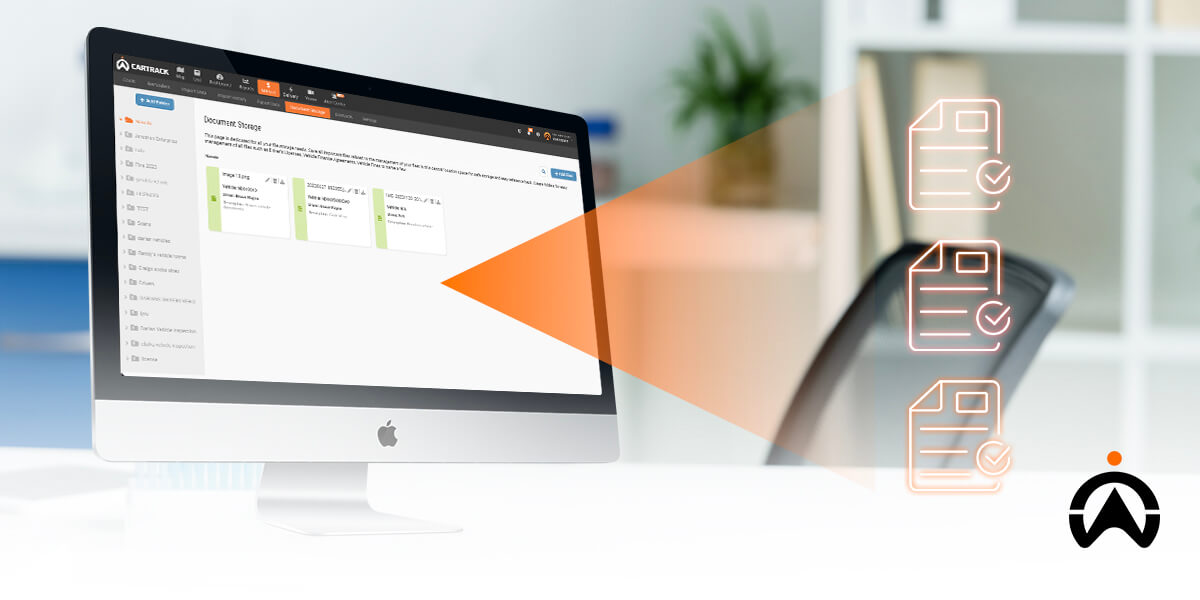

Know the Pros and Cons of Electric Cars & See the Latest Stats

Going green is a hot topic on everybody’s lips right now. Is it possible to create a more sustainable fleet by looking at the pros and cons of electric vehicles?

Get the latest statistics and insights about EVs, how they work, why they’re the best option for the environment, and how Cartrack’s fleet management platform can help you optimise your green fleet mission.

In this article, you will:

  • Learn the difference between ICE vehicles and EVs
  • Get the hottest EV-related statistics
  • Discover the pros and cons of electric vehicles
  • Get answers to the most frequently asked EV questions
  • Find out how Cartrack can optimise your EV-based fleet

The power of electricity: Unveiling EVs

Electric vehicles have taken the world by storm, offering a range of benefits that internal combustion engine vehicles just can’t. First, though, it’s crucial to understand exactly how these two vehicle types differ in key areas and why this matters.

Electric vs ICE: Know the difference

There are more differences between EV and ICE vehicles than there are similarities when it comes to the inner workings. They look relatively the same on the outside, with a bonnet, boot, seats, and a steering wheel. But what goes on beneath that bonnet is where the main difference lies.

ICE is short for internal combustion engine, as these vehicles use fossil fuels like petrol or diesel to power their engines. EVs are completely different. Instead of fuel powering an engine, EVs use electricity from a rechargeable battery to power an electric motor. This main difference along with several others plays an important role in influencing modern society’s tendency to switch to EVs. These include:

  • Emissions and compliance
  • Maintenance
  • Range
  • Cost
  • Noise
  • Efficiency

Whether you’re looking to buy a personal vehicle or purchase replacement vehicles for your fleet, factors like cost, maintenance, efficiency, and range most likely play a significant role in your personal choice of vehicle type.

The pros and cons of EVs: What you need to know

What are the biggest positives and negatives of electric vehicles? Familiarise yourself with the good and the bad to develop a balanced perspective.

The perks

  1. Reduced emissionsOne of the main reasons why electric vehicles are becoming so prevalent on roads worldwide is because they offer a viable countermeasure against climate change with notably fewer harmful emissions.
  2. Energy efficiencyWhen it comes to converting either electricity or petrol to energy, the conversion rate for electricity is much higher, making it more energy efficient. While petrol vehicles only convert about 12% – 30% of the energy stored in petrol to power, EVs convert over 77% of the energy stored in the grid to vehicle power making it the no-brainer option when it comes to choosing an energy-efficient vehicle.
  3. Lower fuel & basic maintenance costsDid we say lower fuel costs? Let’s rephrase that: EVs use no fossil fuels, which means you’ll not be emptying your bank account at a petrol station every few weeks. Electric vehicles also don’t use other fluids like engine oil, and due to regenerative braking, the brake’s wear and tear is reduced significantly.
  4. A quieter ride with instant torquePowered by a battery instead of an engine, EVs make very little noise, creating a great travel experience. An EV’s torque is generated by magnetic fields and an electric current instead of gas combustion and turning the crankshaft, which takes more time.

    For Context, let’s compare the Tesla Model 3 Performancewith the high-performance Audi RS3. While the Audi’s 0-60 mph acceleration is just under four seconds, the Tesla smashes this performance with an impressive 3.1 seconds.

The downsides

  1. The environmental impact of manufacturingWhile driving an EV has minimum harmful emissions, there are debates about the impact its manufacturing process has on the environment. The electric vehicle battery requires lithium mining, which in itself causes carbon emissions, habitat destruction, and pollution. However, climate change activists see this as a necessary evil to reach the greater good of net zero.
  2. EV Energy sourcingOne of the biggest issues EV drivers experience is limited energy sourcing, also known as insufficient charging stations. Just like ICE vehicles’ fuel tanks eventually empty out and need to be refilled, an electric vehicle’s battery must be charged to continue travelling. If there are not enough charging stations, the battery can run empty without the option to recharge, and the driver can end up stranded.
  3. They’re priceyWith EVs not yet being produced at the scale of ICE vehicles, their general production costs are still high. Additionally, manufacturing lithium-ion batteries and electric motors is far more expensive than producing an internal combustion engine. With technology progressing, this may change soon, making EVs more affordable shortly.
  4. Limited rangeThe electric vehicle range depends on the make and model. So, while some EVs have a decent range, others need to be recharged frequently, making them less practical for long-distance travel. In the end, however, a petrol or diesel-powered vehicle still gives you a little bit more, and there are just so many more options to fill up along the way, unlike EVs.

Discover the hottest EV stats right now

There’s nothing like good old statistics to provide some insight on a topic you may not be a hundred per cent familiar with. In terms of market growth, models, and stats by geographical location, there’s lots to learn about EVs.

Market growth

  • In close to a decade, EV use and popularity have experienced incredible growth. The BNEF 2023 Electric Outlook Report recorded 20 million EV vehicles on the road in June 2022 after recording just over 1 million in 2015.
  • In 2022, 14% of all new vehicles sold globally were electric, a significant increase from around 9% in 2021 and less than 5% in 2020.
  • By 2024, it is forecasted that25% of all new passenger car registrationswill be electric, exceeding 17 million units in sales globally.

Models

  • The Tesla Model Y was the world’s most popular plug-in electric vehicle with worldwide unit sales of roughly 771,300 in 2022. However, the Tesla Model 3 is the most desired EV, with 1,852,356 global monthly searches.
  • The BYD Atto 3 claims the third spot among the most popular EVs in Australia, with 3,216 units sold in 2023.
  • The Nissan Leaf was the world’s best-selling electric car from 2011 to 2014 and in 2016

Country-based EV stats

  • In 2020, Norway had 81.0 electric vehicles per 1,000 residents, the highest in the world. The country also has the largest fleet of plug-in EVs per capita globally. In 2021, 15,5% of all vehicles in Norway were fully electric, spectacularly outperforming the EU average of 0,8%.
  • In 2020, China grabbed the top spot for the world’s largest market for electric vehicles. The International Energy Agency’s Global EV Outlook 2023also reports that 40% of global EV sales are made in China.

*Statistics sourced from Statista and IEA

Which vehicle brands make electric vehicles?

With the EV landscape developing at a record pace, you might be surprised at how many electric car companies there currently are. Many of us are only familiar with trusted household brands like the ones mentioned above, but there’s a whole new world of EV brands ready to explore. Here is a mix of new and trusted brands that make the most popular EV models right now.

  • Tesla
  • BYD
  • Rivian
  • Kia/Hyundai
  • General Motors
  • Lucid
  • Ford
  • Mercedes-Benz
  • BMW
  • Fiat
  • Alfa Romeo
  • Ferrari
  • Toyota

Other noteworthy brands involved in the manufacturing and development of electric batteries, charging stations, and EV-related technology include Volta Charging, Electra Vehicles, WiTricity, and Proterra Inc.

Origin and history of EVs

When looking at the ultra-modern exterior design of electric vehicles, it seems impossible to imagine that these machines date back almost two centuries. The first EV model prototypes were created in 1835, though in the late 19th and most of the 20th century, ICE vehicles took centre stage, with the mass production of internal combustion engines being cheaper at the time.

Here’s a fascinating breakdown of how electric vehicles came to be:

  • The first version of a full-sized EV was developed in 1832.
  • The first electric production car was built by Thomas Parker, using a high-capacity rechargeable battery.
  • In 1996, General Motors created one of the most well-known EVs at the time, the EV1.
  • EVs finally took off in the 21st century due to the need to reduce CO2 emissions

Today, Tesla is one of the most popular EV brands, with household brands like Toyota, Ford, BMW, and Nissan also sporting their own EV models.

The environmental need for electric vehicles

While the invention of the electric vehicle happened almost 200 years ago, the need for an alternative to ICE vehicles only peaked relatively recently. Climate change plays a significant role in global policy and the need to preserve the planet.

Climate change influences energy efficiency

The impact of climate change on energy efficiency is undeniable. As our planet warms, energy systems become increasingly vulnerable, highlighting the critical role of energy efficiency in mitigating climate change. By reducing energy consumption and emissions, we can alleviate pressure on the environment and address the challenges posed by a changing climate.

The U.S. Environmental Protection Agency emphasises this connection, recognising energy efficiency as “the most cost-effective way to address climate change.” In most cases, efficiency measures demonstrably reduce energy waste, save money, and facilitate the expansion of renewable energy sources. This makes energy efficiency a key strategy for addressing climate change and its broader impacts on the environment, economy, and human health.

What is Net Zero?

Imagine a world where the greenhouse gases we emit are matched by the ones we remove, creating a stable equilibrium. That’s the essence of net zero, a crucial goal to combat climate change. It’s about reducing our greenhouse gas emissions as close to zero as possible. This involves two key strategies:

Emission reduction: We need to drastically reduce the amount of greenhouse gases we release into the atmosphere. This means transitioning from fossil fuels, investing in energy efficiency, and adopting sustainable practices across industries.

Emission removal: Even with significant reductions, some emissions will remain. Net Zero acknowledges that and seeks to “balance the books” by removing these remaining emissions from the atmosphere. Technologies like tree planting and carbon capture are exploring ways to achieve this.

Achieving net zero is a global challenge that’s gaining momentum. The UK has set an ambitious target of reaching net zero by 2050, and many other countries follow suit. This collective action demonstrates a growing understanding of the urgency to adopt more energy-efficient ways to travel.

Can EVs reduce global warming?

According to the United Nations, oil, gas, and fossil fuels are the biggest contributors to global carbon emissions, accounting for 75% of greenhouse gas emissions and 90% of CO2 emissions worldwide. ICE vehicles mainly operate on fossil fuels, making them a top suspect, while EVs emit notably fewer harmful emissions.

Based on this fact alone, there’s no doubt that EVs have the potential to reduce global warming or climate change and make the world a greener place. The more EVs on the road, the fewer greenhouse gas emissions and harmful air pollution, helping us breathe easily and keep the world clean.
The_environmental_need_for_electric_vehicles

The most frequently asked questions about Electric vehicles

As EVs have not been on the road for that long, there are bound to be quite a few questions. Here are some of the most interesting frequently-asked questions about EVs.

1. Do electric cars have engines?

While we’re used to associating a vehicle’s ability to move with an engine, an EV’s design is based on different technology and uses a rechargeable battery instead. Because there is no internal combustion engine, there is also no fuel tank, fuel line, or fuel pump, and the EV doesn’t emit exhaust from a tailpipe — all crucial components needed for a traditional vehicle engine.

2. What are the biggest problems with electric cars?

Nothing in life is perfect, and while the EV comes pretty close, it does still pose some problems. You never know, these may be solved in future as technological development progresses, but for now, it’s good to familiarise yourself with the following shortcomings, like a lack of charging infrastructure, the very real issue of range anxiety, and the fact that it takes a while to fully charge an EV, especially in cold temperatures.

3. Are EVs and hybrid cars the same?

Electric vehicles and hybrid cars are not the same. Ane, while it’s easy to distinguish between ICE vehicles and EVs, things get a bit more complex when it comes to EVs versus hybrids. Not to worry, though, here’s a breakdown that’ll get you up to date in no time.

  • EV (Electric Vehicle): Powered solely by an electric motor and battery pack, EVs offer a clean and quiet driving experience. Their reliance on charging infrastructure, however, is still developing in some areas.
  • FCEV (Fuel Cell Electric Vehicle): These vehicles use hydrogen fuel cells to generate electricity, resulting in zero tailpipe emissions and water vapour as the only byproduct. While highly eco-friendly, hydrogen refuelling infrastructure is currently limited.
  • PHEV (Plug-in Hybrid Electric Vehicle): Combining an electric motor with a gasoline engine, PHEVs offer both electric driving for shorter distances and the flexibility of a gas engine for longer trips. They can be charged externally, reducing reliance on gas stations.Basically, there are two types of hybrids and a fully electric vehicle. The main difference is that EVs are solely powered by a battery and electric motor and don’t use an alternative fuel source.

4. Where does the EV’s engine sound come from?

EVs have no engines, so where does that consistent, low-key hum actually come from? The engine sound is not generated by any part of the vehicle’s mechanics — it comes from a sound file added to the vehicle to add that sound we’ve come to associate with vehicle movement.

The Hyundai Ioniq 5 N, for example, features ten internal and external speakers as part of a system that generates fake exhaust sounds to mimic the experience of driving an ICE vehicle.

5. What kind of batteries are used in EVs?

The lithium-ion battery is the most well-known option for electric vehicles. Still, other battery types are also successfully powering EVs these days:

  • Nickel-metal hydride batteries (more common in hybrid vehicles)
  • Lead-acid batteries
  • Ultracapacitors

6. Do EV batteries pose any safety risks?

When it comes to fire risks, EV batteries are generally considered safer than internal combustion engines. However, it’s crucial to know that lithium-ion batteries are highly flammable and that EV batteries should under no circumstances be detached, exposed to extreme conditions, or damaged. Continued improvements are being made to ensure increased battery safety for EV users as EV technology moves forward.

7. What are the pros and cons of Tesla?

Apart from the general pros and cons of EVs, Teslas also have some unique to the brand:

  1. Ever heard of Sentry Mode? This is Tesla’s version of a home alarm system that gives the driver a live view of what’s happening around the vehicle, accessible on the Tesla app. It’s definitely a great perk in terms of safety
  2. Teslas are not immune to problems that may require expensive repairs, which affects the insurance premium you’ll have to fork out if you decide to get one. The repair costs combined with high premiums may cause you to think twice before you buy.

Even if you’re not planning on buying a Tesla anytime soon, having insight into EV features, technology, and vehicle types may help you make smart decisions in future, with a booming EV market becoming a crucial component to reaching Net Zero worldwide.

Are EVs a good fit for your fleet? 3 reasons why you should consider going green

Since the popularisation of EVs, they have also been implemented in fleets across large parts of the world. Take a look at why transitioning to EV vehicles has some notable perks for your business.

1. Eliminate fuel costs

For fleet operators, “filling up” often translates to a major headache which is fluctuating fuel prices and ever-growing expenses. Budget control remains a constant battle, and transitioning to EVs offers a promising solution to minimise fuel spend.

2. Reduced fleet maintenance

Forget just slashing fuel costs – electric vehicles (EVs) revolutionise fleet maintenance. Fewer fluids mean less downtime and lower costs, especially for large fleets. Plus, real-time data and proactive maintenance keep your EVs humming, maximising uptime and fueling your business growth – all while going green. It’s not just a fuel swap, it’s a strategic shift to efficiency and cost-effectiveness.

3. Enhanced vehicle efficiencies

Electric vehicles (EVs) hold a trump card for transportation, logistics, and trucking: instant torque. While diesel engines have power, they can’t match the immediate acceleration from a standstill that EVs offer (check CarThrottle for the science).

This translates to major benefits for your fleet. Large trucks can reach cruising speeds faster, requiring less initial power, leading to significant charging cost savings. Whether hauling passengers or freight, instant torque equals efficiency and savings.
Are_EVs_a_good_fit_for_your_fleet

Cartrack Zimbabwe can help you grow a greener fleet

Our industry-leading fleet management technology is constantly evolving, and we’re geared for the future with features that can help you utilise and optimise the implementation of EVs in your fleet.

  • Be proactive about EV maintenance and optimise your savingsThe Cartrack fleet platform allows you to follow a strict predictive maintenance schedule, which prevents unnecessary breakdowns, repairs, and vehicle downtime, whether you have ICE vehicles, EVs, or a mix of both. Sticking to a broad maintenance routine can greatly help reduce operational costs, improve your ability to budget, and free up more money to spend on other fleet-related needs.

    For example, instead of engine maintenance, keeping an eye on an EV’s battery health and lifespan is crucial, as battery replacements are costly. Dedicated telematics data at your fingertips provides up-to-date information about your EV’s health. The fleet management platform also offers a range of useful insights by offering accurate data on vehicle and engine health and driving behaviour, while the dedicated MiFleet platform helps you manage all fleet-related costs, including registration and licensing fees, promoting compliance and helping you avoid late payment penalties.

  • Never worry about range anxiety or vehicle downtimeWhile it’s quick to fill up a petrol or diesel tank, it does take a while to charge an EV, and as we discovered earlier, extreme temperatures can also unnecessarily prolong these charging times. In a fleet context, charging time equals vehicle downtime, significantly impacting fleet operations.

    Cartrack’s fleet management platform can help you make up for lost time by optimising all other aspects of your operation with advanced tools for route planning and optimisation that also allow route planning around crucial charging stations. Additionally, you can schedule charging times into your fleet’s workflow, monitor your EVs’ battery life in real time, and ensure you’re always aware of all range statuses so a fleet car doesn’t end up stranded with an empty battery.

Contact us today to optimise your EV fleet management needs

If you’re ready to start adding EVs to your fleet, we’re ready to make your greener fleet system the best it can be. Contact Cartrack and choose the most sustainable fleet management option.

Fuel Efficiency: Know How to Save Your Fleet a Fortune

Struggling with endless kilometres gobbling up your fuel allowance, rising fuel costs, and a tightening budget?

Might be time for fuel-efficient practices.

Let’s explore simple strategies and powerful tools to transform your fleet into a lean, mean fuel-saving machine.

In this article, you will:

  • Learn what fleet fuel efficiency is and why it’s crucial for cost savings
  • Get practical insights for making your fleet more fuel-efficient
  • Explore the role of fleet management software in optimising fuel usage
  • Discover Cartrack’s fleet management solutions to improve fuel efficiency
  • Test your fuel-saving knowledge with our enlightening quiz

Imagine saving a ton of money without needing a magic petrol station that offers bottomless, free fuel.

Interested?

Well, the truth is, saving your fleet a fortune has less to do with where you buy your fuel, and more to do with how efficiently you use it.

Let’s start with the basics: What exactly is fleet fuel efficiency, and why should you care?

What is fleet fuel efficiency?

Fleet fuel efficiency means how well your vehicles use fuel while doing their jobs. It’s about empowering your drivers, trucks, vans, and machines to use just the right amount of fuel to deliver your goods, complete their routes, and keep your business running smoothly without wasting any fuel or hurting the environment.

Will fuel efficiency save you money?

In short, yes. Fuel efficiency affects fleet costs, and often in a very significant way.

Fuel can be the single largest operating cost for many fleets, according to theNational Highway Traffic Safety Administration (NHTSA), sometimes accounting for around 60% of the total budget. That’s why even small improvements in fuel efficiency can lead to huge cost savings.

Fuel-efficient vehicles simply consume less fuel, leading to substantial and potentially life-saving cost reductions, especially with unpredictable fuel prices.

But the benefits go beyond the pump. Less fuel used means less engine wear and tear, translating to lower maintenance costs on labour, parts, and downtime. And, since efficient vehicles can travel further on a single tank, drivers spend less time refuelling, boosting productivity and minimising operational disruptions.

Overall, fuel efficiency is a key factor in controlling fleet costs. By investing in fuel-efficient vehicles and implementing fuel-saving practices, businesses can significantly reduce their operating expenses and improve their bottom line.

Will_fuel_efficiency_save_you_money

Money-saving factors you need to know for fuel efficiency

For businesses relying on fleets for transportation, fuel costs can quickly add up. To address this, fleet managers need to grasp the factors influencing fuel consumption and take strategic steps to enhance efficiency.

Here are some factors that impact fuel usage:

Road conditions and terrain:
The state of roads, from smooth highways to bumpy gravel roads, can greatly affect fuel efficiency. Uneven surfaces like cobblestone or unpaved roads increase resistance, causing engines to work harder and consume more fuel.

Traffic congestion:
Stop-and-go traffic increases idling, leading to higher fuel consumption. Planning routes to avoid congested areas and scheduling deliveries during off-peak hours can optimise fuel efficiency.

Vehicle maintenance:
Regular maintenance is crucial for preserving fuel efficiency. Neglecting tasks like replacing air filters or spark plugs can result in increased fuel consumption over time.

Fuel quality:High-quality fuel from trusted fuel suppliers is essential for engine performance and fuel economy. Clean fuel ensures optimal efficiency and engine health.

How can I make my fleet more fuel-efficient?

Now that you understand what affects fuel efficiency in your fleet, let’s get into the proven solutions that can propel your fleet’s fuel efficiency.

The key factors contributing to fleet fuel efficiency include:

Vehicle selection: Choosing fuel-efficient vehicles with modern engine technologies and aerodynamic designs can significantly impact overall fleet efficiency. Hybrid or electric vehicles may also be considered for further fuel savings.

Maintenance practices: Regular and proactive maintenance, including timely oil changes, air filter replacements, and checking tyre pressure, ensures that vehicles operate at peak efficiency, minimising fuel consumption. It’s usually recommended that vehicle maintenance checks (VMCs) be conducted monthly, bi-monthly or between 20,000 km and 40,000 km.

Driver behaviour: Driver habits play a crucial role in fuel efficiency. Practising smooth acceleration, moderate speeds, and avoiding unnecessary idling contribute to better fuel mileage. Educate your drivers on sustainable driving habits regularly and implement driver training programs to promote fuel-conscious behaviour.

Route optimisation: Utilising route planning and optimisation tools helps reduce unnecessary mileage, idling time, and fuel consumption. Efficient routing ensures that vehicles reach their destinations using the most direct and fuel-efficient paths.

Telematics and monitoring: Implementing telematics systems allows fleet managers to monitor real-time data on fuel usage, vehicle performance, and driver behaviour. This information helps identify areas for improvement and implement strategies to enhance fuel efficiency.

Fuel management systems: Using fuel management systems helps track fuel transactions, detect irregularities and manage fuel consumption effectively. This can include monitoring fuel card usage and implementing measures to prevent fuel theft.

Technology integration: Adopting advanced technologies like fuel-efficient driving apps, can provide drivers with real-time feedback on their driving behaviour, encouraging fuel-conscious practices.

Load management: Ensuring vehicles carry optimal loads without excessive weight contributes to better fuel efficiency. Avoiding unnecessary cargo weight reduces the energy required to transport goods.

Here are the top 5 fuel-saving tips for your fleet, taken from one of our recent blogs

  • Regularly check the tyre pressure of each of your vehicles
  • Regularly service your vehicles according to the set fleet maintenance schedule
  • Train your drivers on eco-friendly driving like gentle acceleration
  • Use route planning whenever you want to use the most fuel-efficient paths
  • Lighten up your load when necessary
  • Invest in fleet management software for premium fuel-saving

Bonus Tip: Track your progress and inform your drivers of fuel-saving successes to keep drivers motivated.

How can fleet management software improve my fleet’s fuel efficiency?

Fuel costs can feel like a constant uphill battle for fleet managers. Fortunately, fleet management software offers a powerful solution to ease your fleet’s fuel-burning ways.

By using fleet management software to optimise your fleet, these significant fuel efficiency gains are within reach.

Smooth fuel management: When it comes to fuel costs, fleet software makes handling fuel a breeze by syncing up fuel card data with vehicle assignments automatically. It even crunches numbers to give you miles per gallon (MPG) insights, so you’re always in the know about your fuel usage and how it impacts your wallet.

Instant fuel intel: With automated fuel systems, you get real-time updates on fuel economy stats, CO2 emissions, and operational efficiencies. It’s like having a fuel efficiency coach in your pocket, helping you make savvy decisions to save on fuel costs.

Hassle-free fuel transactions: Say goodbye to messy paperwork and confusing fuel records. Fleet fuel software streamlines everything, making it super easy to track fuel use and spot areas where you can save some cash.

Smarter fuel management: By accurately tracking fuel economy, fleet software helps you fine-tune your fuel usage. You’ll have a clear picture of how fuel affects your bottom line, making it easier to manage costs and keep your fleet running smoothly.

Proactive maintenance and driving tips: Fleet software not only helps you stay on top of maintenance schedules but also encourages fuel-efficient driving habits among your drivers.

Green route planning: Some fleet software goes the extra mile by suggesting eco-friendly routes that minimise emissions and cut down on fuel use. It’s a win-win for your business and the environment. By following through with fleet management software to increase your fleet’s fuel consumption, you’ll enjoy these benefits:

  • By decreasing fleet fuel consumption, you save money
  • Your fleet will run smoother, faster and further. Boosting operational efficiency
  • Your fuel-efficient vehicles will be cheaper to maintain
  • Reduce your carbon footprint

Additionally, some governments offer tax breaks or discounts for eco-friendly options, further sweetening the deal. Emissions fees based on fuel consumption also come into play, making efficient choices even more financially.

How_can_fleet_management_software_improve_my_fleet’s_fuel_efficiency

Turn your fleet into a fuel-saving machine

Cartrack Zimbabwe is an industry leader in vehicle tracking as well as fleet and fuel management solutions. Accurate monitoring and analytic tools empower fleets to improve fuel efficiency and save on fuel costs, and Cartrack Zimbabwe offers ideal solutions to do just that.

Here are five ways Cartrack features and solutions can help:

  1. Vehicle maintenance and performanceCartrack Zimbabwe assists fleet managers in keeping track of vehicle health with preventative maintenance alerts that notify managers of scheduled maintenance checks. This helps to address issues promptly, promote fleet longevity, and prevent fuel-consuming problems, like engine misfires that can waste fuel, ensuring vehicles maintain peak fuel efficiency.
  2. Fuel monitoringCartrack’s fleet management systems provide real-time monitoring of fuel consumption by using data analytics. With this, fleet managers gain insights into individual vehicle performance, driver behaviour, and fuel efficiency trends for each vehicle.
  3. MiFleetCartrack’s MiFleet is a cost management system offering full visibility of your fleet’s running cost. By connecting to fuel sensors or integrating with CANBus, it monitors fuel consumption data and identifies inconsistencies that may indicate fuel fraud by comparing transactions to fleet vehicle telemetry data. This empowers managers to address fuel-consuming patterns and maximize fleetwide fuel efficiency.
  4. Fuel usage reportsThe system provides contextualised metrics on fuel consumption per km travelled and per job completed for every driver and vehicle, allowing fleet managers to pinpoint areas that require attention and take corrective actions.
  5. Route OptimisationCartrack’s Delivery tool enables the optimisation of drivers’ routes based on the shortest distance, ensuring drivers take the most efficient routes while avoiding unnecessary fuel wastage and ultimately saving on fuel costs.

Stop fuel wastage and start saving with Cartrack’s fuel management solutions

Cartrack Zimbabwe is your key to answering the looming question ‘Do you know how to save your fleet a fortune’ with a resounding YES.

But you can’t save what you can’t track. Contact Cartrack today and get a free quote for your fleet.

Fuel-saving rookie or expert? Take the quiz to find out

Ready to put your fuel-saving skills to the test?

Take a quiz to help you identify how to boost your fleet’s efficiency and reduce fuel expenses. Answer each question truthfully, jot down your answers, and check the results to reveal your fuel-saving skills.

1. How often do you conduct maintenance checks on your fleet vehicles?

A. Monthly

B. Quarterly

C. Semi-annually

D. Annually

E. I don’t have a regular maintenance schedule

2. How often do you educate your drivers on fuel-efficient driving practices?

A. Regularly, through training sessions

B. Occasionally, during team meetings

C. Rarely, if ever

D. I rely on drivers to educate themselves

E. I haven’t considered driver education for fuel efficiency

3. How do you handle vehicle loading and cargo weight?

A. I overload vehicles regularly without considering weight limits

B. I adhere to recommended weight limits and distribute loads evenly

C. I occasionally exceed weight limits for convenience

D. I rely on drivers to estimate appropriate loading without specific guidelines

E. I have no knowledge or consideration of cargo weight impact

4. Do you use telematics or GPS tracking to monitor and optimise routes?

A. Yes, consistently

B. Occasionally

C. No, but I’m considering it

D. No, and I don’t see the need

E. What is telematics?

5. How do you handle vehicle idling in your fleet?

A. Strict anti-idling policies in place

B. Moderate, with occasional reminders

C. No specific policies

D. I’m not sure

E. Idling is not a concern for my fleet

Fuel efficiency test results:

If you answered mostly A’s: Congratulations, you’re a Fuel Efficiency Pro!

If you answered mostly B’s: You’re on the right track but consider some improvements.

If you answered mostly C’s: There’s room for improvement; assess your fleet practices.

If you answered mostly D’s: It’s time to reevaluate and implement fuel-saving strategies.

If you answered mostly E’s: Your fleet might be missing out on significant fuel efficiency gains.

Apply Cartrack’s advanced fleet management technology and contact us today to start adopting fuel efficiency best practices. Remember, every litre can lead to substantial cost reductions.

The Future of Mobility: 9 Remarkable Ways a Fleet System Helps You Stay Ahead

The fleet industry is constantly evolving, ranging from technological advancements to ever-changing consumer behaviours. Is your business equipped for all this change?

A fleet’s success is dependent on its ability to embrace and adapt to the future of mobility. But what exactly is fleet mobility, why is it so crucial for fleet success, and how can you maintain and achieve it?

Let’s see how a smart system can keep you ahead of the times.

In this article, you will:

  • Learn what fleet mobility is
  • Find out what the future of fleet mobility looks like
  • Delve into the challenges faced with these advancements in fleet mobility
  • Explore how a fleet management system can help boost fleet mobility
  • Discover how Cartrack’s solutions are the key to improving your fleet’s mobility

What is fleet mobility?

Fleet mobility is a new approach to how companies organise the movement of their fleet staff. Unlike traditional fleet management, fleet mobility is focused on flexibility in movement and accessibility, by making use of emerging and innovative transportation technologies to provide flexible, on-demand transportation solutions.

What is the future of fleet mobility?

Fleet mobility is all about technological advancements. So what does the future of fleet mobility look like?

Let’s take a look at the advancements we can expect.

1. Electric vehicles

Electric vehicles are vehicles powered by an electric source as opposed to petrol or diesel. Automotive technology is constantly evolving, which has led to a surge in the production of electric vehicles, and welcomed fleet electrification.

Fleet electrification represents the future of fleet mobility, especially with electrical vehicles (EVs) being seen as the future of fleet mobility due to their potential to reduce fleet costs and a fleet’s environmental impact. EVs offer several benefits for fleet mobility, ranging from lowering fuel and maintenance costs to higher driver satisfaction.

While EV adoption in South Africa is still in its early stages, the growth of charging infrastructure is a clear indicator that we are set to ride the wave of this technological advancement.

Mercedes–Benz South Africa and Chargify are currently building 127 new local EV charging stations across South Africa valued at R40 million. Global companies are also joining in on the movement, withFedEx committing to make their entire global pickup and delivery fleet zero-emission EVs by 2040. In 2021, FedEx conducted EV trials in South Africa to test the technology and assess its operational effectiveness on a standard route, with the vehicle fully loaded with packages.

2. Autonomous Driving

The future of fleet mobility includes the progressive evolution of automotive technology through the use of autonomous vehicles. Autonomous vehicles can operate without human involvement, and with specialised sensors, they can sense their environment and get from point A to point B completely on their own.

While these vehicles are being fully implemented in Singapore and other countries, South Africa may have to wait a bit longer, with them still undergoing extensive AI training.

3. IoT Sensors

Internet of Things (IoT) sensors give fleet managers access to a vast range of real-time data on their fleet by making use of sensors that have been embedded in vehicles and infrastructure. This means fleet managers can make informed business decisions on factors such as vehicle maintenance, driver training and vehicle activity. The insights that are derived from IoT data can help optimise route planning, reduce fuel consumption and enhance fleet efficiency.

4. Mobility-as-a-Service (MaaS)

The future of fleet mobility is embracing shared fleet solutions, through a concept known as mobility-as-a-Service. Mobility-as-a-Service, also known as MaaS is a user-centric approach that integrates various modes of transportation into a unified, on-demand mobility solution.

Simply put, it offers businesses the flexibility to access shared fleets of vehicles on demand. This model eliminates the need for individual ownership and maintenance, reducing fleet costs and providing a more adaptable transportation solution. For fleet operators, MaaS presents an opportunity to optimise vehicle utilisation, reduce fleet costs, and improve overall efficiency by closely managing vehicle usage.

5. Artificial Intelligence

Artificial intelligence (AI) is a simulation of human intelligence processesconducted by a computer system. It makes use of a wide range of technologies that enable machines to perform tasks that typically need human intelligence. In the context of fleet mobility, AI can quickly analyse large amounts of data, with information on vehicle performance, traffic patterns and driver behaviour. This makes it crucial for predictive analysis, allowing fleet managers to identify issues that escalate into unplanned and costly breakdowns. This promotes timely maintenance, improves fuel efficiency, and minimises unplanned downtime delays, boosting productivity.

6. V2V and V2E Communication

Vehicle-to-vehicle and vehicle-to-everything communication is a wireless technology that enables data exchange between vehicles and their surroundings. V2V enables vehicles to exchange data on speed, location, and direction both wirelessly and in real time. This makes it possible for vehicles to detect potential collisions, coordinate movements, and maintain safe distances from one another, which enhances situational awareness and helps to prevent accidents.

V2E makes use of sensors, cameras, and wireless connectivity to create an end-to-end communication system that allows vehicles to share information about their drivers and their surroundings. This makes this technology useful for improving fleet safety, traffic efficiency, and energy savings.

What_is_the_future_of_fleet_mobility

What challenges are faced with advancements in fleet mobility?

As incredible as fleet mobility is, it does come with a fair share of challenges. These include:

  1. Adequate charging stations:The adoption of electric vehicles presents both opportunities and challenges for fleet efficiency. One of the major challenges is the lack of charging stations. While EVs are praised for their ability to reduce emissions and lower operating costs, the limited availability of charging stations can negatively affect fleet mobility and productivity. This leads to downtime and disrupted schedules, as drivers must travel longer distances to find charging stations.
  2. Unpredictable technology:As incredible as technology is, it can be unpredictable. Autonomous vehicles are still undergoing development, which delays widespread adoption. Ensuring the safety and reliability of autonomous vehicles is a concern. AVs can face unexpected technical glitches, which can disrupt fleet operations and compromise efficiency. Furthermore, transitioning to AVs means drivers need to be retrained and adapt to new operational procedures, which is both costly and time-consuming.
  3. Integration of new technologies:The rapid evolution of mobility technologies, such as autonomous vehicles and advanced telematics requires fleet managers to adapt and integrate these technologies into their operations effectively in a way that won’t disrupt fleet functioning.
  4. Skilled personnel and training:The adoption of new technologies means that a fleet’s workforce needs the skills to effectively operate and maintain these systems. Fleet managers need to invest in training and development to ensure that their team can effectively use these advancements and reap their benefits.
  5. Data management and decision-making:While advanced telematics gives you access to a wide range of data, managing and understanding this data can be a hassle. Fleet managers need software that helps them understand their fleet data, making it easier for them to leverage it for informed decision-making and optimise operations.

    If not handled, these challenges can turn into significant issues for fleets. Luckily, there’s a secret weapon in your arsenal; fleet management.

What is fleet management?

Fleet management is the process of overseeing a group of vehicles that are either owned or operated by a company. This involves a wide variety of fleet-related tasks that are crucial to streamlining fleet operations, and ensuring that the fleet operates efficiently and effectively. While this can be a lot to do manually, the answer is a fleet management system.

What is a fleet management system?

Fleet management softwareis the key to bringing the benefits listed above to your fleet. A fleet management system aims to provide fleet managers with real-time data and visibility of their fleet. A fleet management system is a set of tools and processes that have been designed to help fleets effectively measure their fleet. By making use of both software and hardware, a fleet management system can provide fleet managers with an unparalleled view of their vehicle location in real-time, at all times, keep an eye on their fleet’s total fuel consumption, prioritise route optimisation, and ensure their drivers aren’t exhibiting signs of dangerous or distracted driving.

Key components of a fleet management system

An effective fleet management system needs to have the following key components:

  • Fuel management and cost control:Fuel monitoring is a key component of a fleet management system as it allows for the accurate tracking of a fleet’s fuel consumption, which is important for cost control and optimising fleet productivity. This component is important as it helps fleet managers quickly identify excessive or unusual fuel consumption, quickly address the causes and take action to minimise theft or waste.
  • Driver management and safety:Driver management is another key component of a fleet management system, as it includes the different aspects of overseeing and optimising driver behaviour, safety, and performance. Fleets can spot and address dangerous or distracted driving behaviours that negatively impact fleet productivity, which ultimately contributes to a safer and more efficient fleet.
  • Maintenance plans and diagnostics:Maintenance plans and diagnostics play a crucial role in helping fleet managers keep their vehicles in good condition, which subsequently reduces unplanned vehicle downtime and optimises fleet productivity. Diagnostics involve the use of onboard sensors and telematics to monitor vehicle health and detect potential issues before they become serious. This data can then be used to proactively schedule maintenance and repairs, helping fleet managers keep their vehicles in good condition and maximise their productivity.
  • GPS Tracking and telematics:GPS tracking makes use ofsatellite and cellular technology to monitor vehicle location and activity in real time. By providing accurate, real-time data on vehicle movements and usage rates, fleet managers can ensure compliance, and make informed decisions on delivery routes and job dispatching. By making use of GPS tracking, fleet managers can monitor routes, identify possible delays, and make informed decisions for route optimisation.

9 Benefits of a fleet management system for fleet mobility?

Fleet mobility is taking the world by storm, but what are the benefits? Let’s explore 9 of them:

1. Data-driven decision making

A fleet management system can collect and analyse large amounts of data on driver behaviour, vehicle performance, and fuel consumption. This data is crucial for data-driven decision-making, helping you:

  • Optimise routes: By spotting real-time traffic and weather conditions, you can plan more efficient routes, reducing fuel consumption and improving delivery times.
  • Prioritise predictive maintenance: By spotting potential maintenance issues at their earliest stage, you can minimise unplanned downtime and avoid unexpected repair costs.
  • Improve driver behaviour: By monitoring driver behaviour in real-time, you can provide your drivers with specific coaching and training. This encourages safe driving and fuel-efficient practices, which reduces the risk of costly accidents.

2. Embracing sustainable solution

A fleet management system can help you make sustainability your fleet’s standard, by helping you embrace eco-friendly practices. This is done through:

  • Electric vehicle (EV) integration: This system helps you manage charging schedules, monitor battery health, and optimise routes, which ensures that you never run out of battery and that your carbon footprint is reduced.
  • Improving fuel efficiency: By giving you real-time insights into fuel consumption and identifying inefficient driving patterns, you can encourage eco-conscious and fuel-saving driver behaviour.
  • Minimising mileage through route optimisation: Plan out the most fuel-efficient routes to ensure that overall mileage and emissions are reduced, making your fleet greener.

3. Enhanced customer experience

Customer service is crucial for fleets, and a fleet management system is just what you need to ensure you’re giving your customers the best experience. This is done by:

  • Simplifying real-time vehicle tracking: By knowing where your vehicles containing goods to be delivered are at all times, you can give your customers accurate ETAs, which builds trust for your business.
  • Providing proof of delivery (POD): By helping you capture electronic signatures or images once goods have been delivered, you enhance customer satisfaction.
  • Optimising delivery routes: By helping you find the fastest and safest delivery routes, you can deliver goods faster and more efficiently, which exceeds customer expectations.

4. Proactive risk management

A fleet management system allows fleet managers to mitigate risks and ensure compliance with regulations by:

  • Monitoring driver safety: By identifying and addressing dangerous behaviours such as harsh braking, cornering, and speeding, fleet managers can promote a safer working environment.
  • Monitoring vehicle health: By receiving real-time alerts for potential malfunctions, fleet managers can prevent costly breakdowns and guarantee vehicle safety.
  • Simplifying compliance management: By automating documentation and reporting for regulations, you can minimise fleet risks and fines.

5. The ability to adapt to new mobility solutions

A fleet management system helps you stay prepared for the latest advancements in fleet mobility, including shared mobility options and autonomous vehicles. Here’s how:

  • Managing autonomous vehicles: By integrating EVs with this system, you can optimise autonomous fleet operations.
  • Offering shared mobility: By leveraging your fleet for sharing vehicles, you can diversify your offerings and reach new customers.

6. Staying ahead of the competition

A fleet management system helps you not only stay compliant but also optimises operations and helps fleets get a competitive edge. This is done by:

  • Embracing data-driven decisions: By making informed fleet decisions based on data and analytics, you can take your fleet to the next level.

7. Increased fleet longevity

Fleet management helps you keep your fleet healthy for a longer period, by giving you access to:

  • Preventative maintenance: By knowing exactly when a vehicle fault is detected, you’re able to fix the issues before they become more damaging and render the vehicles useless.
  • Driver monitoring: By keeping an eye on driver behaviour, you can spot behaviour that can leave your vehicles damaged and needing repairs sooner than anticipated

8. Improved driver safety

A fleet management system helps you improve your drivers’ safety while they’re behind the wheel, through:

9. Improved fleet mileage

A fleet management system helps you improve the total distance your fleet vehicles travel within a specific period, by giving you access to:

  • GPS tracking: By monitoring and analysing vehicle metrics such as fuel consumption, idle time, and route efficiency, you’re able to receive insights into fuel usage among fleet vehicles and know exactly when and why your vehicle travelled further than usual or necessary.

Benefits_of_a_fleet_management_system_for_fleet_mobility

Boost your fleet mobility with Cartrack’s fleet management solutions

Cartrack Zimbabwe has an advanced fleet management system designed to improve your fleet mobility through various solutions. These include:

  • Real-time GPS tracking:Know exactly where your fleet vehicles are at all times with Cartrack’s live GPS tracking. With immediate visibility into the location and movement of fleet vehicles, you can provide accurate delivery ETAs to your customers, which improves customer satisfaction. However, this does more than just track your vehicles. This technology can be used to monitor and improve your fleet’s efficiency by pinpointing inefficiencies. Fleet mobility is thereby improved by boosting operational efficiency, enhancing vehicle safety and allowing for proactive monitoring and route optimisation.
  • Route optimisation:Ensure your drivers use the fastest, safest, and deviation-free routes with Cartrack’s route optimisation. Available through our Delivery app, this gives you real-time alerts of route delays and deviations, helping you boost customer service and provide faster delivery turnaround times.
  • AI LiveVision cameras:Give your drivers access toreal-time alerts on dangerous and distracted driving with our AI LiveVision cameras. This cloud-connected video management software integrates AI analysis and in-cabin cameras that work to detect dangerous driving behaviours such as smoking, cell phone use, speeding, and yawning. When these behaviours are detected, audible in-cabin alerts notify your drivers in real-time, allowing them to quickly correct their behaviours and prevent a collision.
  • Fuel monitoring:Make every litre of fuel count with our fuel monitoring system. Our fuel cost monitoring software reviews every fuel transaction and matches the receipts with a vehicle’s advanced telemetry. This gives you real-time visibility into fuel usage, and when integrated with a fuel sensor installed in your vehicle’s tank, you can closely monitor fuel consumption in real time. This makes it easier for you to identify fuel theft, reduce fuel wastage, and improve your fleet’s fuel efficiency.
  • Preventative maintenance:Ensure your fleet vehicles are functioning at their optimum level with our preventative vehicle maintenance. This software, which is powered by AI and advanced analytics, provides you with alerts about maintenance issues such as damaged brake pads, low oil levels, and service interval reminders, making it easier for you to spot potential maintenance issues before they become costly. This can be helpful for EVs too, with our fleet management platform giving you access to predictive analytics. By using historical data and machine learning algorithms, our system can predict when your battery needs to be replaced. Helping you create an effective maintenance plan, helps you avoid costly damage to vehicle components, road accidents, and breakdowns that could hinder productivity.
  • MiFleet:Know exactly how much it costs for your fleet to run efficiently with Cartrack’s MiFleet software. Fleet mobility needs you to be aware of everything going on in your fleet, and this includes the financial aspect of it. This cost management solution helps you keep track of all your fleet expenses, whether fuel costs, taxes, or vehicle permits. The in-depth insights help you unlock ultimate fuel savings, which ultimately reduces admin time and fees.

Welcome fleet flexibility and sustainability: Stay ahead with Cartrack Zimbabwe today

Fleet success needs a wide range of interventions and strategies, and without an effective fleet management system, you may not be able to accomplish this. If you need a solution, then Cartrack Zimbabwe is the answer and your companion in achieving fleet mobility.

Chat with us here today.

Mileage Expense Management – The Amazing Feature in a Fleet System

Do you know how much money vehicle mileage is costing your fleet?

Mileage expense management is a crucial, yet often overlooked aspect of fleet management, and without the right system, this can become a major cost-draining issue. But it doesn’t have to be.

There’s a perfect solution to simplify your mileage expense management — it’s called Cartrack.

Ready to find out why?

In this article, you will:

  • Learn what fleet mileage is
  • Find out what fleet mileage expense tracking is
  • Delve into the benefits of fleet mileage expense tracking
  • Explore how a fleet management system simplifies fleet mileage expense management
  • Discover how Cartrack’s solutions are the secret weapon to achieving accurate fleet mileage expense calculations

What is fleet mileage?

Fleet mileage refers to the total distance travelled by a fleet of vehicles within a specific period. It is a critical metric for assessing vehicle usage, monitoring fuel consumption, determining maintenance needs, and overall operational efficiency, and is usually measured in kilometres.

What is fleet mileage expense tracking?

Fleet mileage expense tracking is the practice of keeping a log of the distance travelled by each vehicle in a fleet for tax deduction purposes and to help fleet managers optimise routes, reduce operational costs, and improve overall fleet management. It involves monitoring the money spent on every business kilometre driven by a group of vehicles in a fleet, including deliveries, maintenance runs, and other work-related activities. It includes the tracking of expenses related to fuel, maintenance, repairs, and other operational costs directly related to the distance travelled by fleet vehicles. Fleet mileage expense tracking can be done manually or through the use of fleet management software that automates the process and provides an array of information to manage a fleet more efficiently.

The benefits of fleet mileage expense tracking

Fleet mileage expense tracking is a beneficial tool for the effective running of your fleet. Here are a few benefits of this next-level innovation:

1. Cost management:

Fleet mileage expense tracking is crucial for helping you accurately budget and forecast fleet expenses, including fuel costs, maintenance, and other vehicle-related expenses. By accurately monitoring mileage expenses, you can ensure that your fleet operates within its budget, while also identifying areas of inefficiency that require cost-saving measures. These measures can range from optimising routes and minimising fuel consumption to scheduling preventative maintenance and reducing vehicle usage.

2. Reduce mileage:

Fleet mileage expense tracking plays a crucial role in reducing vehicle mileage by providing valuable insights into vehicle usage patterns and operational inefficiencies. By analysing detailed mileage data, fleet managers can spot areas for optimising fleet efficiency. An example of this is making use of real-time GPS tracking to implement route optimisation strategies, which helps you avoid traffic congestion, something that can significantly increase fleet mileage and vehicle wear and tear.

3. Track driver performance:

Fleet mileage expense tracking plays a big role in knowing how your drivers are operating behind the wheel. By spotting and addressing the root cause of increased mileage, whether it be inefficient driving behaviour or unauthorised vehicle usage, fleet managers can ensure that their drivers are operating safely and efficiently. To provide more detailed reports, this can be integrated with other systems to provide a comprehensive solution for tracking and managing driver behaviour. This simplifies managers’ calculation of fuel consumption and costs associated with each driver, enabling performance comparisons and creating driver-specific solutions.

4. Optimise operations:

Fleet mileage expense tracking gives fleet managers comprehensive insights into vehicle usage rates and the associated expenses. This makes it easier for them to identify inefficiencies, streamline their processes, and make data-driven decisions that play an important role in maximising fleet productivity and efficiency. For example, Sarah notices that her fleet’s mileage has increased significantly over the last two months. The upside is that Sarah makes use of these insights, which helps her identify the source of the increase, which is an increase in deliveries. With this knowledge, she can decide whether she needs another vehicle, or optimise her delivery routes.

These benefits of keeping track of fleet mileage expenses can leave quite a positive impact on a fleet, and the best way to reap these benefits is to implement a fleet management system.

What is a fleet management system?

A fleet management systemis a comprehensive software solution that is designed to streamline and optimise the management of a fleet of vehicles. It allows businesses to track vehicle locations, mileage, and other data, which helps simplify the process of fleet management. Fleet management is the process of overseeing and coordinating a wide range of fleet vehicles. Key aspects of fleet management typically include vehicle tracking, vehicle acquisition, maintenance, tracking and driver monitoring. A fleet management system simplifies all these processes, bringing them all to you through a simple, easy-to-use platform, and helping you increase your fleet efficiency.

What are the elements of effective fleet management?

  1. Real-time tracking: As an essential element of effective fleet management, real-time tracking involves making use of GPS technology to monitor the speed, location, and performance of fleet vehicles in real time. It plays a crucial role in giving fleet managers a comprehensive view of their entire fleet operation, making it easier for them to make informed decisions and optimise fleet performance.
  2. Route optimisation: This element is closely linked to real-time GPS tracking. It is focused on finding and choosing the most efficient and cost-effective routes for fleet vehicles to travel on for business purposes. By making use of GPS technology, advanced algorithms and real-time road data, this element not only identifies the shortest, fastest, and most fuel-efficient routes for drivers to reach their destination, but also prevents route deviation, which is a significant cost generator for fleets.
  3. Tax compliance: Tax compliance refers to the adherence to tax regulations and requirements set by the South African Revenue Services (SARS). It involves several aspects, including accurate record-keeping and the timely filing of tax returns. Fleet managers need to keep accurate records of their fleet’s expenses, including fuel, maintenance, and repairs. This can seem very time-consuming, but effective fleet management helps simplify the recording and storing of these records.
  4. Fuel monitoring: Fuel monitoring is a crucial element of effective fleet management, as it directly impacts operational costs and environmental sustainability. By closely monitoring fuel consumption, fleet managers can identify areas for improvement and implement strategies to reduce fuel usage, which subsequently leads to cost savings. Keeping track of every litre of fuel being consumed can be very difficult, but a fleet management system’s capabilities can give you real-time fuel consumption insights, simplifying the whole process.
  5. Driver monitoring: Your drivers are a crucial part of your fleet, with their behaviour having a significant impact on its success and efficiency. Effective fleet management needs to integrate driver monitoring as it helps fleet managers gain real-time insights into driving behaviour, vehicle status, and operational efficiency, which ultimately leads to improved safety, reduced costs, and enhanced fleet productivity.

Fuel_monitoring

What are the top 3 benefits of a fleet management solution?

A fleet management solution is the secret to a highly effective fleet, yielding a wide range of benefits. Here are the top three benefits that can elevate your entire fleet operation:

  1. Improved driver behaviour:Fleet management makes use of different mechanisms designed to monitor driver safety and efficiency, including in-cabin cameras and GPS tracking technology. These enable real-time monitoring of driver performance metrics such as speed, acceleration, and braking. By triggering real-time alerts when harsh driving is detected, drivers can quickly correct their behaviour. Along with this, fleet managers can review these events, helping them build specific training for drivers, and helping them improve driver behaviour and overall fleet safety.
  2. Improved customer service:One of the biggest selling points of fleet management solutions is the full visibility it gives managers. By helping fleet managers know exactly where all their vehicles are at all times, they can give accurate information to their customers in regards to deliveries and estimated times of arrival (ETAs). Along with this, they can optimise their routes based on real-time traffic and weather conditions.

    Let’s take Michael for instance. He runs a custom-made prescription glasses business. With a full overview of his vehicle and the road conditions, he can ensure his drivers avoid traffic-congested areas, delivering clear vision to his clients as quickly as possible. Talk about 20/20 vision, right?

  3. Increased fuel efficiency:Manually keeping track of fuel consumption can be quite challenging, leading to costly inaccuracies. However, a fleet management solution provides detailed insights into how much fuel each of your vehicles is consuming. No more running to each of your vehicles at the end of the day to play the guessing game of what level your fuel gauge is on. By helping you assess driver behaviour, you can spot and eliminate fuel-wasting behaviour, such as excessive idling, ensuring that your fleet remains fuel efficient.

How can fleet management help simplify mileage expense management?

  • Automated mileage tracking: Fleet management systems automate mileage tracking by using GPS technology to track the location and distance of each vehicle. This data is automatically recorded and stored on the fleet platform, which eliminates the need for manual mileage logs. Not only is this more convenient, but it also ensures accuracy in your mileage tracking.
  • Real-time vehicle monitoring: Powered by GPS tracking technology, fleet management systems give fleet managers access to real-time data on vehicle location, speed and status. This helps fleet managers conveniently verify mileage claims and ensure compliance with the company’s policies.
  • Route optimisation: By providing real-time data on a vehicle’s location, fleet management systems can suggest or optimise routes based on factors such as traffic conditions, distance, and fuel efficiency. This plays a crucial role in reducing mileage by finding the most efficient routes for drivers.
  • Expense reporting: By automating data collection, fleet management systems can generate detailed mileage reports for each vehicle or driver, simplifying the tracking and recording of mileage expenses and facilitating the reimbursement processes.
  • Integration with accounting software: Many fleet management systems integrate with cost management platforms, which helps streamline the reimbursement process by automatically transferring mileage data and expense reports.

Achieve accuracy in your vehicle mileage measurements with Cartrack’s solutions

Say goodbye to the guessing games and human error. With Cartrack Zimbabwe on your side, calculating your vehicle’s mileage will be a breeze. These are a few solutions that’ll give you the edge:

  1. Fuel monitoring system:An increase in fuel consumption can be indicative of increased vehicle mileage, so keep track of your fleet’s fuel consumption with Cartrack’s fuel management system. This industry-leading solution makes use of advanced telematics and real-time visibility to provide detailed fuel monitoring. By providing you with metrics on fuel consumption per kilometre travelled, and per job completed, we help you spot any significant increases in fuel consumption, alerting you that your vehicles are experiencing an increase in mileage.
  2. Driver behaviour monitoring:Keep track of harsh driver behaviour with Cartrack’s driver scorecards. Driver behaviour can significantly impact vehicle mileage, with harsh driving behaviours such as speeding and harsh acceleration decreasing fuel economy by up to 30% at highway speeds, and by up to 40% in stop-and-go traffic. Make use of our driver scorecards to monitor high-risk driving behaviours such as excessive speeding, harsh braking, long idling, and sudden acceleration. By giving you these detailed insights into driver performance, you can identify what behaviours may be causing an increase in vehicle mileage, and create driver-specific solutions to correct these.
  3. MiFleet:Know exactly how much money your fleet needs to run effectively with Cartrack’s MiFleet. This easy-to-use vehicle cost accounting software makes efficiently managing fleet vehicles, drivers, and operating costs simpler. By integrating, digitising and automating fleet admin and cost analysis, this tool helps you know your fleet’s exact running costs, helping you accurately determine your mileage expenses at the touch of your screen. Unlock full insights into this with a wide range of reports ranging from vehicle performance and fuel usage to on-road hours automatically emailed to you.
  4. GPS Tracking:Know exactly how your vehicles are operated with our real-time GPS tracking. Our system does more than just let you know where your vehicles are in real time. With access to your vehicles’ full trip history, you can track exactly where your drivers have been, along with gaining insights into the vehicle idling status, fuel levels and engine diagnostics. By knowing exactly how long your driver operated a vehicle, you can get an accurate report on mileage expenses.

Calculate your fleet’s mileage expenses 100% accurately with Cartrack’s solutions

Calculating your entire fleet’s mileage expenses can be daunting and time-consuming. But that was before Cartrack Zimbabwe. Our industry-leading solutions are here to help you streamline the entire process, turning your stress into peace of mind.

Contact us today to find out how

How to Conquer Route Deviation & the Hidden Costs Draining Your Fleet

Route deviation adds extra time, fuel, and frustration to your operations, making them one of the greatest enemies of efficient fleet management.

So, is it possible to combat the route rebellion and save on fleet costs? You bet.

Discover how smart telematics and tracking technology can efficiently cure route deviation and cost drainage-related headaches.

In this article, you will:

  • Learn the definition of route deviation
  • Differentiate between two types of route deviation
  • Understand route deviation’s effect on efficient fleet management
  • Get answers to burning questions about route deviation and fleet management
  • Discover five ways to combat route deviation
  • Find out how Cartrack’s fleet management solutions optimise fleet operations

Route deviation defined

Imagine mapping out the ideal route for your delivery driver: avoiding traffic jams and unnecessary stops and taking the shortest possible route.

Then, for some reason, your driver veers off course, adding miles, minutes and fuel usage to the trip. Something you didn’t necessarily budget for. That is a classic example of route deviation — a detour that throws a carefully planned schedule and budget out the window.

While there are some legitimate reasons for route deviation, it often happens because drivers are just not sticking to planned routes as instructed.

Types and possible reasons for route deviation

Fleet managers know that even the most meticulously planned routes can hit an unforeseen bump with detours and unplanned stops. These “route deviations” can be caused by a range of factors, sometimes due to driver choices like unplanned breaks or taking shortcuts that are supposed to save time but end up having the opposite effect on fuel costs and efficiency.

However, not all detours are created equal; there are two types of route deviations and what they mean within a fleet-related context:

  • Path deviations are like taking a wrong turn on the highway – the driver goes off the planned route, adding extra miles and minutes. These can happen for various reasons, from missing an exit to following bad GPS advice, and are considered accidental.
  • Sequence violations, on the other hand, are more like stopping at your grandma before your aunt, even though you planned it the other way around. The driver might visit stops in a different order than planned and instructed, potentially impacting delivery times, disrupting workflows, and affecting fuel usage.

Understanding the two types of route deviations helps fleet managers pinpoint the root cause of the issue and take appropriate action. Was it a genuine mistake, a navigation error, or something else entirely? By addressing the “why” behind the detour, fleet managers can ensure efficient routes, reducing fleet costs. Advanced route deviation and optimisation technology make it even easier to ensure drivers stick to allocated routes, optimising savings.

Route deviation technology’s relevance in fleet management

Fleet management software offers route deviation systems because they help in:

  • Productivity: While sticking to traditional routes provides an element of predictability that helps manage expectations, using route deviation detection technology can boost productivity without losing the element of predictability. Time is money, they say, and if your fleet can work more efficiently, you can put a stop to unnecessary cost drainages.
  • Cost management and drainage: If you expect your fleet to travel on pre-planned routes, you most likely have a good reason for this, and from a fleet management perspective, it’s mostly to increase productivity and reduce fuel costs. Identifying and pinpointing where drivers veer off assigned routes helps you address the issue early on and proactively prevent extensive cost drainage.

Here’s why you want route deviation tech for your fleet

  1. Maximising visibility: Route deviation software acts as a watchful eye, constantly monitoring driver behaviour and vehicle location. Any deviation from the planned route is visible to the fleet manager, allowing them to investigate potential issues like unauthorised stops, inefficient detours, or even potential safety concerns.
  2. Optimising resource utilisation: This technology also plays a crucial role in unlocking the full potential of your fleet by optimising resource utilisation by helping ensure that every vehicle, driver, and drop-off is used with maximum efficiency. Imagine the chaos without it, you’d experience unplanned detours causing delays and waste fuel in avoidable traffic jams.
  3. Improving fleet analysis: In the world of fleet management, data is king, and route deviation software along with other telematics tools like driver behaviour monitoring can help pick up problem areas like excessive idling and harsh cornering and braking, which can lead to unplanned maintenance and expensive repairs.
  4. Happy customers: In the cold-chain industry, route deviation can lead to spoilt produce, unhappy customers, and piles of wasted money. Sticking to assigned routes is crucial in these types of industries to ensure the integrity of the products in transit, customer satisfaction, and no money wastage.

The benefits of detecting route deviation within your daily fleet activities span far and wide, but what about the questions you may still have about this unique cost-saving technology?

Here are some of the most popular FAQs around route deviation.

Here’s_why_you_want_route_deviation_tech_for_your_fleet

The most in-demand FAQs about route deviation and fleet management costs addressed

1. What are some costs associated with fleet management?

Running a fleet involves more than just keeping the wheels turning. Fleet managers juggle a variety of expenses, including:

  • Fuel costs: Keeping the tanks filled is a major cost drain, influenced by vehicle choice, driving habits, route efficiency, and fluctuating prices.
  • Insurance: Protecting your vehicles and drivers is crucial, but premiums vary depending on factors like coverage, claims history, and vehicle type.
  • Depreciation: The value of your vehicles naturally decreases over time, impacting your overall budget.
  • Fixed costs: Rent, salaries, utilities, and maintenance form a constant backdrop of expenses.
  • Acquisition: Purchasing or leasing new vehicles requires careful budgeting and consideration of long-term costs.
  • Licenses and permits: Keeping your vehicles legally compliant involves ongoing fees.
  • Administration: Managing paperwork, payroll, and logistics can add another layer of cost if you don’t have the software to automate these processes.

Optimising each of these components is key to controlling costs and ensuring your fleet operates efficiently and profitably.

2. Which part of the fleet management system has high-cost expenses?

When it comes to fleet costs, it’s not a one-size-fits-all answer. However, it all comes down to how problems and obstacles are handled and how swiftly issues like route deviation and bad driver behaviour are addressed. By implementing smart, proactive solutions like driver training and fuel monitoring, you can save significant amounts with early problem detection and smart problem-solving.

3. What fleet cost drainages are caused by route deviation?

While straying from planned routes might seem like a minor inconvenience, the financial impact on fleet operations can be significant. The most immediate cost drain is caused by bloated fuel consumption. Every unnecessary km driven means more fuel eating into your budget.

Route deviation also increases vehicle wear and tear, resulting in more frequent maintenance needs. This adds to your operational costs and increases the risk of unexpected breakdowns and repairs, potentially causing further delays and disruptions.

Ultimately, these added stresses shorten the lifespan of your fleet, forcing you to replace vehicles sooner than anticipated. So, remember, sticking to the route isn’t just about efficiency; it’s about protecting your bottom line.

4. How can fleet costs be reduced?

To keep fleet costs in check, you can use a simple but smart two-pronged approach of proactive planning and real-time monitoring.

Replacing vehicles before frequent repairs and untimely breakdowns turn them into financial liabilities is crucial.

Then, telematics and fuel tracking technology become another powerful tool to monitor your daily expenditure, allowing proactive decision-making that promotes short and long-term savings.

By combining strategic vehicle replacement with insights from telematics data, fleet managers can achieve significant cost reductions, ensuring fleet vehicles operate at peak efficiency and profitability.

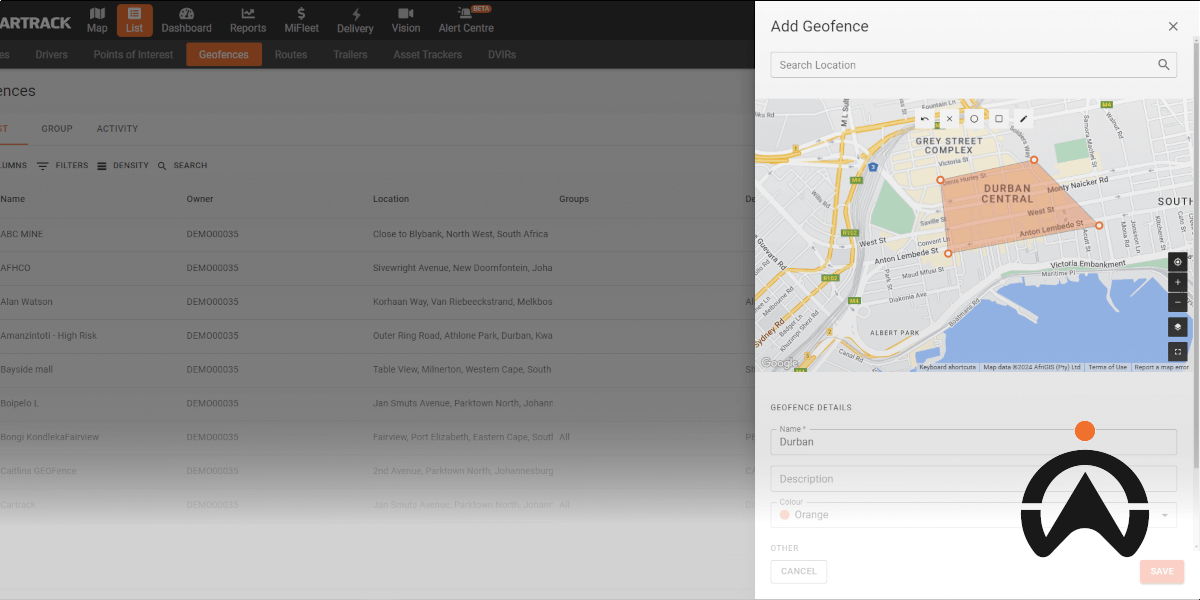
Geofencing

5 Foolproof ways to reduce route deviation in your fleet

Route deviation software is a great tool and it works even better combined with other telematics and vehicle tracking solutions. Consider these five tools in combination with route deviation detection to start seeing real results in fleet savings.

1. Route planning

While a route first needs to be planned and established before route deviation can occur, route planning still plays a crucial role in minimising this cost-guzzling hiccup within fleet management, especially for delivery and field service businesses. Fleet managers can optimise routes by meticulously monitoring route deviation patterns and reasons why these deviations occur, leading to increased efficiency and route deviation.

2. Vehicle tracking

Tracking technology acts as a digital guardian in fleet management, not only for drivers but also by ensuring increased route efficiency. By using GPS tracking devices, managers can identify and address route deviations before they become regular costly detours. Additionally, analysing trip history data provides valuable insights into past deviations. By pinpointing recurring issues and understanding the “why” behind them, managers can implement targeted solutions like route adjustments or driver coaching, ultimately minimising future deviations and their associated costs.

3. Geofencing

By creating virtual boundaries around designated routes and delivery zones, geofencing acts like a digital guardrail that automatically alerts dispatchers or fleet managers when a driver enters or exits a geofenced area. This allows for timely intervention and helps prevent costly detours and possible safety issues. On top of that, geofencing goes beyond just location tracking. By using it with time-tracking software and driver ID tags, you can gain valuable insights into employee activity within designated or marked zones, ensuring efficient operations and optimised schedules. You’ll always know which driver entered a designated area at what time, how long they were there, and when they left.

4. Regular driver performance assessments

The key to conducting regular driver performance assessments is tracking driver behaviour daily. This enables you to detect possible trends in risky driver behaviours like speeding, harsh cornering and braking, and even excessive idling, helping you conduct assessments and create accurate corrective training programs that will give you the results you need to run a profitable fleet while keeping drivers accountable every time they switch on the ignition.

5. Live driver monitoring

While route deviation software can help you spot these issues and provide a bird’s eye view of what routes drivers are taking (or not taking), live driver monitoring using AI-powered or live stream cameras provides more insight into what’s happening inside the cabin and reveal driver behaviour that may contribute to route deviation that may not be detected otherwise. Additionally, live driver monitoring helps offer insight into accidents and any emergencies drivers may be experiencing, whether they’re sticking to the allocated route or deviating.

Live_driver_monitoring

We’ve got the cost-cutting tools to eliminate route deviation and optimise fleet management

If you’re searching for a product that embodies an all-in-one solution for fleet management, search no more. Cartrack Zimbabwe has an all-in-one platform designed to combat cost-draining fleet management concerns like route deviation.

  • Route planning and optimisation: Shave costly km off your routes and say goodbye to route deviation with advanced route planning software. Choose the most efficient routes by reducing travel times and improving routes based on traffic and historical data.
  • Geofencing: Know when your drivers enter or exit designated zones with Cartrack’s geofencing. Create virtual boundaries around important areas, hazardous zones, and work sites to optimise fuel expenditure and reduce route deviation.
  • Delivery: Cut costs with faster, more efficient deliveries using the Cartrack Delivery app. With live tracking, driver performance metrics, route optimisation and automated easy task assignment, you can say goodbye to unnecessary detours and straying off-route.
  • Driver behaviour monitoring: Increase route compliance and improve fuel efficiency by keeping drivers accountable for harsh braking, speeding, and harsh turning. In turn, you save significantly on fuel and vehicle maintenance in the long run.

Eliminate route deviation by making Cartrack Zimbabwe your partner for cost-effective fleet management

Contact us today and start benefitting from telematics and vehicle tracking technology that helps eliminate route deviation, resulting in significant savings.

GPS Logbook: Never Manually Log Book Again – Unlock Business Efficiency

Tired of taking hours to manually log all your business trips in a little book, scribbling side notes and details until the sun sets and the office empties?

Switch to the simpler, time-saving, and more efficient way of tracking your business’s travels —GPS logbooks – where every meter can be accurately recorded automatically.

Your trip-logging life is about to get a whole lot easier.

In this article, you will:

  • Learn about the mechanics behind GPS logbooks
  • Understand the benefits of GPS logbooks over traditional methods
  • Know the functionalities and features of GPS logbooks
  • Explore an easy guide to implementing GPS logbooks into your fleet business
  • Discover Cartrack’s SARS-compliant logbook and its benefits

Introduction to GPS logbooks

Manually filling out logbooks can be a real pain. It’s tedious, time-consuming, and error-prone. Just having to jot down every detail of your vehicle’s movements by hand is enough hassle. That’s where GPS logbooks come in handy. They automate the process, saving you time and ensuring accuracy in tracking your vehicle’s mileage.

GPS logbooks combine GPS technology with detailed recording. They automatically let you know where your vehicle goes, how fast it’s going, and other details to help keep track of mileage accurately where you can mark areas as business or personal travel zones. Unlike the classic logbooks that need writing, GPS logbooks do it automatically, giving precise info every time.

They make tracking easy and exact, showing the route taken, distance, time, and stops. No need to write everything down, so mistakes are fewer and tracking works better.

Whether it’s managing vehicles, watching cargo, or just logging trips, GPS logbooks make trip data more reliable and accurate.

What is GPS technology and how is it used

Before we dive deeper into logbooks and how they’re used, let’s quickly get our heads around GPS technology.

GPS stands for Global Positioning System, it’s a satellite-based navigation tool that helps us locate exactly where we are on Earth. The technology we rely on to navigate from one place to another, whether through Waze or Google Maps on our cars or phones, is known as GPS.

How?

With satellites orbiting around the Earth. These satellites send signals to GPS devices on the ground. The devices figure out how long it takes for each signal to reach them from different satellites. Using this data, your GPS device can figure out exactly where you are.

GPS isn’t just for getting directions. It’s popularly used in tracking just about anything that moves, from cargo to vehicles, and even wildlife. This technology has positioned itself as an integral part of different types of industries and even features, one of them being logbooks.

All the cogs and bolts behind a GPS logbook

The mechanics behind a GPS logbook are quite straightforward. It works by leveraging GPS technology to track and record the movement of your vehicle.

For the logbook to record vehicle movement it uses GPS tracking. The GPS logbook is equipped with a GPS receiver that communicates with satellites through signals. These satellites continuously transmit signals containing precise timing information and their location.

As you drive around, your logbook quietly records all this info: where you’ve been, how fast you’ve been going, and even when you’ve made stops along the way. You can also label trips as either business or personal.

So, when you want to check your travels on a GPS logbook, all you have to do is pull up your logbook’s reports and you’ll see everything in detail, from your routes to your mileage. This information can be downloaded or accessed through software applications.

It is basically like having a digital version of your manual business travel logbook that does everything for you.

Are all vehicles compatible with GPS logbook devices?

If your fleet is vast with different types of vehicles and you’re worried if GPS technology will work on all your vehicles, don’t panic, it will. Vehicle type doesn’t matter when it comes to GPS logbooks.

These devices are designed to be compatible with all kinds of vehicles, whether you’re driving a car, a truck, a van, or even a motorcycle. As long as your vehicle has a power source, like a battery or a connection to the vehicle’s electrical system for the GPS logbook, you’re good to go.

Your vehicle’s OBD-II Port can enhance GPS logbook accuracy

Most modern vehicles come equipped with an On-Board Diagnostics II (OBD-II) port, which is a standardised diagnostic port found in cars and trucks manufactured after 1996. This port allows external devices, such as GPS logbook devices, to connect directly to the vehicle’s onboard computer system.

Using the OBD-II port, GPS logbook devices can access valuable information about the vehicle’s performance, including speed, engine RPM and fuel consumption. This information can then be used to accurately track the vehicle’s movements and more.

With an OBD-II port available, you can simply plug in a compatible GPS logbook device and start tracking your trips with ease. It’s a convenient and hassle-free way to monitor your vehicle’s usage and even expenses.

And before you ask, yes, you can still use a GPS logbook without an OBDII-port.

While many GPS logbook devices are designed to connect to the OBD-II port for vehicle data collection, some GPS logbook devices don’t require it. They rely on GPS satellite signals and built-in accelerometers to record the vehicle’s location and calculate the distance travelled, which is then used to generate an electronic logbook.

But remember that GPS-only logbooks might not be as accurate as those that use OBDII data. Because a GPS signal can be affected by weather, terrain, and tall buildings.

Traditional logbooks vs the revolutionary GPS logbook

While traditional logbooks have served their purpose for decades, they come with inherent limitations:

Prone to human error: Handwritten entries can be inaccurate or incomplete, leading to discrepancies and potential tax headaches.

Time-consuming and laborious: Manually recording trips, calculating distances, and collating data is a tedious and inefficient process.

Susceptible to loss or damage: Physical logbooks can get lost, damaged, or even stolen, jeopardising valuable business records.

Limited insights: Traditional logbooks offer basic data, lacking the depth and analysis needed for optimising fleet performance.

Inconvenient storage: Physical logs require a lot of storage space to be placed. And even if you keep them clean and tidy, they are more vulnerable to damage or loss leading to missing information down the line.

The new and shiny GPS logbook on the other hand can improve the workload of the modern fleet manager.

In their arsenal, they have:

  • Real-time tracking: Shows you the exact location of all your vehicles in real time.
  • Automatic data capture: Your GPS logbook records information such as trip duration, distance travelled, and stops you’ve made along the way
  • Readily accessible logbook reports: The system creates easy-to-read reports summarising your trips. These reports give you a clear picture of how your vehicle has been used, including trip histories, mileage summaries, and more.

But the differences, or rather benefits, don’t end there:

Beyond basic GPS tracking, GPS logbooks can be used with advanced fleet management solutions like Cartrack’s to offer fleet managers an easier course for monitoring each of their vehicles:

  • Fuel management: Monitor fuel consumption, identify areas for improvement, and reduce fuel costs.
  • Harsh driving alerts: Identify and address unsafe driving practices to promote a safer fleet.
  • Real-time tracking: Monitor your fleet’s activity in real-time, gain valuable insights, and respond to situations promptly.

From this short explanation, I’d say the GPS logbooks would be preferred by managers. It’s not just an upgrade, it’s a transformation for businesses seeking efficiency, compliance, and cost savings.

But whichever one you choose, remember they both serve the purpose of tracking vehicle mileage and usage.

Traditional_logbooks_vs_the_revolutionary_GPS_logbook

How are GPS logbooks used?

Even though this logbook has automatic features to get the job done, it still needs your help to get the ball rolling, simply owning one isn’t enough. To truly reap the benefits, you need to know how to use its features effectively.

Here are some tips to help you get the most out of your GPS logbook:

  1. Use automation wisely:– Activate automatic trip recording:


    Make sure your device starts and stops trip recordings automatically to accurately track all mileage.
    – Sync with your vehicle’s odometer: If possible, sync your device with your car’s odometer for even more precise mileage tracking.
    – Consider expense import features: If available, import expenses directly from your bank statements or fuel cards to simplify expense management.

  2. Improve data collection:– Classify trips correctly:


    Label trips as business, personal, or other to make expense reporting and tax deductions easier.
    – Include relevant details: Add notes about the purpose of each trip, any passengers, or toll expenses for better expense tracking and record-keeping.
    – Track additional expenses: If needed, use the logbook to monitor other vehicle-related costs such as parking fees, repairs, or maintenance.

  3. Use reporting tools:– Create custom reports:


    Use the reporting features to generate reports tailored to your needs, such as monthly summaries or detailed expense breakdowns.
    – Export data for analysis: Export data in different formats to analyse it further in spreadsheets or accounting software for deeper insights.
    – Share reports digitally: Share reports electronically with your accountant, employer, or other parties for efficient collaboration.

Your step-by-step guide to implementing GPS logbooks into your business

Using technology like GPS logbooks can greatly enhance your fleet’s performance, streamline operations, and increase profitability.

To start, you’ll want to determine the best solution for your business needs. Research and compare different GPS logbook providers, considering factors like mileage tracking requirements, reporting needs, and desired features such as route optimisation and fuel tracking.

Next, plan and communicate effectively with your team. Make sure everyone understands the goals of implementing GPS logbooks and the benefits they offer. Provide clear instructions and transparent communication about data privacy measures during training sessions.

Once you’ve selected a solution, proceed with installation by following the manufacturer’s instructions for installing GPS devices in your vehicles. Create individual accounts for drivers on your fleet platform and configure settings according to your preferences.

After installation, make the most of the data collected by regularly analysing reports on mileage, fuel consumption, driver behaviour, and route efficiency. Use these insights to optimise routes, reduce idle time, promote responsible driving, and identify cost-saving opportunities.

Lastly, encourage feedback from your drivers on the system’s usability and effectiveness. Keep your GPS logbook software and devices updated to ensure optimal performance and security.

Cartrack’s SARS-compliant logbook feature

Cartrack integrates GPS logbook technology seamlessly into its services, ensuring compliance with SARS regulations while offering a range of user-friendly features.

Cartrack’s SARS-compliant logbook simplifies mileage tracking for individuals and businesses. By leveraging GPS technology, Cartrack automates the process of recording and categorising trips, ensuring accuracy and efficiency.

With Cartrack’s GPS logbook, users can:

View all their trips: Access a comprehensive record of all trips made, including details such as date, time, distance travelled, and route taken.

Keep detailed trip history: Maintain a complete history of trips with the option to add notes and annotations for each journey.

Categorise trips: Easily classify trips as either business or personal, streamlining expense reporting and tax deductions.

Monitor distance travelled: Track the total distance covered within a selected timeframe, providing valuable insights into vehicle usage.

Export data in SARS-ready format: Generate reports in a format compliant with SARS requirements, simplifying tax filing and reporting processes.Ready to convert trip info into tax-compliant business travel claims? Get ready for simple trip management with our GPS logbooks. All you have to do is become a Cartrack client, download the Cartrack mobile app, and follow the easy instructions left in our GPS logbook video to get started. Click on the link below and watch the video:

From manual trip-logging chaos to complete automated control: Get Cartrack’s advanced logbook app

As a fleet manager, you already have enough responsibilities to handle, let’s ease one of them without GPS logbooks. This paperless, data-accurate, and automatic feature can save you time for you to focus more on your other fleet obligations.

Contact Cartrack today for our fleet management solutions.

Number Plate Recognition: The Game-Changing Technology for Vehicle Tracking

Picture this, you pull up to the boom gate in a parking and seconds later the boom just magically opens. You don’t even need to press a button on a machine for a ticket. And the same happens when you exit, you simply just pull up and drive through.

That’s the power of number plate recognition (NPR) technology.

This is just one example of how NPR can make your life a breeze. In this blog, we will explore ways this advanced piece of tech works with other software like vehicle tracking to assist in fleet management.

Strap in, let’s go.

In this article, you will:

  • Explore what number plate recognition is and what makes it tick
  • Discover different types of NPR systems and how they benefit different businesses
  • Learn about the key technologies that power NPR
  • Understand how NPR technology is used by businesses across industries
  • Learn about Cartrack’s NPR-integrated SVR solution and its benefits

What is number plate recognition (NPR)?

There are a few technological advancements used in today’s world that not only benefit businesses but can be helpful to everyday motorists as well — number plate technology is one of them.

Number plate recognition, also known as Automatic Number Plate Recognition (ANPR), is a sophisticated system that uses cameras and advanced software that automatically captures, reads, and stores a vehicle’s licence plate information for future use.

Decoding NPR technology: How does it work?

Number plate recognition works through a combination of cameras, optical character recognition (OCR) software, and database technology.

Let’s use the parking lot example mentioned above. NPR reads and processes your vehicle’s number plate information through cameras. It automatically records entry and exit times, calculates parking fees, and enhances parking management, all without the hassle of physical tickets or social interaction.

Here are the key technologies that make NPR tick:

1. Vehicle number plate detection

This is one of the core technologies that power NPR. It essentially involves identifying, recognising, and extracting the information from licence plates captured through cameras.

  • Image screening. Specialised cameras capture images of licence plates which are then processed to enhance quality and readability.
  • Camera capture: Specialised cameras equipped with infrared or visible light take pictures of licence plates as vehicles drive by or pass through a specific area, like toll gantries, parking lots, or intersections.
  • Image pre-processing: These images undergo adjustments to enhance quality, reduce noise and make them clear enough to read. This is necessary, especially if the image was taken in different lighting conditions or at high speeds.
  • Optical character recognition (OCR): This software analyses the images to identify and extract the alphanumeric characters on the licence plate. It works by detecting the plate within the image, breaking down individual characters, and understanding their shapes and patterns.
  • Character recognition: Once the characters are extracted, the OCR software interprets them to determine the licence plate number. This step may involve pattern-matching algorithms and machine-learning techniques to improve accuracy, especially for distorted or obscured characters.
  • Database comparison: The recognised licence plate number is then compared against a database of known or registered plates, containing information like ownership, registration status, violations, or other relevant data.
  • Alerts and actions: Whether it’s an expired registration or outstanding violations, the system triggers actions like alerts, generates tickets, opens gates, or records entry/exit times. The exact response depends on how NPR technology is used.

2. Recognition system:

After OCR processing uses algorithms to analyse character shapes, fonts, and spacing to find individual characters, the data goes through verification.

  • Verification and error correction: Recognised characters are validated and cross-checked for consistency and adherence to legal plate formats, this helps in error correction.

3. Joint Information System platform:

While NPR is the process of capturing, recognising, and processing vehicle licence plates, JIS acts as a central platform to share NPR data from various sources. This helps connect the data to end users, like law enforcement, who need it.

Here’s how different entities use it.

  • Law enforcement: Licence plate data might be compared to stolen vehicle databases, traffic violation records, or access control systems.
  • Fleet management: Information can be linked to specific vehicles, drivers, and route optimisation software.
  • Transportation: Authorities could use JISP data from NPR systems to monitor traffic flow and identify potential congestion points.
  • Parking management: Plate data can be verified against authorised user lists or payment systems.

NPR helps automate the job of keeping track of cars on the road by spotting important information on licence plates and storing the data either to send to a manager or use at a later date to make sure everything is running smoothly.

Decoding_NPR_technology_How_does_it_work

Different types of NPR systems

Number Plate Recognition (NPR) technology has become a versatile tool across industries, offering valuable insights and automating processes. With different types of NPR systems available, choosing the right one can feel a bit overwhelming. Here are examples of a few different NPR systems:

Fixed camera system: These are stationary cameras installed at specific locations, such as entry/exit points of facilities like toll gantries or along roadways. These are designed to capture and recognise licence plates for various purposes, like toll collection, traffic management, and security surveillance.

Mobile camera system: These consist of cameras mounted on vehicles, such as police cars or enforcement vehicles, for on-the-go licence plate recognition. This allows authorities to patrol areas and identify vehicles of interest, enforce traffic laws, or track stolen vehicles.

Cloud-based NPR system: Ideal for managing extensive camera networks or requiring advanced analytics. When dealing with vast networks and complex data analysis, cloud-based NPR systems use the power of cloud servers for processing and recognition, offering unmatched scalability and flexibility.

Edge-based NPR systems: In contrast to cloud-based systems, edge-based NPR systems perform the processing and recognition of licence plates at the “edge” of the network, meaning they scan the plates directly in the cameras themselves. This can offer advantages in terms of real-time processing and data privacy.

When choosing the right system for your business, consider your application, the industry you’re in and the budget.

How accurate is number plate recognition for fleet and vehicle tracking?

The accuracy of Number Plate Recognition (NPR) for fleet and vehicle tracking is generally high, ranging from 95% to 99% in ideal conditions.

However, some factors can affect the accuracy of the system.

Image quality: High-resolution cameras with good lighting provide clearer images, leading to higher accuracy. So if the image is blurred, low-resolution, or has poor lighting conditions, the system’s accuracy decreases.

Plate condition: Dirty, damaged, or obscured licence plates can make it difficult for the system to read characters correctly. Weather conditions; rain, snow, fog, or extreme temperatures can also poorly affect image accuracy.

Camera angles: Ideally, cameras should capture plates head-on or slightly angled. Extreme angles can distort characters and reduce accuracy.

Software technology: Advanced algorithms and machine learning play a big role in character recognition. Newer and more sophisticated software generally has higher accuracy.

How do businesses use NPR technology and how does it benefit them?

Imagine this, your delivery truck zooms past a checkpoint and in split seconds its licence plate is instantly captured and recognised. No more handwritten logs, no more time-consuming manual entries. NPR accurately and seamlessly tracks your fleet, streamlining operations and saving you precious time and money.

This seems like technology every company should have, one way or another.

Businesses across industries, from logistics and delivery to transport and rental companies, can enjoy the advantages this system can provide and improve their fleet management.

Here’s how NPR can transform fleet management in your business:

Easy tracking: Say goodbye to manual logs. NPR automatically tracks your entire fleet, giving you instant access to vehicle locations and detailed historical data. No more guessing – you’ll always know where your vehicles are, ensuring smooth operations and informed decisions.

Smooth toll gantries: No more waiting at toll booths. NPR identifies your vehicles, ensuring automatic payments and reducing delays. This means smoother journeys, happier drivers, and less fuel consumption, saving you time and resources.

Better security: Worried about vehicle theft? NPR keeps watch, alerting you to unauthorised access or theft attempts. With real-time monitoring, you can intervene quickly, protecting your assets and avoiding costly losses.

Stolen vehicle recovery: Use advanced number plate recognition (ANPR) to swiftly locate your stolen vehicles. ANPR cameras capture and interpret number plates of passing cars, when your stolen vehicle’s number plate is detected, it triggers an alert, enabling you to track and recover the vehicle in real-time.

Compliance made simple: Keeping up with regulations can be tough. NPR helps by monitoring speed limits and access rules, ensuring your fleet stays compliant. This proactive approach minimises fines and keeps your operations running smoothly.

Informed decisions: NPR provides valuable insights into driver behaviour, route efficiency, and fuel usage. Use this data to optimise routes, reduce idling, and implement targeted training – all leading to cost savings and improved efficiency.

How_do_businesses_use_NPR_technology_and_how_does_it_benefit_them

Why Cartrack’s SVR technology and NPR are the perfect recipe for ultimate fleet safety

In a landscape where vehicle theft is on the rise, especially in Zimbabwe, protecting your assets has never been more critical.

In response to this growing challenge, Cartrack offers several safety features like 24/7 vehicle tracking, geofence, smart cameras, and stolen vehicle recovery (SVR) paired with NPR technology. This is our way of safeguarding vehicles with swift recovery in the unfortunate event of theft.

Cartrack takes NPR technology to new heights by seamlessly integrating it with our own GPS tracking and fleet management software and using it to uphold our high stolen vehicle recovery rate.

How? If you report your vehicle as stolen, our 24/7 control room and recovery teams leverage live vehicle tracking from our installed unit and NPR technology to show where the vehicle’s number plate was last seen by cameras, so we can track down the stolen vehicle in real time and attempt to recover it swiftly.

“NPR technology is one of the solutions used by Cartrack to achieve an industry-leading stolen vehicle recovery rate of over 90%!” — Agent Diederiks, Recovery Department, Cartrack

Use Cartrack Zimbabwe and NPR technology for accurate vehicle tracking

Tired of inaccurate fleet tracking and relying on outdated information? Upgrade your business to Cartrack’s complete fleet management solutions, along with NPR technology, for accuracy at every turn.

Ready to experience the power of NPR-integrated fleet management?

Contact Cartracktoday to learn more and start optimising your fleet operations.

Signal-Jamming Detection: Cartrack’s Advanced Technology Has Got You Covered

Losing signal while using GPS technology can be incredibly frustrating. Now imagine if someone jams these signals on purpose to steal your car. What can you do?

Signal jamming detection technology can be the difference between finding your car where you left it or reporting it stolen.

Find out exactly how advanced signal jamming technology can help keep you and your vehicle safe from theft and hijackings.

In this article, you will:

  • Learn more about signal jamming and signal jamming detection
  • Become acquainted with how signal jamming works
  • Establish why this technology exists and what it’s used for
  • Find out what you can do to avoid car theft and hijacking and stay safe
  • Discover Cartrack’s advanced jamming detection and anti-theft technology

What is signal jamming detection?

Imagine you’re trying to listen to your favourite song on the radio, but suddenly, someone cranks up static at full volume. That’s what signal jamming does at a basic level – it disrupts communication by blasting out interference. The effects of signal jamming can be irritating and dangerous, which is why signal jamming detection technology exists as a countermeasure.

Is it possible to fight back against this silent but powerful disruptive power? Yes, and the solution is signal jamming detection. Signal jamming detection technology monitors targeted frequencies for suspicious noise that indicates interference.

Ultimately, signal jamming detection picks up when these disruptions happen, acting like a security guard for the radio waves used to lock cars, use smartphones, or track vehicles’ movements to prevent or at least pick up sinister activities related to these signals.

By catching jamming attempts early on, it helps keep everyone connected.

What_is_signal_jamming_detection

The definition of signal-jamming technology: What does a signal jammer do?

Have you ever been in that frustrating situation where your phone inexplicably loses signal? It could be more than just bad reception. Signal jammers are devices designed to disrupt wireless communication, and by using one of these, criminals can cause the same signal-blocking effect on smartphones and even vehicle-tracking devices.

In a world where communication happens through frequencies, signal jammers are the ultimate party crashers. Imagine radio signals as voices trying to be heard in a crowded room. A jammer acts like a speaker, blasting loud music on the same frequencies used by cell phones and GPS devices. This interference drowns out the legitimate signals or voices, preventing normal communication.

In 2023, the SAPS recovered stolen vehicles and apprehended several vehicle syndicate thieves as the popularity of using signal-jamming technology to steal and hijack cars increased.

Why does signal-jamming technology exist?

Unfortunately, the reason for signal jammers’ existence is quite sinister, as we strongly suspect they were not created for the greater good of mankind. They have very few uses that are considered legitimate or above board, as their main function is to muddle and disrupt means of communication and the exchange of information.

  • Signal jamming usage is largely based on military activity, including overriding or obscuring a target signal and confusing enemy communications or radar.
  • Signal jammers are also a popular tool used in several different crimes as they are effective prevention techniques for blocking calls and internet access, which can disrupt emergency response and communication with authorities.
  • Criminals also use it to conceal their location by messing up vehicle tracker signals to evade capture.

All in all, signal jammers can cause chaos by disrupting personal and public communication while affecting logistics and business activities, which is why they are illegal and considered dangerous in most parts of the world.

How signal jamming is used in vehicle theft and hijackings

It is when a remote device is used to block or jam the locking device of a motor vehicle. When you press your vehicle’s remote, the prospective thief presses a different remote button simultaneously, effectively blocking the signal from your remote to your vehicle.

These devices can be small, hand-held, or large, industrial briefcase-size jamming devices. Certain jamming devices are simply plugged into the vehicle’s cigarette-lighter jack socket, blocking all tracking signals. This results in the control centre losing contact with the vehicle, where the tracking system merely shows the vehicle’s last position before the signal is lost.

Examples of common signal-jamming-related theft or hijacking event

Criminals use GSM and GPS signal jammers to get tracking and recovery teams off their scent during and after hijacking operations. Signal jammers can prevent a vehicle’s telematics or tracking device from communicating its location to its service provider.

Cartrack’s jamming detection helps alert the control room of this activity, and in the event of a thief or hijacker using a jamming device to block communication between the tracking system and the cellular network, Cartrack can switch to RF frequency, which allows continued communication with the vehicle.

Your most burning questions about signal-jamming technology-related crimes answered

Do you have some questions about signal jamming and signal jamming detection? You’re not alone — here are the most frequently asked questions plus detailed answers to help you understand the concept and how the technology is used.

1. Can a car tracker be jammed?

Yes, a jamming device can block the signal from a vehicle tracking device. GPS jammers produce a white noise radio signal transmitted at around the same frequency as the GPS satellites used by the GPS, blocking out the signals to GPS tracking devices and navigation systems.

2. Can a GPS tracker signal be blocked?

Yes. A tracker’s GPS signals can be blocked by a variety of objects, including aluminium foil, plastic containers, and even wet trees. These are examples of more cost-effective options, but criminals use signal-jamming devices because they are more effective than aluminium and plastic and, as you can imagine, are easier to come by and transport than wet trees.

3. How do you prevent signal jamming?

In most cases here in South Africa, we’re looking at signal jamming incidents related to preventing you from locking your car, leaving it vulnerable to theft, or criminals jamming your tracker’s signal in the event of hijacking to deter recovery teams from tracking and recovering your vehicle.

4. Is signal-jamming prevention expensive?

Purchasing a signal-jamming detector can be pricey depending on your budget and how you plan on using the device. However, some companies like Cartrack offer jamming detection as a value add-on or product feature, making it more affordable and convenient for that unforeseen day when you may end up needing it.

Apart from using a jamming detector, you can also do some things to ensure criminals don’t just get away with car theft and other crimes scot-free, and proper preparedness is the first step towards prevention.

signal_jamming_technology_related_crimes

5 Top tips that help you avoid falling victim to vehicle theft

There’s a lot you can do when it comes to preventive measures, so we’ve chosen some of the smartest options that help you deter vehicle theft and track down those involved.

  • Use a steering wheel or gearbox lockSounds so last century, doesn’t it? However, criminals’ hacking skills are never too far behind the invention of the latest technology. Returning to physical barriers like steering wheel and gearbox locks will make it incredibly inconvenient for criminals to steal your car quickly.
  • Stash it, don’t flash itA campaign launched by the CCID or Cape Town Central City during the 2018 festive season urged holiday-goers to keep their valuables out of sight to avoid theft and robbery. In a country with a high crime rate that includes vehicle theft and smash-and-grab incidents, this remains valuable advice. Always ensure your wallet, phone, and other valuables are safely stashed away and not visible to passers-by.
  • Vigilance is keyAssessing your surroundings while parking and before leaving your vehicle behind can give you a good idea of whether the environment you’re leaving your car in is generally safe. Trust your gut, and don’t think twice about your safety. If it doesn’t look or feel right or if there are suspicious-looking individuals on the scene, the best option will always be to get back into your car and drive to a location where you feel more secure.
  • Show us your vehicle’s VINEtching your vehicle’s VIN on all your major car parts is like putting a unique identifying tattoo on each of your limbs. While your dismemberment is highly unlikely, it’s terrifyingly likely that your car might be after a theft or hijacking event. Putting a tracking component on your vehicle parts is an invaluable tool for following the tracks of criminals in car theft syndicates long after incidents of theft, providing invaluable leads for law enforcement and helping stop multiple incidents of vehicle theft.

How Cartrack’s safety-first technology keeps you in control of your car’s location

Cartrack offers state-of-the-art signal jamming detection technology to ensure our control room agents can keep tabs on your tracker despite signal jamming attempts. On top of that, we provide other features that add extra layers of protection against vehicle theft and hijacking for your vehicle or fleet:

Stolen Vehicle Recovery: With dedicated air and ground recovery operations, the Cartrack Stolen Vehicle Recovery team leaps into action the moment your vehicle is reported stolen. With advanced signal jamming detection technology, we have the tools to access your vehicle’s location even when car thieves attempt signal jamming.

CarWatch: Keep an eye on your car even when you’re not there. CarWatch is an early warning system conveniently located on the Cartrack app. With the push of a button, you’ll know the moment your vehicle moves without your consent and alert our stolen vehicle recovery team.

Protector: Have complete peace of mind in case of an emergency with Cartrack’s Protector feature. Get instant access to premium medical, roadside, and legal assistance to ensure your safety fears of ever being left stranded and vulnerable are a thing of the past.

Driver ID and Start Prevent: Control who can drive your fleet vehicles by assigning Driver ID Tags. Combined with our Start Prevent feature, assigned drivers can only start fleet vehicles with your authorisation, ensuring optimised security and a decreased risk of vehicle theft.

Limited Stolen Vehicle Recovery Warranty: In the unlikely event that your vehicle has been stolen and cannot be recovered by Cartrack’s dedicated recovery team, you can claim R150 000 cash back with Cartrack’s Limited Stolen Vehicle Recovery Warranty. *Cartrack’s Recovery Warranty Terms and Conditions apply.

Combat signal jammers and maximise vehicle safety with Cartrack

With Cartrack on your side, there’s nothing to lose except the risk of vehicle theft. Contact us today to find out more about different Cartrack packages and how they can help you increase vehicle safety.

Delivery Fleet Management Software: Minimise Costs and Secure Customers Now

Is your delivery business losing money and customers?

Well if you’re in the delivery game, you know you cannot afford to drop the ball when bringing products and services to customers.

Delivery fleet management software makes securing customer loyalty and business profits a breeze. Take a closer look to see how this must-have software can transform your business.

In this article, you will:

  • Find out what delivery fleet management is
  • Understand how delivery fleet management software works
  • See how delivery and fleet management software helps you make deliveries profitable
  • Identify the challenges with integrating a delivery fleet management software
  • Learn how to tackle these challenges with examples for different industries
  • Uncover Cartrack’s all-in-one software to improve delivery fleet management processes

What is delivery fleet management?

Imagine all the moving parts of a bustling delivery operation; vehicles, drivers, routes, packages, schedules, and customer expectations. Well, delivery fleet management is about successfully managing all of these parts to ensure the successful delivery of a product to a customer.

Through efficient delivery processes, businesses can optimise operations, reduce costs, and promote customer satisfaction.

Delivery fleet management software is a great tool for businesses struggling to overcome late deliveries, frustrated customers and challenges with money losses from poor vehicle/fleet management.

The software can help these businesses address all their delivery challenges more easily.

Delivery fleet management software: what does it do?

Delivery fleet management software involves the smart use of AI to fast-track the delivery process for businesses and avoid money loss while running their fleet.

It is an everything, all-in-one solution to diminishing the complexity of delivery management, driver allocation, route planning, fleet/driver tracking, cost management and the overall delivery experience.

It helps businesses take care of five important parts regarding delivery. Namely; avoiding losses from deliveries, increasing productivity, efficient management, delivery driver excellence and finally customer satisfaction.

Here are five ways delivery management software can benefit your business:

1. Avoiding money loss from delivery

Businesses with delivery operations often fail to set clear expenditure limits, this makes it hard for fleet managers to track the financial performance of their fleet, and the wasteful and cost-efficient practices during the delivery process.

Issues such as excessive fuel expenses, unexpected vehicle breakdowns, poor vehicle management, and inefficient route planning all contribute to money loss for your business. Delivery fleet management software can assist businesses with identifying and avoiding these wasteful costs.

By leveraging AI-powered route optimisation, incentivising eco-driving habits, tracking fuel consumption in real-time, and identifying areas for improvement for delivery, managers can reduce how much they spend on fuel and encourage fuel savings.

Fleet managers can track costs meticulously, negotiate favourable deals with vendors, and implement cost-saving measures to keep your fleet productive

2. Increasing productivity

One of the biggest challenges for delivery companies is completing deliveries faster and getting more deliveries done. Route optimising is a great way for businesses to increase productivity. Poor route optimisation can result in avoidable logistical costs for the business, including increased fuel costs, more wear and tear on the vehicles and unnecessary miles/kilometres travelled.

In delivery, route optimisation refers to finding the most efficient and cost-effective routes for a fleet of vehicles to deliver goods or services to multiple locations. Advanced software also takes into account complex variables like delivery time windows, load balancing, vehicle capacity, and planning start and endpoints.

Delivery fleet management software uses algorithms to get the best routes for scheduled deliveries based on the details you upload. So instead of going through endless pages of delivery information, and trying to figure out the best routes, this automated system provides an efficient route you can rely on.

Using this software managers can also automate the maintenance schedule for their vehicles, monitor vehicle health and extend their fleet’s lifespan. This helps reduce any downtime on vehicles.

3. Efficient management

Fleet managers rely on fleet management software, which gives them valuable insights from GPS, telematics, and driver data to make smarter decisions when it comes to their fleet. However, the addition of delivery software empowers them to take control of every element involved in a successful delivery. From processing the delivery details to assigning drivers and tasks to receiving customer feedback after goods have been delivered.

The combination of a delivery and fleet management system can help a business improve asset and team management, keep up with the necessary fleet maintenance, reduce their carbon footprint with route optimising, refine the fuel management system, monitor their data and reporting as well as integrate fleet technology.

In addition to this, fleet managers get to maintain communication with delivery drivers and customers as they see fit. So that they not only live track their fleet, but they can also check the progress on deliveries and other tasks. This helps them ensure business success as they proactively manage risks.

4. Delivery driver excellence

Delivery drivers love that delivery fleet management software relieves them of planning, eliminates excessive paperwork, and instantly updates them on any changes.

Since delivery drivers perform most of their responsibilities without direct supervision, they often do not interact with managers on a daily basis. While this may seem like a bad thing, many drivers appreciate the sense of freedom, knowing that communication on any delivery changes/updates can be instantly maintained through the software.

This helps businesses foster a good relationship between managers and drivers because drivers are not left to figure out new routes and other changes on their own. Some delivery software systems even help drivers keep track of their vehicle condition, so they do not miss any maintenance on their vehicles.

By equipping drivers with comprehensive training, monitoring their behaviour for proactive coaching, and prioritising safety on every route. Businesses can help drivers fulfil deliveries safely

A delivery management system can facilitate the return and exchange process of orders by scheduling reverse pickups, and repeat drop-offs.

5. Happy customers

With delivery fleet management software everything can be automated. Customers can receive notifications, updates on the delivery process, and prompts to give feedback on customer service after the product has been delivered. Since customers appreciate good communication and flexibility, they can also become easily frustrated with waiting for their delivery. So having this automated, helps businesses ensure customer satisfaction with little to no effort.

Part of the customer experience is fast delivery, no additional costs, no missing deliveries and accurate communication about the delivery. Businesses can use delivery fleet management software to streamline this process, as it provides accurate information for businesses to communicate directly with their customers.

Delivery_fleet_management_software

Potential challenges when integrating delivery fleet management software

While delivery fleet management software offers numerous advantages, there are also potential disadvantages or challenges that businesses may face when implementing and using such systems.

Here are nine common drawbacks:

1. High initial implementation cost

The upfront costs associated with implementing a delivery fleet management system can be challenging, especially for small businesses or businesses aiming to reduce losses from their deliveries. The costs involved in implementing things like hardware, software licensing, and training for managers and drivers can deter businesses from wanting to invest in the software.

2. Integration challenges with existing business systems

Integrating a delivery fleet management software with existing business systems, such as inventory management, order processing, and customer relationship management, can be complex and may require additional resources. Especially, for businesses with built-in fleet management systems, since often the delivery software is not compatible with existing business software.

3. Data security concerns

With the increased use of technology, data management and security are essential. For businesses working with customers, there may be concerns about the security of sensitive information such as customer details and other confidential data.

4. Complexity and learning curve

The complexity of some delivery software may pose a learning curve for users. Employees may need time to become proficient in using the system, which could temporarily affect productivity. Getting an easy-to-use system is very important when considering delivery fleet management software.

5. Limited customisation options

Some systems cannot handle the diverse demands of different businesses and industries. This lack of flexibility can be a drawback for companies with more unique requirements. Getting software that can be customised for your business needs and specifications will save you the headache.

6. Scalability issues as the business expands

As your business grows, it’s important that your delivery fleet management system can handle the new demands of your business. So getting software that can keep up with your business growth from three fleet vehicles to 100 or more is essential.

7. Difficulty tracking customer satisfaction

Some fleet delivery management systems don’t make it possible for businesses to get feedback from customers on the delivery experience. Knowing about your customer’s delivery experience is important, and allows you to improve on your service. The right software should make getting feedback from customers easy, without any additional software or processes.

8. Challenge ensuring safe delivery of fragile products

Businesses delivering fragile or temperature-sensitive products stand to lose and waste their inventory if they do not have a complete delivery fleet management system. A delivery fleet management system can gear up your fleet with temperature monitoring and other sensors to ensure the safe delivery of products and other goods.

9. Resistance to change from employees

Delivery drivers can feel challenged by the digital process and may resist adapting to the new technology and workflow. Overcoming the resistance and ensuring that staff members are adequately trained can be a challenge for businesses.

After considering all these challenges when implementing a delivery fleet management system, ask yourself, is it the right option for your business? Let’s help you answer that question.

Is a delivery fleet management system right for you?

A delivery fleet management system is perfect for the following types of businesses.

1. E-commerce and online retailers

The cost of delivery is a big problem for retailers, from shipping costs to delivery fees, this process can eat into your business profits.

Businesses selling products online can optimise their delivery processes, track shipments in real time, and provide better visibility to customers using delivery fleet management software. This can help them increase sales, reduce delivery costs and enhance customer satisfaction with fast and efficient deliveries.

2. Small courier business

Companies specialising in courier services, package delivery, and express shipping, face a unique set of challenges. Such as labour costs from partner drivers who often use their personal vehicles, long delays because of poor scheduling or traffic in specific areas as well as fuel wastage.

Courier businesses can use delivery management systems to optimise routes, save on fuel, gain visibility on delivery drivers, or track their fleet, as well as check the progress of the delivery and impress customers with on-time deliveries.

3. Food and grocery delivery

Providing online delivery services has become a necessity for supermarkets, especially after the COVID-19 pandemic. However, grocers and other businesses in the food and beverage industry can experience losses from their deliveries. Due to things such as labour costs on delivery drivers, poor inventory management, and cost wastages incurred due to late deliveries. Customers are also known to be price sensitive since they do not respond well to price mark-ups on their favourite products. Because of this food grocers find it difficult to offset the money lost from deliveries, with profits from the products ordered by customers.

These businesses can benefit from route planning, task managing, live tracking and other solutions that can be customised with delivery fleet management software. This can help them keep food fresh for a long time, and give instant order updates to customers which can boost customer relationships and service satisfaction.

4. Medical and pharmaceutical businesses

At large the pharmaceutical supply chain faces several challenges, including supply chain visibility, drug counterfeiting, in-transit theft and product damage. In the last mile, express delivering medicine and other pharmaceutical supplies can also be costly, and result in losses for the company. Losses from product damage, theft etc. due to lack of fleet and delivery visibility.

Businesses can ensure the safe and timely delivery of crucial supplies with temperature monitoring, secure transport options, delivery progress tracking, and fleet management solutions, helping businesses increase revenue and avoid losses from their delivery operations.

5. Furniture and home appliance businesses

Furniture and home appliance delivery is not cheap. These types of businesses don’t always have the luxury of waiting until they have more than one order from customers before they deliver. Whether it’s one side table, a couch or 12 office chairs they need to deliver the product to the customer promptly and in mint condition. Any damage or delays with deliveries can cost the business money and customers.

Companies involved in manufacturing and distributing products such as furniture and home appliances can use delivery management systems to coordinate shipments, manage inventory levels, and optimise delivery routes for efficiency. They can complete big deliveries while simultaneously managing single/smaller delivery tasks, and prevent any damage to their products in the process.

6. Event catering services

Businesses in the food service industry can lose money from delivery labour costs, scheduling mistakes, and damaged or poor quality food products amongst other losses.

Companies providing party rentals, or drop-off catering can use delivery management systems to coordinate the delivery and setup of equipment and catering at events. They can delight clients and deliver perfection on time, every time, with precise coordination and real-time updates.

Delivery fleet management software has now become a necessity, especially for companies with fleets for product delivery or e-commerce businesses without any fleets.

Let’s uncover the brilliance of Cartrack’s Delivery fleet management software. We’ll show you how this software seamlessly integrates into your current process to turn your delivery chaos into a well-oiled machine.

Is_a_delivery_fleet_management_system_right_for_you

Automate and streamline your delivery process with Cartrack Delivery

No matter what type of business you’re in, our delivery fleet management software helps businesses selling their products manage their deliveries. This tool helps you take any of the delivery jobs from do to done in the fastest way possible.

Cartrack delivery helps every person involved in the delivery processes from managers, to drivers and even customers to achieve or experience delivery excellence, here’s how:

Why managers love it

Ditch the spreadsheets and all the manual work from trying to manage your fleet and deliveries. With our advanced software equipping and dispatching delivery drivers has never been easier. The process of capturing delivery details, driver information and verifying fleet vehicle readiness and availability can be seamlessly integrated with fleet management software.

The ‘advanced driver settings’ reduce the onboarding time for managers and with the addition of fleet management software, managers can accurately track delivery progress and driver performance. This is valuable for when drivers have to deliver fragile products. Managers can organise training and guides on how to drive safely when making deliveries.

Managers also find these two Cartrack Delivery pros extremely beneficial:

Since the software handles everything related to planning deliveries. Managers can foster a better relationship with drivers, and focus on improving the cost efficiency of deliveries.

Why drivers love it

Drivers get to ditch physical clock-in struggles by simply signing into the app using either their username, mobile number or email address. They can work seamlessly even with limited data as they switch between low-data or offline mode in different situations.

They are also empowered as they receive scheduled delivery updates instantly, and notifications about tasks assignment, cancellations and priority changes. Drivers can also upload images, and supporting documents and capture e-signatures from customers as proof of delivery.

Drivers also find these two Cartrack Delivery pros extremely beneficial:

  • Work smart, not hard – drivers can stay connected where they are with an easy-to-use app which allows them to work smarter, faster and with no confusion
  • Stay in the Loop – they get instant job updates on assignments, cancellations, and priorities, keeping them constantly in the loop.

Happy drivers lead to delivery excellence, this delivery fleet management software helps make drivers more productive.

Why customers love it

Customers get automated notifications that keep them updated on the delivery progress so they are always informed. They can also acknowledge a delivery digitally, and share feedback instantly.

They get to stay informed about any delays due to traffic or unforeseen circumstances, so they can plan accordingly. Delivery drivers are also proactive when there are delays and changes, demonstrating their commitment to customer service.

Customers also find these two Cartrack Delivery pros extremely beneficial:

  • Peace of mind – They get accurate information on ETAs. Knowing exactly when to expect your delivery eliminates unnecessary waiting and frustration.
  • Clear expectations – The upfront communication about any changes ensures you’re always in the loop, fostering trust and building a stronger relationship.

Well, there you have it, all the reasons why managers, delivery drivers and customers love Cartrack Delivery but what types of businesses can benefit from using Cartrack Delivery?

Truth is, almost any type of business that has a product or service to deliver. Here are a few examples:

Types of industries that can benefit from Cartrack delivery

Crush every delivery deadline, whether you have one van or a fleet of 100 vehicles. The Cartrack delivery tool works for everyone and helps businesses get their packages where they need to be faster while boosting profits in the process.

E-commerce

Cartrack delivery helps e-commerce businesses deliver their products faster and streamline their operations. By tracking their delivery progress in real-time, they can improve productivity and make more timely deliveries, and reduce fuel expenses with route optimisation and other fleet management solutions.

Food & beverage

Keep your food and grocery deliveries fresh and get them delivered on time with Cartrack’s Delivery tool and fleet management software. Avoiding losses from waste is one of the best ways for businesses to save money and secure customer loyalty. Food and beverage Businesses can use Cartrack Delivery to plan routes, keep their customers updated throughout the process, and boost productivity. Businesses can also use Cartrack’s temperature sensors to monitor and alert them of any temperature fluctuations so they can deliver fresh goods all the time.

Medical or furniture

From fragile medical supplies to bulky furniture, Cartrack delivery handles it all. Our versatile and customisable software adapts to the unique needs of any business, from small couriers to event caterers. They get to reduce costs, improve efficiency, and deliver a seamless experience to their customers. With Cartrack’s Delivery tool and fleet management software, these businesses can ensure they do not lose money on deliveries, by using various features such as route optimisation, which allows drivers to complete jobs in the fastest sequence, reducing fuel costs and speeding up delivery times.

More reasons why businesses love Cartrack Delivery

Still not convinced? Here are extra reasons why businesses love Cartrack Delivery.

Cost savings

Cartrack Delivery is your money-saving solution for your delivery operations. Our AI-powered route optimisation algorithms trim miles off your deliveries, saving fuel and precious time for drivers.

Seamless integration

Cartrack Delivery works with any business that relies on delivery and fleets for its revenue, from e-commerce to medical supplies. With the addition of fleet management solutions, businesses can use Cartrack delivery as a tool for task management.

Real-time visibility

With real-time GPS tracking, you’ll have your fleet at your fingertips. Monitor driver locations, package progress, and performance metrics, all in a single, intuitive dashboard. React to opportunities and challenges instantly, ensuring deliveries always reach the right place, at the right time.

Enhanced customer satisfaction

Proactive communication is key to happy customers. With Cartrack Delivery, automated notifications keep customers informed at every step, minimising frustration and boosting customer satisfaction.

Paperless processes

Cartrack Delivery helps businesses digitise their manual processes, eliminating the mountains of paperwork and replacing them with automated tasks and digital proof of delivery.

Cartrack Delivery isn’t just another software, it’s a powerful tool with an intuitive platform that empowers managers, drivers and customers, Don’t just hear it from us, hear it from a business that uses Cartrack Delivery

Case Study: Calagan Recliners and Cartrack Delivery

In 2023, our Cartrack Delivery solutions specialist, Wayne Sholtz, undertook an experiment to see how our Cartrack Delivery could help a business like Calgan Recliners.

Calgan Recliners is one of South Africa’s biggest furniture manufacturers and suppliers, specialising in reclining sofas and chairs. They are based in Johannesburg and have been in the furniture business for over 25 years.

We looked at the route of one of their main delivery trucks. It had 15 deliveries to complete, which amounted to a total of 195km. We used Cartrack Delivery’s route optimisation feature, and with it, managed to complete all 15 deliveries in 165km. 28km less than this truck would have driven, equating to about seven litres in fuel savings for that truck on that day.

Through this exercise, we found that if Calagan recliners used Cartrack Delivery, they would save about 13% on fuel costs with just one of their trucks. Imagine the savings on their entire feet?

Cartrack’s route optimise feature is designed to help businesses optimise their delivery routes based on the shortest distance for quicker turnaround times. By integrating delivery fleet management software businesses can ensure more timely and cost-efficient deliveries, boosting productivity and enhancing customer satisfaction.

Cartrack Delivery, your all-in-one solution for faster deliveries

Cartrack provides new solutions for businesses juggling fleet management and delivery. Dispatching and assigning deliveries becomes effortless with our advanced software and the Cartrack delivery app providing an all-in-one solution.

Cartrack delivery stops businesses from losing money and customers by helping them build delivery excellence and efficiency.

Contact us for a Cartrack Delivery demo today.

The Best Field Service Fleet Management: All in One Software

If you’re a field service manager, you probably have a difficult task mastering more than one trade.

You have to schedule and coordinate employees’ work activities, as well as the company’s vehicles and equipment like fleet managers, while simultaneously ensuring excellent customer service and satisfaction.

Dropping the ball on any of these tasks can directly impact the company’s revenue. That is a lot of pressure.

Well, thank goodness for fleet management solutions that have everything you need all in one place.

Let’s delve more into this and how it will help you up your field service game.

In this article, you will:

  • Understand what field service management involves
  • Know how field service management works and the challenges in the industry
  • Discover solutions that can help make field service field management easier
  • Uncover Cartrack field service software – one of the best on the market

What does field service management involve?

Field service management (FSM) is about the complete management of your company’s resources to ensure the fulfilment of excellent customer service. It involves the coordination of the work activities of employees, as well as the company equipment and fleet/vehicles and proper communication with customers.

For example, a field service manager at an internet service provider company will need to dispatch skilled technicians to install or repair the internet fibre cable or other types of internet connection. In addition to this, they have to ensure that the right technician is assigned to the task and that they are equipped with everything they need.

For businesses with company fleets, field service managers also have to make sure that a vehicle is available for the mobile worker. Take into account that these technicians have to perform different tasks, at different times and in different locations. FSM is about seamlessly coordinating every part of this process for efficiency and success.

Let’s break down field service management a bit more:

  • Field service scheduling – which is arranging employee schedules, matching service appointments with available technicians and creating realistic work order completion timelines
  • Field service dispatch management – this concerns coordinating and monitoring the field service specialists when dispatched on their work assignment
  • Work-order management – this refers to the process of tracking service work orders from creation to completion and customer invoicing
  • Inventory and equipment management – this involves keeping track of any supplies, parts, products etc. for all the service tasks to be completed

What_does_field_service_management_involve

4 main challenges for field service management

Companies involved in the field-service business like professional plumbing, courier services, repairs and maintenance services, telecoms services and professional electrical services amongst other service businesses, face specific challenges relevant to their industry. To be successful these businesses have to combat the following four main challenges:

1. Poor customer service

Customer service is the lifeline of any service business, so ensuring higher customer satisfaction rates is the smartest way for businesses to stay ahead of their industry competitors. Any mishaps in field service management can instantly affect the customer service experience and can make a difference between a five-star review and a one-star review online.

2. Tedious paper-based process

If your business has not gone digital already, it is a few steps behind its industry competitors. It’s time to digitise your processes, but many businesses find this to be challenging. This is because some FSM tools do not seamlessly integrate with the business’s other processes.

Going digital and reducing the paperwork, is one of the smartest ways for businesses to keep up with their work from job creation to completion while keeping the customer informed at all times.

3. Inefficient routing

Poor scheduling and routing can crumble an entire business, and directly impact sales, profitability and customer retention. Most service businesses are challenged by employee, inventory and fleet management as this is a complex process.

When workers call in sick or require leave, the process of rescheduling can result in stress. So can the problem of products being unavailable or vehicles being serviced or under repair. Each of these problems can disturb a manager as they attempt to keep tabs on all these elements.

4. Poor driver and fleet management

Field service managers can often struggle with the continuous fleet analysis necessary to ensure the fulfilment of any work order. Getting fleet management software allows FSM to track the relevant data concerning certain fleet vehicles, and makes it easy for those on the road and those in the office to secure constant communication.

These challenges may seem daunting for any field-service business or management team, but did you know that fleet management solutions can help businesses streamline this process and easily combat each of these challenges?

We unpack this in more detail below:

Fleet management solutions help businesses combat field service management challenges

Fleet management solutions can easily be integrated with FSM systems, for deliveries, service dispatching, asset management and healthcare/medical service providers and other services to ensure the fulfilment of excellent customer services.

For example, if a business requires a task to be completed at point A only. Well, this can be effectively completed with advanced fleet management software platforms.

Here’s how:

Scheduling work

The right integrated technology can help a business schedule their technicians, couriers and other service providers’ daily work tasks. It can help with effective task management, to ensure drivers complete work within their shift times, and start and end their route in the designated place. Regarding equipment, managers can dispatch equipment to ensure it gets to the designated location for a specific period.

Live tracking

Fleet management can be used to optimise routing and dispatching, making it possible for managers to monitor the planned and actual routes with live tracking. This real-time visibility of your service task process ensures the timely completion of tasks. Fleet managers gain full visibility of driver location, and can assign tasks to them while they are en route. Customers can also be updated on the progress of their delivery.

Mobile app for employees

Managers need to be able to communicate with their mobile workers, and a mobile app is the perfect tech for these kinds of businesses. With a mobile app for employees businesses can ensure they have continued communication with their employees on the road, can easily assign tasks while they are en route, and ensure there is no miscommunication. Employees also feel more empowered with an app because they can easily fulfil tasks with less frustration when there are changes to their routes or cancellations.

Customer notifications

Customers can receive information about the date their products will be delivered or when their service person will be coming. Customers can also receive notifications about when the service provider or delivery person is on the way and when the item has been successfully delivered or the service completed. This is a major advantage for businesses as it maintains customer satisfaction and good customer relationships, which will help with overall business growth and sustainability.

Data and software management

There are multiple types of field service management software on the market, but the best fleet management solutions can be customised to suit your business service delivery. The best fleet management software can do all of the above, and manage and store the advanced data for managers to compile reports about successful and unsuccessful delivery, hours worked by employees and other challenges faced when completing a delivery or service.

Benefits of using fleet management solutions for your field service business

Fleet management solutions are one of the smartest and most effective ways for businesses to make their employees happier, and ensure satisfied customers and a thriving business.

  1. Increased mobile teams’ productivity and output – Mobile teams can finish more jobs each day, and experience less frustration because of scheduling issues etc. This all ultimately results in more productivity and output.
  2. More tasks completed with ease – Managers get to easily eliminate dispatching errors, and ensure the right and equipped technician arrives on time, every time for every task
  3. Improved communication across teams – Get rid of the communication woes between the team in the office and the mobile teams. This has been one of the biggest challenges for fleet and field-service managers, this type of integration greatly improves communication between each team.
  4. Cut business expense – Managers can keep track of inventory and fleet, and effectively reduce business costs such as fuel, hardware & resources through efficient resource management. Moreover, with efficient communication.
  5. Better customer experience – Improved customer satisfaction often leads to more referrals and repeat business. With a fleet management solution, field services businesses can fulfil the promise they made to their customers, and ensure they get more customers.

Ready to unlock the advanced software, with a user-friendly app, and customisable features that are helping businesses get the best field service fleet management solution?

‍Benefits_of_using_fleet_management_solutions_for_your_field_service_business

Cartrack Field Service – one of the best field service fleet management solutions

Cartrack Field Service is the solution for field service businesses. This smart software does not depend on a tracking device for its function. This is great news for businesses because this driver-based software means you do not have to worry about tracking device installation or the integration of a unit with your vehicle. This means no downtime, it’s just plug and play — everything seamlessly happens.

This is how it works:

Cartrack Field Service web features for easier, faster task management

Dispatch managers or field-service managers use Cartrack’s Field Service solution, which is easily accessible through on web-based platform. This tool helps you manage your tasks, jobs, deliveries and drivers, ensuring everything you need, is all in one place.

Cartrack Field Service users can easily set up new drivers using the “Advanced driver settings” on the app. This is where all the relevant information regarding drivers/mobile workers is uploaded and managed to ensure that the mobile worker is equipped and available for the assignment.

Here are a few of the popular features field service managers enjoy using:

  1. Right person for the Job

    A To-do list allows the users to select the type of task the driver/mobile worker must complete. At the same time, the Job selection/validation option ensures that users elect the special equipment or vehicle required for the job. The system automatically notifies users, if the selected driver is not licensed or equipped for the specific job selected. So you’ll never accidentally send your IT person for a plumbing job again.
  2. Faster job completion

    Users can set priority for each job and set a time window for which workers can complete a service using the priority and time window. With fully customisable options, users can also change the priority order for jobs, and this is instantly communicated with the driver. In addition, users can either schedule new work and plans for drivers or select auto-schedule on repeat deliveries, pick-up or routine service using the pre-planning and auto-planning jobs option.

    With Route optimisation – the system can design the best route plan for your drivers so that whenever you assign tasks to them, they get the time and cost-efficient route option.

How Cartrack’s all-in-one field service app empowers workers and customers

Drivers, service providers and technicians are all empowered thanks to Cartrack’s all-in-one Field Service app. They see what tasks have been assigned to them, and can tick off items from their to-do list. This automates the entire process and gives you full visibility of all your task progress so you can complete jobs faster.

  1. Empowered field-service workers

    Drivers/mobile workers can simply sign in using either their username, mobile number or email address and their unique password. This one app is data efficient, and mobile workers can switch to low data mode whenever necessary. In addition to this, in areas where they may have no network, they can switch to offline mode. Whenever they take a break, they can upload the driver mobile mode to break mode, this also helps keep everyone else updated on availability and progress.By getting instant updates on their job scheduling and information users can see all the jobs assigned to them. They get instant messages on job details as soon as the task managers make the updates, such as cancelling, or changing priority. With the to-do list feature on the app, drivers can tick off completed tasks, scan forms, and add an attachment or confirm proof of completion by getting customers to digitally sign through the app. This digitises your entire manual process for more efficiency and ends the headaches from lost paperwork.

    Workers can also complete vehicle/driver pre-checks before starting a job to confirm what tools are required. This helps to ensure their safety and also makes sure that they don’t waste time by showing up on-site with the incorrect equipment.

  2. Enhanced communication with customers

    Customers can receive automated emails/SMS notifications about when the scheduled service will take place. They can also confirm the completion of a specific service by digitally signing onto the app and completing a customer feedback form to help improve customer service.Since field-service agents can also (when enabled) instantly communicate with customers, they can also confirm the time, location and availability of any service. They can notify customers when they will be slightly late due to traffic and other delays.

    With customers/clients, communication is key so giving information about delays, changes etc. is one way to strongly impact them.

    Well, there you have it, a quick and seamless integration to your field service management via the web and a mobile app for field service workers. This simple but advanced tech is perfect for boosting business productivity and helping businesses achieve customer service excellence.

Take any field service job from do to done the fastest way with Cartrack Zimbabwe

Cartrack field service has proven to help businesses reduce fuel costs and other stress related to managing a field service team. With an empowered team, it’s your business’s turn to shine with glowing reviews and ratings.

Let’s strategise on how you can master Cartrack Field Service to empower your team and secure customer loyalty with service excellence.

Contact us for a demo today